7 Swim Workouts for Developing Power and Speed That Pro Athletes Swear By
Discover 7 powerful swim workouts to boost explosive speed and power. From sprint intervals to underwater kicks, transform your racing performance with proven techniques.
The big picture: Swimming fast isn’t just about technique—it’s about building explosive power that translates into speed in the water.
Why it matters: Elite swimmers combine strength training with targeted pool workouts to develop the muscular power needed for sprint performance and race-day dominance.
What’s next: These seven proven workout protocols will help you build the specific power and speed adaptations that separate competitive swimmers from recreational lap counters.
Disclosure: As an Amazon Associate, this site earns from qualifying purchases. Thank you!
Sprint Interval Training for Explosive Speed Development
Sprint intervals form the cornerstone of power-based swimming training because they force your neuromuscular system to fire at maximum capacity. This workout method bridges the gap between raw strength and racing speed by training your body to generate explosive propulsion when it matters most.
Short Distance High-Intensity Repeats
Execute 25-yard or 50-yard sprints at 95-100% effort to maximize your explosive power output. Focus on distances that allow you to maintain peak velocity throughout each repeat without form breakdown. Target 8-12 repetitions per set, ensuring each sprint maintains consistent stroke rate and distance per stroke for optimal neuromuscular adaptation.
Recovery Periods and Timing
Allow 2-3 minutes of complete rest between sprint repeats to ensure full phosphocreatine system recovery. Use active recovery with easy swimming or walking rather than static rest to maintain body temperature and circulation. Monitor your stroke count consistency – when it increases by more than 2 strokes per length, you need longer recovery periods.
Progressive Overload Techniques
Increase training load by adding one additional repeat every two weeks while maintaining maximum effort levels. Alternatively, reduce rest periods by 15-30 seconds once you can complete all repeats with consistent times. Advanced swimmers can incorporate resistance tools like parachutes or power towers during alternate weeks to enhance explosive strength development.
Power-Based Stroke Technique Workouts
Power development in swimming requires targeted technique refinement that maximizes force application through each stroke phase. These workouts focus on optimizing your stroke mechanics to generate maximum propulsion while maintaining efficiency.
Catch and Pull Phase Enhancement
Sculling drills with paddles develop your feel for water and strengthen your catch position. Practice high-elbow catch positions during 50-yard repeats at 80% effort, focusing on grabbing maximum water volume. Fist swimming followed by normal stroke swimming helps you engage your forearms more effectively during the pull phase.
Stroke Rate Optimization
Tempo trainer workouts at varying stroke rates build your neuromuscular control and power output. Start with your natural stroke rate, then increase by 2-4 beats per minute for 25-yard sprints. Practice maintaining stroke length while increasing turnover rate through stroke count drills combined with maximum effort swimming.
Body Position and Streamlining
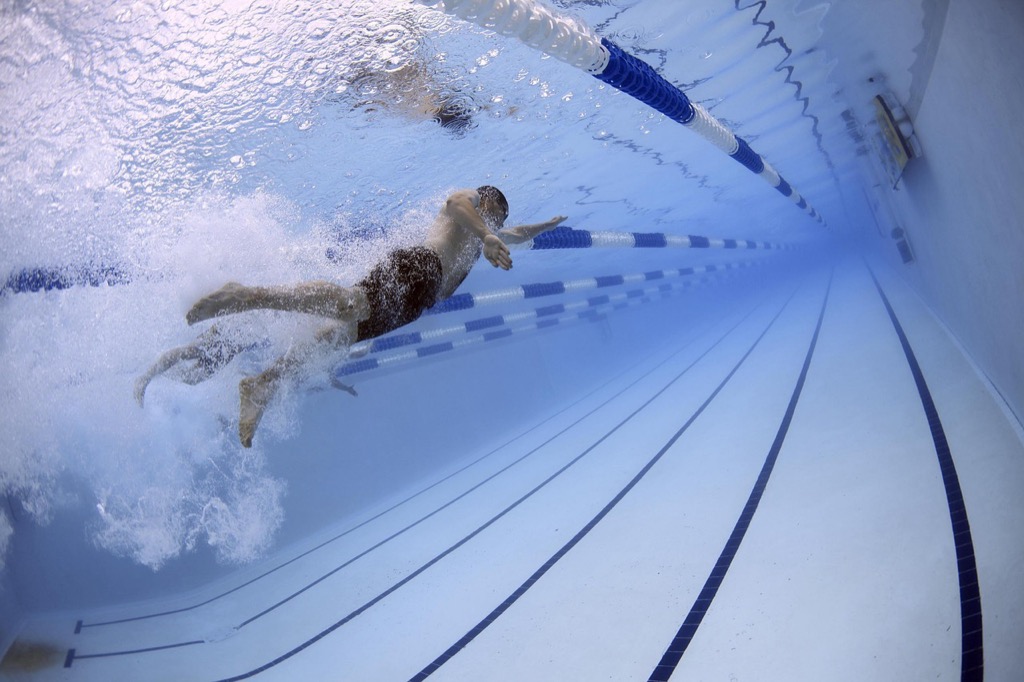
Underwater dolphin kick sets develop core power and teach optimal body position for speed. Practice 15-yard underwater swims focusing on tight streamline position and explosive kick rhythm. Rotation drills with resistance bands strengthen your core connection to stroke power, emphasizing hip-driven body rotation that maximizes propulsion efficiency.
Underwater Dolphin Kick Power Sets
Your underwater dolphin kick determines how fast you’ll surface after every turn and dive. These power-focused sets build the explosive core strength and breath control you need to maintain speed beneath the surface.
Breath-Holding Endurance Training
You’ll develop the anaerobic capacity needed for longer underwater distances by practicing controlled breath-holding sequences. Start with 4×25 underwater dolphin kick on 2:00, holding your breath for the entire length while maintaining consistent kick rhythm. Progress to 50-yard attempts as your lung capacity improves, focusing on steady kick frequency rather than desperate speed.
Explosive Push-Off Techniques
Your push-off velocity directly impacts your underwater momentum and overall race performance. Practice explosive wall departures by driving through your legs with maximum force while maintaining a tight streamline position. Execute 8-10 explosive push-offs with 30-second rest intervals, focusing on generating maximum initial speed before transitioning into your dolphin kick rhythm.
Wall-to-Wall Underwater Challenges
You’ll maximize your underwater potential by swimming full pool lengths beneath the surface using only dolphin kick. Complete 4-6 wall-to-wall attempts with 3-minute recovery periods, maintaining consistent kick depth and body position throughout each length. Track your distance improvements weekly while ensuring you surface safely before oxygen depletion becomes dangerous.
Resistance Training in Water Workouts
Water resistance training amplifies your power development by forcing your muscles to work against increased drag while maintaining proper stroke mechanics. These workouts bridge the gap between dry-land strength training and racing speed by creating specific resistance that mimics competitive conditions.
Parachute and Drag Equipment Training
Parachute training forces you to generate maximum power against substantial resistance while maintaining stroke rhythm. Attach a drag chute or resistance bucket and perform 6×50 freestyle at 80% effort with 90-second rest intervals. Focus on maintaining high stroke rate despite the added drag to develop explosive pulling power and core stability.
Partner-Assisted Resistance Swimming
Partner resistance creates variable drag that challenges your power output throughout each stroke cycle. Have your partner hold a towel or resistance cord while you swim 4×25 sprints at maximum effort. Your partner controls resistance by adjusting grip tension, allowing you to experience progressive overload within each repetition.
Elastic Band Power Development
Elastic band training develops explosive starts and turns through controlled resistance that increases with stretch. Anchor bands poolside and perform 8×15-yard sprints against band tension, focusing on rapid stroke turnover. Release the bands mid-length to experience assisted swimming, which trains your neuromuscular system for higher stroke rates.
Plyometric Pool Exercises for Swimmers
Plyometric exercises in the pool environment create unique power development opportunities that dry-land training can’t replicate. The water’s resistance and buoyancy properties allow you to perform explosive movements with reduced joint impact while building the specific neuromuscular patterns needed for racing speed.
Explosive Jump and Dive Sequences
Execute vertical jumps from chest-deep water, driving your knees to your chest before exploding upward through the surface. Perform 8-10 maximum effort jumps with 30-second rest intervals between each repetition. Follow immediately with shallow dive entries from pool deck, focusing on streamlined body position and explosive entry angle to maximize underwater distance.
Pool Deck to Water Transitions
Practice explosive deck-to-water sequences by performing burpees on pool deck followed by immediate shallow dives into the water. Complete 6-8 transitions focusing on rapid movement from prone position to streamlined dive entry. This drill develops the explosive power needed for racing starts while training your body to maintain speed through position changes.
Multi-Directional Movement Patterns
Perform lateral bounds across the pool width in waist-deep water, alternating single-leg explosive pushes off the pool bottom. Execute 4-6 bounds per direction before switching to backward explosive hops for 15-20 yards. Add rotational jumping movements where you perform 180-degree turns mid-air to develop multi-plane power essential for flip turns and open water navigation.
High-Intensity Interval Training (HIIT) Swimming
HIIT swimming protocols deliver maximum cardiovascular and muscular adaptations in minimal training time. These workouts push your anaerobic threshold while developing explosive power through carefully structured work-to-rest ratios.
Tabata-Style Swimming Protocols
Execute 20 seconds of maximum effort swimming followed by 10 seconds of complete rest for 8 rounds. Choose 25-yard freestyle sprints at 100% intensity, maintaining stroke rate above 50 strokes per minute throughout each interval. Complete 3-4 Tabata sets with 2-minute recovery between sets to maximize power output and avoid technique breakdown.
Variable Speed and Stroke Combinations
Alternate between explosive 15-second freestyle sprints and 30-second backstroke recovery swimming within each 2-minute interval. Progress through butterfly, breaststroke, and freestyle combinations to challenge different muscle groups while maintaining high heart rates. Perform 6-8 intervals with stroke transitions occurring every 25 yards to develop multi-stroke power and prevent muscular compensation patterns.
Heart Rate Zone Targeting
Target 85-95% maximum heart rate during work intervals using waterproof heart rate monitors for precise zone training. Maintain recovery periods at 60-70% maximum heart rate through easy backstroke or breaststroke swimming. Monitor heart rate variability between sets to ensure adequate recovery and prevent overtraining while maximizing anaerobic power development.
Race Pace Simulation Workouts
Race pace simulation workouts replicate the exact physiological and psychological demands you’ll face during competition. These targeted training sessions prepare your body and mind for specific race distances while developing the metabolic systems needed for peak performance.
Competition Distance Training
Train at your target race pace for progressively longer distances to build race-specific endurance. Start with 50% of your race distance at goal pace, then increase by 25% weekly. For 100-yard events, begin with 4×25 at race pace with 15-second rest, progressing to 2×50 with 30-second rest.
Negative Split Development
Practice swimming the second half faster than the first to master race strategy and finishing power. Execute broken swims where you intentionally hold back early, then accelerate. Try 4×100 where you swim the first 50 at 70% effort, then drop 2-3 seconds on the back half.
Mental Toughness Building
Simulate race pressure through challenging pace maintenance under fatigue. Perform descending sets where each repeat must be faster despite accumulating lactate. Execute 5×100 on tight rest where you must hit target splits on each 25, teaching your mind to focus when your body wants to quit.
Conclusion
These seven power-focused swim workouts provide you with a comprehensive toolkit for transforming your speed and explosive strength in the water. By consistently implementing these training methods you’ll develop the neuromuscular adaptations that separate competitive swimmers from recreational ones.
Remember that progression is key – start with manageable intensities and gradually increase the challenge as your body adapts. Your power development depends on quality over quantity so maintain proper form even when fatigue sets in.
The combination of sprint intervals resistance training plyometric exercises and race simulation creates a synergistic effect that maximizes your swimming potential. Stay consistent with your training schedule and you’ll notice significant improvements in your explosive power within just a few weeks of dedicated practice.
Frequently Asked Questions
What is explosive power in swimming and why is it important?
Explosive power in swimming refers to the ability to generate maximum force quickly through the water. It’s crucial because speed in swimming isn’t just about technique—it requires muscular power to create propulsion. Elite swimmers combine strength training with pool work to develop the explosive power needed for sprint performance and competitive success.
How do sprint interval training workouts help develop explosive speed?
Sprint intervals engage the neuromuscular system at maximum capacity, bridging the gap between raw strength and racing speed. By performing 8-12 repetitions of 25-50 yard sprints at 95-100% effort with 2-3 minutes rest between sets, swimmers develop the specific power adaptations needed for competitive racing performance.
What are power-based stroke technique workouts?
Power-based stroke technique workouts focus on maximizing force application through each stroke phase. They include sculling drills with paddles to enhance catch and pull phases, tempo trainer workouts for stroke rate optimization, and underwater dolphin kick sets to develop core power and optimal body positioning for speed.
How do underwater dolphin kick power sets improve swimming performance?
Underwater dolphin kick power sets build explosive core strength and breath control essential for maintaining speed after turns and dives. These sets develop anaerobic capacity for longer underwater distances and help swimmers maximize their underwater momentum through proper push-off techniques and wall-to-wall challenges.
What is resistance training in water and how does it work?
Resistance training in water uses drag equipment like parachutes, partner assistance, or elastic bands to force muscles to work against increased resistance while maintaining proper stroke mechanics. This amplifies power development by creating specific training conditions that bridge the gap between dry-land strength training and racing speed.
What are plyometric pool exercises and their benefits?
Plyometric pool exercises are explosive movements performed in water that create unique power development opportunities unavailable in dry-land training. They include vertical jumps, explosive dive sequences, and multi-directional movements that enhance racing start power, flip turn ability, and overall explosive strength in aquatic environments.
How do HIIT swimming protocols maximize training efficiency?
HIIT swimming protocols, like Tabata-style workouts (20 seconds maximum effort, 10 seconds rest for 8 rounds), deliver maximum cardiovascular and muscular adaptations in minimal time. They incorporate variable speeds, stroke combinations, and heart rate zone targeting to optimize anaerobic power development and training intensity.
What are race pace simulation workouts?
Race pace simulation workouts replicate the physiological and psychological demands of competition by training at target race pace for progressively longer distances. They focus on negative split development, race strategy practice, and building mental toughness to maintain challenging paces under fatigue, preparing swimmers for peak competitive performance.