
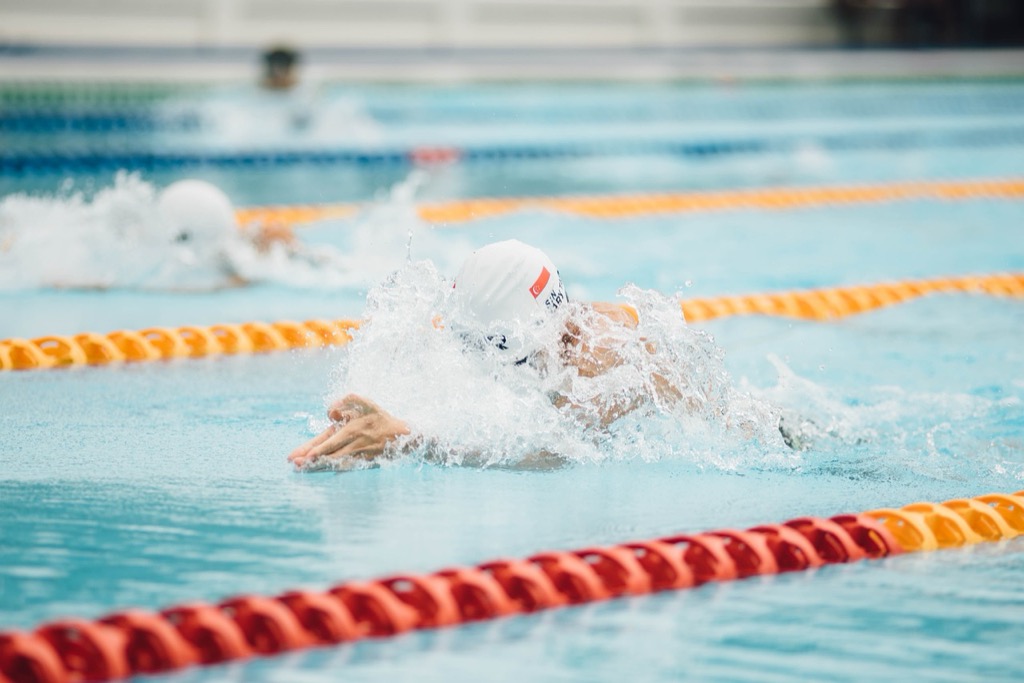
7 Swim Workouts for Endurance vs Speed That Pro Athletes Swear By
Discover 7 targeted swim workouts designed for endurance vs speed training. Learn specific techniques, pacing strategies, and progressive methods to excel in your chosen swimming discipline.
Why it matters: Your swimming goals determine which workouts will get you there faster â whether you’re training for a marathon swim or racing sprints.
The big picture: Endurance swimmers need different training protocols than speed demons chasing personal records in shorter distances.
What’s ahead: We’ve broken down seven targeted workouts that’ll help you dominate your chosen swimming discipline.
Disclosure: As an Amazon Associate, this site earns from qualifying purchases. Thank you!
Understanding the Difference Between Endurance and Speed Training in Swimming
Endurance and speed training create distinctly different physiological adaptations in your body. You’ll develop different energy systems, muscle fiber recruitment patterns, and cardiovascular responses depending on which training approach you emphasize.
Endurance Training Benefits for Swimmers
Endurance training builds your aerobic capacity and teaches your body to efficiently process oxygen during sustained effort. You’ll develop stronger cardiovascular health, improved fat burning capabilities, and enhanced mental toughness for longer distances. This training also increases your stroke efficiency and helps you maintain proper technique when fatigue sets in.
Speed Training Benefits for Swimmers
Speed training develops your anaerobic power and explosive muscle recruitment for short bursts of maximum effort. You’ll build fast-twitch muscle fibers, improve your neuromuscular coordination, and increase your stroke rate capacity. This training also enhances your ability to generate power off starts and turns while maintaining stroke mechanics at high intensities.
How to Determine Your Training Focus
Your training focus should align with your competitive goals and natural physiological strengths. Consider your target race distances, current fitness level, and which energy system needs the most development. Most swimmers benefit from incorporating both training types, but you’ll want to emphasize the approach that directly supports your primary swimming objectives and competition schedule.
Workout 1: Long Distance Continuous Swimming for Endurance
Long distance continuous swimming builds the aerobic foundation that separates endurance swimmers from sprinters. This workout type develops your cardiovascular system while teaching your body to efficiently utilize oxygen over extended periods.
Proper Pacing Techniques
Start at 70-75% of your maximum effort and maintain consistent stroke rhythm throughout your swim. Focus on breathing patterns that feel sustainable – typically every 2-3 strokes for freestyle swimmers. Monitor your pace using a poolside clock, aiming to complete each 100-meter segment within 5-10 seconds of your target time.
Distance Progression Guidelines
Begin with 800-1000 meters if you’re new to endurance training, adding 200-400 meters weekly. Experienced swimmers should target 1500-3000 meters per session, progressing toward competition distances. Build your longest weekly swim by 10-15% each week, allowing your aerobic system to adapt without overloading your shoulders and core muscles.
Recovery and Rest Intervals
Take minimal rest between continuous swimming sessions – no more than 30-60 seconds at pool walls for quick hydration. Schedule complete rest days every 3-4 training sessions to prevent overuse injuries. Active recovery through easy 200-400 meter swims helps maintain technique while allowing your cardiovascular system to recover between intense endurance sessions.
Workout 2: Sprint Intervals for Maximum Speed Development
Sprint intervals represent the cornerstone of speed development in competitive swimming. This workout targets your anaerobic power system and fast-twitch muscle fibers essential for explosive speed.
Optimal Sprint Distances
Sprint distances should range from 25 to 100 meters for maximum speed development. You’ll build explosive power with 25-meter all-out efforts and develop speed endurance with 50-75 meter repeats. Advanced swimmers can incorporate 100-meter sprints to bridge speed and power endurance training effectively.
Rest-to-Work Ratios
Rest intervals should be 3-4 times longer than your work period for complete recovery. If you swim a 25-meter sprint in 15 seconds, rest for 45-60 seconds between repetitions. This ratio ensures you maintain maximum intensity throughout each sprint interval and prevents premature fatigue.
Technique Maintenance During High-Intensity Sets
Focus on stroke rate acceleration rather than stroke length reduction during sprints. You’ll maintain proper body position and catch mechanics by emphasizing quick tempo while preserving your distance per stroke. Practice breathing patterns that support your sprint distance to avoid technique breakdown under oxygen debt.
Workout 3: Pyramid Sets Combining Endurance and Speed Elements
Pyramid sets offer the perfect bridge between endurance and speed training by systematically building distance before breaking it back down. You’ll develop both aerobic capacity and anaerobic power within a single structured workout.
Building Up and Breaking Down Distances
Start with shorter distances like 50 meters and progress to your peak distance of 200-400 meters before descending back down. You’ll swim 50-100-150-200-150-100-50 meters with consistent rest intervals between each segment. This progression challenges your energy systems differently at each stage while maintaining stroke efficiency throughout the pyramid structure.
Adjusting Intensity Throughout the Set
Maintain moderate intensity during the ascending phase at 75-80% effort to build your aerobic base effectively. Push your intensity to 85-90% effort at the pyramid’s peak distance for maximum challenge. Drop back to 80-85% effort during the descending phase to practice speed while managing accumulated fatigue from earlier segments.
Stroke Rate Variations
Keep your stroke rate steady at 16-18 strokes per length during shorter pyramid segments for technical precision. Increase to 18-20 strokes per length at peak distances to maintain speed despite growing fatigue. Allow stroke rate to naturally decrease by 1-2 strokes per length during descent while focusing on stroke length and efficiency recovery.
Workout 4: Threshold Training for Sustained Speed
Threshold training targets the precise intensity where your body shifts from primarily aerobic to anaerobic energy production. This workout develops your ability to maintain higher speeds for extended periods without accumulating excessive lactate.
Identifying Your Lactate Threshold
Your lactate threshold occurs at approximately 85-90% of your maximum heart rate during sustained swimming efforts. You’ll recognize this intensity when you can maintain a challenging pace for 20-30 minutes while breathing becomes labored but still controlled. Test your threshold by swimming a 1000-meter time trial at maximum sustainable effort.
Maintaining Target Heart Rate Zones
Monitor your heart rate during threshold sets to stay within 82-88% of your maximum heart rate throughout the workout. Use a waterproof heart rate monitor or count your pulse for 10 seconds immediately after each interval. Adjust your pace if your heart rate drops below 82% or exceeds 88% consistently.
Progressive Overload Principles
Increase your threshold training volume by 5-10% weekly, starting with 800-1200 meters of threshold work per session. Progress by extending interval distances from 200 meters to 400 meters while maintaining the same pace and rest periods. Advanced swimmers can build up to 2000-2500 meters of total threshold training within a single workout.
Workout 5: Fartlek Swimming for Variable Pace Training
Fartlek swimming brings unpredictable speed changes that mirror real race conditions. This Swedish training method teaches your body to adapt quickly between different intensities within a single continuous swim.
Mixing Speeds Within Single Sessions
Alternate between easy, moderate, and sprint paces every 25-50 meters without structured rest periods. You’ll swim 100 meters easy, then 50 meters at race pace, followed by 25 meters all-out before returning to easy swimming for recovery.
Reading Your Body’s Signals
Monitor your breathing patterns and stroke rhythm to determine when to change pace naturally. When your stroke rate drops below 14 per length, it’s time to pick up the pace, while labored breathing signals a need to slow down and recover.
Adapting to Different Pool Conditions
Adjust your pace changes based on pool traffic and lane availability during busy sessions. Use wall space strategically for quick intensity bursts, and extend easy-pace segments when sharing lanes with slower swimmers to maintain workout flow.
Workout 6: Time-Based Sets for Consistent Pacing
Time-based swimming sets train your internal clock while building the aerobic foundation essential for distance events. You’ll learn to maintain consistent splits across multiple intervals.
Clock Management Strategies
Send yourself off on specific intervals like every 1:30 for 100-meter repeats. Use the pace clock to track your departure times and finish splits consistently.
Start with intervals that give you 15-20 seconds rest between repeats. Adjust your interval time based on your target pace and fitness level.
Building Aerobic Base
Maintain 70-80% effort throughout each repeat to develop your aerobic energy system. Focus on sustainable pacing rather than maximum intensity during these sets.
Complete 8-12 repeats of 100-200 meters with consistent splits. Your heart rate should remain steady across all intervals without significant elevation.
Monitoring Stroke Count and Efficiency
Count your strokes per length on every third repeat to track efficiency changes. Maintain stroke count within 1-2 strokes of your baseline throughout the set.
Watch for stroke rate increases that indicate fatigue or pacing errors. Consistent stroke mechanics indicate proper aerobic base development and sustainable effort levels.
Workout 7: Race Pace Simulation for Competition Preparation
Race pace simulation transforms your training from general fitness into competition-specific preparation. You’ll practice the exact speeds and conditions you’ll face during your target events.
Mimicking Competition Conditions
Create training sets that replicate your race distance and timing exactly. Swim your 500-meter freestyle at the pace you plan to hold during competition, including warm-up protocols and lane positioning. Practice your race-day breathing patterns and stroke rhythm to build muscle memory for competition pressure situations.
Tapering and Peak Performance
Reduce your training volume by 40-60% during the two weeks before competition while maintaining race pace intensity. Schedule your final race simulation 5-7 days before your event to allow full recovery. Focus on stroke technique refinement rather than fitness building during this crucial preparation phase.
Mental Preparation Techniques
Visualize your entire race sequence during simulation sets, including start positioning and turn execution. Practice positive self-talk phrases you’ll use during difficult race moments. Time your breathing patterns to match race conditions and rehearse your pacing strategy for different segments of your target event.
Conclusion
Your swimming performance depends on choosing the right workout for your specific goals. Whether you’re building endurance for long-distance events or developing explosive speed for sprints these seven targeted workouts provide the framework you need to excel.
Remember that consistency beats intensity when you’re just starting out. Focus on proper technique during every workout and gradually increase your training volume as your fitness improves.
The key to long-term success lies in periodically reassessing your goals and adjusting your training emphasis accordingly. Most swimmers benefit from incorporating elements of both endurance and speed work but your primary focus should align with your competitive objectives and natural strengths.
Frequently Asked Questions
What’s the difference between endurance and speed swimming training?
Endurance training focuses on building aerobic capacity, cardiovascular health, and stroke efficiency through longer, sustained efforts at moderate intensity. Speed training develops anaerobic power, fast-twitch muscle fibers, and explosive movement through short, high-intensity intervals. Each creates different physiological adaptations and targets distinct energy systems in your body.
How do I determine which type of swimming training to focus on?
Base your training focus on your competitive goals and natural physiological strengths. If you compete in longer distances (800m+), emphasize endurance training. For shorter races (50-200m), prioritize speed work. Most swimmers benefit from incorporating both types but should emphasize the training style that aligns with their primary competitive objectives.
What distance should I swim for endurance training?
New swimmers should start with 800-1000 meters per session, while experienced swimmers should target 1500-3000 meters. Begin at 70-75% of your maximum effort and maintain consistent stroke rhythm. Gradually increase distance over time and schedule complete rest days to prevent overuse injuries.
How long should I rest between sprint intervals?
Maintain a rest-to-work ratio of 3-4 times longer than your sprint duration. For example, if you swim a 25-meter sprint in 15 seconds, rest for 45-60 seconds. This ensures complete recovery between sprints, allowing you to maintain maximum intensity and proper technique throughout the workout.
What are pyramid sets and how do they work?
Pyramid sets combine endurance and speed elements by systematically building distance before breaking it back down. For example: 50-100-150-200-150-100-50 meters with consistent rest intervals. Maintain 75-80% effort ascending, push to 85-90% at peak distance, then drop to 80-85% during descent while focusing on stroke efficiency.
How do I find my lactate threshold for threshold training?
Your lactate threshold occurs at approximately 85-90% of maximum heart rate during sustained efforts. Monitor your heart rate during threshold sets, aiming to stay within 82-88% of maximum. Start with 800-1200 meters of threshold training and gradually increase volume by 5-10% weekly while maintaining consistent pace.
What is fartlek swimming training?
Fartlek swimming incorporates unpredictable speed changes that mimic race conditions. Alternate between easy, moderate, and sprint paces every 25-50 meters without structured rest periods. This teaches quick adaptation between intensities and helps develop race-specific fitness by training your body to handle variable pace demands.
How do time-based sets improve my swimming?
Time-based sets train consistent pacing by having you start intervals at specific times (like every 1:30 for 100m repeats). Start with intervals allowing 15-20 seconds rest between repeats at 70-80% effort. Track departure times, finish splits, and stroke count to develop aerobic fitness and pacing consistency.
When should I start race pace simulation training?
Begin race pace simulation 4-6 weeks before your target competition. Practice exact race speeds, distances, and conditions you’ll face. Reduce training volume by 40-60% in the two weeks leading up to competition while maintaining race pace intensity to ensure you’re fresh and ready to perform.
How often should I incorporate different types of swimming workouts?
Balance your training based on your primary goals. Endurance-focused swimmers should do 60-70% endurance work and 30-40% speed/power training. Speed-focused swimmers should reverse this ratio. Include variety throughout the week with different workout types to prevent monotony and ensure comprehensive fitness development.

