6 Ways To Use Sand Vs Cartridge Filters That Extend Equipment Life
Learn 6 key usage differences between sand and cartridge filters to maximize equipment lifespan. Proper cleaning and pressure monitoring are crucial.
Choosing a pool filter often feels like a permanent decision, but the real secret to a long-lasting system isn’t just about what you buy. It’s about how you use it. Whether you have a classic sand filter or a modern cartridge unit, your daily and seasonal habits are what truly protect your investment. Understanding the right way to operate your specific filter type is the difference between a system that lasts three years and one that lasts a decade.
Disclosure: As an Amazon Associate, this site earns from qualifying purchases. Thank you!
Hayward Sand vs. Pentair Cartridge: Key Differences
At their core, sand and cartridge filters do the same job with entirely different philosophies. A sand filter, like a popular Hayward ProSeries, acts like a rapid-run riverbed. Water is forced through a deep bed of specialized #20 silica sand, and the sharp edges of the sand grains snag debris and particles.
A cartridge filter, such as a Pentair Clean & Clear, works more like an air filter in your car. It uses a large, pleated sheet of polyester media to create a massive surface area. Water passes through the fibrous material, and particles get trapped on the surface. This design allows cartridge filters to trap much smaller particles—down to 10-20 microns, compared to 20-40 microns for a typical sand filter.
This fundamental difference dictates their maintenance routines and performance. Sand filters are cleaned by reversing the water flow in a process called backwashing, which is quick but uses a significant amount of pool water. Cartridge filters require a more hands-on approach: you must manually remove and hose down the filter elements. While more labor-intensive, this method conserves water and is a key reason they are popular in drought-prone areas.
Backwashing a Hayward ProSeries Sand Filter
The Hayward ProSeries sand filter delivers balanced flow and effective backwashing for a cleaner pool. Its corrosion-proof tank and easy-to-use VariFlo valve ensure dependable performance and simple operation.
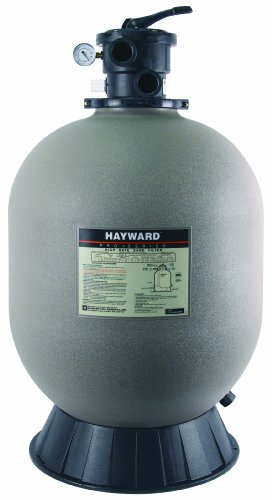

The most common mistake pool owners make with sand filters is backwashing on a fixed schedule. Your pressure gauge—not the calendar—tells you when to clean your filter. Note the pressure reading right after a fresh backwash; this is your "clean" pressure. You only need to backwash when the gauge reads 8-10 PSI above that clean starting point.
The process itself is simple but requires a crucial sequence. First, always turn the pool pump off before touching the multiport valve handle. Forcing the handle while the pump is running will shred the internal gasket and lead to leaks. With the pump off, press down and turn the handle to the "BACKWASH" position.
Turn the pump back on and let it run for 2-3 minutes, or until the water in the small sight glass on the valve runs clear. Turn the pump off again, switch the valve to "RINSE," and run the pump for another 30 seconds. This step resettles the sand bed and prevents sand from being blown back into your pool. Finally, turn the pump off one last time and return the valve to "FILTER."
Cleaning a Pentair Clean & Clear Cartridge
Like a sand filter, the pressure gauge is your guide for cleaning a cartridge filter. Once the pressure rises 8-10 PSI above its clean reading, it’s time for maintenance. This is a more involved process than backwashing, but it’s essential for extending the life of your expensive cartridges.
Start by turning off the pump and bleeding the air from the tank using the air relief valve on top. Open the tank, remove the cartridges, and set them aside for cleaning. The best tool for the job is a simple garden hose with a high-pressure nozzle. Work your way from top to bottom, carefully spraying between each pleat to dislodge debris. Never use a pressure washer, as it’s too powerful and will tear the delicate filter media, rendering the cartridge useless.
For a truly life-extending clean, give your cartridges a chemical bath once or twice a season. Soaking them overnight in a filter cleaning solution dissolves the oils, suntan lotions, and mineral scale that a simple hosing leaves behind. This step restores the media’s ability to filter effectively and can easily turn a one-season cartridge into one that lasts for three or more years.
ZeoSand Media Swaps vs. Unicel Cartridge Life
Experience superior water clarity with the Unicel C-8412 replacement filter cartridge. Designed for 120 sq ft Hayward and Waterway filters, its 4 oz Reemay media offers efficient filtration and extended cleaning intervals.

The media inside your filter is a consumable, whether it’s sand or a cartridge. Standard pool filter sand needs to be completely replaced every 3-5 years. Over time, the water flow smooths the sharp edges of the sand grains, making them less effective at trapping dirt.
When it’s time to replace your sand, consider an upgrade like ZeoSand. This alternative media, made from a mineral called zeolite, has a porous, jagged structure that can filter particles down to the 3-5 micron range, offering water clarity that rivals a cartridge filter. It has a similar lifespan to regular sand, but its superior filtration can reduce the need for backwashing, saving water and wear on your multiport valve.
Cartridges, like those made by Unicel for various filter models, typically last 1-3 seasons. Their lifespan is directly tied to how well they are maintained. A well-cared-for cartridge that gets regular deep cleanings will last much longer than one that is only hosed off. The tradeoff is clear: sand changes are a major, infrequent project, while cartridge replacements are a smaller, more frequent operational cost.
Monitor Pressure to Protect Your Pool Pump
Your filter’s pressure gauge is the single most important diagnostic tool for your entire pool system. It’s not just about knowing when to clean the filter; it’s about protecting your pump motor from burnout. When you first get your system running, use a permanent marker to write the "clean pressure" PSI directly on the filter tank.
When the pressure climbs, it means the filter is clogged and water flow is restricted. This forces your pump to work much harder to push water through the system, drawing more electricity and putting immense strain on its motor and seals. Consistently running your pump against high back-pressure is a leading cause of premature pump failure.
Low pressure is just as dangerous. A pressure reading below your normal clean pressure indicates a blockage before the pump, usually a full skimmer basket or a clogged pump basket. This starves the pump of water, causing it to lose its prime and run dry. When a pump runs dry, the water that normally cools it is gone, causing friction to build and melt the shaft seal, which can quickly destroy the entire motor.
Keep your pool clean with this durable skimmer basket. It fits Pentair U-3 and Hayward SP1070 skimmers, featuring a brass weight for stability and a stainless steel handle with a rubber grip for easy removal.

Using BioGuard Clarifiers with Filter Types
Water clarifiers are excellent for getting that extra sparkle, but their effectiveness depends on your filter type. Clarifiers work by using a coagulant to bind tiny, suspended particles together into larger clumps. These larger clumps are then big enough for your filter to easily trap and remove.
Sand filters are the perfect partner for clarifiers. Because sand has a relatively large micron rating, it can struggle with the ultra-fine particles that cause hazy or cloudy water. Adding a dose of a clarifier like BioGuard Polysheen Blue helps the sand filter perform far above its normal capabilities, dramatically improving water clarity.
With cartridge filters, you should use clarifiers with caution. Since cartridge media already filters very fine particles, adding a coagulant can cause the filter to clog extremely quickly, leading to a rapid pressure increase and the need for a full cleaning. A better choice for cartridge systems is often an enzyme-based chemical. Enzymes break down non-living organic contaminants like oils and lotions, reducing the overall load on the filter without gumming up the pleats.
Proper Winterization for Sand & Cartridge Units
Closing your pool correctly is one of the most critical things you can do to ensure your equipment survives the winter. For both filter types, the process starts with a final, thorough cleaning. You want to remove all the season’s gunk so it doesn’t sit and harden in the system for months.
For a sand filter, perform a final backwash and rinse. Then, set the multiport valve to the "WINTERIZE" setting if it has one; otherwise, leave the handle set between two positions to lift the gasket. The most important step is to remove the drain cap at the very bottom of the filter tank. Water left inside will freeze, expand, and crack the tank wide open.
For a cartridge filter, perform your final deep clean with a chemical solution. Instead of putting the cartridges back in the tank, store them indoors in a garage or shed where they won’t freeze. A frozen cartridge can become brittle and crack. Just like with a sand filter, you must drain all water from the filter tank by removing its drain plug.
Sizing Your Filter: Hayward vs. Pentair Models
When it comes to filters, bigger is always better. An oversized filter provides more surface area for trapping dirt, which means the water stays cleaner, the flow rate remains higher for longer, and you’ll go for much longer stretches between cleanings. This reduces wear and tear on all your equipment, especially the pump.
Consider a common 20,000-gallon pool. A standard choice might be a Hayward ProSeries 24-inch sand filter (S244T), which holds 300 lbs of sand. A fantastic cartridge alternative would be a Pentair Clean & Clear Plus 420, which boasts 420 square feet of filter area. The Pentair model will maintain optimal flow and require cleaning far less often than the Hayward sand filter, but its upfront cost is significantly higher.
The key is to match the filter to your pump’s flow rate, not just the pool’s gallonage. A powerful pump paired with an undersized filter creates a constant state of high pressure, inefficient filtration, and unnecessary strain. Investing in a larger filter from the start is one of the smartest ways to extend the life of your entire equipment pad and reduce your maintenance workload for years to come.
Ultimately, the longevity of your pool equipment comes down to proactive, informed maintenance. By understanding how your specific filter works and using its pressure gauge as your guide, you can avoid the common pitfalls that lead to costly repairs. A little attention to detail during the season and a proper winterization at the end of it will ensure your system runs efficiently for its maximum lifespan.