10 Essential Safety Equipment Items for Family Pontoon Boaters
Ensure your family stays safe on the water with these 10 essential safety equipment items for family pontoon boaters. Read our expert guide and prepare today.
Picture a perfect, sunny Saturday afternoon, drifting on the lake with your family laughing on the spacious deck of your pontoon boat. Suddenly, an unexpected squall rolls in, or a rogue wave from a passing wake sends a loose cooler sliding, reminding you how quickly conditions can change on the water. Having the right safety gear onboard isn’t just about passing a Coast Guard inspection; it’s about securing peace of mind so you can focus on making memories.
Disclosure: As an Amazon Associate, this site earns from qualifying purchases. Thank you!
Crucial Safety Prep Before Your Family Pontoon Outing
Pontoons are spacious, stable platforms that make it easy to forget you are on open water, which often leads to a false sense of security. Before turning the key, conduct a thorough pre-departure walkthrough to verify every passenger knows where the life jackets, fire extinguisher, and first aid kit are stored.
Weight distribution is particularly critical on pontoons; overloading the bow or crowding everyone to one side can drastically affect handling in choppy waters. Ensure your passenger count and gear weight stay well within the limits printed on your boat’s capacity plate.
Check the local marine weather forecast, test your bilge pump manually, and ensure your communication gear is fully charged before casting off. This quick, five-minute routine transforms potential emergencies into minor, easily managed inconveniences.
Life Jacket – Mustang Survival MIT 100 Inflatable PFD
Personal flotation devices (PFDs) save lives, but they only work if they are actually worn rather than stuffed inside a storage bench. Traditional foam jackets are bulky and hot, often discouraging family members from keeping them on during warm summer days.
The Mustang Survival MIT 100 Inflatable PFD offers a lightweight, low-profile design that solves this comfort issue, using membrane inflatable technology to provide 28 pounds of buoyancy when activated. This manual-inflation model is perfect for pontooning because it won’t inflate accidentally from a splash or a heavy rain shower, giving the wearer total control.
- Inflation Type: Manual (pull-cord) with oral inflation tube backup
- Buoyancy: 28 lbs (more than 1.5 times the buoyancy of standard foam PFDs)
- Sizing: Universal adult (30″ to 52″ chest size)
- Re-arming Kit: Uses Mustang Survival MA7203 re-arm kit
This PFD is ideal for active adult pontooners who want all-day comfort without sacrificing safety. It is not suitable for weak swimmers, children under 16, or high-speed water sports like wakeboarding, where inherently buoyant foam vests are required.
Marine Fire Extinguisher – Kidde Mariner 10
Pontoon boats carry highly flammable fuel and have complex 12-volt electrical systems tucked away in enclosed spaces, making onboard fires an immediate, catastrophic threat. A marine-rated fire extinguisher is legally required and must be instantly accessible to suppress a fire before it reaches the fuel tank.
The Kidde Mariner 10 is a US Coast Guard-approved class 10-B:C dry chemical extinguisher specifically designed to combat flammable liquid and electrical fires. Its durable aluminum cylinder and rust-resistant pressure gauge are built to survive harsh marine environments without corroding or losing charge.
- Classification: UL rated 10-B:C (suitable for fuel and electrical fires)
- Material: Corrosion-resistant aluminum valve and cylinder
- Mounting: Includes a heavy-duty mounting bracket to prevent rolling
- Weight: 2.8 lbs of dry chemical agent
This is a non-negotiable safety item for every motorized pontoon boat owner. While it excels at handling small engine compartment or electrical fires, it is not designed for Class A trash or wood fires, meaning you should still keep a bucket handy for minor campfire-style accidents.
Throwable Cushion – Stearns Flotation Cushion
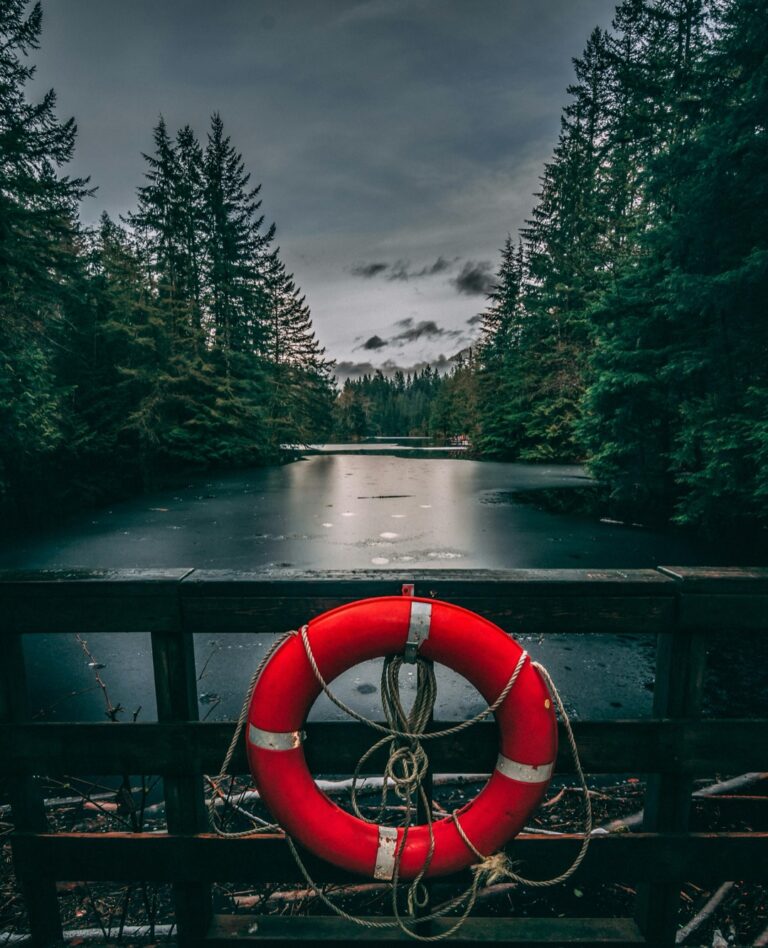
When someone slips off a pontoon swim platform, getting the boat turned around can take critical minutes. A throwable device acts as an immediate lifeline, keeping the swimmer afloat and visible while you maneuver the vessel back to them.
The Stearns Flotation Cushion is a dual-purpose Type IV PFD that serves as a comfortable seat cushion during normal cruising and a highly visible rescue device in an emergency. Made with durable webbed straps and tough nylon fabric covering flotation foam, it can be thrown accurately even in windy conditions.
- Type: USCG Approved Type IV Throwable Device
- Material: Heavy-duty nylon shell over marine flotation foam
- Dimensions: 15 x 15 inches with 2-inch thickness
- Features: Dual grab straps for easy throwing and holding
This is a legal requirement for all boats over 16 feet and is perfect for family pontoons where space is at a premium. It is not a substitute for a wearable life jacket and should never be worn on a person’s back during an emergency.
Marine First Aid Kit – Adventure Medical Kits Marine 100
From fishhook punctures and minor sunburns to deep cuts from propeller blades, medical issues happen fast on the water where professional help is miles away. A dedicated marine first aid kit provides the specialized supplies needed to stabilize injuries in a wet environment.
The Adventure Medical Kits Marine 100 is housed in a completely waterproof, floating dry bag, ensuring your bandages and medications stay dry even if the storage compartment floods. It contains professional-grade supplies organized by injury type, including burn treatments, bleeding control, and motion sickness remedies.
- Case Type: 100% waterproof dry bag with roll-top closure
- Capacity: Designed for boats carrying 1 to 6 passengers on day trips
- Key Contents: Clean-room bandages, trauma pads, medication, and wound care
- Weight: Under 1 pound, making it easy to store in any console
This kit is perfect for day-tripping inland and coastal pontooners who need a compact, reliable medical setup. It is not designed for multi-day blue-water voyages, which require more extensive trauma equipment and surgical tools.
Marine Air Horn – Falcon Safety Super Sound Horn
Sound signals are your primary way to signal intent, warn other boaters in blind channels, or call for help in low-visibility fog. A built-in electric boat horn can easily fail due to corroded wiring, making a reliable backup air horn a critical safety asset.
The Falcon Safety Super Sound Horn produces a piercing, 120-decibel blast that can be heard up to a mile away, ensuring your presence is known even over loud engine noise. It uses a non-flammable propellant and features a robust, impact-resistant trumpet head that won’t crack under typical marine abuse.
- Output: 120 dB at 10 feet
- Range: Audibility up to 1 mile
- Can Size: 1.5-ounce pressurized canister (yields up to 30 blasts)
- Approval: Meets USCG requirements for boats up to 65 feet
This horn is essential for pontooners navigating busy channels, rivers, or lakes with heavy commercial traffic. Keep in mind that the pressurized gas can deplete, so carrying a spare canister or having a mouth-blown whistle as a final backup is highly recommended.
VHF Marine Radio – Standard Horizon HX210
Cell phones lose signal quickly on open water, and their batteries drain rapidly when searching for towers. A VHF marine radio connects you directly to the Coast Guard, local marine patrols, and surrounding vessels on Channel 16, which is monitored 24/7.
The Standard Horizon HX210 is a compact, floating 6W handheld VHF radio that features a high-resolution dot matrix display and an easy-to-navigate menu system. If dropped overboard, it floats face-up and activates a water-activated strobe light, making recovery effortless even in pitch-black conditions.
- Transmit Power: Switchable between 6W, 2.5W, and 1W
- Waterproof Rating: IPX7 (submersible to 3.3 feet for 30 minutes)
- Battery: Built-in 1850 mAh Li-Ion battery with 3-hour quick charger
- Extras: Integrated FM broadcast receiver and NOAA weather alerts
This radio is an absolute necessity for families boating on large lakes, coastal bays, or major river systems. While incredibly reliable, users must learn basic radio protocol and understand that its range is limited to line-of-sight (typically 5 to 8 miles) due to the short handheld antenna.
Pontoon Anchor – Slide Anchor Box Anchor
An anchor is more than a tool for swimming or fishing; it is a vital safety device that prevents your pontoon from drifting into rocks, shallow sandbars, or busy shipping lanes if your engine dies. Traditional anchors struggle to hold the high-profile, wind-catching design of a pontoon boat.
The Slide Anchor Box Anchor is engineered specifically to hold large, high-windage vessels like pontoons in sand, mud, or rock without requiring a heavy, cumbersome chain leader. It sets quickly on any bottom surface and folds flat for easy, rattle-free storage inside compact pontoon under-seat lockers.
- Size Recommended: Baby or Small size for most pontoons under 24 feet
- Material: Hot-dipped galvanized steel (stainless steel also available)
- Function: Works at a short 2-to-1 scope, saving line and swing space
- Storage: Folds flat into a heavy-duty storage bag
This design is ideal for pontoon owners who frequently anchor in crowded coves or areas with shifting winds and currents. It is not suitable for extremely deep ocean anchoring where long, heavy chain scopes are mandatory for safety.
Electronic Visual Flare – Sirius Signal C-1002 LED Flare
Traditional chemical pyrotechnic flares expire every 42 months, are difficult to dispose of safely, and can cause severe burns or damage your pontoon’s vinyl seating if dropped. Electronic visual distress signals (eVDSD) provide a modern, reusable, and much safer alternative for night signaling.
The Sirius Signal C-1002 LED Flare is a USCG-approved electronic flare that flashes the international SOS distress signal in both visible red-orange and infrared light. It runs on standard batteries for hours, floating upright to provide a persistent beacon that stays active long after traditional hand-held flares have burned out.
- Power Source: 8 CR123 batteries (included, offering a 10-year shelf life)
- Run Time: Exceeds USCG requirements with up to 4 hours of continuous SOS signaling
- Visibility: Visible up to 10 miles in clear night conditions
- Safety Kit: Includes a daytime orange distress flag to meet daytime requirements
This electronic flare is perfect for family boaters who want to avoid the recurring cost and fire hazards of chemical flares. Note that it requires a daytime distress flag (included in the kit) to fully meet US Coast Guard carriage requirements for both day and night signaling.
Manual Bilge Pump – Beckson Thirsty-Mate Hand Pump
Pontoons and tri-toons have sealed aluminum chambers, but heavy rain, leaking access hatches, or a minor puncture can trap water inside these tubes, severely affecting buoyancy and stability. An electric bilge pump cannot access these separate, sealed chambers, making a manual hand pump essential.
The Beckson Thirsty-Mate Hand Pump is a self-priming manual pump constructed from durable marine-grade plastics that will not corrode, scratch your aluminum logs, or spark near fuel fumes. It features a long, flexible discharge hose that easily reaches into deep pontoon drain plugs to clear water quickly.
- Flow Rate: Pumps up to 10 gallons per minute with minimal effort
- Hose Length: 36-inch flexible inlet/outlet hose
- Material: Non-sparking, impact-resistant polyvinyl chloride
- Size: 24-inch body for excellent leverage and stroke volume
Every pontoon owner should have one of these onboard to drain condensation or leakage from individual log chambers. It is not meant for draining large volumes of water from a sinking open-hull boat, where a high-capacity electric pump is required.
Carbon Monoxide Detector – MTI Industries Safe-T-Alert
Pontoons often idle for long periods while swimmers play near the rear platform, creating a silent hazard as odorless, colorless carbon monoxide (CO) gas accumulates under the swim deck or canopy. A marine-grade CO detector monitors the air quality to protect your family from “station wagon effect” poisoning.
The MTI Industries Safe-T-Alert is a surface-mounted 12-volt carbon monoxide alarm specifically calibrated for the harsh, high-humidity marine environment. It features advanced sensor technology designed to resist false alarms caused by diesel fumes or cleaning agents while remaining highly sensitive to CO.
- Power Supply: Direct 12V DC wire-in (won’t suffer from dead alkaline batteries)
- Current Draw: Low 60 mA draw, minimizing battery drain while anchored
- Alarm Thresholds: Meets ABYC standards for marine carbon monoxide detectors
- Housing: Moisture-resistant circuit board and sealed casing
This detector is an essential addition for pontoons equipped with bimini tops, enclosures, or stern swim platforms where passengers gather near the exhaust. It is less critical for wide-open, un-canopied boats, though still highly recommended if you spend time idling or running a generator.
How to Properly Store and Inspect Your Onboard Safety Gear
Buying the right safety equipment is only half the battle; how you store and maintain it determines if it will work when an emergency strikes. Avoid the temptation to tuck your gear away in deep, hard-to-reach under-seat compartments beneath heavy coolers or water skis. Use dedicated, clearly labeled storage bags or dry lockers that can be accessed in seconds by any passenger on board.
Perform a thorough inspection of your gear at the start of every boating season and once a month during peak use. Check the pressure gauge on your fire extinguisher, inspect the inflatable PFD bobbin for expiration, and test your VHF radio’s battery level. Ensure that your anchor rode is free of tangles and that your first aid kit supplies haven’t expired or suffered water damage.
Keep a simple checklist laminated and attached to the inside of your console door to guide your pre-season checks. Taking the time to properly dry, clean, and inspect your gear after a long weekend prevents mold growth and mechanical failure, keeping your family safe for years to come.
Safe boating isn’t about planning for disaster; it’s about ensuring your family’s best days on the water stay that way. Equip your pontoon with these essential tools, and cast off with the confidence that you are prepared for whatever the lake throws your way.