10 Essential Kayak Camping Trip Gear Picks for Weekend Adventurers
Gear up for your next getaway with these 10 essential kayak camping trip picks. Pack smarter and explore the water with confidence. Read our expert guide today!
Imagine paddling into a secluded cove as the sun dips below the tree line, knowing your campsite for the night is only accessible by water. Kayak camping offers unparalleled freedom, but it also demands a smart approach to gear selection where every ounce and inch of space matters. Having the right equipment ensures that a sudden downpour or a splash over the bow remains a minor detail rather than a trip-ending disaster.
Disclosure: As an Amazon Associate, this site earns from qualifying purchases. Thank you!
How to Balance Weight and Waterproofing on the Water
Kayaking introduces a unique logistical challenge: everything you bring must fit inside narrow hatches while remaining completely dry. Unlike backpacking, where weight is the primary enemy, kayak camping forces you to balance heavy-duty water protection against the physical limits of your boat’s displacement. A kayak loaded with heavy, water-logged gear becomes sluggish, unresponsive, and difficult to paddle safely through choppy water or swift currents.
Achieving the perfect balance means pairing lightweight, compressible backpacking gear with rugged, reliable waterproof containment. Do not make the mistake of using ultra-heavy PVC river dry bags for everything, as they lack the flexibility to slide deep into tight bow and stern hatches. Instead, opt for lightweight, abrasion-resistant dry bags for interior storage, reserving heavy-duty shells only for items exposed directly on the deck.
Remember that even the best “waterproof” hatches leak eventually under pressure or during a capsize. Wrapping sleeping bags and electronics in dedicated dry storage inside your hatches provides a crucial secondary line of defense. This dual-layer strategy keeps the overall payload manageable while guaranteeing a dry, safe haven once you finally pull onto the gravel bar for the night.
Dry Bag – Sea to Summit Big River Dry Bag 20L
A dry bag is your primary defense against moisture, acting as a vault for gear that absolutely cannot get wet, like dry clothes and sleeping gear. Without dedicated dry bags, even minor condensation inside the hull can ruin your trip before the first night.
The Sea to Summit Big River Dry Bag 20L stands out because it utilizes 420-denier ripstop nylon, offering a perfect middle ground between lightweight packability and extreme abrasion resistance. Its hypalon lash loops allow you to secure it directly to the kayak deck, while the oval shape prevents it from rolling away when set down on a sloped riverbank.
- Capacity: 20 Liters (ideal for sleeping bags or mid-sized apparel)
- Material: 420D waterproof TPU-laminated nylon
- Best for: Storing sleeping gear, spare warm layers, and dry food
When packing this bag, always roll the top closure at least three times before buckling to ensure a watertight seal. This bag is perfect for paddlers who need rugged durability without the bulk of heavy PVC, though it is not rated for prolonged submersion where electronics are involved.
Backpacking Tent – REI Co-op Half Dome SL 2+
Your tent is your sanctuary from wind, rain, and insects at the end of a long day of paddling. In a coastal or river environment, moisture rises from the ground and dampens the air, making a well-ventilated, freestanding tent essential.
The REI Co-op Half Dome SL 2+ is the ideal pick because its freestanding design is easy to pitch on rocky beaches or sandy shorelines where staking is difficult. The superlight (SL) construction keeps the trail weight under four pounds, yet it offers generous vertical walls and a spacious 2+ floor plan that provides ample room to dry out damp clothing.
- Minimum Trail Weight: 3 lbs. 15 oz.
- Floor Dimensions: 90 x 54 inches
- Best for: Two paddlers or a solo camper wanting extra space for gear
Keep in mind that the pre-bent pole structure must be handled carefully when packing into tight kayak hatches; splitting the poles from the tent body makes loading much easier. This tent is perfect for weekend adventurers seeking a balance of durability and interior space, but solo minimalists might find it slightly bulkier than a dedicated one-person shelter.
Sleeping Pad – Therm-a-Rest NeoAir XLite NXT
A sleeping pad does more than cushion your body from hard ground; it insulates you from the cold, damp earth beneath your tent. Because water campsites are notoriously humid and chilly overnight, a pad with high thermal resistance is crucial for a restorative sleep.
The Therm-a-Rest NeoAir XLite NXT delivers an outstanding R-value of 4.5 while packing down to the size of a one-liter water bottle, saving valuable space in your kayak hatches. It features ThermaCapture technology to trap radiant heat without the crinkly, loud noise associated with older models, ensuring a quiet night’s rest.
- R-Value: 4.5 (suitable for three-season use)
- Packed Size: 9 x 4.1 inches
- Best for: Cold-sensitive sleepers and space-conscious packers
Always pack a field repair patch kit, as inflatable pads are susceptible to punctures from sharp river rocks or stray fishing hooks. This pad is ideal for anyone looking to maximize hatch space and warmth, though budget-conscious paddlers might find the premium price tag hard to justify.
Camp Stove – Jetboil Flash Cooking System
A reliable camp stove is essential for boiling water quickly to rehydrate meals, brew morning coffee, or sanitize drinking water in an emergency. On the water, wind is a constant presence, making open fires or cheap, unshielded burners highly inefficient.
The Jetboil Flash Cooking System excels by integrating the burner and the cooking cup into a single, wind-resistant unit that boils a liter of water in under two minutes. The color-changing heat indicator on the sleeve lets you know exactly when your water is ready, saving precious fuel on multi-day trips.
- Boil Time: 100 seconds per 16 oz.
- Fuel Compatibility: Isobutane-propane canisters
- Best for: Rapid boiling, freeze-dried meals, and hot drinks
Note that this stove is designed primarily for boiling water rather than simmering complex meals, as the intense heat concentrates at the bottom of the cup. It is the perfect choice for the efficient camper who values speed and convenience, but it is not suitable for gourmet camp chefs who want to fry fresh-caught fish.
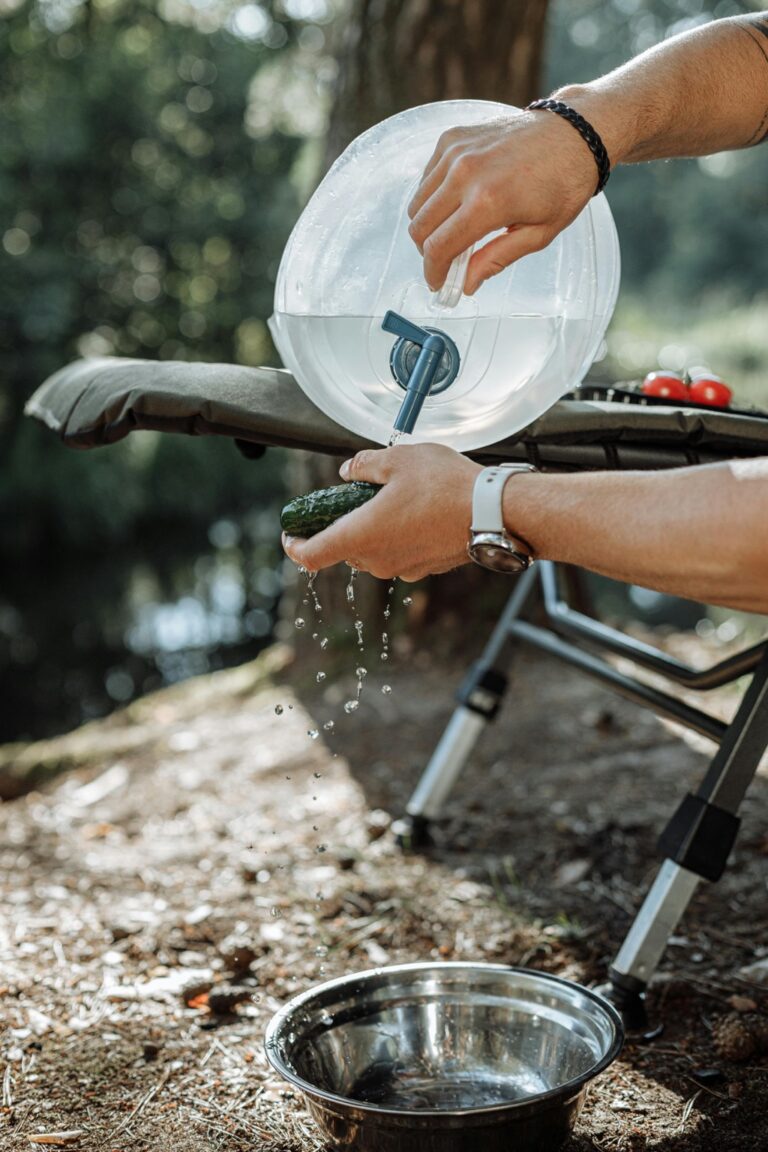
Water Filter – Sawyer Products Squeeze System
Freshwater is heavy, weighing over eight pounds per gallon, meaning you cannot reasonably pack all your drinking water for a multi-day trip. A dependable filtration system allows you to treat river or lake water on demand, keeping your kayak’s payload light and manageable.
The Sawyer Products Squeeze System is the gold standard because of its absolute simplicity, durability, and 0.1-micron hollow fiber membrane that removes 99.99999% of bacteria and protozoa. Unlike complex pump filters with fragile moving parts, the Sawyer Squeeze relies on simple gravity or manual pressure, minimizing the risk of failure in the field.
- Filter Life: Rated up to 100,000 gallons
- Included Components: Collapsible pouches, drinking straw, and cleaning syringe
- Best for: Treating large volumes of water quickly in any backcountry environment
To maintain optimal flow rates, always backflush the filter with the included syringe after filtering silty river water to prevent clogging. This filter is perfect for any paddler looking for a fail-proof, lightweight water solution, though it does require protection from freezing temperatures to prevent internal damage.
Power Bank – Anker PowerCore Solar 20000
Modern navigation, weather tracking, and emergency communication rely on smartphones and GPS devices, which drain battery life rapidly in cold, wet environments. A reliable power bank keeps your vital electronics charged and functional throughout your weekend expedition.
The Anker PowerCore Solar 20000 is built for the rugged conditions of paddle sports, featuring a dustproof and water-resistant exterior with a 20,000mAh capacity that can charge a smartphone multiple times. It also features a built-in solar panel for emergency topping-off and a convenient integrated flashlight for camp setup after dark.
- Capacity: 20,000mAh / 74Wh
- Output Ports: Dual USB-A (supports simultaneous charging)
- Best for: Multi-day device charging and emergency solar backup
Keep in mind that solar charging is slow and should be viewed as an emergency backup rather than your primary recharging method; fully charge the unit at home before launching. This power bank is perfect for tech-reliant adventurers who need rugged, weather-resistant power, but minimalists who leave their phones off may find it unnecessarily heavy.
Waterproof Headlamp – Black Diamond Storm 500-R
Setting up camp after dark, navigating a low-light launch, or searching through dark kayak hatches requires hands-free illumination. Because kayak camping happens in damp, wet environments, a standard headlamp can quickly short-circuit from splashes or heavy rain.
The Black Diamond Storm 500-R is the ultimate water-recreation headlamp, boasting an IP67 waterproof rating that allows it to survive submersion in up to one meter of water for 30 minutes. Its 500-lumen output provides a powerful beam for distance spotting, while the rechargeable battery eliminates the need to carry spare alkaline cells.
- Max Output: 500 lumens
- Waterproof Rating: IP67 (dustproof and waterproof)
- Best for: Camp setup, night paddling, and emergency signaling
Take time to learn the tap-style user interface before your trip, as switching between the red, green, blue, and white light modes can feel unintuitive with cold hands. This headlamp is perfect for serious water sports enthusiasts who refuse to let wet weather stop them, while casual campers who only need light inside their tent may find its advanced features overkill.
Camp Chair – Helinox Chair One Backpacking Chair
After paddling hard for several hours, sitting on damp logs or hard rocks can lead to muscle fatigue and lower back pain. Having a dedicated, comfortable seat off the ground elevates camp comfort and allows your body to recover properly for the next day’s paddle.
The Helinox Chair One Backpacking Chair is the original and best compact chair, packing down to a size that easily slides into a kayak hatch. Its 600-weave polyester seat and lightweight aluminum frame support up to 320 pounds, offering exceptional durability and stability on uneven terrain.
- Weight: 2 lbs. 2 oz.
- Weight Capacity: 320 lbs.
- Best for: Relaxing on rocky, sandy, or uneven shorelines
When using this chair on soft sand or mud, the narrow legs can sink; pairing it with a groundsheet or tennis balls on the feet will prevent this issue. It is a fantastic luxury item for paddlers prioritizing comfort, but ultra-minimalist packers may prefer to save the hatch space and sit on their gear bags.
Bilge Pump – Seattle Sports Sea-Lect Hand Pump
Water invariably finds its way into your cockpit from paddle drip, waves, or an unexpected roll, compromising your kayak’s stability and comfort. A bilge pump is an essential safety tool that allows you to evacuate water rapidly without exiting your boat.
The Seattle Sports Sea-Lect Hand Pump features a high-visibility neon foam sleeve that provides flotation, ensuring you will not lose it if it slips into the water. Its impact-resistant plastic body and ergonomic handle allow for fast, high-volume pumping with minimal physical strain.
- Length: 21 inches
- Flotation: High-density foam collar
- Best for: Expelling water from open or closed-cockpit kayaks
Periodically flush the pump with clean freshwater to remove sand and salt crystals, which can score the internal seals and reduce pumping efficiency over time. This is a non-negotiable safety item for any sit-in kayaker, though sit-on-top paddlers with self-scupper holes will have less need for it.
Soft Cooler – YETI Hopper Flip 12 Portable Cooler
A soft cooler allows you to bring fresh food, cold beverages, or vacuum-sealed meats for your first night on the water, elevating the entire camp dining experience. Unlike hard coolers, which are bulky and rigid, a soft-sided cooler can squeeze into awkward spaces or sit securely on a kayak deck.
The YETI Hopper Flip 12 Portable Cooler is ideal because of its HydroLok Zipper, which is completely leakproof and prevents melted ice from spilling inside your hatch or cockpit. Its ColdCell Insulation keeps ice cold for days, while the tough DryHide Shell resists punctures, UV rays, and mildew.
- Capacity: 12 cans (plus ice)
- Material: High-density fabric with TPU coating
- Best for: Preserving fresh food and cold drinks on weekend trips
To maximize cooling performance, pre-chill the cooler with sacrificial ice the night before your trip, and apply zipper lubricant regularly to keep the watertight zipper operating smoothly. This premium cooler is perfect for food-focused weekend paddlers, though it is too bulky for tight-fitting sea kayak hatches and is best suited for sit-on-top or recreational kayaks with open wells.
How to Pack and Distribute Gear Weight in a Kayak
Properly loading a kayak is about more than just fitting everything inside; it directly impacts how your boat tracks, turns, and handles rough water. An improperly balanced kayak will “plow” through the water if too heavy in the bow, or “wag” its tail if too heavy in the stern, making paddling exhausting.
As a general rule, place your heaviest items—such as water, canned food, and the camp stove—close to the center of the kayak, near the bulkhead just behind or in front of your seat. This keeps the center of gravity low and centered, preserving the boat’s natural pivot point. Light, bulky items like sleeping bags, tents, and spare clothing should be pushed far into the bow and stern extremities.
Keep your gear balanced evenly from side to side to prevent the kayak from listing, which causes uneven tracking and muscle strain. Always secure loose deck items with bungee cords, ensuring that safety gear like your bilge pump and spare paddle are easily reachable from the cockpit. A well-packed kayak should sit level in the water, maintaining its designed waterline and handling characteristics even under a full load.
Conclusion
Packing for a weekend kayak camping trip requires a thoughtful blend of backcountry efficiency and marine safety. By investing in gear that balances low weight with high water resistance, you protect both your comfort and your safety on the water. With your kayak properly balanced and your gear secure, you are ready to launch into a flawless weekend of wilderness paddling.