8 Essential Gear Items for a Lake Raft Up
Planning a lake raft up? Discover 8 essential gear items you need for tying multiple boats together securely. Read our expert guide and prep for your next trip.
Picture a perfect summer Saturday afternoon, drifting on a calm lake with your favorite people as a line of boats merges into a floating party island. While a successful raft-up looks effortless, keeping multiple vessels safely tied together requires the right preparation and specialized equipment. Having the correct gear on hand ensures a fun, damage-free afternoon rather than an expensive call to your marine insurance provider.
Disclosure: As an Amazon Associate, this site earns from qualifying purchases. Thank you!
Crucial Safety Rules Before You Tie Boats Together
Safety must be the absolute priority before any ropes are thrown or hulls touch. Never keep boat engines running while people are actively tying vessels together or swimming near the sterns, as carbon monoxide buildup and spinning props pose lethal threats. Establish a clear “no-swim zone” around the outboards and sterns, keeping all swimming activity confined to designated safe areas away from the tie-up points.
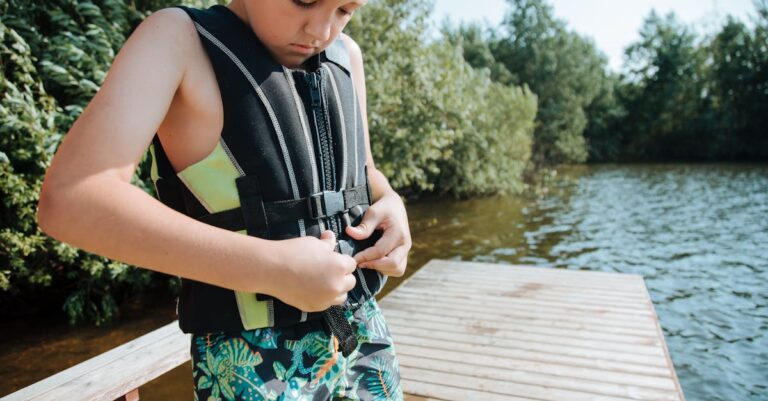
Additionally, always designate a lead boat—typically the largest and heaviest vessel with the deepest draft—to act as the primary anchor point for the entire group. Every captain must remain sober enough to monitor changing weather conditions and execute a quick exit strategy if the wind shifts or waves pick up. Keep life jackets easily accessible, and ensure that at least one person on each boat knows how to quickly cut or release the lines in an emergency.
How to Choose the Perfect Spot for a Lake Raft Up
Location choice dictates the entire success of the raft-up. Look for a protected cove or bay that blocks prevailing winds and minimizes the impact of wake from passing vessels. Avoid tight navigation channels, busy boat launch areas, or blind spots behind points of land where oncoming traffic cannot see your floating assembly.
Consider the bottom composition of the lake bed to ensure your anchors can bite and hold securely. A sandy or mud bottom is ideal, while rocky bottoms should be avoided as they can prevent anchors from setting properly. Always check depth charts to ensure there is plenty of clearance for all drafts represented in the raft-up, keeping in mind that water levels can fluctuate throughout the season.
Boat Fender – Taylor Made Super Gard Inflatable Fender
When multiple boats swing together on a lake, waves and wakes will inevitably cause them to bump into one another. Without proper cushioning, gelcoat will chip, rub rails will crush, and fiberglass will crack. Boat fenders act as the crucial buffer between hulls, absorbing the kinetic energy of shifting waters and preventing expensive cosmetic damage.
The Taylor Made Super Gard Inflatable Fender is the premier choice for this task due to its one-piece marine-grade vinyl construction and molded-in ribs that prevent rolling. Its double-molded ends offer superior strength under intense pressure when boats squeeze against each other.
- Available sizes: 5.5″ x 20″, 6.5″ x 22″, 8.5″ x 26″
- Material: Heavy-duty marine-grade vinyl
- Valve: Inflation valve to adjust pressure
Before buying, match the fender size to the largest boat in the tie-up to ensure adequate protection. Keep in mind that these require inflation and periodic pressure checks, as cold water can cause them to soften. This fender is ideal for standard runabouts, pontoon sides, and mid-sized cruisers, but it is not designed for massive commercial-grade hulls.
Bungee Dock Line – Airhead Bungee Dockline
Traditional rigid ropes transfer every wake-induced tug directly to your boat’s cleats, which can lead to structural damage or sudden, jerky movements. Bungee dock lines solve this by acting as shock absorbers between adjacent boats in the raft-up. They allow the boats to move naturally with the water’s surface while keeping them snug enough to prevent gaping spaces.
The Airhead Bungee Dockline stands out because of its high-quality internal bungee cord wrapped in a durable, UV-resistant hollow-braid rope. The built-in foam floats prevent the line from sinking if dropped, and sliding adjustments at each end make looping over cleats fast and painless.
- Available lengths: 4 feet (stretches to 5.5 feet) and 6 feet (stretches to 9 feet)
- Tensile strength: Up to 4,000 lbs
- Color options: Multiple high-visibility patterns
These lines are best used for secondary stabilization between adjacent boats, not as the primary anchor lines holding the entire raft-up together. Because they stretch, relying on them solely in high winds can cause boats to drift too far apart. This product is perfect for recreational boaters looking for a quick, secure tie-off, but is not suitable for heavy cruisers over 4,000 pounds in rough waters.
Dock Line – SeaSense Double Braided Nylon Dockline
While bungee lines handle the flex, a secure raft-up requires static, high-strength lines to serve as the main structural connection. These lines lock the bow and stern cleats of neighboring boats to prevent them from pivoting or drifting into one another’s paths. A high-quality double-braided nylon line provides the necessary strength, stretch resistance, and soft hand-feel for quick knotting.
The SeaSense Double Braided Nylon Dockline is highly reliable for this application, offering a professionally spliced 12-inch eye on one end for easy cleat hitching. The double-braid nylon construction resists rot, mildew, and UV damage, ensuring it remains soft and pliable even after seasons of exposure to sun and lake water.
- Available diameters: 3/8″ (boats up to 20′), 1/2″ (boats up to 25′), 5/8″ (boats up to 35′)
- Lengths: 15 feet, 20 feet, 25 feet
- Material: 100% premium double-braided nylon
When using these lines, avoid letting them drag in the water where they can wrap around props. Always match the diameter of the line to the heaviest boat in the pairing to prevent overloading. This line is excellent for anyone needing dependable, static tie-offs, but it requires a basic understanding of cleat hitches to be used safely.
Boat Anchor – Fortress Marine Anchors Guardian G-11
A raft-up is only as secure as the anchor holding the primary boat in place. If the main anchor slips, the entire chain of boats will drift toward hazards, shallow water, or other vessels. A premium utility anchor is required to bite deep into the lake bed and withstand the multi-boat drag load.
The Fortress Marine Anchors Guardian G-11 is engineered from a high-tensile, corrosion-resistant aluminum-magnesium alloy, making it incredibly lightweight yet capable of matching the holding power of much heavier steel anchors. It disassembles quickly for storage and features a sharp fluke design that penetrates lake sand and mud instantly.
- Weight: 6.2 lbs (replaces 10-13 lbs steel anchors)
- Boat size range: 28 to 32 feet
- Material: Anodized aluminum-magnesium alloy
To maximize its holding power, this anchor must be paired with at least six to ten feet of anchor chain before transitioning to the rope rode. Without the weight of a chain to keep the shank parallel to the lake bottom, the anchor may pull free under the load of multiple boats. It is perfect for boaters who want elite holding power without the strain of hauling heavy steel, but it is not ideal for rocky or heavily weeded lake bottoms.
Fender Adjuster – Taylor Made Pontoon Fender Adjuster
In a raft-up, boats of different heights and gunwale shapes sit side-by-side. Fenders must be positioned at varying heights to protect against rub rails overlapping or hulls making contact. Constantly untying and retying fender lines to adjust these heights is tedious and slow, especially when boats are actively drifting together.
The Taylor Made Pontoon Fender Adjuster solves this by snapping securely onto standard 1.25-inch square pontoon rails, allowing quick height changes with a simple slide-and-lock mechanism. This eliminates the need for complex knots and lets captains adapt to shifting wave heights or different boat styles instantly.
- Compatibility: Fits 1.25″ square pontoon rails
- Rope sizes: Accepts lines up to 3/8″ diameter
- Material: Heavy-duty molded plastic
Note that this specific model is designed strictly for square rails found on pontoon boats; it will not grip round bow rails or flat cleats. Ensure the fender line used is the correct diameter to prevent slippage under pressure. This is an indispensable tool for pontoon owners participating in raft-ups, but runabout or cruiser owners should seek out alternative round-rail adjusters.
Boat Hook – Star brite Telescoping Boat Hook
Pulling two multi-ton vessels together by hand invites pinched fingers, strained backs, or falls overboard. A boat hook acts as a safe extension of your arm, allowing you to grab lines, catch cleats, or gently nudge hulls away from each other during the initial tie-up. It is a critical safety tool that keeps crew members safely behind the gunwales during close-quarters maneuvers.
The Star brite Telescoping Boat Hook features lightweight, high-grade aircraft aluminum that resists corrosion even in harsh environments. Its locking mechanism holds firm under tension, and the glass-reinforced nylon hook head is designed to grab lines or push off without scratching fiberglass finishes.
- Length options: 3 to 8 feet (telescoping) and 5 to 12 feet
- Material: High-tensile aluminum shaft with rubber grip
- Floatability: Designed to float if dropped overboard
While highly durable, telescoping poles can slip if the twist-lock mechanism is not tightened properly before use. Rinse the mechanism with fresh water after use to prevent sand or grit from jamming the internal collars. This tool is a must-have for any boater managing tight docking or rafting situations, though it is not designed to support the full weight of a moving boat under high speed.
Safety Throw Bag – Hyperlite Rescue Throw Bag
Raft-ups naturally involve social gatherings, swimming, and moving water, which dramatically increases the risk of someone getting swept away by currents or wind. If a swimmer struggles or a loose boat drifts out of reach, scrambling for a loose dock line is too slow. A safety throw bag provides immediate, long-distance rescue capability that can be deployed in seconds.
The Hyperlite Rescue Throw Bag is highly visible with its bright orange, heavy-duty nylon bag and floats effortlessly on the water’s surface. It contains 50 feet of high-tensile polyolefin line that feeds out smoothly without tangling, allowing for accurate throws even in breezy conditions.
- Rope length: 50 feet
- Line strength: Rated for emergency water rescue loads
- Material: Floating polyolefin rope inside a self-draining bag
Using a throw bag requires a brief learning curve; practicing the underhand toss technique before a trip is crucial for accuracy. Always repack the bag carefully by stuffing the rope back in yard-by-yard rather than coiling it, which prevents knots on the next throw. This safety gear is essential for any responsible captain hosting a raft-up, but it is not intended to be used as a standard mooring or towing line.
Sand Anchor – SandShark Super Sport Sand Anchor
While the main bow anchor keeps the raft-up from drifting out to sea, the sterns of the tied boats will swing wildly in the wind if left unsecured. A sand anchor is designed to pin the shallow-water end of the raft-up to a nearby sandbar, beach, or shallow shoreline. This prevents the entire line of boats from pivoting into obstacles or tangled lines.
The SandShark Super Sport Sand Anchor features a high-quality anodized aluminum auger that drills easily into sand or shallow lake beds. Once driven down, its broad screw-threads provide exceptional holding power against the lateral forces of wind and wake, keeping the sterns locked in place.
- Adjustable height: Extends from 30 inches to 48 inches
- Material: Engineering-grade anodized aluminum
- Includes: Padded storage bag and removable turning handle
This anchor only functions effectively in soft bottoms like sand, silt, or loose mud; it will not penetrate hard clay or rock-strewn lake beds. Be sure to set it at an angle away from the boat to maximize its leverage. This tool is perfect for shallow-water sandbar rafts, but is completely unsuitable for deep-water anchoring.
Step-by-Step Guide to Safely Tying Boats Together
The key to a seamless raft-up is a methodical, step-by-step approach that removes guesswork and reduces stress on the water. First, the designated lead boat—the largest and heaviest in the group—must drop its primary bow anchor and secure its position, allowing the wind or current to naturally align the boat. Only after the lead boat is fully set should the next vessel begin its approach, moving at dead-idle speed.
Before the second boat approaches, both captains must hang their fenders at the correct heights, matching the rub rails and gunwales of both vessels to prevent metal-on-gelcoat contact. The approaching boat should come in parallel, slightly downwind or downcurrent, allowing the natural drift to close the final gap. Use a boat hook to catch the lead boat’s cleats, then quickly secure breast lines (perpendicular lines) and spring lines (diagonal lines) to prevent forward and backward movement.
Repeat this process for each subsequent boat, adding them one at a time to alternating sides of the lead boat to balance the weight and wind load. Secure the outer boats with a secondary stern or sand anchor to prevent the entire line from swinging out of control. Once all lines are tight and cleated, shut down all engines, establish the safe swim zones, and double-check that no lines are dangling near props.
How to Safely Untie and Disband the Raft Up
Disbanding a raft-up requires just as much care as assembling it, as wind and currents will immediately try to push unanchored boats into each other. Always disband in the reverse order of assembly, starting with the outermost boats on each side. Before anyone starts an engine, ensure all swimmers are out of the water and safely aboard their respective vessels.
The captain of the departing boat should start their engine only after verifying that all lines are clear of the propeller area. Untie the spring lines first, leaving a single breast line to keep the boats positioned while preparing to drift apart. On a clear signal from both captains, release the final line, use a boat hook or hands to gently push the hulls apart, and back away slowly in reverse to clear the remaining boats.
The lead boat, which holds the primary anchor, must remain stationary and anchored until all other vessels have successfully cleared the area. Once the field is clear, the lead captain can retrieve the main anchor and proceed safely. Clear, calm communication between captains during this process prevents hasty maneuvers that lead to collisions or tangled lines.
Conclusion
Gathering on the water with friends is one of the greatest joys of recreational boating, and a well-executed raft-up makes those moments unforgettable. By equipping your vessel with high-quality fenders, shock-absorbing lines, and robust anchoring systems, you protect both your investment and your crew. Prepare your gear, choose your spot wisely, and enjoy a safe, relaxing day on the lake.