Windy Beach Day Packing List: 8 Essentials to Bring
Tame the breeze with these 8 essential shelter and comfort picks for a windy beach day. Read our guide to stay relaxed and enjoy your seaside trip today.
A stiff ocean breeze can turn an idyllic beach day into a frustrating battle against flying umbrellas and stinging sand. Standard fair-weather gear quickly fails when coastal winds kick up past fifteen knots. Equipping yourself with specialized, wind-resilient gear ensures your day by the surf remains relaxing rather than exhausting.
Disclosure: As an Amazon Associate, this site earns from qualifying purchases. Thank you!
Why Windy Days Demand Specialized Beach Gear
Standard beach gear is designed for gentle breezes, not the sustained, shifting winds of an active shoreline. Cheap umbrellas and flimsy pop-up tents act like kites, transforming into dangerous projectiles the moment a gust catches them. When wind speeds climb, the structural integrity of your shelter and the anchoring capacity of your gear make the difference between a secure camp and a ruined afternoon.
High winds also introduce secondary challenges, most notably airborne sand and rapid heat loss from wind chill. Without proper barriers, fine sand gets into eyes, sunscreen, coolers, and gear, while a constant breeze makes even a warm day feel chilly. Investing in wind-specific gear isn’t just about safety; it is about creating a livable microclimate on the shoreline where you can actually relax.
Beach Canopy – Shibumi Shade Wind-Powered Tent
Traditional canopies fight the wind, requiring heavy frames and massive anchors to stay put. A wind-powered canopy takes the opposite approach, utilizing the natural coastal breeze to lift and float the shade canopy above your setup.
The Shibumi Shade is designed specifically for breezy shorelines because it requires wind to work. Built with a single, high-strength curved aluminum pole and a lightweight, UPF 50+ canopy fabric, it flows with the wind instead of resisting it. It weighs a mere four pounds, sets up in under three minutes, and won’t break or blow away even in sustained winds of over twenty miles per hour.
Because this shade relies entirely on wind to stay aloft, it is useless on completely calm days. It requires a minimum wind speed of about three to five miles per hour to fly properly, and you must orient it correctly to the wind direction during setup.
- Weight: 4 lbs
- Shade Area: Approx. 150 sq. ft.
- Wind Requirement: 3 to 20+ mph
- Material: UPF 50+ polyester blend
This is perfect for regular ocean beachgoers who frequently face steady coastal breezes. It is not suitable for inland lake beaches, deep valleys, or calm, zero-wind summer days where a traditional framed tent is required.
Beach Umbrella – BeachBUB All-In-One System
If you prefer the classic aesthetic and targeted shade of an umbrella, you need a system that absolutely will not lift out of the sand. A flying umbrella is one of the most common hazards on a public beach, capable of causing serious injury.
The BeachBUB All-In-One System solves this safety hazard with an ingenious, sand-filled base design. Instead of relying solely on a screw-tip pole, this system uses an ultra-durable canvas base that you fill with up to 120 pounds of local sand, locking the umbrella firmly to the beach. The umbrella itself features commercial-grade ribs and a heavy-duty canopy rated to withstand winds up to 35 mph.
While highly effective, filling the base with sand requires a few minutes of manual shoveling at the start of your day, and emptying it takes a bit of effort before packing up. The overall package is also heavier to transport than cheap, flimsy alternatives.
- Base Capacity: 120 lbs of sand
- Wind Rating: Up to 35 mph
- Canopy Size: 7.5-foot canopy
- Frame Material: Fiberglass ribs and thick-walled aluminum pole
This system is ideal for families and solo beachgoers who want the reliable, classic shade of an umbrella without the constant anxiety of it taking flight. It is not for minimalist packers who refuse to carry a slightly heavier bag or spend five minutes prepping a base.
Sand Anchors – Orange Screw Ultimate Ground Anchor
Even the best wind-resistant gear is only as secure as its connection to the earth. Standard straight tent stakes pull straight out of loose, dry sand under the slightest load, leaving your gear vulnerable to sudden gusts.
The Orange Screw Ultimate Ground Anchor uses a heavy-duty, helical screw design made from recycled materials that bites deep into loose soil and sand. The wide, spiral flights distribute the pull force across a massive surface area, offering immense holding power that straight pegs cannot match. They are virtually indestructible, highly visible so you won’t step on them, and come with a clear drive tool that doubles as a storage sleeve.
Driving these screws into packed, rocky sand requires some arm strength, and they must be screwed in completely flush to prevent a tripping hazard. In incredibly soft, dry surface sand, you must clear the top layer away to reach the damp, compact sand beneath for maximum hold.
- Material: Recycled polycarbonate
- Length: 9.5 inches (Large size)
- Weight: 3 ounces per screw
- Holding Power: Rated up to several hundred pounds in optimal conditions
This is a must-have accessory for anyone anchoring pop-up tents, windbreaks, dog leashes, or tarps in soft sand or loose soil. It is unnecessary if your shelters already utilize integrated sandbags or if you only visit hard-packed, gravel-heavy shorelines.
How to Properly Anchor Your Gear in Soft Sand
Securing gear in soft sand requires a different approach than anchoring in backyard dirt. Sand is highly fluid; dry surface sand has almost zero holding power, meaning you must dig down to reach the damp, packed layer beneath. When inserting a sand anchor or umbrella pole, always clear away the top two to three inches of dry drift before driving your anchor at a 45-degree angle away from the direction of the wind.
For sandbags and canopy anchors, the trick is to overfill them. Do not just scoop dry sand from the surface; damp, wet sand from closer to the waterline is significantly heavier and packs tighter. Once filled, bury the sandbags in shallow pits and pack dry sand over them to create a deadman anchor, which multiplies the resistance against strong, steady gusts.
Beach Tent – Sun Ninja 4-Pole Pop Up Shelter
When the wind is swirling from multiple directions, a traditional open canopy can trap air like a parachute. A flexible, tension-based beach tent uses aerodynamic angles to let the wind slide over and around the structure.
The Sun Ninja 4-Pole Pop Up Shelter uses highly elastic spandex-blend fabric and four stable aluminum poles to create a customizable, wind-shedding oasis. Instead of fighting the wind with rigid frames, the elastic canopy stretches and shifts dynamically to relieve wind pressure. It anchors via four large corner pockets that you fill with sand, which aligns perfectly with the natural weight-anchoring principles of sandy beaches.
Setting this up alone in a gale requires a specific sequence—pinning the windward sandbags first before raising the poles—otherwise, the fabric will whip around uncontrollably during setup. You will also need to adjust the pole placement occasionally if the wind shifts direction significantly.
- Fabric: UPF 50+ Spandex/Lycra blend
- Poles: 4 folding aluminum poles
- Sizes: Available in 4-person, 8-person, or children’s sizes
- Included: Sand shovel and pegs for alternative turf use
This is perfect for larger groups, families with kids, and those who want adaptable, low-profile shade that handles shifting wind directions with ease. It is not ideal for rocky shores or concrete-like hard dirt where you cannot dig or easily fill sand anchor bags.
Beach Chair – Tommy Bahama 5-Position Classic
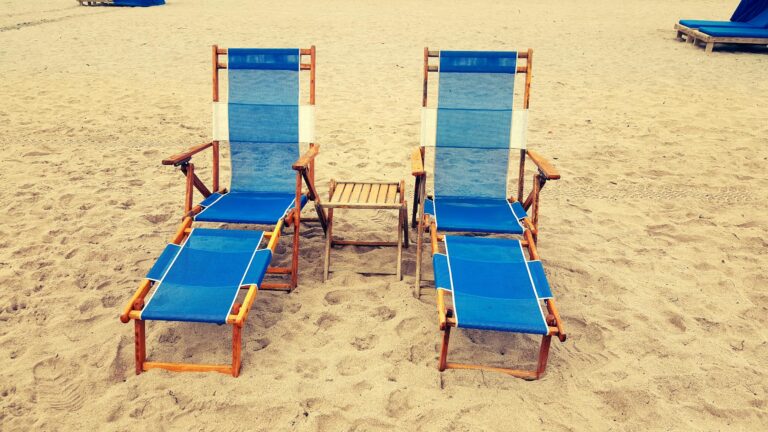
A windy day means blowing sand is constantly moving along the ground level. A low-profile beach chair keeps you comfortably elevated above the worst of the flying sand while remaining stable enough not to blow over when you stand up.
The Tommy Bahama 5-Position Classic is a coastal staple for good reason, balancing weight, durability, and wind-day utility. Its lightweight, rust-proof aluminum frame sits low to the ground to keep your center of gravity low, preventing the chair from flipping in sudden gusts. It features a lay-flat option, integrated backpack straps for easy transport, and a secure towel bar on the back to keep your towels from blowing away.
Because it sits low to the sand (about nine inches off the ground), getting in and out of the chair can be challenging for those with limited mobility or knee issues. Additionally, the fabric can trap fine sand in its seams if not shaken out thoroughly.
- Frame Material: Rust-proof aluminum
- Recline Positions: 5 positions, including lay-flat
- Weight Capacity: 250 lbs
- Seat Height: 9 inches off the ground
This is the gold standard for active beachgoers who want a reliable, feature-rich chair that won’t rust from salt air or tip over in a breeze. It is not suitable for those who require a taller, dining-height chair for easy entry and exit.
Beach Windbreak – Windscreen4you Privacy Wall
No matter how good your umbrella or tent is, a blowing wind will carry stinging sand horizontally across your camp. A dedicated fabric windbreak acts as a barrier, deflecting the wind upward and creating a calm, sand-free pocket of air for your chairs and blankets.
The Windscreen4you Privacy Wall provides heavy-duty defense against howling coastal winds with its tightly woven, wind-blocking fabric. Supported by sturdy wooden or metal poles that drive deep into the sand, this windbreak stands tall against sustained gusts without collapsing. It creates an instant private cove, blocking both the eyes of neighbors and the relentless chill of a steady sea breeze.
Installing a long windbreak requires a mallet or a heavy drift tool to drive the poles deep enough to resist the leverage of a strong wind. You must also angle the wall slightly toward the prevailing wind to prevent it from acting like a sail and collapsing.
- Fabric Material: Heavy-duty outdoor polyester
- Poles: Solid wood or reinforced metal (depending on configuration)
- Dimensions: Typically 20 feet long by 3 to 4 feet high
- UV Resistance: High-grade UV protection to prevent fabric degradation
This is an essential pick for cold-water beaches, autumn beach days, or highly windy shorelines where sand-stinging is a constant issue. It is overkill for hot, muggy days where you actually want the sea breeze to cool you down.
Beach Blanket – CGear Sand-Free Life Blanket
Traditional towels and blankets trap sand, turning your seating area into a gritty, abrasive mess on windy days. You need a ground cover that lets sand pass through rather than pooling on top where you sit.
The CGear Sand-Free Life Blanket utilizes patented dual-layer mesh technology originally developed for military helicopter landing pads. When sand lands on the blanket, a quick brush forces it down through the weave, while the patented construction prevents sand from coming back up from underneath. The heavy-duty weave also gives the blanket enough weight and structure to resist flapping and folding over when the wind kicks up.
The weave is somewhat coarse, meaning it is not as soft or plush as a traditional fleece or cotton towel; using a light sarong or towel on top of it solves this comfort issue. It also does not absorb water, so it cannot double as a drying towel.
- Technology: Patented dual-layer sand-free mesh
- Corners: Reinforced D-rings for stakes
- Material: High-density polyethylene mesh
- Sizes: Multiple sizes from personal to extra-large family sizes
This is a game-changer for families, campers, and gear-heavy beachgoers who hate packing half the beach home with them. It is not for those looking for a plush, cozy, or water-absorbent blanket to dry off with after a swim.
Marine Cooler – YETI Roadie 24 Hard Cooler
Windy days accelerate evaporation and heat transfer, meaning cheap zippered bags or thin plastic coolers will lose ice rapidly. Furthermore, blowing sand easily penetrates zipper teeth and cheap lid seals, ruining your food and drinks.
The YETI Roadie 24 Hard Cooler is built like a tank and features an airtight, interlocking lid gasket that completely seals out blowing sand and hot air. Its rotomolded construction provides incredible thermal insulation that keeps ice cold for days, even when exposed to direct sun and warm coastal winds. It is tall enough to hold wine bottles upright, compact enough to fit behind a car seat, and heavy enough to act as a solid anchor point or extra seat on the sand.
It lacks a traditional drain plug, meaning you have to tip it over to empty melted ice, and it is significantly heavier than soft-sided alternatives when fully loaded. It is also a premium investment compared to standard department-store coolers.
- Construction: Rotomolded polyethylene
- Capacity: Holds up to 18 cans (with a 2:1 ice-to-can ratio)
- Weight: 12.8 lbs (empty)
- Lid System: Hefty Latches designed for easy, one-handed opening
This is the ultimate cooler for day-trippers, boaters, and beach campers who demand maximum ice retention and absolute protection from sand invasion. It is not for budget-conscious buyers or those who need a lightweight, collapsible cooler for long hikes.
Critical Wind Safety Tips for Coastal Waters
Strong offshore winds—winds blowing from the land out toward the open water—are incredibly deceptive. While the shoreline may look calm and inviting, these winds can rapidly push paddleboards, kayaks, and inflatable rafts far out to sea before you realize what is happening. Always check a reliable marine forecast before heading out, paying close attention to wind direction, tide cycles, and local rip current warnings.
If you find yourself caught in an offshore wind while paddling or swimming, never try to fight directly back against the wind if you are tiring. Aim diagonally toward the shoreline, or flag down assistance immediately. Wearing a properly fitted Coast Guard-approved life jacket and keeping a whistle or signaling device attached to your person are non-negotiable safety rules for any windy coastal outing.
Managing and Cleaning Sandy Gear After the Gale
A windy day guarantees that salt and sand will find their way into every hinge, zipper, and fabric pore of your gear. Leaving this debris on your equipment leads to rapid corrosion, seized moving parts, and degraded fabrics. The golden rule of beach gear maintenance is a thorough freshwater rinse as soon as you return home—never store gear wet or salty.
Shake out all tents, blankets, and chairs while they are still dry at the beach to remove the bulk of the sand. Once home, spray everything down with a garden hose, paying special attention to aluminum joints, umbrella tilt mechanisms, and zippers. Let all items dry completely in a shaded, well-ventilated area before packing them into their storage bags to prevent mold and mildew growth.
Conclusion
Equipping yourself with the right wind-resistant gear transforms a potentially miserable, sand-blasted outing into a secure, comfortable day of coastal relaxation. By selecting gear designed to work with the wind rather than against it, you can focus on the surf instead of chasing runaway umbrellas. Invest in high-quality anchors, tension-based shelters, and sand-free gear to ensure your beach days are defined by comfort, not chaos.