Cloudy Pool Water Fixes: 8 Must-Have Tools and Products
Struggling with murky water? Discover 8 essential tools for fixing cloudy pool water quickly and restore your pool’s crystal-clear shine today. Read now!
Stepping out onto the deck only to find the pool looking like a bowl of skim milk instead of a sparkling blue oasis is one of the most frustrating moments in backyard pool ownership. This cloudiness is more than just an aesthetic eyesore; it is a clear warning sign that pool water chemistry is unbalanced, filtration is failing, or environmental debris has taken over. Getting the water back to crystal-clear status does not require a costly professional service, but it does require the right sequence of intervention and a specific set of high-performing tools.
Disclosure: As an Amazon Associate, this site earns from qualifying purchases. Thank you!
Why Pool Water Turns Cloudy and How to Diagnose It
Cloudy pool water is almost always a symptom of three main culprits: poor filtration, chemical imbalances, or an onset of early-stage algae. When water sits stagnant or the filter runs too few hours a day, microscopic debris accumulates instead of getting trapped in the filter media. Low sanitizer levels allow bacteria and organic matter to multiply, while high pH or alkalinity causes dissolved calcium to fall out of suspension, leaving the water looking milky.
Diagnosing the exact cause starts with a systematic check of the pool equipment and chemical levels. Inspect the pressure gauge to see if the filter is clogged and needs cleaning, and ensure the pump is circulating water for at least 8 to 12 hours a day. Next, run a comprehensive chemical analysis to pinpoint whether the issue is low chlorine, high calcium hardness, or an off-kilter pH balance.
Once the root cause is identified, treating the issue becomes a targeted project rather than a guessing game of dumping expensive chemicals into the deep end. Balancing the water first ensures that any subsequent clarifiers or shocks can work at maximum strength. Without this initial diagnostic step, pool owners risk wasting time and money on treatments that merely mask the underlying problem.
Water Test Kit – Taylor Technologies K-2006
A reliable water test kit is the bedrock of all pool maintenance because adjusting water chemistry without accurate measurements is impossible. While cheap test strips are fine for a quick, daily check, they lack the precision needed to diagnose and resolve a severe cloudy water issue. A professional-grade liquid drop test kit provides the exact chemical parts-per-million (ppm) readings required to make calculated adjustments.
The Taylor Technologies K-2006 utilizes FAS-DPD titration, which is the gold standard for testing free and combined chlorine with pinpoint accuracy. This specific kit measures pH, total alkalinity, calcium hardness, cyanuric acid (stabilizer), and acid/base demand with clear, color-coded endpoints. The heavy-duty plastic storage case keeps reagents organized and protected from moisture, ensuring they remain viable for the entire swim season.
- Tests included: Free and combined chlorine, pH, acid/base demand, total alkalinity, calcium hardness, and cyanuric acid (CYA)
- Test type: FAS-DPD liquid titration with drop-count accuracy
- Ideal for: Daily monitoring, troubleshooting severe cloudiness, and establishing exact chemical baselines
Using a liquid titrator does require a brief learning curve, as counting drops and watching for distinct color transitions requires a bit more focus than reading a paper strip. It is vital to keep the testing vials clean and to store the reagents in a cool, dark place, as exposure to extreme heat or sunlight will compromise their shelf life.
This kit is perfect for dedicated pool owners who want absolute control over their water chemistry and are tired of guessing at color shades on cheap strips. It is not ideal for those looking for a five-second, low-effort test, but for clearing up cloudy water, there is simply no substitute for this level of accuracy.
Pool Shock – HTH Super Shock Treatment
When pool water turns cloudy, organic contaminants, sweat, sunscreen, and early-stage algae are often overwhelming the free chlorine levels. Pool shock is a highly concentrated dose of sanitizer designed to rapidly raise free chlorine levels, breaking down these microscopic contaminants through oxidation. Without shocking the pool, standard chlorination methods cannot keep up with a heavy bio-burden.
HTH Super Shock Treatment is a powerful calcium hypochlorite (cal-hypo) formula containing 56.5% available chlorine. This fast-acting, quick-dissolving granular formula destroys bacteria and algae without adding cyanuric acid (CYA) to the water, which prevents “chlorine lock” down the road. Its high concentration means a single one-pound bag treats up to 13,500 gallons of pool water, making it a highly cost-effective option for rapid clearing.
- Available chlorine: 56.5% Calcium Hypochlorite (cal-hypo)
- Coverage capacity: One pound treats up to 13,500 gallons
- Compatible uses: Algae remediation, high bather loads, and spring pool openings
Because this is a cal-hypo shock, it does introduce a small amount of calcium to the pool, so owners with naturally high calcium hardness levels should monitor their levels closely. It must be pre-dissolved in a bucket of water before application in vinyl-liner pools to prevent bleaching or damaging the liner material. Always broadcast shock in the evening, as sunlight quickly degrades free chlorine before it can complete its sanitizing work.
This shock is the ultimate choice for pool owners dealing with algae blooms or heavy organic bather loads who need immediate sanitizing power. It is not suitable for those who already have dangerously high calcium levels, who should instead opt for a sodium di-chlor or liquid chlorine alternative.
Pool Clarifier – Clorox Pool&Spa Clarifier
When pool water is cloudy but chemical levels are balanced, the issue is often tiny, suspended particles that are too small for a filter to capture. A pool clarifier acts as a coagulant, binding these microscopic particles together into larger clumps. Once these clumps reach a larger size, the pool’s filtration system can easily trap them during its normal run cycle.
Clorox Pool&Spa Clarifier features a highly concentrated polymer formula that works quickly without upsetting the water’s delicate chemical balance. It is specifically designed to be compatible with all filter types—including sand, cartridge, and DE (diatomaceous earth) systems. This clear-water formula does not require any pre-mixing, allowing users to pour it directly into the skimmer or around the pool edge for fast action.
- Filter compatibility: Sand, cartridge, and DE filter systems
- Application method: Direct pour into the skimmer or around the pool perimeter
- Treatment dosage: 1 fluid ounce treats up to 5,000 gallons of pool water
The key to using this clarifier successfully is patience and continuous filtration, as the pump must run constantly for 24 to 48 hours to clear the clumped particles. Over-applying a clarifier can actually have the opposite effect, acting as a dispersant and making the water cloudier, so following the dosage instructions on the label is critical.
This product is ideal for pool owners facing mild to moderate cloudiness who want a simple, low-effort solution that works alongside their existing filter system. It is not the right choice for extreme cloudiness or heavy algae blooms, which require a stronger settling agent or heavy-duty shock treatment first.
Water Flocculant – BioGuard PowerFloc Liquid
When cloudiness is severe and the water needs to be cleared within 24 hours, a standard clarifier is too slow. A water flocculant, or “floc,” is a heavy-duty chemical that binds suspended particles together extremely fast, causing them to sink to the pool floor. Instead of relying on the filter to catch the debris, floc drops everything to the bottom, leaving a layer of sediment that must be vacuumed directly to waste.
BioGuard PowerFloc Liquid is a professional-grade formula that works exceptionally fast on even the most stubborn, milky water. It features a thick, highly active formula that grabs onto dead algae, dirt, and microscopic debris, pulling them down to the pool floor within hours. This product is formulated to work over a wide pH range, ensuring reliable performance even if the chemical balancing is not quite perfect yet.
- Active formula: Heavy-duty polymeric flocculant
- Settling time: 12 to 24 hours of pump-off time
- Requirements: Must have a multiport valve to vacuum directly to “waste”
Using PowerFloc requires a specific process: the pump must run on “recirculate” (bypassing the filter) for a few hours to distribute the product, then shut off completely for 12 to 24 hours to allow the debris to settle. Because it drops everything to the bottom, the pool setup must allow manual vacuuming directly to “waste” or drain, as sending this heavy sediment through a cartridge filter will instantly clog it.
This tool is perfect for pool owners preparing for an upcoming weekend gathering who need crystal-clear water overnight and have a multiport valve filter system. It is not suitable for pools with cartridge filters that cannot bypass filtration, or for owners who lack the time to manually vacuum the pool floor.
Pool Vacuum – Hayward Navigator Pro Cleaner
Once a flocculant or heavy shock has forced all the suspended cloudiness to the bottom of the pool, a reliable vacuum is essential to remove the settled debris. Leaving this fine layer of silt on the floor will result in the water clouding up again as soon as swimmers jump in. A high-quality vacuum ensures that this fine sediment is completely lifted out of the pool system rather than recirculated.
The Hayward Navigator Pro Cleaner is a suction-side automatic pool vacuum that excels at clearing fine silt, sand, and settled debris from pool floors. It features an exclusive SmartDrive steering system that ensures systematic coverage of the pool floor, preventing it from getting stuck in corners or missed spots. This vacuum connects directly to the skimmer or a dedicated suction line, utilizing the pool’s existing filtration pump for high-suction cleaning power.
- Pool type: Inground concrete, vinyl, or fiberglass surfaces
- Drive system: SmartDrive programmed steering for complete floor coverage
- Connection point: Dedicated suction line or pool skimmer vacuum plate
Because this vacuum relies on the pool pump’s suction, the pump must run at an adequate speed, and the skimmer basket must be kept clear of large leaves to maintain optimal performance. When vacuuming up flocculant or dead algae, users must set the pool’s multiport valve to “waste” to prevent the fine debris from overloading the filter media.
This vacuum is an excellent investment for inground pool owners who want consistent, automated cleaning and need a reliable way to clear settled sediment without manual labor. It is not suitable for above-ground pools with low-horsepower pumps that cannot provide the necessary suction flow rates.
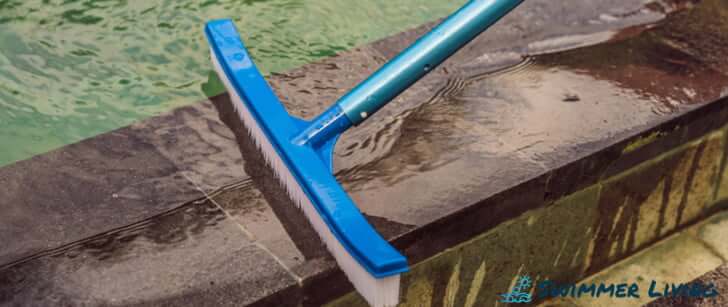
Pool Brush – Lalapool Heavy Duty Wall Brush
Algae and organic biofilms often cling to pool walls and steps, creating a hazy, dull look in the water that chemicals alone cannot easily penetrate. Brushing these surfaces breaks up these microscopic layers, suspending the particles in the water so the sanitizer and filter can destroy and capture them. Without regular, aggressive brushing, cloudy water issues will linger in hard-to-reach corners and stairs.
The Lalapool Heavy Duty Wall Brush is built with a rugged, aluminum-reinforced frame that prevents bending or snapping when applying heavy downward pressure. Its 18-inch width allows users to cover large areas of plaster, vinyl, or concrete quickly, while the curved edges help navigate tight corners and steps without scratching the pool finish. The poly-nylon bristles are stiff enough to scrape away stubborn organic growth but flexible enough to protect delicate pool liners.
- Brush width: 18 inches for maximum surface coverage
- Frame material: Heavy-duty, reinforced aluminum frame and handle
- Bristle type: Stiff poly-nylon bristles safe for vinyl and plaster
When dealing with cloudy water, brushing should be done daily, starting at the shallow end and working systematically toward the deep end drain. Keep in mind that heavy scrubbing with a wide brush is a physical workout, and using a high-quality, telescoping pole is necessary to reach the deepest parts of the pool floor.
This wall brush is an absolute necessity for any pool owner looking to clear up cloudy water quickly and keep algae from taking root in dead spots. It is not designed for scraping off heavy calcium scale deposits, which require a specialized stainless-steel bristle brush.
Phosphate Remover – Natural Chemistry Phosfree
Phosphates are organic compounds that enter pool water through lawn fertilizers, rain, leaves, and bather runoff, serving as the primary food source for algae. When phosphate levels rise, algae can bloom rapidly, turning the water a cloudy, dull green even if you maintain normal chlorine levels. Removing these phosphates starves any remaining algae spores, preventing the cloudiness from returning.
Natural Chemistry Phosfree is a highly effective, natural phosphate remover that lowers phosphate levels to near zero without adding harsh chemicals to the water. It works by binding to dissolved phosphates on a molecular level, turning them into a fine precipitate that the pool filter can easily trap. This formulation is highly concentrated, meaning a small dosage is sufficient to treat large volumes of water without altering pH or alkalinity.
- Target compound: Dissolved orthophosphates from organic debris
- Formula: Natural, non-toxic lanthanum-based liquid
- Target level: Ideal for reducing phosphates below 100 ppb
After adding Phosfree, the pool filter pressure will rise as it traps the bound phosphates, requiring users to monitor the gauge and backwash or clean the filter as needed. For maximum efficiency, ensure the pool water is properly balanced and the free chlorine level is below 5 ppm before applying the treatment.
This product is perfect for pool owners whose water remains persistently hazy despite having balanced chemical levels, especially those located near agricultural areas or heavy foliage. It is not a quick-fix sanitizer and should not be used as a replacement for chlorine or shock treatments during an active algae bloom.
Filter Cleaner – Pleatco FilterWash Tablets
As the filtration system works overtime to clear up cloudy water, the filter media becomes saturated with oils, calcium scale, and organic debris. Simply rinsing a cartridge or backwashing a sand filter with water is often not enough to strip away stubborn, greasy residue. A specialized chemical filter cleaner is required to break down these deposits, restoring the filter’s flow rate and trapping efficiency.
Pleatco FilterWash Tablets are fast-acting, effervescent tablets specifically designed to deep-clean pool cartridges and DE grids. Unlike harsh liquid acid washes that can degrade the polyester fibers of the filter, these tablets utilize a gentle, non-foaming formula that penetrates deep into the pleats. This targeted cleaning action removes body oils, lotions, dirt, and mineral scale, extending the lifespan of expensive cartridge elements.
- Form factor: Fast-dissolving effervescent tablets
- Soak time: 20 to 30 minutes in water
- Compatible media: Polyester cartridge elements and DE grids
To use these tablets, the filter cartridge must be removed from its canister and soaked in a large bucket of water mixed with the dissolved tablet for at least 20 to 30 minutes. Always rinse the cartridge thoroughly with a garden hose after soaking to ensure all loosened debris and chemical residue are completely washed away before re-installation.
This filter cleaner is highly recommended for cartridge filter owners who want an easy, pre-measured cleaning solution that preserves filter life while restoring water flow. It is not designed for direct application into sand filters, which typically require a specialized liquid sand filter backwash cleaner.
The Correct Order of Steps to Clear Cloudy Water
Cleansing cloudy pool water requires a methodical, step-by-step approach; throwing various chemicals into the water all at once will often cause unwanted chemical reactions and worsen the cloudiness. Begin by thoroughly brushing the walls and floor to suspend all organic matter, then run a comprehensive water test to balance the pH and total alkalinity. Balancing these levels first ensures that chlorine and clarifiers will operate at peak chemical efficiency.
Once balanced, administer a heavy dose of pool shock in the evening to eradicate bacteria and algae, keeping the pool pump running continuously overnight. The next morning, assess the pool: if the water is slightly hazy, add a pool clarifier to help the filter catch the dead algae; if the water is still milky-white and the system has a waste line, apply a water flocculant and shut down the pump to let the debris settle.
Finally, vacuum the settled sediment from the floor, running the vacuum to “waste” if a flocculant was used, or through the filter if a clarifier was used. Finish the process by thoroughly cleaning or backwashing the filter to remove all the trapped debris, then run the pump for another 24 hours to polish the water.
How to Maintain Filter Efficiency Year-Round
A pool filter is the unsung hero of clear water, and maintaining its efficiency is the single best way to prevent cloudiness from occurring in the first place. Throughout the swim season, monitor the filter’s pressure gauge weekly; once the pressure rises 8 to 10 PSI above its clean baseline, it is time to backwash or rinse the cartridge. Allowing the pressure to climb higher than this restricts water flow, drastically reducing the pool’s turnover rate and inviting stagnant, cloudy conditions.
Beyond regular rinsing, plan to deep-clean the filter media at least twice a year—typically during mid-season and before winterizing the pool. This deep-clean removes the stubborn oils, scale, and organic biofilms that a standard water rinse cannot budge, keeping the filtration surface fully functional.
Finally, inspect the physical condition of the filter elements regularly, looking for tears in cartridge pleats, cracked plastic manifolds in DE filters, or channeled sand in sand filters. Damaged components allow unfiltered water to bypass the media entirely, rendering cleaning efforts useless and causing persistent cloudiness that no chemical can fix.
Chemical Safety Practices for Pool Maintenance
Dealing with concentrated pool chemicals requires strict adherence to safety protocols to prevent personal injury and hazardous chemical reactions. Always store pool chemicals in a cool, dry, well-ventilated area away from direct sunlight, and keep them completely out of reach of children and pets. Never store different chemical types—especially chlorine shocks and acids—directly adjacent to one another, as accidental mixing can release toxic chlorine gas or trigger an explosion.
When preparing treatments, always add the chemical to water, rather than adding water to the chemical, to prevent violent splashing or concentrated chemical reactions. Wear protective eyewear, chemical-resistant gloves, and closed-toe shoes to protect skin and eyes from corrosive dust or liquid splashes.
Lastly, never mix different brands or types of chlorine shock together in the same bucket, even if they look identical. Mixing calcium hypochlorite with trichlor or dichlor can cause a rapid, violent chemical reaction that can easily result in combustion or serious injury.
Conclusion
Clearing up cloudy pool water does not have to be a stressful ordeal if the problem is approached with the right tools and a structured plan of attack. By systematically diagnosing the chemical levels, using high-quality treatments in the correct order, and keeping the filtration system clean, pool owners can quickly restore their water to its pristine, inviting state. Keeping these essential tools on hand ensures that a warm weekend is never lost to cloudy water again.