
9 Essential Water Safety Gear Picks for Lake Families
Ensure your family stays secure this summer with our top 9 essential water safety gear picks for lake families. Browse our expert recommendations and shop now.
Sunny lake days can shift from blissful relaxation to a sudden rescue situation in a matter of seconds. When the wind kicks up or someone slips off the dock, having the right gear on hand is the difference between a minor hiccup and a tragedy. Outfitting a lake family requires reliable, durable safety equipment designed specifically for dynamic freshwater environments.
Disclosure: As an Amazon Associate, this site earns from qualifying purchases. Thank you!
Why Lake Safety Requires a Layered Gear Strategy
Lake environments are deceptively calm, often masking hazards like sudden thermoclines, submerged timber, and rapid weather shifts. A single life jacket is a crucial starting point, but it cannot patch a laceration from a propeller, signal a distant boat in a storm, or pull a fatigued swimmer out of a sudden rip current. A layered strategy ensures that if one safety measure fails or proves insufficient, another is immediately ready to take its place.
This approach categorizes gear into three distinct zones: personal wear, vessel-based rescue, and emergency communication. For instance, while a personal flotation device (PFD) keeps a swimmer afloat, a rescue throw bag bridges the gap between a boat and someone struggling in the water without risking another person jumping in. By coordinating these tools, lake families create a safety net that protects everyone from toddlers to family pets.
Life Jacket – Onyx MoveVent Dynamic Paddle Vest
The primary role of a life jacket is simple: keeping a swimmer’s head above water when they cannot do it themselves. However, a life jacket only works if someone is actually wearing it, which is why comfort and mobility are paramount. A bulky, hot vest will end up stuffed under a boat seat rather than keeping a family member safe during an unexpected fall overboard.
The Onyx MoveVent Dynamic Paddle Vest solves the biggest complaint about life jackets: bulkiness and heat. It features a high-back design that fits perfectly over kayak seats and boat chairs without pushing the vest up against the chin. The ventilated mesh lower back keeps paddlers and boaters cool on blistering July afternoons, while the heavy-duty nylon fabric resists punctures and abrasions.
- U.S. Coast Guard Approved Type III PFD
- Sculpted, flexible foam molds to the torso
- Expandable zippered pocket with a mesh drainage system
- Reflective material for enhanced low-light visibility
This vest requires proper strap adjustment before launching; the side adjustments must be snug to prevent the jacket from riding up in the water. It is an exceptional choice for active kayakers, paddleboarders, and recreational boaters who value mobility. However, it is not designed for high-speed water sports like tubing or water skiing, which require high-impact rated vests.
Rescue Throw Bag – NRS Standard Rescue Throw Bag
A rescue throw bag is the fastest way to extend help to a struggling swimmer without putting the rescuer in danger. Entering the water to save a drowning person is a last resort that often results in two victims instead of one. A throw bag allows a rescuer on a boat or dock to safely pull a swimmer to safety from a distance.
The NRS Standard Rescue Throw Bag is the gold standard for rapid recovery when someone is swept away by a current or struggles to swim back to the pontoon. It features 75 feet of premium, high-strength polypropylene rope packed into a durable Cordura bag that floats on the surface. The bright orange bag and high-visibility rope ensure the target can easily spot and grab the line even in murky lake water.
- 75 feet of 3/8-inch polypropylene rope
- Tensile strength of 1,900 pounds
- Ethafoam floatation disc built into the bottom of the bag
- Mesh panels for quick drying and drainage
Throwing a rescue bag accurately is a perishable skill that requires practice on dry land before an actual emergency occurs. Stuffing the rope back into the bag correctly—never coiling it, but stuffing it loosely—is critical to prevent tangles during the next deployment. This tool is essential for any lake family using motorized vessels, canoes, or docks, though it is overkill for small, enclosed backyard swimming areas.
First Aid Kit – Adventure Medical Kits Marine 100
Minor cuts, fishhook punctures, scraped knees, and sunburns are inevitable during a full day on the water. A marine-grade first aid kit ensures that these minor annoyances do not cut a lake day short or turn into serious infections. Standard household first aid kits are not built for wet environments and will quickly deteriorate on a boat.
The Adventure Medical Kits Marine 100 comes in a fully waterproof, dry-bag style pouch that keeps bandages, medications, and tools bone-dry. The interior is meticulously organized by injury type, allowing frantic parents to find burn gel or sterile gauze in seconds without dumping the entire kit onto a wet deck. The contents are tailored specifically for water sports, including remedies for motion sickness and water-borne pathogens.
- 100% waterproof dry-bag outer case with a roll-top closure
- Includes marine-specific supplies like motion sickness medication and cold packs
- Easy Care organization system with clear, labeled pockets
- Sized perfectly for day boats, kayaks, and tackle boxes
While this kit is highly comprehensive for day-to-day lake mishaps, the medications have expiration dates and must be checked and replaced annually. It does not contain heavy trauma gear like tourniquets, which families engaging in high-speed sports might want to add separately. It is the perfect foundational kit for weekend boaters and lakeside cabins, though larger groups may want to upgrade to a larger marine kit for extended trips.
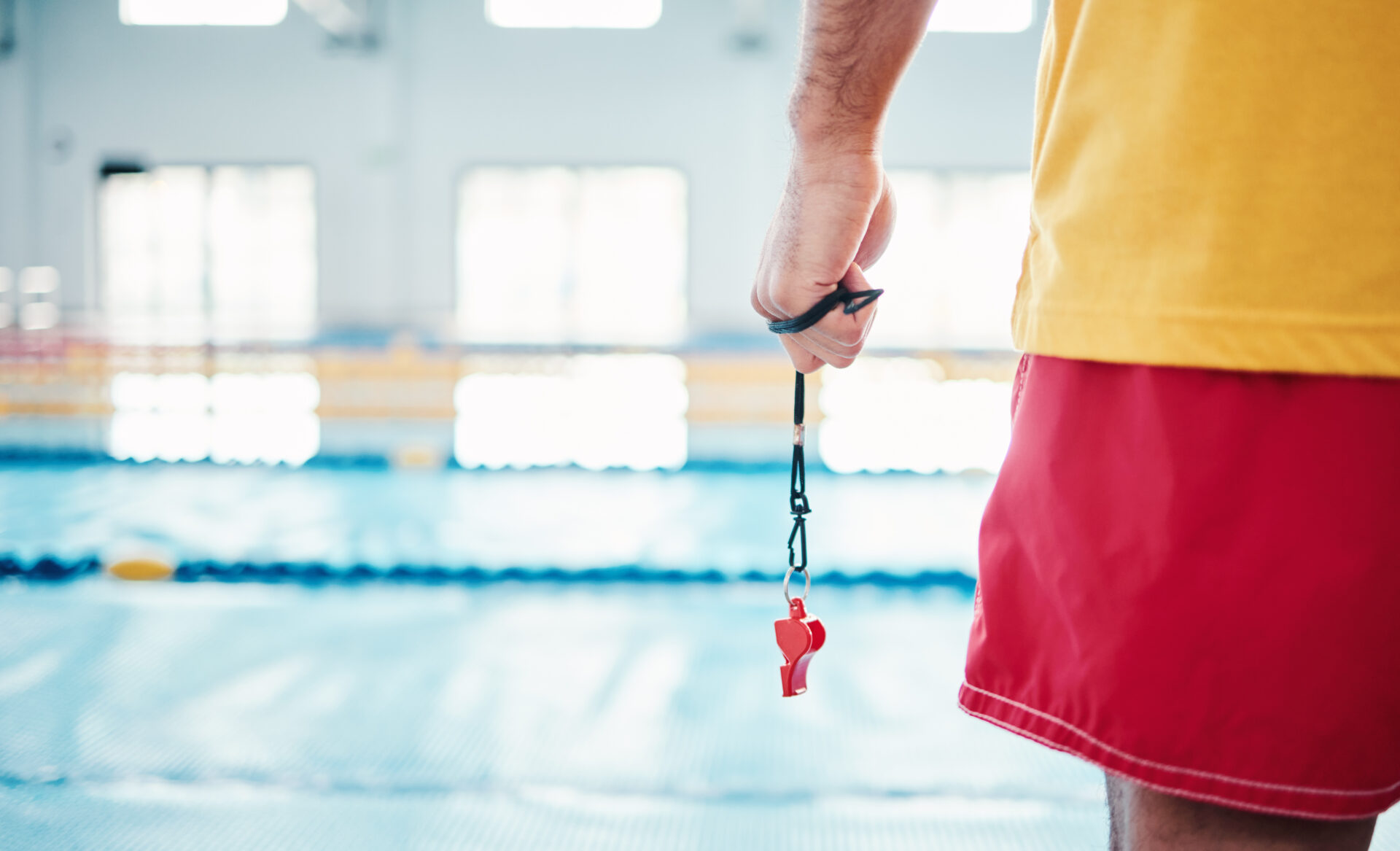
Safety Whistle – Storm All-Weather Safety Whistle
Human voices carry poorly over open water, especially when competing with outboard motors, wind, and waves. A safety whistle is a low-tech, fail-proof signaling device that allows a swimmer or paddler to alert nearby boaters of their location. It is a vital tool for survival when someone becomes separated from their vessel.
The Storm All-Weather Safety Whistle is widely recognized as the loudest whistle on the market, capable of producing a piercing 120-decibel blast. Its patented design allows it to be heard up to a mile away over land and a half-mile over water. Crucially, it even works underwater, making it an incredibly reliable rescue signaling device in chaotic conditions.
- Creates a 118 to 120 dB sound level
- Thermoplastic construction that does not corrode in wet environments
- Unique double-chamber design that clears water instantly when blown
- Easy-to-grip shape that works well for small hands or gloved fingers
This whistle is incredibly loud, so users should avoid testing it indoors or near ears without hearing protection. It should be clipped directly to the zipper of every life jacket on the boat so it is instantly accessible in a capsize. It is a mandatory safety upgrade for every family member on the water, but parents must teach children that it is an emergency tool, not a toy.
Throwable Cushion – Kent Type IV Float Cushion
A Type IV throwable flotation device is not just a smart safety measure; it is a legal requirement on almost all recreational boats over 16 feet. If a passenger slips off the swim platform while the boat is idling, a throwable cushion provides immediate buoyancy. It also serves as a visual marker to keep track of the swimmer’s position in choppy water.
The Kent Type IV Float Cushion is the industry standard for this vital safety layer. Made with durable, puncture-resistant outer fabric and buoyant foam, it features dual webbing straps that serve as handholds. It is designed to be thrown to a conscious swimmer who can cling to the cushion until rescued, or used as a functional seat cushion on skiffs and pontoon boats to save space.
- U.S. Coast Guard approved Type IV throwable device
- Durable, weather-resistant nylon shell
- Strong webbing straps for throwing and holding
- Compact, square design that stores easily on any boat console
A throwable cushion must never be worn on the back like a backpack, as this can force a swimmer’s face down into the water. It must be kept in an easily accessible location on the boat—not locked in a storage hatch under seats—to meet legal requirements and ensure rapid deployment. This is a must-have for all motorized boat owners, but is not intended for non-motorized paddle craft under 16 feet.
Manual Bilge Pump – Seattle Sports Paddlers Bilge Pump
When waves break over the bow of a canoe or a kayak capsizes, getting the water out quickly is critical to restoring stability. A swamped vessel is incredibly difficult to maneuver and is prone to rolling over again. A manual bilge pump allows you to clear water from the bilge or cockpit rapidly without relying on electrical power.
The Seattle Sports Paddlers Bilge Pump is a high-volume manual pump that draws out water with minimal effort. It features a high-visibility, bright neon foam collar that prevents the pump from sinking if it drops overboard, and its comfortable handle makes rapid pumping less tiring. The pump is designed to withstand the grit, sand, and small debris commonly found in lake water.
- High-volume pump action clears water quickly
- Custom-molded foam sleeve for positive flotation
- Corrosion-resistant plastic barrel and steel shaft
- Option to attach a hose to redirect water over the gunwale
Pumping water manually requires physical effort, so users should familiarize themselves with the leverage needed to pump efficiently. It is wise to secure the pump to the kayak deck rigging with a lanyard so it does not float away during a wet exit. This tool is indispensable for kayakers, canoeists, and owners of small utility boats without electric bilge pumps.
Handheld VHF Radio – Uniden MHS75 Marine Radio
Cell phones are notoriously unreliable on larger lakes surrounded by hills, and their touchscreens become useless when wet. A handheld marine radio provides a direct, reliable line of communication to local marine patrols, towing services, and other boaters. In a true emergency, a marine radio is the fastest way to broadcast a distress call to everyone in your immediate vicinity.
The Uniden MHS75 Marine Radio provides a rugged, compact solution for lake communication. It is fully waterproof and boasts a large, backlit display that is easy to read in direct sunlight or at night. The radio features dual, triple, and quad watch operations, allowing you to monitor emergency Channel 16 while listening to local weather alerts or communicating with other family members on a secondary channel.
- JIS8/IPX8 submersible waterproof rating
- Selectable 1, 2.5, or 5 Watt transmitting power
- Access to all USA, International, and Canadian marine channels
- Rechargeable lithium-ion battery with a rapid charging cradle
Users must understand basic marine radio etiquette and channel usage, particularly that Channel 16 is reserved strictly for distress and hailing. The battery life is excellent, but the unit should be stored in its charging cradle between trips to ensure a full charge. This is a vital safety tool for families boating on large reservoirs or expansive waterways, while families on small, private neighborhood lakes can likely rely on simpler signaling methods.
Dog Life Jacket – Ruffwear Float Coat Dog Life Jacket
Even strong-swimming dog breeds can tire rapidly in choppy lake water, suffer from cramps, or struggle to climb back onto a boat or dock. A canine life jacket keeps your pet safe from exhaustion and makes it much easier to retrieve them from the water. It also provides peace of mind when dogs are playing on steep, slippery shorelines.
The Ruffwear Float Coat Dog Life Jacket is the premium choice for canine water safety, offering a secure, anatomical fit that allows a natural swimming motion. The strategically placed foam panels keep the dog in an upright, head-above-water position, while the low-profile, reinforced handle on the back lets owners safely hoist their wet pet back onto the boat deck. The belly straps are padded to prevent chafing during long days of play.
- Telescoping neck closure adjusts to fit various dog breeds securely
- High-visibility fabric with reflective trim for low-light tracking
- Strong, low-profile handle optimally positioned for lifting
- Sheltered, quick-release buckles keep straps tucked away
Finding the correct size requires measuring the dog’s girth around the widest part of the rib cage, not guessing based on weight alone. The jacket should be adjusted snug enough that it does not slip when lifting the dog, but not so tight that it restricts breathing. This is an essential investment for any lake family with a dog, regardless of the breed’s natural swimming ability.
Water Shoes – Astral Loyak Outdoor Water Shoes
Lakeshores are full of hidden hazards like sharp rocks, broken glass, rusty fishhooks, and slippery clay. Cheap flip-flops slip off instantly in mud and offer zero traction on wet dock wood or slimy launch ramps. A dedicated, high-traction water shoe protects feet from injury while providing the grip needed to walk confidently on slippery surfaces.
The Astral Loyak Outdoor Water Shoes combine the grip and protection of a technical water shoe with the low-profile style of a casual sneaker. The high-performance rubber outsole clings to wet rocks like glue, while the durable Cordura nylon upper drains water instantly and dries rapidly to prevent blisters. The flexible sole allows for natural foot movement, making them comfortable for paddling, swimming, or walking around the marina.
- Flex-Grip outsole with siped rubber for wet traction
- Sturdy 1000D Cordura nylon uppers for abrasion resistance
- Built-in drainage holes at the toe and heel
- Low-profile, zero-drop design for natural balance
These shoes are designed to be worn sockless, so getting the correct snug fit is crucial to prevent debris from entering around the ankle. While they provide excellent grip and protection for wading and paddling, they do not have the heavy ankle support required for long-distance hiking. They are perfect for lake families who transition constantly from boats to rocky shorelines and shallow wading areas.
How to Properly Fit and Test Life Jackets for Kids
A child’s life jacket only works if it fits properly and stays securely on their body when they hit the water. Never buy a life jacket that a child will “grow into,” as an oversized vest can easily slip over their head, leaving them underwater. Always select a PFD based on the child’s current weight range, which is clearly printed on the inside label of U.S. Coast Guard-approved vests.
When fitting the jacket, secure all zippers, buckles, and straps, starting from the waist and working up to the shoulders. For infants and toddlers, always use the crotch strap to prevent the vest from riding up over their ears. Once secured, perform the “shoulder pull” test: lift the child up by the shoulders of the life jacket; if the vest slides up past their nose or chin, it is too loose and needs further tightening or a smaller size.
Finally, test the fit in a controlled, shallow water environment before heading out onto the open lake. Let the child float on their back to ensure the vest naturally keeps their mouth and nose well clear of the water. This practice run not only confirms the jacket works as intended but also helps the child build confidence and overcome the initial panic of floating in a PFD.
Maintaining and Storing Safety Gear Off-Season
Neglecting safety gear during the cold winter months is a fast track to gear failure when the spring season rolls around. Damp life jackets stored in dark boat lockers quickly become breeding grounds for mold and mildew, which degrade the fabric and weaken the stitching. Before storing any gear, rinse it thoroughly with clean, fresh water to remove lake muck, salt, and sunscreen residue, then hang it to dry completely in a well-ventilated, shaded area.
Inspect each item carefully before packing it away for the winter. Check life jackets for broken buckles, ripped seams, or waterlogged foam, and test the zippers to ensure they glide smoothly. Unpack throw bags to inspect the rope for fraying or UV damage, and remove batteries from handheld VHF radios and flashlights to prevent terminal corrosion during months of inactivity.
Store all safety equipment in a cool, dry, climate-controlled space away from direct sunlight and pests. Rodents love to nest in foam life jackets and chew through tow ropes, so storing gear in heavy-duty, sealed plastic bins is highly recommended. Taking these simple preventative steps ensures that your life-saving equipment remains fully functional and ready for action the moment you launch the boat next spring.
Conclusion
Equipping your family with these reliable safety essentials ensures that unexpected lake hazards remain minor stories rather than major emergencies. Investing in durable, highly functional gear allows everyone to enjoy the water with complete peace of mind. Prioritize preparation, keep your equipment maintained, and make every lake day a safe and memorable one.


