6 Best Boat Bilge Pumps For Emergencies That Save Vessels
When water breaches your hull, reliable gear is vital. We review the top six emergency bilge pumps designed to keep your vessel afloat during critical crises.
Nothing ruins a day on the water faster than the sudden, sickening realization that your bilge is holding more than just a little condensation. Having a high-performance pump isn’t just about convenience; it is the primary line of defense between a minor leak and a catastrophic sinking. Choosing the right hardware now ensures you have the peace of mind to focus on the horizon rather than the waterline.
Disclosure: As an Amazon Associate, this site earns from qualifying purchases. Thank you!
Understanding Essential Bilge Pump Mechanics
At its core, a bilge pump is a simple centrifugal device designed to move water from the lowest point of your hull back overboard. Most marine setups rely on a submersible pump, which uses an impeller to spin water outward, creating the pressure needed to force it through a discharge hose.
The most critical distinction for emergency readiness is between manual and automatic systems. A manual pump requires you to flip a switch, which is useless if you are topside dealing with a fouled line or a sudden squall. Automatic pumps utilize a float switch or electronic sensor to detect water levels, ensuring the system engages the moment a threat is identified.
Rule 1500 GPH Pump: Reliable Heavy-Duty Power
Keep your boat dry with the Rule 1500 GPH bilge pump. Its durable design withstands harsh marine environments, and the included 6-foot wire simplifies installation.


If you operate a larger cruiser or a vessel prone to taking on spray, the Rule 1500 is the gold standard for raw, unadulterated output. This pump is built like a tank, featuring a stainless steel shaft and a water-cooled motor that can handle the extended run times required during a genuine emergency.
I recommend this for boaters who prioritize sheer volume over fancy bells and whistles. It doesn’t have internal sensors, meaning you’ll need to pair it with a high-quality float switch, but that simplicity is exactly why it remains a favorite for offshore safety. If you need to move a massive amount of water quickly, this is the pump you want in your hull.
Attwood Sahara S1100: Best Automatic Choice

The Sahara S1100 is a brilliant piece of engineering because it integrates the pump and the automatic switch into one compact, sealed housing. By eliminating the need for external wiring and separate float switches, you drastically reduce the number of potential failure points in your bilge.
This unit is perfect for the boater who wants a "set it and forget it" solution that doesn’t sacrifice performance. Its 1,100 GPH rating is more than enough for most mid-sized runabouts or center consoles. If you want a clean installation that works perfectly right out of the box, the Sahara is your best bet.
Johnson Pump Ultima Combo: Smart Sensor Tech
Keep your boat dry with the Johnson Pumps Ultima Combo Bilge Pump. Its 1000 GPH capacity and easy-to-replace cartridge ensure reliable performance and simple maintenance.

The Ultima Combo stands out because it utilizes an electronic field sensor rather than a mechanical float. Mechanical floats can get stuck on debris or bilge grime, but the Ultima’s sensor detects the presence of water through conductivity, making it far more reliable in dirty bilge conditions.
This pump is the ideal choice for those who hate the maintenance associated with traditional switches. It is incredibly responsive and won’t cycle unnecessarily, which saves your battery life during long days at the dock. If you are tired of cleaning gunk out of your float switch, this is the upgrade you need.
Seaflo 12V Submersible: Top Value Selection

Not every boater has the budget for top-tier professional gear, and that is where the Seaflo 12V comes into play. It provides a surprisingly robust 1,100 GPH at a price point that makes it easy to keep a spare on board at all times.
While it lacks some of the premium housing materials found in more expensive units, its performance is consistent and reliable. It is the perfect solution for smaller vessels or as a secondary "backup" pump to keep in your emergency kit. For the cost-conscious boater, this pump provides excellent insurance.
Whale Supersub Smart: Low Profile Efficiency

The Whale Supersub is designed specifically for tight spaces where a traditional pump simply won’t fit. Its unique, low-profile shape allows it to sit deep in the bilge, removing water that other pumps would leave behind.
This is the go-to choice for narrow-hulled sailboats or performance boats with very limited clearance. Despite its small footprint, it is surprisingly powerful and features an integrated electronic sensor. If your bilge is cramped and awkward, the Supersub is the only logical solution.
Rule-Mate 500 GPH: Compact Vessel Solution
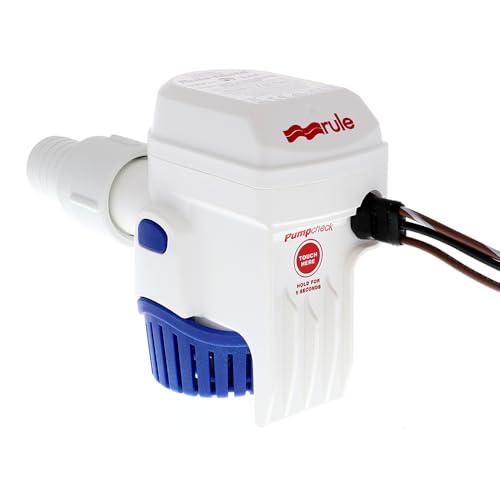
The Rule-Mate 500 is a fantastic option for small skiffs, kayaks, or boats with very limited battery capacity. It features a built-in "Rule-Mate" sensor that only activates when water reaches a specific level, preventing the pump from running dry and draining your battery.
It is compact, efficient, and incredibly easy to install in tight corners. Because it is a lower-volume pump, it isn’t meant for massive leaks, but it is perfect for managing nuisance water. For day-trippers and small-craft owners, this is an essential piece of safety gear.
Proper Installation for Emergency Readiness
Installation is the most common place where safety systems fail. Always ensure your pump is mounted at the lowest point of the bilge, and use high-quality, marine-grade heat-shrink butt connectors for all electrical joins. Moisture is the enemy, and a poor connection will corrode long before you actually need the pump.
Equally important is the discharge hose routing. Ensure your hose has a proper "loop" above the waterline before exiting the hull to prevent back-siphoning. If you don’t install a vented loop, you might accidentally pump water back into your boat every time you stop.
Maintenance Tips for Reliable Performance
Even the best pump is useless if the intake is clogged with hair, oil, or debris. Make it a habit to check your bilge every time you head to the boat, ensuring the area around the pump is free of loose wires or trash.
Test your float switch or sensor manually by lifting it or covering it with a damp rag to ensure the pump kicks on immediately. If you notice the pump sounds sluggish or is vibrating excessively, check the impeller for obstructions. A few minutes of cleaning now can prevent a disaster later.
Testing Your System for Maximum Safety
Don’t wait for an emergency to find out your wiring is faulty. Once a month, pour a bucket of water into the bilge and watch how the system handles the intake. You should see a strong, steady stream coming out of the discharge port on the hull.
If the flow is weak, check for kinks in the hose or a failing battery connection. Remember, a bilge pump is your last line of defense; treat it with the same level of respect you give your engine. If it doesn’t pass the bucket test, don’t leave the dock until it does.
Investing in a high-quality bilge pump is one of the smartest decisions you can make as a boat owner. By choosing the right model for your hull and maintaining it with diligence, you ensure that small problems stay small. Stay safe, keep your bilge clean, and enjoy your time on the water with the confidence that you are prepared for anything.