6 Paddleboard Fin Replacements For Performance Upgrades
Boost your paddleboard’s speed and tracking with these six top-tier fin upgrades. Discover how the right design can transform your water performance today.
Ever feel like your paddleboard is fighting you on a long-distance trek or drifting aimlessly when you’re trying to catch a wave? The secret to transforming your board’s personality often lies just a few inches beneath the surface in your fin box. Upgrading your fin isn’t just a cosmetic choice; it’s the most cost-effective way to unlock a completely new level of performance and control on the water.
Disclosure: As an Amazon Associate, this site earns from qualifying purchases. Thank you!
Understanding Paddleboard Fin Performance Metrics
To choose the right fin, you must first understand how three primary metrics—depth, base length, and rake—dictate your board’s movement. Depth provides stability and tracking, while the base length influences how much drive and acceleration you get out of a turn. Rake, or the sweep of the fin, determines how tightly you can pivot; more rake makes for smoother, longer arcs, whereas an upright profile is built for quick, snappy maneuvers.
It is a common misconception that "bigger is always better" for stability. While a large, deep fin offers excellent straight-line tracking, it also creates significant drag, which can tire you out on longer excursions. Balancing your fin size against your body weight and the board’s volume is the key to finding that "sweet spot" where the board feels like an extension of your own body rather than a cumbersome platform.
FCS II Connect Toolless Fin for Versatility


If you frequently switch between flatwater cruising and light chop, the FCS II Connect is your best friend. The standout feature here is the toolless system, which allows you to swap or adjust your fin position in seconds without fumbling for a screwdriver on the beach. It’s an incredibly reliable, no-nonsense fin that provides a neutral, balanced feel across a wide variety of board shapes.
This fin is perfect for the paddler who values convenience above all else but refuses to sacrifice build quality. While it might not offer the hyper-specialized performance of a dedicated race or surf fin, its versatility is unmatched. If you only want to own one replacement fin that handles 90% of your daily paddling needs, the FCS II Connect is the definitive choice.
FCS II Hatchet Fin for Enhanced Tracking

When your board feels like it’s "fishtailing" or struggling to hold a straight line during long, rhythmic strokes, it’s time to look at a Hatchet-style fin. The broad, squared-off profile of the FCS II Hatchet acts like a rudder, locking the tail of your board into the water and preventing unwanted lateral drift. It’s a game-changer for anyone who finds themselves constantly switching sides to keep the board moving straight.
This fin is specifically designed for touring and long-distance paddling where efficiency is the goal. Because of its surface area, you will notice a slight increase in drag, but the trade-off is significantly less energy wasted on corrective strokes. If your primary goal is covering distance with minimal effort, the Hatchet is an essential upgrade.
Futures Fins Performance Glass for Speed
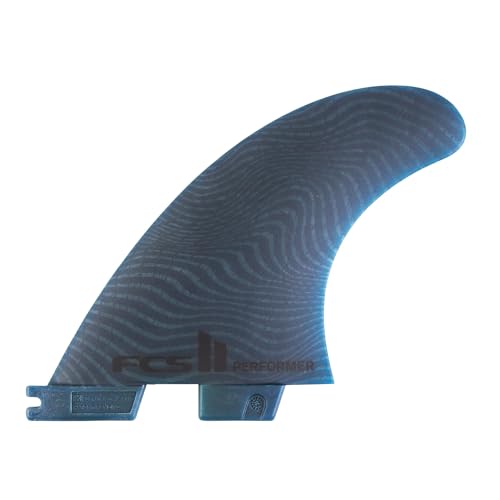
If you are transitioning into performance surfing or want to feel more "snap" in your turns, look toward the Futures Fins Performance Glass series. These fins are manufactured using a high-density, resin-transfer molding process that creates a stiff, responsive flex pattern. This rigidity translates directly into speed, as the fin doesn’t "wobble" under the pressure of a hard turn, allowing you to project out of maneuvers with more drive.
These fins are best suited for intermediate to advanced paddlers who have developed a feel for edge control. Because they are stiff, they provide immediate feedback, which can be unforgiving for beginners but exhilarating for those looking to push their board’s limits. If you want to feel every ounce of energy transferred from your feet into the water, this is the upgrade you need.
Aqua Bound Carbon Touring Fin for Efficiency

Weight is the enemy of efficiency, and the Aqua Bound Carbon Touring Fin addresses this with a feather-light construction that doesn’t compromise on durability. By utilizing carbon fiber, this fin remains incredibly rigid while shedding the weight that often makes plastic fins feel sluggish. The result is a clean, efficient glide that feels noticeably smoother during high-cadence paddling.
This fin is the gold standard for fitness paddlers and racers who count every second and every calorie burned. While the price point is higher, the reduction in swing weight at the tail of the board makes a tangible difference over a three-mile paddle. If you are serious about your fitness routine or competitive racing, the investment in carbon is absolutely worth it.
Captain Fin Co. Joel Tudor Pivot for Control

Sometimes you don’t want speed; you want the ability to dance on your board and execute precise, stylish turns. The Joel Tudor Pivot fin features a wide base and a narrow, upright profile designed to facilitate tight, controlled pivot turns. It’s a classic, surf-inspired shape that rewards a rhythmic, graceful approach to riding waves.
This fin is not for the person trying to break speed records or paddle in a straight line for miles. It is for the longboard enthusiast who wants to master the art of the nose ride and the roundhouse cutback. If your paddleboarding style is more about expression and flow than raw velocity, this is the only fin you should be considering.
Dorsal Signature Series Surf Fin for Stability

For those who want a reliable, durable option that doesn’t break the bank, the Dorsal Signature Series is a fantastic entry point into the world of aftermarket fins. These fins are constructed from high-quality fiberglass or reinforced nylon, offering a consistent flex pattern that mimics more expensive options. They provide a stable, predictable ride that is perfect for recreational paddlers looking to improve upon their stock plastic fin.
Dorsal is ideal for the weekend warrior who wants a noticeable upgrade in tracking and stability without spending a fortune. While they might lack the advanced material engineering of carbon fiber, they offer incredible value and are built to handle the rigors of rocky shorelines and sandy bottoms. If you are looking for a solid, all-around performer, you really can’t go wrong here.
Factors Influencing Fin Selection and Design
Choosing the right fin requires an honest assessment of your environment. If you paddle in shallow, rocky rivers, a deep, rigid fiberglass fin might be a liability, as you’ll risk snapping it on the riverbed. In those scenarios, a shorter, more flexible composite fin is a much smarter, safer choice that will save you from constant replacements.
- Water Depth: Shallow water calls for shorter fins; deep water allows for high-aspect, deep-tracking fins.
- Board Shape: A displacement hull board (pointed nose) needs a different fin profile than a planing hull (rounded nose) to maintain proper tracking.
- Paddling Style: Are you cruising, racing, or surfing? Each discipline requires a specific rake and surface area to maximize performance.
Installing and Adjusting Your New Fin Setup
Installing a new fin is straightforward, but it’s often done incorrectly. Always ensure your fin box is free of sand or debris before sliding the fin in; even a small grain of grit can cause the fin to sit crooked or make it impossible to remove later. Once inserted, make sure the locking screw or mechanism is fully engaged so you don’t lose your investment during a session.
Don’t be afraid to experiment with the position of the fin within the box. Moving the fin forward (toward the nose) generally makes the board turn more easily, while moving it backward (toward the tail) increases straight-line tracking. Spend a few sessions moving your fin an inch at a time to truly feel how it changes your board’s handling characteristics.
Maintaining Your Fin Box for Longevity
The fin box is the most neglected part of a paddleboard, yet it is vital for performance. After every session, especially in saltwater, rinse the box thoroughly with fresh water to prevent salt crystallization, which can seize the fin in place. If you notice the box becoming loose or showing hairline cracks, address it immediately with marine-grade epoxy to prevent water from seeping into the board’s core.
Treating your fin box with care ensures that your board stays responsive and safe for years to come. A well-maintained box means you can swap fins easily as conditions change, giving you the flexibility to adapt your board to any water you encounter. Remember, a clean, well-functioning fin system is the foundation of a great ride.
Upgrading your fin is a small investment that yields a massive return in how your board performs and how much fun you have on the water. Whether you’re chasing speed, stability, or the perfect turn, there is a configuration out there that will turn your current board into a precision instrument. Take the time to dial in your setup, and you’ll find that your favorite local spot feels like a completely new playground.