6 Best Goggles For Low Visibility Cold Water For Divers
Navigate murky, frigid depths with confidence. We review the 6 best diving goggles designed for superior visibility and thermal protection in cold waters.
Diving in cold, murky water requires more than just a thick wetsuit; it demands optical clarity that can cut through the gloom. When the visibility drops and the temperatures plummet, your mask becomes your primary link to the environment. Choosing the right lens technology can turn a disorienting, dark dive into a controlled and rewarding underwater experience.
Disclosure: As an Amazon Associate, this site earns from qualifying purchases. Thank you!
Understanding Optics in Cold and Murky Waters
In low-visibility environments, light transmission is your greatest asset. Unlike clear tropical waters, cold-water sites are often rich in suspended particulates that scatter light, making standard lenses feel like you are looking through a veil. High-quality tempered glass is essential, but the real magic lies in the light-transmittance properties of the glass itself.
When selecting a mask, prioritize ultra-clear glass over standard green-tinted glass. Ultra-clear lenses lack the iron impurities found in cheaper options, allowing more natural light to enter and significantly improving color perception in low-light conditions. This distinction is the difference between seeing a dull shadow and identifying the vibrant textures of a reef or wreck.
Cressi F1 Frameless Mask for Low Light Clarity
Enjoy a streamlined diving experience with the Cressi F1 frameless mask. Its low-profile design folds flat for easy packing, while the single-lens construction and quick-adjust buckles ensure a comfortable, hydrodynamic fit.
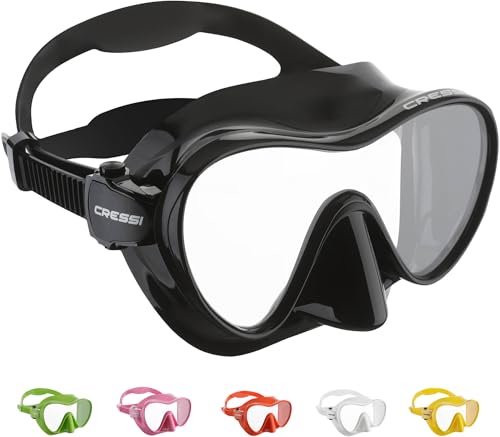

The Cressi F1 is a go-to choice for divers who prioritize a minimalist design without sacrificing field of view. Because it is a frameless, single-lens mask, the glass sits closer to your eyes, which naturally expands your peripheral vision. This is a massive advantage when you are navigating a dark, low-visibility site and need to keep track of your dive buddy.
This mask is perfect for the diver who wants a lightweight, low-volume profile that is easy to clear. It doesn’t have the bells and whistles of high-end optical coatings, but its simplicity makes it incredibly reliable. If you want a no-nonsense, high-clarity mask that fits a wide range of face shapes, the F1 is a solid, budget-friendly investment.
Scubapro Synergy Twin Trufit for Cold Comfort

Cold water diving often involves stiff facial muscles and the need for a seal that doesn’t leak when you’re shivering. The Synergy Twin features Trufit technology, which utilizes varying thicknesses of silicone to create a soft, flexible skirt that conforms to your face like a second skin. It creates an exceptional seal that prevents the "cold water drip" that can ruin a dive.
The twin-lens design allows for a lower internal volume, making it much easier to clear if water does find its way in. It’s an ideal choice for divers with smaller or more sensitive faces who struggle with rigid masks leaving pressure marks. If comfort and a leak-proof seal are your top priorities in frigid conditions, this is the mask you should be wearing.
Atomic Aquatics SubFrame for Superior Visibility

The Atomic Aquatics SubFrame is widely considered the gold standard for durability and optical performance. It uses a unique internal frame molded directly under the silicone skirt, which provides incredible structural integrity without the bulk of an external plastic frame. This construction allows for an exceptionally wide viewing window that feels almost like you aren’t wearing a mask at all.
This mask is engineered for the diver who demands the absolute best visibility and is willing to pay for it. The optical quality of the glass is top-tier, offering a crisp, distortion-free view that is vital when your surroundings are already compromised by silt or depth. If you are a serious cold-water explorer, the SubFrame is the last mask you will ever need to buy.
TUSA Paragon Mask with CrystalView Optical Glass

The TUSA Paragon stands out because of its focus on color enhancement and protection. It utilizes "CrystalView" optical glass, which is specifically treated to be anti-reflective and UV-protective, helping to reduce the glare that can occur in shallow, murky, or reflective water. This makes it a fantastic tool for photographers or those who need to spot subtle details in low-light environments.
Beyond the glass, the reinforced frame construction is built to withstand the rigors of cold-water gear, such as heavy hoods and gloves. It is a premium, feature-rich mask that balances technical performance with high-end comfort. If you are looking for a mask that actively improves your visual contrast in challenging conditions, the Paragon is worth every penny.
Mares X-Vision Ultra for High Contrast Vision
Experience superior comfort and fit with the X-Vision Ultra Liquidskin mask, designed with bi-silicone technology to accommodate various face shapes. Enjoy an expanded field of vision and easy adjustments with the two-button buckle system, even while wearing gloves.

The Mares X-Vision Ultra is designed with a focus on "Gold" or "Mirror" lens options, which are specifically tuned to increase contrast in low-visibility water. By filtering out certain wavelengths of light, these lenses help make objects pop against the dark, murky backdrop of a cold lake or quarry. It is a specialized piece of equipment for those who spend a lot of time in low-light scenarios.
The skirt design is equally impressive, featuring small dimples around the face seal that reduce pressure and improve the overall fit. It is a fantastic option for divers who find that standard lenses just aren’t cutting through the gloom. If you find yourself struggling to see your dive computer or your buddy in dark water, the high-contrast lenses on the X-Vision Ultra provide a noticeable advantage.
Hollis M1 Frameless Mask for Wide Angle Views
Enjoy crystal-clear underwater views while diving or snorkeling with this mask's ultra-clear lens and comfortable, leak-proof silicone skirt. The easy-to-adjust strap and buckles ensure a secure and custom fit.

The Hollis M1 is a favorite among technical and cave divers, and for good reason—it uses Saint-Gobain Diamant crystal clear glass. This glass is exceptionally transparent, meaning it allows more light to pass through than almost any other mask on the market. In the dark, claustrophobic environments often found in cold-water diving, that extra light transmission is a game-changer.
The frameless, single-lens design ensures there is no "blind spot" in the middle of your vision. It is rugged, reliable, and provides an expansive field of view that is essential for situational awareness. If you are a technical diver or someone who frequently dives in dark, silty conditions, the M1 is arguably the best tool for the job.
Managing Fogging Issues in Cold Water Diving
Fogging is the bane of cold-water diving, caused by the temperature differential between your warm face and the cold water outside. To combat this, you must treat new masks with a mild abrasive—like non-gel toothpaste—to remove the factory silicone residue. Do this thoroughly before your first dive, or you will be battling fog regardless of the lens quality.
- Always use a high-quality anti-fog spray or gel before entering the water.
- Spit is an old-school backup, but commercial anti-fog solutions are far more consistent in cold temperatures.
- Avoid touching the inside of the lens with your fingers, as skin oils are the primary cause of recurring fog.
Proper Fit and Seal Techniques for Cold Water
A mask that leaks is more than an annoyance; in cold water, it’s a distraction that leads to unnecessary stress. Before you buy, perform the "inhalation test" by placing the mask on your face without the strap and inhaling through your nose. If it stays in place for a few seconds without you holding it, the skirt geometry is a good match for your face.
Remember that your hood plays a massive role in your mask’s seal. If your hood is too thick or bunched up under the mask skirt, you will inevitably deal with leaks. Always pull the mask skirt directly onto your skin and pull the hood over the edge of the skirt to create a smooth, watertight barrier.
Maintenance Tips for Long-Lasting Goggle Lenses
Your mask is a precision optical instrument, so treat it with the same care you would your regulator. Always rinse your mask with fresh, lukewarm water after every dive to prevent salt crystallization, which can scratch the glass and degrade the silicone. When drying, keep it out of direct, harsh sunlight, as UV rays will cause the silicone skirt to yellow and become brittle over time.
Store your mask in a protective hard case rather than tossing it loosely into your gear bag. A single scratch in the center of your lens can become a focal point for light refraction, effectively ruining your visibility for future dives. By keeping the glass clean and the silicone supple, you ensure that your gear remains as effective on its hundredth dive as it was on its first.
Investing in a mask specifically designed for low-visibility, cold-water conditions is one of the most effective ways to upgrade your diving experience. Whether you prioritize light transmission, contrast, or the perfect facial seal, the right choice will allow you to focus on the beauty of the underwater world rather than the limitations of your gear. Take the time to test the fit, maintain your lenses, and you will find that even the darkest waters hold incredible things to see.