

6 Best Fishing Chart Apps For Offshore Fishing Pros
Navigate offshore waters with confidence. We review the 6 best fishing chart apps, highlighting key features for pros to improve navigation and catch rates.
Pushing off into the deep blue requires more than just a sturdy hull and a well-stocked tackle box; it demands precision navigation and an intimate understanding of the seafloor. Modern technology has revolutionized how offshore pros locate pelagic species by putting professional-grade bathymetry right in the palm of your hand. Choosing the right digital chart app is the difference between aimlessly trolling open water and consistently finding the structure where the big fish congregate.
Disclosure: As an Amazon Associate, this site earns from qualifying purchases. Thank you!
Navigating Offshore Fishing With Digital Charts
Offshore fishing is a game of finding subtle variations in a vast, featureless expanse. Digital charts transform your mobile device into a high-powered sonar and mapping station, allowing you to identify drop-offs, canyons, and wrecks that hold baitfish. Without these tools, you are essentially guessing; with them, you are hunting with intent.
The shift from paper charts to digital interfaces has changed the pace of the sport. You can now overlay weather patterns, current speeds, and historical catch data directly onto your navigation route. This integration is essential for pros who need to make split-second decisions when the bite turns on or a storm front approaches.
Navionics Boating: Best For Detailed Bathymetry
If you prioritize high-definition contour lines, Navionics is the industry gold standard. Their SonarChart feature provides incredibly dense bathymetric data that reveals minute changes in depth, which are often the exact spots where tuna or marlin ambush prey. For the pro who spends hours studying the bottom to find the perfect ledge, this is your primary tool.


The app’s interface is intuitive, and the ability to download maps for offline use ensures you stay on track even when you are fifty miles offshore without cell service. It is the most reliable choice for captains who demand consistency and high-resolution detail. If you want the most accurate bottom profile available on a mobile screen, Navionics is the clear winner.
Garmin ActiveCaptain: Best For Syncing Devices
![Garmin Central America Caribbean Navionics+ NSSA010R [010-C1451-20]](https://m.media-amazon.com/images/I/41oj2ZF0rdL._SL500_.jpg)
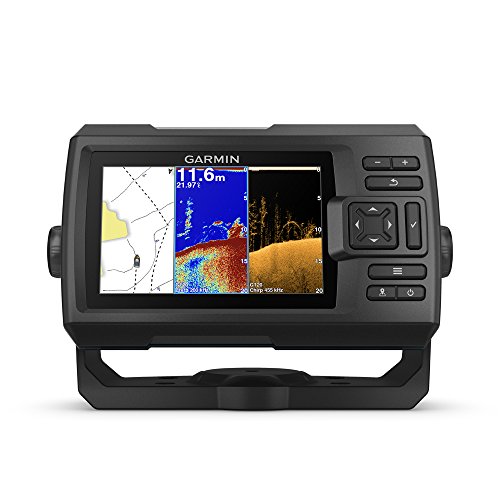
Garmin ActiveCaptain is the ultimate ecosystem for those who already run Garmin marine electronics on their console. The app bridges the gap between your phone and your boat’s MFD (Multi-Function Display), allowing you to update charts and sync waypoints seamlessly. It turns your tablet into a secondary cockpit, which is invaluable when you need to check coordinates while someone else is at the helm.
The real strength here is the "Quickdraw Contours" community, which allows users to contribute depth data to build a shared map of the ocean floor. If you are already invested in the Garmin hardware ecosystem, this app is not just a recommendation—it is a necessity. It is the most efficient way to maintain a unified data set across all your gear.
FishAngler App: Best For Community Data Sharing
FishAngler takes a different approach by focusing on the social and collaborative side of offshore fishing. It functions like a digital logbook where you can track catches, weather conditions, and gear setups, then share that information with a trusted circle of anglers. For the pro who values local intelligence and crowd-sourced reports, this app provides a level of insight that private charts simply cannot match.
While it lacks the deep-sea mapping precision of dedicated navigation apps, its strength lies in the "what is biting where" aspect. It is perfect for those who want to keep a comprehensive digital journal of their offshore successes. Use this as a supplement to your navigation suite rather than a primary chart plotter.
C-MAP Embark: Best For Real-Time Map Updates

C-MAP Embark excels at providing a clean, professional-grade interface that prioritizes real-time data integration. The app is known for its frequent map updates and seamless transition between satellite views and vector charts. It is built for the mariner who values reliability and a clutter-free experience while navigating complex coastal inlets or offshore reefs.
The app’s ability to overlay weather and tide information directly onto the chart is exceptionally well-executed. If you are tired of apps that feel bloated or slow, C-MAP offers a refreshing, high-performance alternative. It is an excellent choice for captains who need a responsive, no-nonsense tool that stays updated without constant manual intervention.
FishTrack: Best For Satellite Sea Temperature
FishTrack is a specialized tool that every offshore pro should have in their arsenal for targeting pelagic species. It specializes in sea surface temperature (SST) and chlorophyll imagery, which are the two most important factors for finding fish that migrate along thermal breaks. You aren’t just navigating to a coordinate; you are navigating to the "edge" where the water color and temperature change.
The satellite imagery is crisp, and the ability to track eddies and currents in real-time is a game-changer for finding bait concentrations. It is not designed for turn-by-turn navigation, but for finding the "hot zone" before you even leave the dock. If you are chasing billfish or wahoo, FishTrack is an indispensable piece of your pre-trip planning.
BlueChart Mobile: Best For Advanced Routing

BlueChart Mobile is built for the navigator who demands precision and safety above all else. It offers advanced routing capabilities that consider your vessel’s draft and height, ensuring you don’t end up in water that is too shallow for your hull. The interface is highly technical and mimics the layout of professional marine plotters, making it a favorite for those who appreciate a traditional navigation feel.
The app handles complex route planning with ease, allowing you to set multiple waypoints and calculate estimated arrival times based on current speed. It is a robust, serious tool for the captain who treats offshore travel with the gravity it deserves. If your priority is sophisticated route management and reliable navigation, this is the app to choose.
Essential Features For Offshore Chart Apps
When evaluating these tools, look for features that directly impact your safety and success on the water. Offline capability is non-negotiable; never rely on a cellular signal when you are beyond the horizon. You also want an app that supports the import and export of GPX files, which allows you to move your saved waypoints between your phone and your boat’s permanent navigation system.
- Offline Mapping: Ensure you can download high-res charts before departure.
- Layer Customization: Ability to toggle between satellite, bathymetric, and weather layers.
- Waypoint Management: Easy organization of spots, wrecks, and canyons.
- Hardware Sync: Compatibility with your onboard MFD or GPS plotter.
Reading Bathymetric Data For Better Catches
Bathymetry is the study of the ocean floor, and reading it is a skill that separates the pros from the weekenders. Look for "tight" contour lines, which indicate steep drop-offs or underwater canyons where deep, nutrient-rich water is forced upward. This upwelling attracts baitfish, which in turn draws in the predators you are trying to catch.
Do not just look for the deepest hole; look for the "structure within the structure." A small rock pile sitting on the edge of a massive drop-off is often more productive than the drop-off itself. Master the art of identifying these pinch points on your digital chart, and you will find yourself consistently fishing over active structure rather than barren sand.
Staying Safe With Digital Marine Navigation
Digital charts are incredible tools, but they should never replace basic seamanship and traditional backup systems. Always carry a paper chart of your primary fishing grounds and ensure your boat has a dedicated, hard-wired GPS plotter that is independent of your mobile device. Batteries die, screens crack, and phones overheat; your safety should never depend on a single piece of consumer electronics.
Furthermore, use your digital apps to stay ahead of the weather. Check your radar overlays and wind forecasts frequently, and have a clear exit strategy if the conditions begin to deteriorate. Technology is there to enhance your experience, but your judgment as a captain remains the most important safety feature on the boat.
The right digital chart app acts as an extension of your senses, turning a vast, empty ocean into a map filled with potential. By choosing a tool that aligns with your specific fishing style—whether it’s high-def bathymetry or real-time temperature tracking—you gain a significant edge on the water. Use these tools to plan wisely, respect the sea, and keep your focus on the horizon; the next big catch is waiting for those who know exactly where to look.
