6 Best Fishing Kayak Fish Finders For Shallow Water Rated
Finding fish in shallow water requires precision. We review the 6 best kayak fish finders, highlighting sonar clarity and depth accuracy for your next trip.
Navigating the skinny water of your favorite marsh or hidden cove requires a different approach than chasing deep-water pelagics. When you are hovering over mere feet of water, a standard sonar setup can often clutter your screen with noise or fail to define structure accurately. Selecting the right fish finder ensures you spend more time landing trophy bass and less time guessing what is lurking beneath your hull.
Disclosure: As an Amazon Associate, this site earns from qualifying purchases. Thank you!
Understanding Shallow Water Sonar Requirements
In shallow water, the cone angle of your transducer becomes your most critical variable. A wide cone is generally preferred because it covers more ground, but in depths under five feet, it can actually create a "dead zone" where the sonar footprint is too small to provide meaningful data. You need a unit that allows for high-frequency settings, which provide the crisp, high-resolution imagery necessary to distinguish between a rock, a log, or a bedding fish.
Don’t fall for the trap of thinking more power equals better performance in the shallows. Excessive power in shallow depths often leads to "surface clutter," where the signal bounces off the water’s surface and obscures the very fish you are trying to find. Look for units that offer adjustable sensitivity and frequency control to keep your returns clean and actionable.
Garmin Striker Cast: Best Portable Casting Unit


If you are paddling a minimalist kayak or a sit-on-top without a dedicated battery setup, the Garmin Striker Cast is a game-changer. It is a rugged, puck-style transducer that you can cast out with a fishing rod or tow behind your boat. It streams sonar data directly to your smartphone, turning your phone into a high-definition display without the need for complex wiring.
This unit is perfect for the kayak angler who values mobility above all else. Because it is wireless, you can cast it into a tight pocket of reeds or under an overhanging branch to see what is hiding where your kayak physically cannot go. If you want a simple, no-fuss solution that prioritizes versatility over permanent installation, this is your best bet.
Humminbird PiranhaMAX 4: Best Entry-Level Pick
The Humminbird PiranhaMAX 4 is the ultimate "set it and forget it" machine for those new to kayak fishing. It features a bright, clear color display that is surprisingly easy to read even in direct sunlight, which is a common challenge for kayak anglers sitting low to the water. The interface is intuitive, meaning you won’t be fumbling with menus when you should be casting.
This unit excels in shallow water because it provides a reliable, dual-beam sonar that gives you a solid view of the bottom contour without overwhelming you with data. If you are looking for a straightforward, budget-friendly tool that just works, the PiranhaMAX 4 is the clear winner. It isn’t for the tech-obsessed, but it is perfect for the angler who wants to find fish without a steep learning curve.
Lowrance Hook Reveal 5: Best Mapping Capability
The Lowrance Hook Reveal 5 stands out because it brings professional-grade mapping to a compact, kayak-friendly form factor. Its standout feature is the Genesis Live real-time mapping, which allows you to create custom depth contour maps of your local lake as you paddle. In shallow, uncharted waters, this feature is invaluable for identifying hidden drop-offs or submerged channels.
![Genesis - The Broadcast Collection 1975-1981 - 5СD [5 CD Box Set]](https://m.media-amazon.com/images/I/41Wn2nFMQvL._SL500_.jpg)
This unit is ideal for the serious angler who spends their weekends exploring new water and wants to build a database of "honey holes." The combination of FishReveal, which overlays sonar targets onto a down-scan image, makes identifying fish hanging near structure incredibly easy. If you are a data-driven angler who wants to master a specific body of water, this is the investment you need to make.

Garmin Striker Vivid 4cv: Best Display Quality
When it comes to screen clarity, the Garmin Striker Vivid 4cv is in a league of its own. It uses high-contrast color palettes that make fish arches and structure pop against the background, even on the brightest, glare-heavy days. The ClearVü scanning sonar provides near-photographic images of the bottom, which is essential when you are trying to differentiate between a pile of weeds and a school of baitfish.
This unit is designed for the angler who refuses to compromise on visual detail. The vivid color schemes help you spot subtle differences in bottom composition, such as shifting from mud to gravel, which often holds more fish. If you find yourself struggling to interpret standard sonar screens, the Vivid 4cv will provide the clarity you need to fish with confidence.
Raymarine Dragonfly 4 Pro: Best Dual-Channel Sonar
The Raymarine Dragonfly 4 Pro uses CHIRP DownVision technology to deliver a level of detail that is rarely seen in small-format units. By sending a wide spectrum of frequencies into the water, it produces high-resolution images that make it easy to identify individual fish, even when they are tightly tucked against structure. It is essentially a high-end sonar packed into a small, weather-proof chassis.
This unit is perfect for the angler who demands precision in their gear. The dual-channel sonar allows you to view traditional fish-finding sonar alongside the high-resolution DownVision simultaneously. If you are fishing complex, shallow environments like docks or rocky rip-rap, the Dragonfly 4 Pro offers the best chance of seeing exactly what is beneath you.
Deeper Smart Sonar PRO+: Best Wireless Option
The Deeper Smart Sonar PRO+ is a marvel of miniaturization, fitting a powerful, GPS-enabled sonar into a ball the size of a tennis ball. It creates its own Wi-Fi signal to send data to your tablet or phone, providing a high-resolution map of the bottom. Because it is fully wireless, it is the most portable option on this list, making it perfect for kayak anglers who switch between different boats or rental vessels.
This is the ultimate tool for the "adventure angler" who hikes into remote ponds or uses a lightweight, inflatable kayak. It is remarkably accurate for its size and allows you to save your bathymetric maps to the cloud for future trips. If you prioritize portability and want a high-tech solution that doesn’t require drilling holes in your kayak, the Deeper PRO+ is the only choice that makes sense.
Optimizing Transducer Placement for Kayaks
In a kayak, transducer placement is the difference between a clear signal and a blurry mess. For the best performance, you want the transducer mounted as close to the center of the hull as possible, ensuring it stays submerged even when you are fully loaded with gear. Many anglers opt for a "scupper mount," which passes the transducer through the drainage holes in the kayak, providing a direct, unobstructed view of the water.
Alternatively, a "shoot-thru-hull" installation is popular for those who don’t want to drill into their boat. By using marine-grade epoxy to bond the transducer to the inside of the hull, you can get decent readings without exposing the unit to rocks or debris. Just remember that this method only works with fiberglass or thin plastic hulls; thicker, rotomolded plastic can significantly dampen the sonar signal.
Interpreting Shallow Water Sonar Data Signals
Interpreting shallow water sonar is about looking for "arches" and "shadows." In shallow water, fish often appear as smaller, tighter marks rather than the large, sweeping arches you see in deep water. If you see a small, bright dot directly over a dark, irregular shape on the bottom, you are likely looking at a fish holding tight to a piece of structure.
Pay close attention to your "bottom line." A thick, solid line indicates a hard bottom—like rock or clay—which is usually a prime feeding zone for predatory fish. A thin, fuzzy line often suggests a soft, silty bottom, which may be less productive. Learning to read these subtle visual cues will turn your fish finder from a simple depth gauge into a powerful tool for locating active fish.
Essential Gear for Kayak Fish Finder Setup
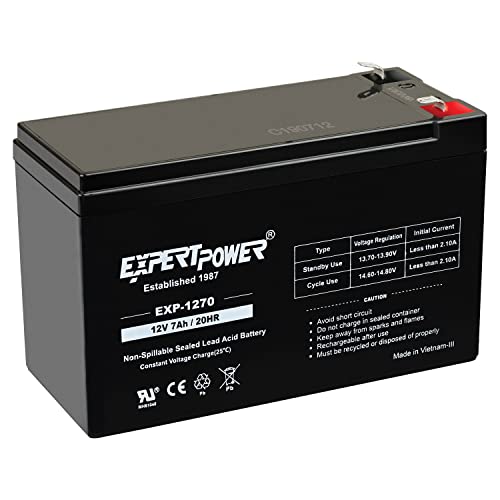
Beyond the unit itself, your setup is only as good as your power source. Lithium iron phosphate (LiFePO4) batteries are the industry standard for kayaks because they are lightweight, hold a consistent voltage, and offer a significantly longer lifespan than traditional lead-acid batteries. A 10Ah battery is usually more than enough to power a 5-inch display for a full day of fishing.
Don’t neglect your wiring management. Use waterproof connectors and heat-shrink tubing to protect your connections from the inevitable splashes and exposure to the elements. Finally, consider a sturdy, adjustable mounting arm; being able to tilt your screen to avoid glare or move it out of the way while paddling is a luxury you will quickly realize is a necessity.
Finding the right fish finder for your kayak is less about the most expensive unit and more about matching the technology to your specific fishing style. Whether you prefer a permanent, high-definition mount or a portable, wireless puck, the data you gain will fundamentally change how you approach the water. Invest in your setup, keep your transducer clean, and you’ll find that even the shallowest water holds plenty of secrets waiting to be discovered.