

6 Best Running Belts For Race Day To Keep Gear Secure
Find your perfect fit with our top 6 running belts. We review the best gear to keep your essentials secure, bounce-free, and accessible during your race day.
Nothing ruins a perfect race day faster than gear that bounces, chafes, or threatens to eject your phone onto the pavement. Finding the right running belt is about achieving that "forget it’s even there" feeling while keeping your essentials locked down tight. These six options represent the gold standard for security, comfort, and accessibility when every second counts.
Disclosure: As an Amazon Associate, this site earns from qualifying purchases. Thank you!
FlipBelt Zipper Edition: Best For Stability
![FlipBelt Zipper Running Belt, Waist Pack for Fitness and Running Fanny Pack for Women Men Phone Keys Money US Company - [Black] - [Medium]](https://m.media-amazon.com/images/I/21auTGxkCxL._SL500_.jpg)

The FlipBelt Zipper Edition is the gold standard for runners who despise the "bounce" factor. Its tubular, seamless design sits flush against your waist, using high-quality spandex-blend fabric to compress your gear against your body. Because it lacks traditional buckles or adjusters, it eliminates the common pressure points that cause chafing over long distances.
The inclusion of a secure zipper pocket adds a layer of confidence for those carrying keys or credit cards that simply cannot be lost. If you are the type of runner who gets distracted by items shifting around your hips, this is your best bet. It is essentially a wearable pocket system that moves as a single unit with your core, making it the most stable option on this list.
SPIbelt Performance Series: Best For Phones

If your primary race day concern is keeping a large smartphone secure and accessible, the SPIbelt Performance Series is the industry leader. Unlike bulky armbands that can cause muscle imbalances, this belt uses a low-profile, expandable pouch that stays incredibly flat until you need it. The performance version features extra-sturdy elastic and a wider band, which prevents the belt from sagging even when loaded with a heavy phone and extra gels.
The genius of this design lies in its simplicity and the tension-based closure. It keeps your device pinned against your lower back, which is the body’s natural center of gravity. For runners who need to pull their phone out quickly for a race-day photo or to check a pace app, the SPIbelt is unmatched in both security and speed.
Nathan The Zipster: Best For Hydration Needs

Nathan’s The Zipster is a versatile powerhouse designed for those who need to carry more than just a phone. It features multiple dedicated pockets, allowing you to organize your nutrition, keys, and a soft hydration flask without everything turning into a jumbled mess. The fabric is highly breathable, which is a major advantage during humid summer races when moisture management becomes critical.
This belt shines for runners who prefer to carry their own hydration rather than relying on crowded aid stations. The layout balances weight distribution across the entire waistband, preventing the "lopsided" feeling that often occurs with single-bottle belts. If your race strategy involves carrying your own fuel and water, The Zipster provides the most organized ecosystem for your gear.
Salomon Pulse Belt: Best For Trail Running

Trail running demands gear that can handle unpredictable terrain without shifting, and the Salomon Pulse Belt is built exactly for that. It is constructed from breathable, four-way stretch fabric that conforms perfectly to your anatomy, making it feel more like a piece of apparel than an accessory. It features specialized diagonal straps that are specifically designed to hold collapsible trekking poles, a feature that trail racers will find invaluable.
Beyond the pole storage, the belt features multiple storage pockets that accommodate soft flasks and energy gels with ease. Because it is so lightweight and form-fitting, it stays put even on technical descents where you are moving dynamically. For anyone tackling a race with significant elevation gain or rugged footing, this belt is the superior technical choice.
CamelBak Ultra Belt: Best For Long Distances
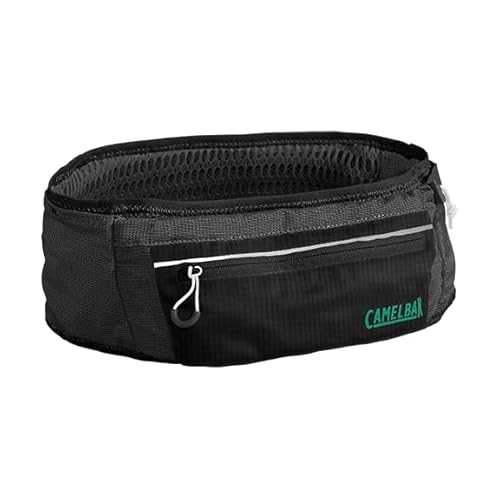
When you are pushing into marathon or ultra-marathon territory, the CamelBak Ultra Belt is designed to support your endurance. It comes equipped with a custom-fit 500ml Quick Stow flask, ensuring you have immediate access to hydration without needing to stop. The material is treated to be lightweight and highly breathable, which helps prevent the dreaded "sweat-soak" that can lead to skin irritation over several hours of exertion.
The pocket configuration is optimized for quick access to nutrition, which is vital when your brain starts to fog late in a long race. It is a robust, well-engineered piece of equipment that prioritizes endurance performance over pure minimalism. If your race day goal involves staying fueled and hydrated for the long haul, this is the belt that will carry the load most comfortably.
Naked Running Band: Best For Minimalists

The Naked Running Band is a marvel of engineering for the runner who wants to carry everything but feel like they are wearing nothing. It is constructed from a proprietary power-mesh fabric that is incredibly thin, yet strong enough to hold a significant amount of weight. It lacks zippers or buckles entirely, relying on high-tension compression to keep your items pinned to your body.
Because it is so thin, it disappears under your race singlet and won’t interfere with your stride in the slightest. You can pack it with flasks, gels, and a phone, and it will remain remarkably stable through sheer compression. If you find traditional belts too bulky or hot, the Naked Running Band is the ultimate minimalist solution for serious racers.
Essential Features For Your Race Day Belt
When evaluating your options, prioritize breathability and moisture-wicking materials. You will be sweating, and a belt that traps heat against your waist will quickly become a source of discomfort. Look for fabrics that dry quickly and don’t lose their elasticity when wet, as synthetic blends are almost always superior to cotton-based components.
- Pocket Security: Always opt for zippers or deep, overlapping folds to ensure gear doesn’t bounce out.
- Weight Distribution: A wider band generally distributes weight better than a thin, rope-like strap.
- Accessibility: Ensure you can reach your nutrition or phone while moving at race pace without needing to look down.
How To Fit Your Belt For Maximum Comfort
A running belt should sit at your natural waist or slightly lower on your hips, depending on your personal preference and the manufacturer’s design. It should be snug enough that you can jump up and down without it sliding, but loose enough that it doesn’t restrict your breathing or abdominal movement. If you feel like you are constantly pulling it up, it is either the wrong size or the material has lost its tension.
Always test your belt with a full load before race day. A belt that feels perfect empty might sag or chafe once you add a phone, gels, and a water flask. Adjust the positioning during your training runs to find the "sweet spot" where the weight feels balanced and secure.
Managing Gear Weight During Your Race
The biggest mistake runners make is overpacking their belts with "just in case" items. Every ounce you carry adds up over the course of a race, leading to unnecessary fatigue and potential form breakdown. Keep your loadout strictly to what you need for your specific nutrition and hydration plan, and leave the extra gear in your drop bag.
Distribute the weight evenly around your waist to prevent the belt from pulling to one side. If you are carrying a heavy phone, place it at the small of your back to keep the center of gravity neutral. By keeping your belt light and balanced, you allow your body to focus entirely on maintaining your pace.
Maintaining Your Running Gear After Use
Running belts take a beating from sweat, salt, and constant friction, so proper maintenance is essential for longevity. Hand wash your belt in cool water with a mild detergent after every long run or race to remove the salt buildup that can degrade elastic fibers. Avoid using fabric softeners, as these can clog the pores of technical fabrics and reduce their breathability.
Always air dry your belt away from direct sunlight, which can break down the synthetic materials over time. Check the seams and zipper tracks periodically for signs of wear or fraying. Taking these small steps will ensure your belt remains just as reliable on your tenth race as it was on your first.
Choosing the right belt is about matching your specific race distance and gear requirements to the right level of support. Whether you prioritize the stability of a FlipBelt or the minimalist feel of a Naked Running Band, the goal is to eliminate distractions so you can focus on the road ahead. Invest in a belt that fits your body and your strategy, and you will find your race day flow far easier to maintain.
