6 Portable Water Testing Devices That Every Parent Should Know
Ensure your child’s drinking water is safe anywhere. Discover 6 user-friendly, portable devices that test for common contaminants instantly.
You watch your kids splash in the pool, a lake, or even the tub at a vacation rental, and for a split second, you wonder: is that water really clean? That fleeting thought is something every parent has, because what you can’t see can absolutely affect your family’s health and fun. Knowing what’s in the water is the first step to ensuring every splash is a safe one.
Disclosure: As an Amazon Associate, this site earns from qualifying purchases. Thank you!
Why Water Quality Matters for Family Safety
Water that looks crystal clear can still be a problem. It’s a lesson you learn quickly around pools and natural bodies of water. For kids, with their sensitive skin and tendency to swallow water, the stakes are even higher.
Imbalanced pool chemistry can lead to everything from red, irritated eyes and dry skin to more serious ear infections. In lakes or streams, runoff after a heavy rain can introduce bacteria that isn’t visible to the naked eye. Even the tap water in an unfamiliar location might have a different mineral content that could upset a sensitive stomach.
The goal isn’t to become a chemist overnight. It’s about having the right tools to get a quick, reliable picture of the water your family is about to jump into. Visibility is not a substitute for testing. A simple check can be the difference between a great day and a week of dealing with a nasty rash or illness.
AquaChek 7-Way Strips for Quick Pool Checks
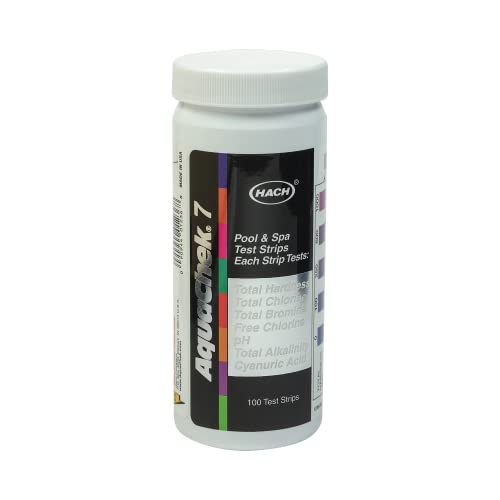

Think of test strips as your first line of defense for any pool or hot tub. They are the fastest, simplest way to get a snapshot of what’s going on with your water chemistry. You just dip a strip, wait a few seconds, and match the colors on the strip to the chart on the bottle. It’s that easy.
These strips typically test for the seven most important factors: total hardness, total chlorine, free chlorine, pH, total alkalinity, and cyanuric acid (stabilizer). This gives you a broad overview. Is your sanitizer level okay? Is the pH going to irritate skin? Is the alkalinity stable? You get answers in under a minute.
But it’s important to understand their role. Test strips are fantastic for routine monitoring to confirm everything is on track. They are less effective for diagnosing a complex problem, as the color-matching can be subjective. If you have persistent cloudy water or an algae bloom, you’ll need a more precise tool to figure out the root cause.
Taylor K-2006 Kit for Accurate Chemistry

When you need to move beyond a quick check and get truly accurate numbers, the Taylor K-2006 is the gold standard. This is the kit many pool professionals carry in their trucks, and for good reason. It uses a method called titration, where you add liquid reagents drop by drop until the water sample changes color. It feels a bit like a high school chemistry experiment, but the results are undeniable.
This kit provides precise readings for free chlorine, total chlorine, pH, alkalinity, calcium hardness, and cyanuric acid. That precision is critical when you’re trying to solve a problem. For example, knowing your free chlorine is exactly 1.5 ppm versus just “low” on a test strip tells you exactly how much shock to add. It removes the guesswork that often leads to over-treating and wasting expensive chemicals.
The tradeoff is time and complexity. A full battery of tests can take 5-10 minutes, and you have to follow the instructions carefully. But for any parent managing a backyard pool, investing in this kit means you can handle 90% of water chemistry issues with the same confidence as a pro. It pays for itself by preventing bigger, more expensive problems down the line.
HM Digital TDS-EZ Meter for Purity on the Go
Easily test your water quality with the HM Digital TDS-EZ. This accurate meter features a hold function to save readings and an auto-off feature to conserve battery life. It measures TDS from 0-9990 ppm with clear LCD display.
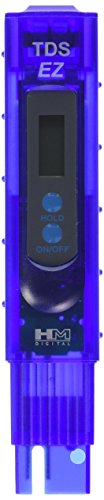
This tool shifts our focus from treated pool water to general water purity. A TDS (Total Dissolved Solids) meter measures the total concentration of dissolved substances—mostly minerals, salts, and metals—in water. It gives you a single number, measured in parts per million (ppm), that acts as a general indicator of water quality.
Imagine you’re at a vacation rental and the tap water tastes a little “off.” A quick test with a TDS meter can tell you if it has a high mineral content. It’s also great for checking the effectiveness of a water filter (like a Brita pitcher) or the quality of bottled water. You’d be surprised how much TDS levels can vary between brands.
It’s crucial to know what a TDS meter doesn’t do. It does not detect harmful contaminants like bacteria, pesticides, or lead. It’s purely a measure of dissolved solids. A low TDS reading is generally a good sign of pure water, but a high reading isn’t automatically dangerous—it might just indicate hard water with lots of calcium and magnesium. It’s a useful data point, especially when you’re away from home.
Watersafe Bacteria Test for E. Coli Detection
Quickly detect coliform (including E. coli) and non-coliform bacteria in your drinking water with results in as little as 6 hours. This easy-to-use, lab-quality kit tests all water sources and detects even single bacteria per mL for peace of mind.

This is a specialized tool for a very specific and serious concern: bacterial contamination. Unlike other tests that give you immediate results, this one is a simple, single-use vial that you fill with a water sample and let sit for 48 hours. If harmful bacteria like E. coli are present, the water will change color.
This test is not for your weekly pool check. It’s for high-stakes situations where you have a genuine concern about safety.
- Testing water from a private well after a flood.
- Checking a remote swimming hole or creek before letting the kids play.
- Confirming the potability of a water source while camping or in an emergency.
The two-day wait time is the biggest drawback, but it provides a level of certainty that no other portable test can. It’s an inexpensive piece of gear that can offer incredible peace of mind when you’re far from a trusted water source. Having one or two of these in a travel bag or emergency kit is a smart move for any adventurous family.
pHin Smart Water Monitor for Effortless Care
Monitor your pool or hot tub water with the pHin HPR1710 to ensure optimal chemical balance. This device helps maintain water quality.

For the busy parent who wants pool care to be as automated as possible, the pHin Smart Water Monitor is a game-changer. This device floats in your pool or hot tub, continuously testing the water temperature, sanitizer, and pH levels around the clock. It then sends all that data directly to an app on your phone.
The real magic is in the recommendations. The app doesn’t just show you numbers; it tells you exactly what chemical to add and precisely how much. It even scans the barcode on your chemical products to tailor the dosage. This completely eliminates the guesswork and the risk of adding too much or too little.
Of course, this convenience comes at a price. The device itself is an investment, and it requires an ongoing subscription for the monitoring service. But for families who value their time and want to ensure their pool is perfectly balanced without constant manual testing, the pHin system can be a worthwhile luxury. It turns pool maintenance from a chore into a simple notification.
Apera Instruments PH60 Pocket pH Tester Pen
This replacement pH probe for the Apera PH60 tester features a lithium glass membrane with a built-in temperature sensor for accurate readings from 0-14 pH and 0-50°C. Its maintenance-free gel electrolyte ensures reliable performance for 12-24 months, ideal for general water solution testing.

While multi-parameter kits are great, sometimes you just need to nail one critical measurement: pH. The pH level of your water is the foundation of everything else. If it’s too high or too low, your chlorine won’t work effectively, and the water will be uncomfortable for swimmers. An accurate pH pen, like the Apera PH60, gives you a precise, digital reading in seconds.
Why dedicate a tool to just one thing? Because pH can be tricky to read accurately on a test strip, where the shades of orange and red can look very similar. A digital pen removes all subjectivity. You dip the probe in the water, and a number appears on the screen. It’s that simple.
This tool is perfect for the parent who wants an extra layer of precision without committing to a full reagent kit. It complements test strips perfectly—use the strips for a broad overview and the pen to get a dead-on pH reading. For anyone with a saltwater chlorine generator or who struggles with fluctuating pH, this little device is an invaluable problem-solver.
Making Sense of Your Water Test Readings
Getting the numbers is just the first step; understanding them is what matters. The most important concept to grasp is water balance. Your readings for pH, alkalinity, and sanitizer don’t exist in a vacuum—they all affect each other. For instance, high alkalinity can make it very difficult to adjust your pH, and an incorrect pH level can render your chlorine almost useless.
Don’t panic over a single reading that’s slightly out of range. Water chemistry is a dynamic system. The key is to look at the overall picture and make small, deliberate adjustments. Start by addressing alkalinity first, then pH, and finally your sanitizer level. This order of operations will save you a lot of time and frustration.
The true value of these testing devices is empowerment. They give you the data you need to maintain your water confidently or to have a more intelligent conversation with the staff at your local pool store. Instead of just saying “my water is cloudy,” you can say, “my free chlorine is low, my pH is 7.8, and my cyanuric acid is high.” That leads to a faster, more effective solution every time.
Ultimately, these tools are about more than just numbers; they’re about confidence. Knowing your water is safe and balanced allows you to relax and focus on what’s important—making lasting memories with your family. So test your water, trust your readings, and enjoy every moment.