6 Benefits of Timers for Pool Pumps That Maximize Performance
Maximize your pool pump’s performance with a timer. Automate filtration schedules to save energy, reduce wear, and ensure consistently clean water.
Ever walk out to your pool and realize you forgot to run the pump yesterday? Now the water looks a little hazy, and you’re playing catch-up with chemicals and filtration. A dedicated pool pump timer is one of the simplest, most effective upgrades you can make, turning that manual chore into an automated system. It’s not just about convenience; it’s about creating a healthier, more efficient, and longer-lasting pool environment.
Disclosure: As an Amazon Associate, this site earns from qualifying purchases. Thank you!
Why Your Pool Pump Needs a Dedicated Timer
A pool pump timer is the brain of your circulation system. Without one, you’re relying on memory to run your pump, which almost guarantees inconsistency. That inconsistency is the root of many common pool problems, from cloudy water to algae blooms.
Think of it as putting your pool on a reliable, non-negotiable schedule. The timer ensures your water is circulated and filtered for the required amount of time, every single day, without you lifting a finger. This consistency is the foundation for clear water, balanced chemistry, and a pump that isn’t being overworked or underutilized.
Cut Energy Costs with the Intermatic T104R Timer
Control your equipment with this 24-hour time switch, ideal for industrial, commercial, and residential use. It handles high power loads up to 40 amps and offers up to 12 on/off cycles daily using included trippers.


Your pool pump is likely one of the biggest energy consumers in your home. Running it 24/7 is an incredible waste of electricity and money. A timer gives you precise control to run the pump only as long as needed to achieve at least one full water “turnover” per day.
A classic mechanical timer like the Intermatic T104R is a workhorse for this exact task. You set the trippers for your desired run time—say, eight hours during the day—and it handles the rest. By cutting unnecessary runtime from 24 hours down to 8, you can slash that portion of your energy bill by up to 65%. It’s a simple device that pays for itself very quickly.
This isn’t about cutting corners on filtration; it’s about being smart. Most residential pools don’t need constant circulation, especially overnight when there’s no bather load or sun breaking down chlorine. A timer lets you match the pump’s work to the pool’s actual needs, eliminating pure energy waste while maintaining pristine water.
Better Filtration with a Hayward TriStar VS Pump
Save energy and money with the Hayward TriStar VS Variable-Speed Pool Pump. Its efficient motor cuts energy costs by up to 90%, while the no-rib basket simplifies maintenance.

Consistent circulation means consistent filtration. When your pump runs on a predictable schedule, your filter can effectively trap debris, dirt, and contaminants. This prevents the buildup that leads to cloudy water and gives algae a foothold.
A timer takes the guesswork out of achieving your daily turnover rate. This is especially powerful when paired with a variable-speed (VS) pump like the Hayward TriStar VS. You can program it to run at a high speed for a couple of hours to skim the surface after heavy use, then have it automatically switch to a long, slow, energy-sipping speed for the main filtration cycle.
This combination of automated scheduling and variable speed is the gold standard for water clarity. The slow, steady circulation is far more effective at filtering out tiny particles than short, powerful blasts. The result is water that doesn’t just look clear but is microscopically cleaner.
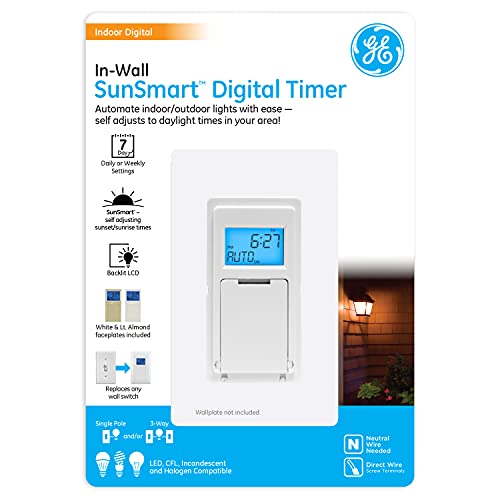
Extend Pump Life with the GE 15470 Digital Timer
Automate your home lighting with the GE SunSmart Digital In-Wall Timer. Its SunSmart technology automatically adjusts to local sunrise/sunset times, while weekly programming and vacation security offer convenient, energy-saving control for lights, fans, and heaters.
The life of your pump’s motor is measured in operational hours and start-up cycles. Manually flicking the switch on and off multiple times a day or just letting it run endlessly both put unnecessary stress on the motor and its components. A pump motor works best with a planned, consistent operational schedule.
Using a timer like the GE 15470 Digital Timer provides that consistency. It ensures the pump starts and stops once per cycle, reducing wear on the motor’s windings and bearings. This smooth, predictable operation prevents the jarring starts and stops that contribute to premature failure.
Think of it like driving a car. Constant stop-and-go traffic is much harder on the engine and brakes than a long, steady highway cruise. A timer gives your pump that smooth “highway” run, helping you get the maximum lifespan out of your expensive equipment.
Automate Schedules with a BN-LINK Heavy Duty Timer
Easily automate your home with this heavy-duty dual-outlet mechanical timer. Its built-in pin dial offers simple 24-hour scheduling for lamps, fans, and holiday lights, saving energy and money.

The most immediate benefit of a timer is reclaiming your time and mental energy. No more daily reminders or second-guessing whether you remembered to turn the pump on or off. You set the schedule once and let the system do its job.
A robust digital timer like the BN-LINK Heavy Duty Timer is perfect for this “set it and forget it” approach. With multiple programmable on/off settings, you can easily create a custom schedule for your pool. You can even set different schedules for weekdays and weekends, or adjust runtimes seasonally with just a few button presses.
This automation is a huge quality-of-life improvement. It means you can go on vacation without worrying about your pool turning green. It means one less thing on your daily to-do list, freeing you up to simply enjoy the water.
Balance Chemicals with a Pentair IntelliFlo VSF
Maintain optimal water clarity with the Pentair IntelliFlo VSF Pump. This 3 HP pump adjusts to flow changes, ensuring consistent performance and up to 90% energy savings compared to traditional pumps.

Properly balanced water chemistry depends on circulation. When water is stagnant, chemicals like chlorine can become concentrated in one area while other parts of the pool are left unprotected. This leads to inefficient sanitation and potential damage to your pool liner or plaster.
A timer ensures that every time you add chemicals, they are thoroughly mixed and distributed throughout the entire body of water. This even distribution makes your chemicals more effective, meaning you use less of them over time. It also prevents the wild swings in pH and chlorine levels that can occur in a poorly circulated pool.
For the ultimate in chemical efficiency, an advanced pump like the Pentair IntelliFlo VSF (Variable Speed and Flow) is a game-changer. Its onboard controller acts as a sophisticated timer, allowing you to maintain a precise flow rate. This slow, constant movement of water is ideal for keeping chemicals perfectly suspended and active, providing the most stable and safe swimming environment possible.
Reduce Noise with Off-Peak Aube by Honeywell Runs
Let’s be honest: pool pumps can be noisy. The constant hum can disrupt a peaceful afternoon by the pool or annoy your neighbors. A timer is the perfect solution to manage this noise pollution.
With a reliable timer, like the popular Aube by Honeywell models, you can schedule the pump to run during times when nobody is outside. Many owners choose to run their pumps overnight. Not only is this quieter, but it can also take advantage of lower off-peak electricity rates offered by some utility companies, saving you even more money.
This simple scheduling trick transforms your backyard experience. It preserves the tranquility of your pool area for swimming and relaxing, relegating the mechanical noise to hours when it won’t bother anyone. It’s a small change that makes a huge difference in your enjoyment of the space.
Choosing Between Mechanical and Digital Timers
The choice between a mechanical and a digital timer really comes down to your needs and budget. There’s no single “best” answer, only the best fit for your situation.
Mechanical timers, like the Intermatic T104R, are the industry standard for a reason. They are incredibly durable, simple to operate, and relatively inexpensive. You set the on/off times by moving physical trippers on a dial. The downside is their lack of precision and features; you typically get one on/off cycle per day, and a power outage will stop the clock, requiring you to reset the time.
Digital timers, like those from GE or BN-LINK, offer far more flexibility. You can program multiple, precise on/off times for different days of the week, and most have a battery backup to save your settings during a power outage. They are perfect for anyone who wants to fine-tune their schedule or automate adjustments between seasons. The tradeoff is a higher initial cost and a more complex setup that can be intimidating for some.
Ultimately, the decision rests on what you value most. If you want simple, bulletproof reliability and are on a tight budget, go mechanical. If you crave precision, scheduling flexibility, and modern features, a digital timer is the superior choice.
Ultimately, a pool pump timer isn’t a luxury accessory; it’s a core component of a well-managed pool system. By investing in this simple device, you save money, improve water quality, extend the life of your equipment, and reclaim your valuable time. It’s one of the smartest, most cost-effective upgrades you can make to ensure your pool is always ready when you are.