6 Causes of Pool Color Changes Every Owner Should Know
A pool’s color reveals its health. Green may mean algae, while brown can signal metals. Discover the 6 key reasons your pool water changes color.
There’s nothing quite like the sinking feeling of pulling back the pool cover to find the water has turned a strange, uninviting color overnight. That crystal clear blue you left yesterday is now a murky green, a hazy white, or something else entirely. Understanding what these colors mean is the first step toward fixing the problem and getting back to swimming.
Disclosure: As an Amazon Associate, this site earns from qualifying purchases. Thank you!
Decoding Your Pool’s Unwanted Color Changes
Your pool’s color is its primary way of communicating with you. A sudden shift from clear blue is a visual alarm bell, signaling an imbalance in the water’s chemistry or the presence of an unwanted guest like algae or bacteria. Ignoring it won’t make it go away; in fact, it will almost certainly get worse.
The most common culprits are green, cloudy or milky, and yellow. Green almost always points to algae, while cloudy water can stem from low sanitizer levels or a pH imbalance. Less common but still important are shades of pink, which indicate a bacterial slime, or even brown and black, which often point to metals in the water.
Think of yourself as a water detective. The color is your first clue, but it rarely tells the whole story. A good test kit is your essential tool for gathering more evidence, allowing you to pinpoint the exact cause and apply the right solution instead of just guessing and wasting expensive chemicals.
Green Water: The Telltale Sign of Algae Bloom
If your pool looks more like a pond, you’re dealing with algae. This is by far the most common color change, and it happens when your sanitizer level—usually chlorine—drops too low to fight off the microscopic plant life that’s always trying to take hold. Warm weather, heavy rain, or a high bather load can deplete chlorine quickly, giving algae the opening it needs.
The fix is a process, not a single action. You need to shock the pool, which means adding a massive dose of chlorine to kill the algae. But that’s just the start. You also have to vigorously brush the pool’s walls and floor to break the algae’s grip, allowing the chlorine to work more effectively.
After shocking and brushing, your work isn’t done. The dead algae will turn the water cloudy and gray, so you’ll need to run your filter continuously for 24-48 hours to clear it out. Don’t forget to backwash or clean your filter as needed, because it will be working overtime to remove all that dead organic material.
Testing for Metals with a Taylor K-2000 Kit
Sometimes, green water isn’t algae at all. If you’ve shocked your pool and the water is clear but still has a distinct green tint, or if you see brown or reddish stains, you might be dealing with metals. Copper, often from copper-based algaecides or corroding heater elements, can turn water green. Iron, common in well water, can create a rusty brown hue.
Simply adding more chlorine can make a metal problem worse by oxidizing the metals faster, which deepens the color and can stain your pool surfaces. This is a classic case where treating the wrong problem makes things worse. You need to know for sure what you’re dealing with.
A high-quality test kit is crucial here. The Taylor K-2000 kit, a favorite among pool pros, can be supplemented with the R-0870 reagent to specifically test for iron and copper. If metals are present, the solution isn’t chlorine; it’s a metal sequestrant or chelating agent. These products bind to the metal ions in the water, preventing them from oxidizing and staining.
Keep your pool pristine with Pool Mate Metal Out. This concentrated formula prevents and removes a wide range of metal and mineral stains, protecting your pool surfaces and equipment. Use it for pool openings, closings, and throughout the season.


Cloudy Water from Low Free Chlorine Levels
Cloudy, milky water that obscures the bottom of your pool is another common ailment. This is often the precursor to an algae bloom and is a clear sign that your sanitizer is struggling. The issue is a lack of "free chlorine," which is the active, germ-killing chlorine in your water.
When chlorine does its job, it binds with contaminants like sweat, sunscreen, and bacteria, becoming "combined chlorine," or chloramines. Chloramines are weak sanitizers, cause that stereotypical "pool smell," and make the water look dull and hazy. If your test kit shows high total chlorine but low free chlorine, you have a chloramine problem.
The solution is to reach "breakpoint chlorination" by shocking the pool. Adding a large dose of chlorine breaks the chemical bonds of the chloramines, releasing them from the water as a gas and restoring a healthy level of free chlorine. This brings back the sparkle and ensures your water is properly sanitized.
Yellow Hues Caused by Seasonal Tree Pollen
During spring and early summer, you might notice a fine, yellow dust coating the surface of your pool or collecting in the corners. This is almost always tree pollen. It can give the water a yellowish or even greenish tint, leading many owners to mistakenly believe they have a stubborn case of mustard algae.
While pollen isn’t directly harmful, it is an organic material that places a heavy demand on your chlorine. The sanitizer works hard to break it down, leaving less free chlorine available to fight off actual algae and bacteria. Pollen is also so fine that it can easily pass through some sand filters, making it difficult to remove.
The key to managing pollen is twofold: physical removal and chemical assistance.
- Skim the surface frequently to remove the bulk of it.
- Run your filter system longer than usual.
- Use a pool clarifier to help clump the tiny particles together so your filter can catch them, or an enzyme product designed to break down organic waste.
Pink Slime: Identifying a Bacterial Infestation
If you spot a slimy, pinkish-red residue in shady corners, around ladders, or inside your skimmer basket, you’re not dealing with algae. This is a bacterial colony, specifically Serratia marcescens, which is an airborne organism that thrives in damp, low-circulation areas. It’s often called "pink algae," but it’s a completely different beast.
Keep your pool clean with this durable skimmer basket. It fits Pentair U-3 and Hayward SP1070 skimmers, featuring a brass weight for stability and a stainless steel handle with a rubber grip for easy removal.

This bacteria is notoriously resistant to normal levels of chlorine. It forms a protective biofilm, or slime layer, that shields it from sanitizers. Because of this, simply adding a standard dose of shock won’t be enough to eradicate it.
Getting rid of pink slime requires a more aggressive approach. First, physically scrub all visible slime off the surfaces. Then, triple-shock the pool and run the filter for at least 24 hours. It’s also critical to thoroughly clean anything that might harbor the bacteria: filter cartridges, skimmer baskets, pool toys, and ladder steps.
Unbalanced pH and Alkalinity Create Cloudiness
Cloudy water isn’t always about chlorine or contaminants. Sometimes, the cause is a fundamental imbalance in your water’s pH and total alkalinity. When pH or alkalinity levels drift too high, it can cause calcium in the water to fall out of solution, a process called precipitation. This results in cloudy water and can lead to rough, scaly deposits on your pool surfaces and equipment.
This type of cloudiness often appears right after you’ve added chemicals, particularly a calcium-based shock (calcium hypochlorite). The sudden spike in pH from the shock pushes the already high-calcium water over the edge, creating a milky haze. It’s a classic sign that your foundational water chemistry was off before you started.
The fix involves rebalancing your water, not just adding more sanitizer. Test your pH and alkalinity first. If they are high, use a pH decreaser (like muriatic acid or sodium bisulfate) to bring them back into the proper range. Always balance your pH and alkalinity before shocking the pool to prevent calcium clouding and ensure your chlorine works at maximum efficiency.
SpaGuard pH Decreaser lowers spa water pH to prevent cloudiness and protect equipment. Achieve balanced water for optimal bather comfort.

Maintaining Clarity with a Regular Test Routine
Ultimately, nearly every pool color problem can be prevented. The secret isn’t some magic chemical; it’s a consistent and disciplined testing routine. Catching a small dip in chlorine or a slight rise in pH is infinitely easier and cheaper to fix than battling a full-blown algae bloom or a cloudy mess.
Commit to testing your water at least once or twice a week during the swim season. Your core tests should always be for free chlorine, pH, and total alkalinity. A reliable liquid drop test kit will give you far more accurate readings than test strips, allowing for more precise chemical adjustments.
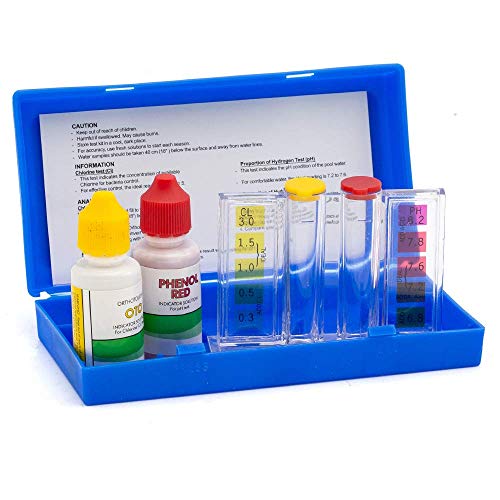
Easily test your pool or spa water for chlorine and pH levels with this convenient 2-way test kit. It features a clear view unit with an integrated color scale for accurate, easy-to-read results, and includes all necessary solutions and a carrying case.
Think of your test kit as your pool’s dashboard. It gives you the critical information you need to keep everything running smoothly. A few minutes spent testing each week will save you hours of brushing, shocking, and filtering down the road, ensuring your pool is always safe, clear, and ready for enjoyment.
Your pool’s color is its language, and learning to interpret it is the most valuable skill a pool owner can have. By understanding these common causes, you can stop reacting to problems and start preventing them, saving yourself time, money, and a lot of frustration.