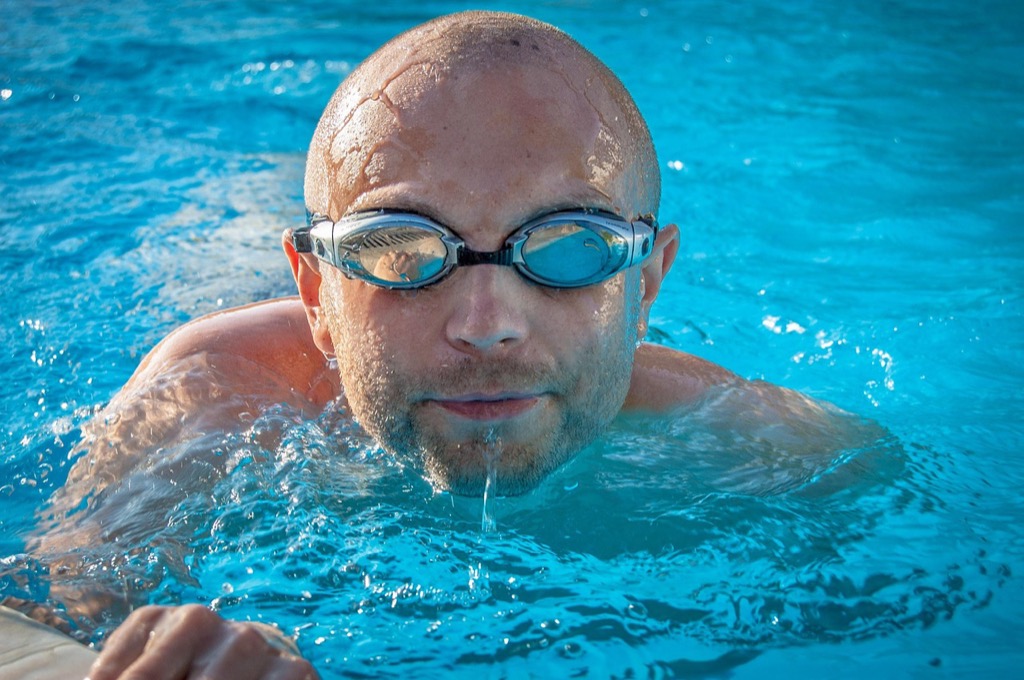
7 Pro Techniques to Maximize Lap Swim Efficiency
Discover 7 proven techniques to boost your lap swimming efficiency: master body position, optimize breathing, perfect stroke mechanics, and track progress for faster, more effective workouts.
Why it matters: Swimming laps efficiently isn’t just about speed—it’s about maximizing your workout while minimizing energy waste and injury risk.
The big picture: Most swimmers unknowingly sabotage their pool sessions through poor technique, ineffective breathing patterns, and suboptimal training approaches that leave them exhausted without meaningful progress.
What’s next: These seven evidence-based techniques will transform your lap swimming from a tedious slog into a powerful, efficient workout that delivers real results in less time.
Disclosure: As an Amazon Associate, this site earns from qualifying purchases. Thank you!
Master Your Body Position for Optimal Hydrodynamics
Your body position determines whether you’ll glide through water like a torpedo or struggle against it like a brick. Proper hydrodynamics can reduce drag by up to 40% and dramatically improve your lap swimming efficiency.
Maintain a Horizontal Body Line
Position your body parallel to the pool’s surface with hips riding high near the waterline. Your legs should trail behind you at the same depth as your torso, creating a straight line from head to toe. Drop your hips and your body acts like a brake, forcing you to work harder for every stroke.
Keep Your Head in Neutral Position
Align your head with your spine by looking straight down at the pool bottom, not forward. Your waterline should hit just above your eyebrows when you’re not breathing. Lifting your head even slightly causes your hips to sink and increases drag exponentially throughout your stroke cycle.
Engage Your Core for Stability
Activate your abdominal muscles to create a rigid connection between your upper and lower body. Your core acts as the foundation that transfers power from your stroke to forward motion. Weak core engagement allows your body to snake through the water, wasting energy and reducing your stroke effectiveness.
Perfect Your Breathing Technique for Sustained Performance
Your breathing pattern directly impacts your swimming endurance and stroke efficiency. Poor breathing technique can disrupt your body position and force you to work harder than necessary.
Develop Bilateral Breathing Patterns
Bilateral breathing every third stroke creates balanced muscle development and improved stroke symmetry. You’ll notice better body rotation and reduced shoulder strain when you breathe on both sides consistently.
Practice alternating your breathing side during easy-paced laps. Start with 25-yard intervals focusing solely on switching sides every third stroke until it becomes automatic.
Time Your Breath Exchange Efficiently
Your breath exchange should happen during the natural roll of your stroke when your shoulder lifts. Turning your head too early or late disrupts your streamlined position and wastes energy.
Exhale continuously underwater through your nose and mouth. Quick, explosive inhalation when your mouth clears the water ensures you’re not holding your breath between strokes.
Practice Breath Control Drills
Hypoxic training builds lung capacity and teaches efficient oxygen use during longer swimming sessions. Try breathing every 5th or 7th stroke for short intervals to improve breath control.
Use the 4-4-4 drill: breathe every 4th stroke for 4 laps then return to normal breathing. This controlled restriction strengthens your respiratory system while maintaining proper technique.
Optimize Your Stroke Mechanics for Maximum Propulsion
Your stroke mechanics directly determine how much forward momentum you generate with each arm cycle. Perfecting these fundamentals transforms wasted motion into efficient propulsion.
Focus on High Elbow Catch
High elbow catch maximizes your pull power by engaging larger muscle groups effectively. Keep your elbow higher than your wrist throughout the underwater phase, creating a paddle-like surface with your forearm and hand. This technique increases your catch area by 30-40% compared to straight-arm pulling.
Practice the catch-up drill to isolate this movement pattern and build muscle memory for proper elbow positioning.
Extend Your Stroke Length
Longer strokes reduce your stroke count while maintaining speed, improving overall efficiency. Reach forward fully before initiating your catch, extending through your lats and shoulders. Elite swimmers typically take 12-16 strokes per 25-yard length compared to 20+ for recreational swimmers.
Count your strokes per length and aim to reduce this number by 2-3 strokes through improved extension and catch technique.
Coordinate Arm and Body Rotation
Synchronized rotation transfers power from your core through your arms for maximum propulsion. Initiate body roll from your hips and core, allowing your shoulders to follow naturally. Your catching arm should enter as your body rotates toward that side.
This coordination reduces shoulder strain while increasing power output by engaging your entire kinetic chain rather than just arm muscles.
Develop Efficient Kick Patterns for Speed and Endurance
Your kick serves as the foundation for sustained swimming performance, providing stability and propulsion while preserving energy for longer distances.
Master the Two-Beat Kick
The two-beat kick synchronizes with your arm strokes, delivering one kick per arm cycle. You’ll generate steady propulsion while maintaining perfect body alignment and conserving energy for distance swimming. Elite distance swimmers rely on this pattern because it reduces oxygen consumption by 15-20% compared to aggressive flutter kicking, making it essential for lap swim efficiency.
Practice Flutter Kick Variations
Flutter kick training builds leg strength and improves your body position control during extended swim sessions. You should practice vertical kicking to develop power, then transition to streamlined flutter kicks with a kickboard. Vary your tempo between fast 25-yard sprints and steady moderate-pace 100s to build both explosive power and endurance capacity.
Balance Power with Energy Conservation
Your kick intensity should match your swimming goals and distance requirements for maximum efficiency. Save aggressive flutter kicking for sprint intervals and race finishes, while using gentler two-beat patterns for longer aerobic sets. Monitor your heart rate during kick-focused sets—you’ll maintain better overall pace when your legs support rather than dominate your stroke mechanics.
Implement Strategic Pacing for Consistent Performance
Smart pacing transforms your lap sessions from energy-draining struggles into controlled, sustainable workouts. The key lies in managing your effort systematically rather than swimming at random intensities.
Use Interval Training Methods
Interval training builds your aerobic capacity while teaching your body to recover efficiently between efforts. Structure your workouts with specific work-to-rest ratios like 100-meter repeats with 15-second rest periods, or pyramid sets that gradually increase then decrease distances.
This approach develops both speed and endurance simultaneously, allowing you to maintain higher average speeds throughout your entire workout.
Monitor Your Stroke Rate
Your stroke rate serves as your swimming speedometer, helping you maintain consistent effort across different sets. Count your strokes per minute during various intensities to establish personal benchmarks for easy, moderate, and hard efforts.
Elite distance swimmers typically maintain 60-70 strokes per minute, while sprinters reach 80-90 strokes per minute during race pace efforts.
Plan Your Energy Distribution
Energy distribution planning prevents the classic mistake of starting too fast and fading badly. Divide your workout into zones: 70% at comfortable effort, 20% at moderate intensity, and 10% at high intensity for balanced development.
This 70-20-10 rule ensures you’re building aerobic base while incorporating enough intensity to improve performance without overwhelming your recovery capacity.
Utilize Pool Tools and Equipment for Enhanced Training
Strategic equipment use transforms basic lap swimming into targeted skill development sessions. The right tools address specific technique deficiencies while building strength and endurance systematically.
Incorporate Fins for Technique Development
Fins elevate your body position while allowing you to focus entirely on stroke mechanics without worrying about sinking legs. Short training fins work best for technique work, providing just enough lift to maintain proper alignment.
Practice your catch and pull phases with enhanced propulsion feedback that helps you feel correct hand positioning. Fins also enable longer sets at higher speeds, building the muscle memory needed for efficient stroke patterns.
Use Pull Buoys for Upper Body Focus
Pull buoys isolate your upper body by supporting your legs, forcing you to generate all propulsion through proper arm technique. This equipment eliminates kick-dependent swimming and reveals stroke inefficiencies immediately.
Position the buoy between your thighs rather than your ankles for maximum stability and core engagement. Extended pull sets with buoys build the specific strength needed for distance swimming while perfecting your stroke rhythm.
Add Paddles for Strength Building
Paddles increase resistance during the pull phase, building functional strength in your lats, shoulders, and core muscles. Start with smaller paddles to avoid shoulder strain and gradually progress to larger sizes.
Focus on maintaining proper catch position as paddles amplify both good and bad technique habits. Use paddles for shorter, high-quality sets rather than long endurance swims to prevent overuse injuries and technique breakdown.
Track Your Progress with Data-Driven Metrics
Consistent measurement transforms swimming from guesswork into scientific improvement. Data reveals patterns you’ll miss through feel alone and creates accountability that drives long-term progress.
Monitor Stroke Count Per Lap
Count your strokes per 25-yard length to identify efficiency trends. Elite swimmers typically take 12-16 strokes per lap in freestyle while recreational swimmers often exceed 20. Record counts during easy sets when technique remains consistent.
Lower stroke counts indicate better distance per stroke and improved efficiency.
Measure Time Intervals Consistently
Time specific distances at identical effort levels to track fitness gains. Use a pace clock or waterproof watch to record 100-yard splits during moderate-effort sets. Consistency beats speed when building your measurement baseline.
Compare times weekly rather than daily to account for natural performance fluctuations.
Analyze Performance Trends
Review monthly data to identify improvement patterns and technique breakdowns. Plot stroke count versus time to reveal whether you’re gaining efficiency or just swimming harder. Strong swimmers maintain low stroke counts even as pace increases.
Sudden increases in stroke count often signal fatigue or technique regression requiring immediate attention.
Conclusion
Transforming your lap swimming starts with implementing these seven techniques systematically. You don’t need to master everything at once – focus on one element at a time and build your skills progressively.
Your swimming efficiency will improve dramatically when you combine proper body positioning with strategic breathing patterns and optimized stroke mechanics. The key lies in consistent practice and patience with the learning process.
Remember that every swimmer’s journey is unique. What works best for you might differ slightly from these guidelines so pay attention to how your body responds to each technique adjustment.
Start incorporating these methods into your next pool session. You’ll notice improvements in both your endurance and overall swimming satisfaction as these techniques become second nature.
Frequently Asked Questions
What is the most important technique for efficient lap swimming?
Mastering proper body position is crucial for efficient lap swimming. Maintaining a horizontal body line with high hips and a neutral head position can reduce drag by up to 40%. Keep your head looking straight down and engage your core for stability to transfer power effectively through your strokes.
How should I breathe while swimming laps?
Practice bilateral breathing by alternating sides to promote balanced muscle development and reduce shoulder strain. Time your breath exchanges with your natural stroke roll to maintain streamline position. Incorporate breath control drills like hypoxic training to enhance lung capacity and oxygen efficiency during longer swims.
What is a high elbow catch and why is it important?
A high elbow catch maximizes pull power by engaging larger muscle groups and can increase your catch area by 30-40%. This technique involves keeping your elbow high during the underwater pull phase. Practice the catch-up drill to build muscle memory for proper elbow positioning and improve overall propulsion.
Should I focus on kick intensity during lap swimming?
Your kick strategy should match your swimming goals. Use a two-beat kick synchronized with arm strokes for distance swimming to conserve energy. Save aggressive flutter kicks for sprint sets, and practice vertical kicking drills to build leg strength while maintaining proper body position control.
How can I pace myself effectively during lap sessions?
Implement strategic pacing using the 70-20-10 rule: 70% comfortable effort, 20% moderate intensity, and 10% high-intensity work. Use interval training with structured work-to-rest ratios to build aerobic capacity. Monitor your stroke rate consistently to maintain effort levels across different sets without overwhelming recovery.
What swimming equipment should I use for training?
Start with fins to elevate body position and focus on stroke mechanics. Use pull buoys to isolate upper body technique and paddles to build strength through increased resistance. Begin with smaller paddles to avoid injury and always maintain proper technique when using any training equipment.
How do I track my swimming progress effectively?
Monitor stroke count per lap (elite swimmers average 12-16 strokes), measure time intervals during moderate-effort sets, and analyze monthly performance trends. Consistent data tracking transforms swimming from guesswork into scientific improvement, revealing patterns and technique breakdowns that drive long-term progress.