7 Ways to Evaluate Pool Surface Wear and Tear That Prevent Accidents
Learn 7 expert techniques to assess pool surface damage, from visual inspections to chemical testing. Catch costly repairs early and keep your pool safe.
The bottom line: Your pool’s surface condition directly impacts safety, aesthetics, and long-term maintenance costs.
Why it matters: Pool surfaces endure constant exposure to chemicals, weather, and heavy use – making regular evaluation essential for preventing costly repairs and potential safety hazards.
What’s next: Recognizing early warning signs and understanding proper assessment techniques can save you thousands in renovation costs while keeping your pool safe and beautiful.
Disclosure: As an Amazon Associate, this site earns from qualifying purchases. Thank you!
Conduct a Visual Surface Inspection
Your eyes are your best diagnostic tool when evaluating pool surface conditions. A systematic visual inspection reveals most surface problems before they become costly repairs.
Check for Visible Cracks and Chips
Examine your pool’s surface systematically, working from shallow to deep end in overlapping sections. Look for hairline cracks that often appear first along step edges and corners where stress concentrates. Small chips typically develop around return fittings and light fixtures where chemical concentrations are highest. Document crack locations with photos since they’ll spread quickly once water penetrates the surface layer.
Look for Discoloration and Staining Patterns
Scan for color changes that indicate chemical imbalances or structural issues beneath the surface. Dark streaks often signal metal corrosion from pool equipment, while yellow-brown patches typically indicate organic matter buildup in porous areas. White chalky deposits suggest calcium buildup from high pH levels, and blue-green stains usually point to copper pipe corrosion affecting your pool’s circulation system.
Identify Rough or Uneven Surface Areas
Run your hands along suspect areas to detect texture changes your eyes might miss. Rough patches indicate surface deterioration where the finish is breaking down, creating bacteria harboring spots and potential injury risks. Hollow-sounding areas when tapped suggest delamination underneath, while raised bumps often indicate trapped air or moisture causing the surface to separate from its substrate.
Perform a Physical Touch Test
Your hands can detect surface problems that your eyes might miss. Running your palm across different pool areas reveals texture changes and potential safety hazards before they become major issues.
Feel for Surface Texture Changes
Run your palm slowly across various pool sections to detect subtle changes in texture. Your fingertips will catch rough patches, raised areas, or indentations that indicate surface deterioration. Pay special attention to high-traffic zones like steps and shallow end areas where wear accelerates. Focus on transitions between different materials or where the surface meets fixtures.
Test Surface Smoothness with Your Hand
Glide your hand horizontally across the pool surface using consistent pressure to identify smooth versus rough areas. Normal pool surfaces should feel uniformly smooth with minimal texture variation. Check multiple depths including the waterline area where chemical exposure is highest. Document any areas where your hand catches or feels resistance during the sweep.
Identify Areas of Increased Roughness
Target spots around return jets, lights, and step edges where roughness typically develops first due to water circulation and foot traffic. These high-stress areas often show early signs of surface breakdown through increased texture. Compare the roughness between different sections of your pool to establish a baseline for normal wear versus problem areas requiring attention.
Examine the Pool Waterline
The waterline serves as ground zero for most pool surface deterioration. This area endures constant chemical exposure and fluctuating water levels that accelerate wear patterns.
Inspect Tile Condition at Water Level
Check each tile for cracks, chips, or loose sections around the entire waterline perimeter. Focus on corner joints and areas where tiles meet different materials like coping stones.
Document any missing tiles or pieces that move when pressed. These damaged areas allow water infiltration behind the tile surface, creating bigger structural problems.
Check for Scale Buildup and Mineral Deposits
Look for white, chalky deposits or rough crystalline formations along the waterline tiles and adjacent surfaces. These mineral buildups indicate poor water chemistry balance over time.
Test suspected scale areas by scraping gently with a plastic tool. Hard deposits that resist easy removal signal advanced mineral accumulation requiring professional treatment.
Assess Grout Lines for Deterioration
Run your finger along grout joints to detect cracking, crumbling, or missing sections between waterline tiles. Pay special attention to horizontal grout lines that bear more stress.
Dark staining or algae growth in grout indicates water penetration. Soft or powdery grout texture means deterioration has compromised the waterproof barrier around your tiles.
Assess Chemical Balance Impact on Surfaces
Your pool’s chemical balance directly affects surface longevity more than any other factor. Poor water chemistry creates a domino effect of deterioration that accelerates exponentially over time.
Monitor pH Level Effects on Pool Materials
High pH levels above 7.8 cause calcium scaling and surface pitting on plaster and concrete surfaces. You’ll notice white, chalky deposits forming first around return jets and step edges where water circulation creates the most chemical contact.
Low pH below 7.2 creates acidic conditions that dissolve calcium-based surfaces, leaving behind rough, etched areas that feel like sandpaper when you run your hand across them.
Evaluate Chlorine Damage to Surface Coatings
Excessive chlorine levels above 5 ppm bleach colored surfaces and break down protective sealers on painted pools. You’ll see fading patterns that follow water circulation routes, with the most severe damage occurring near chlorine feeders and main drains.
Vinyl liners become brittle and develop stress cracks along fold lines when chlorine levels stay consistently high for extended periods.
Check for Chemical Etching or Bleaching
Chemical etching appears as dull, whitish patches on dark surfaces where acid washing or shock treatments concentrated. These areas feel rough to the touch and create permanent texture changes that can’t be reversed through rebalancing.
Bleaching shows up as irregular light spots on colored plaster or paint, typically spreading outward from chemical distribution points in your pool’s circulation system.
Investigate Structural Integrity Issues
Beyond surface-level deterioration, you need to assess whether your pool’s foundation remains sound and stable.
Look for Settling or Movement Cracks
Settlement cracks appear as diagonal or stair-step patterns that extend through multiple surface areas. You’ll typically find these running from the shallow end toward the deep end or radiating from corners where structural stress concentrates.
Check around pool equipment pads and deck joints where ground movement creates the most pressure. Document any cracks wider than a quarter-inch, as these indicate significant structural shifting that requires professional evaluation.
Check for Hollow-Sounding Areas When Tapped
Tap systematically across your pool surface using a hammer handle or similar tool to identify delaminated areas. Solid surfaces produce a sharp, clear sound while compromised areas create a hollow, drum-like echo.
Focus on areas around skimmers, returns, and step attachments where water infiltration commonly occurs. Mark hollow spots with chalk since these areas often expand rapidly once water penetrates behind the surface material.
Examine Pool Steps and Ladder Anchor Points
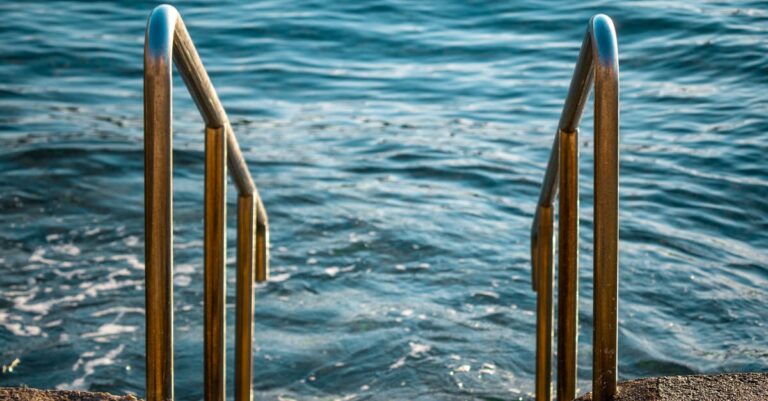
Inspect all anchor bolts and mounting hardware for looseness or corrosion that could compromise swimmer safety. Check for gaps between steps and pool walls, which indicate structural movement or deteriorating sealant.
Test handrails by applying moderate pressure to detect any wobbling or shifting. Look for stress cracks radiating from anchor points, as these high-load areas often show the first signs of structural fatigue.
Test Water Penetration and Seepage
Water infiltration through compromised pool surfaces creates costly structural damage and signals deteriorating waterproof barriers. Testing for penetration issues helps you catch problems before they escalate into major repairs.
Perform a Water Loss Test
Turn off your pool equipment and mark the water level with tape or a grease pencil. Check the level after 24 hours – normal evaporation removes about 1/4 inch daily in most climates. Loss exceeding 1/2 inch suggests leaks through surface cracks or compromised seals around fittings.
Check for Wet Spots Around Pool Perimeter
Walk around your pool deck and inspect for consistently damp areas or soft spots in the surrounding soil. These wet zones often indicate water seeping through hairline cracks or deteriorated grout lines. Pay special attention to areas near pool lights and return fittings where penetration commonly occurs first.
Monitor Groundwater Issues Near Pool Structure
Observe how groundwater behaves around your pool during heavy rains or irrigation cycles. Rising water tables can push through weakened pool surfaces from below, creating hydrostatic pressure damage. Look for unexplained water appearing in equipment areas or persistent moisture along the pool’s foundation edges.
Document Surface Wear Patterns Over Time
Creating a comprehensive record of your pool’s surface condition helps you track deterioration patterns and make informed maintenance decisions. Documentation provides concrete evidence of changes that might otherwise go unnoticed over months or years.
Take Regular Photographs for Comparison
Photograph your pool surface monthly from the same angles and lighting conditions. Focus on problem areas like waterlines, steps, and return fittings where wear typically accelerates. Take close-up shots of any existing damage to monitor progression over time. Store these images in dated folders on your phone or computer for easy comparison. This visual timeline becomes invaluable when deciding whether surface issues require immediate attention or can wait for scheduled maintenance.
Keep Maintenance Records and Repair History
Maintain a detailed log of all chemical treatments, repairs, and surface-related incidents. Record dates, chemical levels, weather conditions, and any observed changes in surface texture or appearance. Include receipts and contractor reports for professional work performed on your pool. Note correlations between chemical imbalances and surface damage patterns. This documentation helps identify recurring problems and proves essential when filing warranty claims or planning major renovations.
Track Seasonal Wear and Weather Damage
Monitor how different seasons affect your pool surface deterioration patterns. Document freeze-thaw damage in colder months, UV bleaching during summer, and storm-related wear after severe weather events. Note which areas show accelerated wear during heavy usage periods versus off-season months. Record temperature extremes and their impact on surface expansion or contraction. This seasonal tracking reveals when your pool faces the greatest stress and helps you schedule preventive maintenance accordingly.
Conclusion
Regular pool surface evaluation isn’t just about aesthetics—it’s your first line of defense against costly repairs and safety hazards. By implementing these seven assessment techniques you’ll catch problems early when they’re still manageable and affordable to fix.
Your pool’s surface tells a story through cracks discoloration texture changes and structural shifts. Learning to read these signs empowers you to make informed decisions about maintenance timing and budget allocation.
Remember that consistency is key. Monthly evaluations combined with proper documentation will help you establish patterns and predict when professional intervention might be necessary. This proactive approach protects both your investment and your family’s safety while ensuring years of enjoyable pool ownership.
Frequently Asked Questions
How often should I inspect my pool surface?
You should conduct a visual inspection of your pool surface monthly, with more thorough assessments every 3-6 months. Regular evaluations help catch early warning signs like cracks, chips, and discoloration before they become expensive repairs. During peak swimming season, increase inspection frequency to identify wear patterns and safety hazards quickly.
What are the most common signs of pool surface damage?
The most common signs include visible cracks and chips (especially around steps and return fittings), discoloration and staining patterns, rough or uneven texture areas, and deteriorating waterline tiles. Scale buildup, mineral deposits, and grout line deterioration around the waterline are also key indicators of surface problems requiring attention.
How does poor water chemistry affect my pool surface?
Poor water chemistry accelerates surface deterioration significantly. High pH levels cause calcium scaling and surface pitting, while low pH creates acidic conditions that dissolve calcium-based surfaces. Excessive chlorine can bleach colored surfaces and damage protective sealers. Chemical imbalances lead to etching, bleaching, and permanent texture changes that cannot be reversed.
What is the touch test and why is it important?
The touch test involves running your hands across different pool surface areas to detect texture changes and potential safety hazards. Focus on areas around return jets, lights, and step edges where roughness typically develops first. This physical assessment helps identify problems that may not be visible during visual inspections alone.
Why is the waterline area particularly vulnerable to damage?
The waterline is “ground zero” for pool surface deterioration due to constant chemical exposure and fluctuating water levels. This area experiences the most stress from chemical reactions, scale buildup, and mineral deposits. Waterline tiles often crack, chip, or become loose, and grout lines deteriorate faster, compromising the waterproof barrier.
How can I identify structural integrity issues in my pool?
Look for settling or movement cracks appearing as diagonal or stair-step patterns, particularly around equipment pads and deck joints. Tap the surface to identify hollow-sounding areas indicating delamination. Check pool steps and ladder anchor points for looseness or corrosion, and test handrails for stability to ensure structural safety.
What documentation should I maintain for my pool surface?
Take regular photographs from consistent angles and lighting to track surface changes over time. Maintain detailed logs of chemical treatments, repairs, and surface incidents to identify recurring problems and assist with warranty claims. Document seasonal wear patterns and weather damage to help schedule preventive maintenance effectively.
How do I test for water penetration and leaks?
Perform a water loss test to check for leaks by marking the water level and monitoring changes over 24-48 hours. Inspect the pool perimeter for wet spots or unusual moisture. Monitor groundwater behavior around the pool during heavy rains, as these signs can indicate deteriorating waterproof barriers requiring immediate attention.