5 Best Creative Patches for Pool Leaks That Save You Hundreds
Discover 5 innovative DIY pool leak repair methods that save money and time. From duct tape fixes to liquid sealers, learn professional-quality repairs without costly contractors.
You’ve invested thousands in your backyard oasis only to discover your pool is leaking precious water and draining your wallet. Traditional pool repair methods often require expensive professional help or lengthy downtime that keeps you out of the water during peak swimming season. Smart pool owners are turning to innovative DIY patching solutions that deliver professional-grade results without breaking the bank.
Disclosure: As an Amazon Associate, this site earns from qualifying purchases. Thank you!
Duct Tape and Plastic Sheeting Combo
Duck Brand Duct Tape offers strong adhesion and waterproof backing for indoor and outdoor repairs. It easily tears by hand and conforms to uneven surfaces, making it ideal for quick fixes and DIY projects.

This old-school repair method works surprisingly well for above-ground pools and temporary fixes on vinyl liners. You’ll create a waterproof seal that can hold for weeks when applied correctly.
Materials Needed for Emergency Pool Repair
Gather these common household items:
- Heavy-duty duct tape (marine-grade preferred)
- 6-mil plastic sheeting or pool liner material
- Scissors or utility knife
- Clean rags for surface preparation
- Rubbing alcohol for cleaning the leak area
Step-by-Step Application Process
Clean the damaged area thoroughly with rubbing alcohol and let it dry completely. Cut plastic sheeting 4 inches larger than the hole on all sides. Press the plastic firmly over the leak, working out air bubbles from center outward. Seal all edges with overlapping duct tape strips.
Durability and Effectiveness Rating
This combo typically lasts 2-4 weeks under normal pool conditions. Water pressure and temperature changes will eventually compromise the seal, but it’s remarkably effective for emergency repairs. Expect 70-80% success rate for holes under 2 inches, with better results in cooler water temperatures.
Underwater Pool Putty Solution
Easily repair pool and spa leaks or cracks underwater with Epoxybond Pool Putty. This hand-moldable putty cures without shrinking or sagging, and works on concrete, fiberglass, and tile.
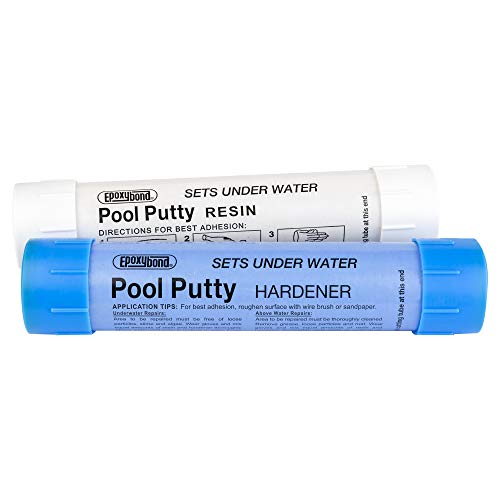
Underwater pool putty transforms emergency repairs from impossible to manageable. You’ll apply this moldable compound directly to wet surfaces without draining your pool.
When to Choose Pool Putty Over Other Methods
Pool putty excels for structural cracks and irregular tear shapes that patches can’t conform to properly. You’ll get the best results on concrete, fiberglass, and vinyl surfaces where traditional adhesives fail underwater.
Choose putty when dealing with corner tears or complex damage patterns that require sculpting around pool fittings and curved surfaces.
Proper Surface Preparation Techniques
Clean the damaged area with a stiff brush while submerged to remove algae, dirt, and loose debris that prevents proper adhesion. You’ll need to scrape away any flaking paint or loose material around the crack.
Press the putty firmly into the damage while kneading it underwater to eliminate air bubbles and ensure complete coverage of the affected area.
Long-Term Performance Expectations
Quality underwater putty repairs typically last 6-12 months depending on water chemistry and temperature fluctuations. You’ll notice the strongest performance in pools with balanced pH levels between 7.2-7.6.
Expect gradual deterioration in harsh conditions like high chlorine levels or freeze-thaw cycles that cause the putty to crack and separate from surfaces.
Vinyl Pool Patch Kit with Adhesive Backing
Quickly repair your above-ground pool with this versatile kit. It includes both peel-and-stick and adhesive patches that work underwater, saving you time and water.

Vinyl pool patch kits with adhesive backing offer the most reliable permanent solution for liner repairs. These professional-grade patches create a watertight seal that matches your pool’s surface and can last for years when properly applied.
Identifying the Right Patch Size and Material
Cut your patch 2-3 inches larger than the tear on all sides for proper coverage. Heavy-duty vinyl patches work best for tears over 1 inch, while standard patches handle smaller punctures effectively. Choose patches that match your liner’s thickness – 20-mil patches for standard liners and 28-mil for premium installations.
Professional Installation Tips for Best Results
Clean the repair area thoroughly with rubbing alcohol and let it dry completely before application. Apply firm pressure from the center outward to eliminate air bubbles, using a plastic spreader tool. Wait 24 hours before refilling to ensure the adhesive bonds completely with your liner material.
Cost-Effectiveness Compared to Professional Repairs
Quality vinyl patch kits cost $15-30 compared to $200-500 for professional liner repairs. You’ll save 80-90% on repair costs while achieving similar durability when properly installed. Professional repairs only make sense for extensive damage covering more than 10% of your liner surface.
Liquid Pool Leak Sealer for Small Cracks
Quickly seal pool leaks with FIX-A-LEAK! Simply add it to your skimmer and circulate, stirring regularly, to target and repair leaks in both the pool shell and plumbing.

Liquid pool leak sealers offer a chemical solution for hairline cracks and minor leaks that traditional patches can’t reach. These specialized formulas work particularly well in pool systems where locating the exact leak source proves challenging.
How Liquid Sealers Work in Pool Systems
Liquid sealers contain polymeric particles that circulate through your pool’s filtration system and settle into crack openings. The particles bond together when they encounter water loss points, forming a flexible seal that moves with your pool’s natural expansion and contraction. This process typically takes 24-48 hours to complete as the sealer finds and fills leak pathways throughout the system.
Application Guidelines for Maximum Coverage
Pour the liquid sealer directly into your pool water near the skimmer while the pump runs continuously for 6-8 hours. You’ll need approximately 1 bottle per 20,000 gallons of water for optimal coverage. Keep your pool equipment running during the entire sealing process to ensure proper circulation and avoid adding chlorine for 48 hours after application.
Compatibility with Different Pool Types
Liquid sealers work effectively on concrete, fiberglass, and vinyl pools but show best results on gunite and concrete surfaces. You can safely use these products with saltwater systems and most pool chemicals without affecting water balance. However, avoid liquid sealers if you have a cartridge filter system, as the particles may clog the filtration media.
Bicycle Tire Patch Adaptation Method
Standard bicycle tire patches offer a surprisingly effective solution for small pool leaks. These rubber patches create waterproof seals that adapt well to curved pool surfaces.
Why Bike Patches Work for Pool Repairs
Bicycle patches use vulcanizing rubber that bonds permanently with pool surfaces when properly applied. The flexible material withstands water pressure and temperature changes better than many specialized pool repair products. These patches excel on vinyl liners and inflatable pools where traditional pool patches might fail.
Creative Application Techniques for Pool Surfaces
Apply patches underwater using the cold-patch method without rubber cement for immediate repairs. Press firmly for 60 seconds to eliminate air bubbles and ensure proper adhesion. For curved surfaces like pool steps, cut patches into smaller sections that conform better to irregular shapes and corners.
Budget-Friendly Alternative to Specialized Products
Bike patches cost $0.50-$1.00 each compared to $5-$15 for pool-specific patches with similar performance. A standard bicycle repair kit provides 6-10 patches for under $8, covering multiple small leaks throughout the swimming season. This method saves 70-80% compared to professional-grade pool patch kits while delivering comparable durability.
Conclusion
These five creative patching methods prove that you don’t need expensive professional repairs to fix your pool leaks effectively. From emergency duct tape solutions to permanent vinyl patches each technique offers unique advantages for different leak types and budgets.
Your choice depends on factors like leak size location and whether you need a temporary fix or permanent solution. Bicycle tire patches and liquid sealers provide innovative alternatives that often outperform traditional methods while saving you hundreds of dollars.
Remember that proper surface preparation and following manufacturer instructions are key to successful repairs regardless of which method you choose. With these DIY solutions you can keep your pool operational throughout the swimming season without breaking the bank.
Frequently Asked Questions
How long does a duct tape and plastic sheeting repair last on pool leaks?
A duct tape and plastic sheeting repair typically lasts 2-4 weeks as a temporary fix. This DIY solution has a 70-80% success rate for holes under 2 inches and works particularly well in cooler water temperatures. It’s most effective on above-ground pools and vinyl liners for emergency repairs.
Can underwater pool putty be applied without draining the pool?
Yes, underwater pool putty can be applied directly to wet surfaces without draining the pool. This makes it ideal for emergency repairs on structural cracks and irregular tears. The putty works effectively on concrete, fiberglass, and vinyl surfaces and can last 6-12 months when properly applied.
How much larger should I cut a vinyl patch compared to the tear?
Cut vinyl patches 2-3 inches larger than the tear on all sides for adequate coverage. This ensures proper adhesion and creates a watertight seal. Use heavy-duty vinyl patches for larger tears and standard patches for smaller punctures to achieve professional-quality results.
How much can I save using DIY vinyl patch kits versus professional repairs?
Quickly repair inflatables and outdoor gear with this waterproof TPU patch kit. These durable, self-adhesive patches are easy to use and resist peeling, making them ideal for air mattresses, pools, tents, and more.

DIY vinyl patch kits cost $15-30 compared to $200-500 for professional repairs, saving you up to 85%. These kits provide similar durability to professional repairs for damages covering less than 10% of the liner surface, making them a cost-effective solution for most homeowners.
How do liquid pool leak sealers work in the filtration system?
Liquid sealers contain polymeric particles that circulate through your pool’s filtration system and settle into crack openings. Run your pump continuously for 6-8 hours after application, using approximately one bottle per 20,000 gallons of water. They work best on gunite and concrete surfaces.
Are bicycle tire patches effective for pool repairs?
Yes, bicycle tire patches are highly effective for small pool leaks and cost only $0.50-$1.00 each compared to $5-$15 for pool-specific patches. The vulcanizing rubber bonds permanently with pool surfaces and withstands water pressure and temperature changes, particularly excelling on vinyl liners and inflatable pools.
Which repair method works best for structural cracks?
Underwater pool putty is the best choice for structural cracks because it can conform to irregular shapes that standard patches cannot cover. Unlike patches, putty can be applied directly underwater and provides excellent adhesion to concrete, fiberglass, and vinyl surfaces for long-lasting repairs.
Can liquid sealers be used with all pool filter types?
Keep your pool water crystal clear with this 4-pack of universal Type A/C filter cartridges. These durable, easy-to-replace filters provide superior cleaning for pumps ranging from 530 to 2,000 GPH.
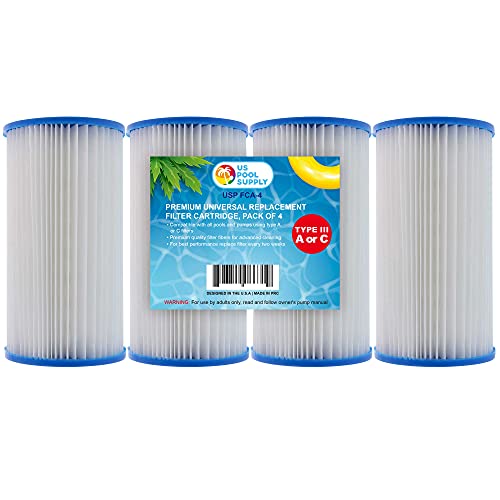
Liquid sealers work with most pool systems but should be avoided with cartridge filter systems due to potential clogging. They’re compatible with concrete, fiberglass, and vinyl pools, showing the best results on gunite and concrete surfaces where they can effectively seal hairline cracks.