
8 Essential Safety Gear Picks for Paddleboarding in Rough Water
Stay safe on your next adventure with these 8 essential safety gear picks for paddleboarding in rough water. Prepare for your trip and shop our expert guide now.
The wind shifts suddenly, turning a calm afternoon paddle into a grueling battle against whitecaps and chop. When the water gets rough, standard flatwater habits won’t keep you safe; you need specialized, high-performance gear designed to withstand the violent forces of open water. Equipping yourself with the right safety essentials ensures that a sudden spill remains a manageable detour rather than a life-threatening emergency.
Disclosure: As an Amazon Associate, this site earns from qualifying purchases. Thank you!
Understanding the Risks of Rough Water Paddling
Rough water introduces unpredictable variables like wind-driven swell, strong tidal currents, and sudden temperature drops. Unlike inland lakes on a calm day, coastal waters or turbulent rivers can separate a paddler from their board in a matter of seconds. Wind acts as a sail on an inflatable or hard paddleboard, blowing it away faster than anyone can swim.
Cold water shock and physical exhaustion are silent threats that accelerate rapidly when fighting chop. Falling off repeatedly drains energy reserves, making self-rescue increasingly difficult without proper support systems. Understanding these dynamics shifts the focus from simply staying afloat to actively managing communication, visibility, and thermal protection.
Life Jacket – Astral BlueJacket Life Jacket
A life jacket is the single most critical piece of safety gear, but rough water demands more than a basic flotation device. You need a jacket that offers high-mobility flotation without riding up when climbing back onto a board in heavy chop. It must also have accessible storage for rescue essentials and a secure fit that stays put during high-impact spills.
The Astral BlueJacket Life Jacket excels here because of its two-panel design and foam construction that mimics the natural movement of a paddler’s torso. This life jacket features a freely floating internal harness that allows the outer foam panel to slide up and down, keeping the vest firmly anchored around your torso even when your arms are raised. It also boasts a large clamshell pocket on the chest, perfect for storing a radio, whistle, or emergency snacks.
Before buying, pay close attention to sizing, as the BlueJacket relies on a snug, athletic fit across the ribs to prevent riding up. While it is highly adjustable, paddlers with broader shoulders should spend time adjusting the side straps to ensure a balanced fit.
- USCG Type: Type III Approved
- Buoyancy: 15.5 lbs of PVC-free foam
- Key Features: Side-entry design, hydration sleeve, lash tab for rescue knife
- Best For: Active touring, rough ocean paddling, white water SUP
This vest is ideal for dedicated paddlers who prioritize mobility and storage for safety gear. It is not the right choice for casual flatwater paddlers who prefer lightweight, inflatable belt packs that offer minimal protection in rough, open water.
Board Leash – FCS Coiled Calf SUP Surf Leash
A paddleboard is a giant flotation device, and in rough water, a leash is the only thing keeping it from blowing away. A loose board in a 15-knot headwind will outrun even the strongest swimmer in seconds. A heavy-duty, reliable leash keeps your board within arm’s reach without dragging in the water or tangling around your ankles.
The FCS Coiled Calf SUP Surf Leash is engineered to withstand the intense loads of ocean swells and heavy chop. Mounting to the calf keeps the heavy-duty coiled cord elevated out of the water, preventing drag and reducing the risk of catching floating debris or kelp. The double stainless-steel swivels prevent the cord from twisting or knotting, ensuring the leash stays extended and ready when you take a swim.
Keep in mind that a calf leash requires a snug, secure fit just below the knee to prevent slipping under tension. It is crucial to inspect the neoprene cuff regularly for wear, especially if you frequently paddle in high-salinity saltwater environments.
- Cord Thickness: 7mm high-strength polyurethane
- Attachment Point: Calf cuff with quick-release pull tab
- Swivels: Marine-grade double stainless steel
- Best For: Rough water touring, downwind paddling, ocean swells
This leash is perfect for coastal paddlers facing wind, chop, and strong currents who need to keep their board close without sacrificing deck space. It is not suitable for fast-moving whitewater rivers where a quick-release torso belt leash is required to prevent entrapment.
Marine VHF Radio – Standard Horizon HX890
Cell phones often lose signal or become useless when wet, making a dedicated marine VHF radio your most reliable link to search and rescue. In rough water, being able to call the Coast Guard or local harbor patrol immediately can make the difference between a swift rescue and hours spent adrift. A proper radio must be waterproof, buoyant, and easy to operate with cold, wet hands.
The Standard Horizon HX890 is a powerhouse of safety features, boasting built-in GPS and Digital Selective Calling (DSC). With the press of a single, protected distress button, this radio transmits your exact GPS coordinates and vessel information to rescue authorities. It also features an active noise-canceling function that filters out wind and wave noise, ensuring your voice is heard clearly when conditions are at their worst.
Users must register for a free Maritime Mobile Service Identity (MMSI) number to activate the DSC distress features, which is a crucial step often overlooked by beginners. It is also important to practice operating the menus and locking the keypad so you do not accidentally change channels while paddling.
- Waterproof Rating: IPX8 (Submersible up to 4.9 feet for 30 minutes)
- Battery Life: Up to 11 hours with high-capacity Li-ion battery
- Safety Features: Water-activated strobe light, DSC distress button, MOB (Man Overboard) function
- Best For: Off-shore coastal paddling, open-ocean crossings, solo touring
This radio is a must-have for solo paddlers and coastal explorers traversing open, unpopulated waters. It is unnecessary, however, for paddlers staying close to guarded beaches or small inland lakes where visual contact with shore is never lost.
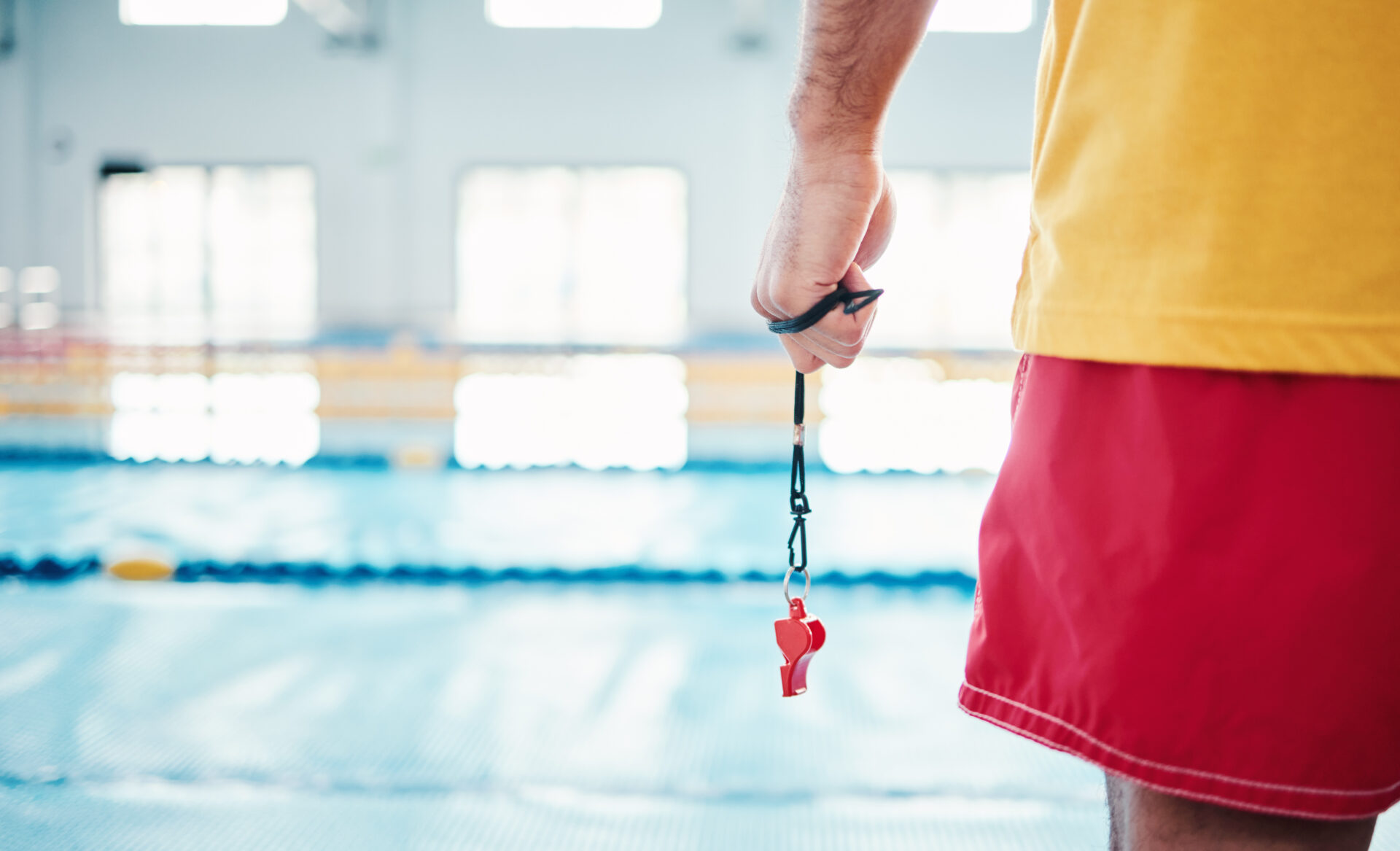
Emergency Whistle – Storm All-Weather Safety Whistle
When winds howl and waves crash, the human voice is easily drowned out by the environment. An emergency whistle provides a high-pitched, penetrating sound that carries much farther than screaming, allowing you to signal nearby boaters or search teams. Because rough water inevitably gets you wet, you need a whistle that functions perfectly even when completely submerged.
The Storm All-Weather Safety Whistle is widely recognized as one of the loudest whistles on the market, capable of being heard over a mile away. Its unique patented design allows it to perform flawlessly underwater or in driving rain, as the internal chamber naturally clears water when blown. The high-impact thermoplastic body is highly durable and designed to clip securely to your life jacket harness.
Be prepared for the sheer volume of this whistle; blowing it in a closed space or too close to your own ears can cause temporary hearing discomfort. It is best to attach it to your life jacket shoulder strap on a short lanyard so it can be reached and blown without restricting your vision.
- Sound Decibel Level: Up to 120 dB
- Material: High-impact thermoplastic
- Attachment Option: Dual-chamber design with integrated lanyard hole
- Best For: All-weather marine safety, low-visibility signaling
This whistle is essential for every rough-water paddler who wants a foolproof, low-cost signaling device that works in any storm. It is not suitable for those looking for a compact, stealthy whistle, as its bulky frame is designed solely for maximum volume and grip.
Rescue Knife – NRS Co-Pilot Titanium Knife
Getting tangled in a leash, fishing line, or discarded rigging in rough water can quickly drag a paddler under. A rescue knife mounted to the lash tab of your life jacket allows you to cut yourself free in a split second. In high-stress situations, you need a knife that can be deployed instantly with one hand and won’t rust from constant exposure to saltwater.
The NRS Co-Pilot Titanium Knife is a stellar safety tool for paddlesports because of its corrosion-resistant titanium blade. The blunt safety tip prevents accidental punctures of your skin or inflatable paddleboard, while the squeeze-lock sheath keeps the knife securely locked until you squeeze both sides to release it. It features both smooth and serrated edges, along with a convenient rope-cutting hook for slicing through thick webbing or cords.
Because the titanium blade is exceptionally hard, sharpening it requires specialized diamond stones once it eventually loses its edge. Always practice releasing the knife from its sheath blindfolded, as you may need to deploy it in dark, churning water under duress.
- Blade Material: Corrosion-free Titanium alloy
- Length: 5.75 inches total (2.25-inch blade)
- Sheath Mechanism: Secure squeeze-lock design
- Best For: Saltwater SUP touring, whitewater safety, emergency line cutting
This knife is a critical safety tool for paddlers navigating areas with heavy marine traffic, fishing lines, or thick kelp beds. It is not intended as a general-purpose camp or utility knife, as the blunt tip limits its versatility on land.
Emergency Strobe – ACR Firefly PRO LED Strobe
If you are separated from your board or drifting after dark, visibility is your lifeline. A high-intensity emergency strobe light makes you visible to rescue vessels and aircraft from miles away, even in heavy swell. It must be completely waterproof, long-lasting, and capable of activating automatically or manually when you enter the water.
The ACR Firefly PRO LED Strobe is designed to meet strict military and commercial survival standards. Utilizing a cool-white LED, it produces an ultra-bright flash that is visible for over three miles in clear conditions and can run continuously for over 56 hours on AA batteries. Its slim profile fits comfortably on a life jacket shoulder strap, and its casing is built to withstand extreme impacts and thermal shock.
While the strobe is incredibly reliable, you must check the battery compartment regularly for any moisture or corrosion, particularly after paddling in saltwater. Storing the light with fresh lithium batteries ensures peak performance and prevents leakage over long periods of non-use.
- Light Output: Up to 39 lumens (visible over 3 miles)
- Battery Type: 2 AA Alkaline or Lithium batteries
- Operational Life: Over 56 hours of continuous strobe
- Best For: Low-light paddling, offshore crossings, search-and-rescue visibility
This strobe is an indispensable safety asset for anyone paddling near dusk, dawn, or in open coastal waters where search-and-rescue teams may be deployed. It is not necessary for casual midday paddlers who stay within protected, shallow swimming zones.
Water Helmet – WRSI Current Pro Paddling Helmet
Falling off a paddleboard in rough water, especially near rocky shores, shallow reefs, or in surf zones, carries a high risk of head injury. A blow to the head can cause disorientation or unconsciousness, making self-rescue impossible even with a life jacket. A dedicated paddling helmet protects the temples and base of the skull while shedding water quickly to keep your vision clear.
The WRSI Current Pro Paddling Helmet features a multi-layered impact defense system, combining a tough ABS plastic shell with a polyurethane sub-shell to absorb heavy impacts. Its Interconnect Retention System automatically tightens the harness at the back of your head when water pressure pushes the helmet back, preventing it from slipping off during a hard fall. The removable ear pads provide extra protection and warmth in cold, windy conditions.
Proper fit is crucial; the helmet should sit level on your forehead and not tilt back when you shake your head. Ensure you adjust the chin strap tightly enough that it cannot be pulled over your chin, but comfortably enough to allow breathing and swallowing.
- Shell Material: ABS plastic with polyurethane sub-shell
- Safety Standard: CE EN 1385 certified for whitewater
- Retention: Interconnect Retention System with O-Brace harness
- Best For: Surf zones, rocky river sections, shallow coastal reefs
This helmet is vital for paddlers tackling breaking surf, rocky shorelines, or fast-flowing river currents. It is not necessary for deep-water open-ocean touring where hard obstacles are non-existent.
Rescue Throw Bag – Salamander Rapid Rescue Bag
When paddling in a group, a rescue throw bag is the fastest way to pull a swimming partner back to safety or secure a drifting board. Trying to paddle up to a panicked swimmer in rough water can be dangerous and inefficient. A throw bag allows you to remain securely on your board while tossing a high-visibility, floating line directly to the person in distress.
The Salamander Rapid Rescue Bag is designed for quick, accurate deployment in chaotic water conditions. It features 50 feet of high-strength floating rope housed in a compact, durable Cordura bag with foam flotation panels to keep the bag on the surface. The bright yellow rope is woven with reflective strands, making it highly visible in low-light conditions and heavy spray.
Throwing a rescue line accurately requires practice, so paddlers should rehearse underhand and overhand throws on dry land before relying on it in the water. After use, the rope must be completely repacked by stuffing it back into the bag rather than coiling it, which prevents tangles during the next deployment.
- Rope Length: 50 feet of 1/4-inch MFP floating line
- Tensile Strength: 1,000 lbs load capacity
- Bag Material: Heavy-duty Cordura with mesh drainage
- Best For: Group paddling safety, river SUP, swiftwater rescue assistance
This tool is a must-have for group leaders, safety-minded companions, and instructors paddling in dynamic water environments. It is of limited use to solo paddlers, as you cannot easily throw a line to rescue yourself.
How to Choose the Right Leash for Rough Water
Selecting a leash for rough water requires matching the attachment style and cord design to your specific environment. A coiled leash is the standard for flatwater and open-ocean touring because it stays on the deck, minimizing drag and catching on debris. However, in surf zones, a straight leash is preferred because it allows the board to drift away from you after a fall, reducing the risk of the board springing back and striking your head.
The attachment point also dictates safety and utility. Calf or knee attachments are ideal for active paddling because they keep the leash line clear of your feet, making it easier to walk the board during step-back turns. For fast-moving rivers or tidal estuaries with high entrapment risks, a quick-release belt leash mounted to your waist or life jacket is non-negotiable, allowing you to instantly detach if the board becomes pinned underwater.
Crucial Pre-Launch Safety Checks for Paddlers
Before your board even touches the water, a thorough gear inspection can prevent equipment failure in the middle of a swell. Start by examining your board’s fin box to ensure the fin is tightly secured and the screw is free of corrosion. For inflatable boards, verify the pressure with a reliable gauge, as cold water can cause the air pressure inside the board to drop, making it flex under your feet.
Next, double-check all personal safety connections, including your life jacket buckles and the leash’s swivel joints and velcro cuffs. Confirm that your VHF radio is fully charged, turned on, and that the channel lock is activated to prevent accidental frequency shifts. Finally, file a quick float plan with a friend onshore, stating your exact launch point, intended route, and expected return time.
Caring for Your Safety Gear After Saltwater Use
Saltwater is highly corrosive and can degrade even the toughest marine-grade plastics, fabrics, and metals over time. After every outing, thoroughly rinse all safety gear with clean, fresh water to wash away salt crystals, sand, and organic debris. Pay special attention to zipper tracks on life jackets, metal clips on throw bags, and the velcro sections of your board leash, which can lose their grip if clogged with salt.
Once rinsed, hang your gear to dry in a shaded, well-ventilated area away from direct sunlight, as UV rays break down synthetic fibers and weaken foam flotation. Never store safety gear while it is still damp, as this encourages mold and mildew growth which can rot stitching and compromise buoyancy materials. Store electronics, such as your VHF radio, with their batteries removed or contact points clean to prevent slow power drains or corrosion during the off-season.
Mastering rough water paddleboarding requires a combination of physical skill and uncompromising gear preparation. By investing in specialized safety tools and keeping them meticulously maintained, you turn potential hazards into manageable challenges. Stay prepared, respect the water, and ensure every launch leads to a safe return.


