
9 Essential Safety Gear Items for Boating With Children
Ensure your family stays secure on the water with these 9 essential safety gear items for boating with children. Pack your boat properly and shop our list today.
Taking children out on the water turns a standard weekend boating trip into an unforgettable family adventure, but it also elevates your safety responsibilities instantly. Outfitting a day boat for young passengers requires specialized gear designed specifically for smaller bodies and unpredictable situations. Having the right marine safety equipment on board ensures that if the unexpected happens, you can act with absolute confidence and keep every child secure.
Disclosure: As an Amazon Associate, this site earns from qualifying purchases. Thank you!
Key Water Safety Rules Before Welcoming Kids Aboard
Establish the baseline before anyone steps onto the dock. The most critical rule on any recreational vessel is that children must wear a properly fitted life jacket at all times while on the dock or deck. Do not wait until you are underway to enforce this, as slips and falls frequently happen during boarding and unloading. Set a firm, zero-tolerance boundary so kids understand that the life jacket is non-negotiable.
Designate a physical “safe zone” on the boat where children must remain while the captain is docking, anchoring, or navigating tight channels. These high-stress maneuvers require the operator’s full attention, making it dangerous for kids to roam freely. Instruct young passengers to sit in a designated cockpit seat or cabin space until the vessel is securely anchored or tied up.
Establish clear rules about keeping hands and feet inside the boat at all times. Children are naturally curious and often want to reach into the water or touch passing docks and pilings. Teach them that “lines and fenders” do the work of protecting the boat, and human limbs must never be used to cushion an impact.
Youth Life Jacket – Mustang Survival Rev Youth Vest
A dedicated youth life jacket bridges the gap between toddler vests and adult gear, keeping active kids safe without restricting their movement. When children reach school age, they need a vest that supports their weight but allows them to swim, paddle, and climb back aboard easily. A poorly designed vest will ride up around a child’s chin, causing discomfort and tempting them to take it off.
The Mustang Survival Rev Youth Vest stands out because of its segmented foam panels and high-mobility design. Engineered for children weighing between 55 and 88 pounds, this USCG-approved Type III vest features a cooling mesh back and heavy-duty zipper closures that hold up to rugged saltwater environments. The split-back design integrates smoothly with boat seats, preventing the vest from pushing forward against the child’s neck while seated.
Before buying, note that this vest does not feature a crotch strap, which is standard on infant and toddler models. This means getting the chest tension right is crucial to prevent the vest from riding up in the water. Regularly rinse the zippers with fresh water after saltwater use to prevent corrosion and keep the buckles operating smoothly.
This vest is ideal for active older children who enjoy tubing, paddleboarding, or swimming off the swim platform. It is not suitable for toddlers or children under 55 pounds who still require the head-support collar and crotch strap found on infant-specific models.
- Weight Range: 55–88 lbs (25–40 kg)
- Approval: Harmonized Level 70 (USCG and Transport Canada approved)
- Material: Durable 300D polyester shell with segmented foam
- Best For: Water sports, paddling, and active deck wear
Infant Life Jacket – Stearns Infant Classic Series
Infant flotation devices serve a completely different purpose than older youth vests; they are designed to save a non-swimmer’s life by forcing them onto their back. Babies have heavier heads relative to their body weight, meaning a standard vest will not keep their face out of the water. An infant vest must feature a prominent head-support collar and a secure crotch strap to prevent the baby from slipping out of the bottom.
The Stearns Infant Classic Series vest is a dependable choice that handles this job perfectly. It features an oversized head recovery pillow, a sturdy chest strap, and a durable leg strap to keep the vest anchored. Constructed with a tough nylon shell and PE flotation foam, this Type II USCG-approved vest is built to handle the damp, high-wear conditions of recreational family boats.
Keep in mind that babies often dislike the bulkiness of these vests, especially around the neck and head support. Practice wearing the vest at home in a positive environment before heading out to the dock so your infant becomes accustomed to the restricted movement. Inspect the crotch strap buckle regularly to ensure sand or salt spray has not jammed the locking mechanism.
This vest is perfect for parents taking infants under 30 pounds on calm inland lakes or slow-moving rivers. It is not intended for high-speed water sports, and it will not fit toddlers who have outgrown the 30-pound limit.
- Weight Range: Under 30 lbs (14 kg)
- Approval: USCG Approved Type II
- Key Features: Oversized head support, adjustable crotch strap, grab handle
- Best For: Calm inland waters and slow-moving rivers
Safety Whistle – Storm All-Weather Safety Whistle
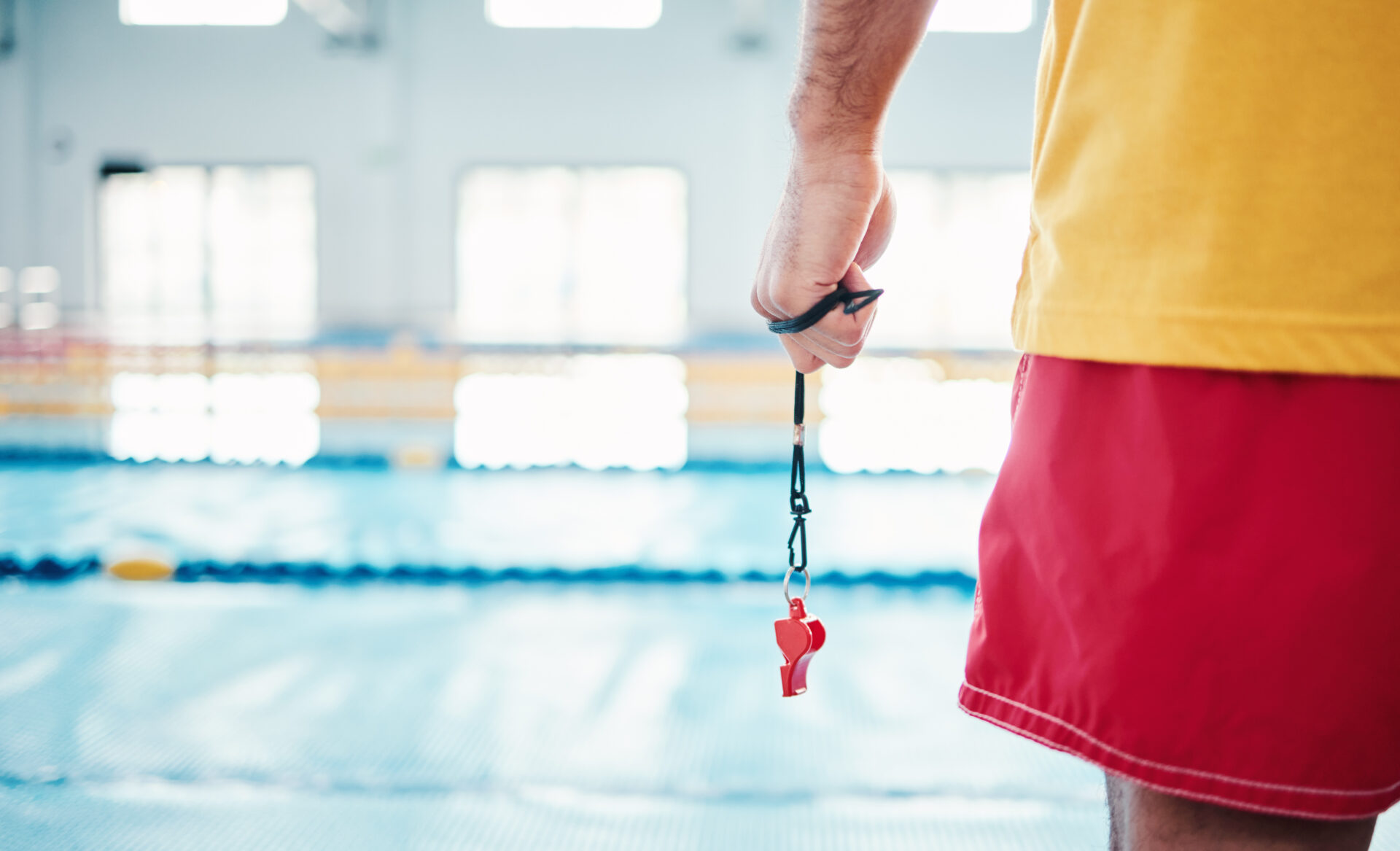
In an emergency, a human voice cannot compete with the roar of an outboard engine, rushing wind, or breaking waves. A safety whistle attached directly to a child’s life jacket gives them a loud, effortless way to signal for help if they fall overboard or get separated on land. It is a simple, low-cost tool that transforms a child from a silent victim into an active participant in their own rescue.
The Storm All-Weather Safety Whistle is widely recognized as one of the loudest whistles on the market, capable of being heard over a mile away and even working completely submerged. Its patented design creates a high-frequency sound chamber that naturally purges water when blown. Unlike cheap plastic whistles that rattle, this pealess whistle cannot clog, freeze, or fail due to salt buildup or sand intrusion.
Teach your children that this whistle is a tool, not a toy, and should only be blown in a genuine emergency. Secure it to the life jacket’s zipper pull or shoulder strap using a short, marine-grade lanyard that won’t create a choking hazard. Avoid long cords that could snag on boat cleats or rigging during boarding.
This is an essential safety add-on for every child’s life jacket on any vessel, from a 12-foot kayak to a large pontoon boat. It is not suitable for loose storage in a glove box; it must be physically attached to the vest to be effective when needed.
- Decibel Rating: Up to 120 dB
- Design: Pealess, high-impact thermoplastic
- Special Feature: Works underwater and in extreme weather
- Best For: Attachment to personal flotation devices (PFDs)
Marine First Aid Kit – Adventure Medical Kits Marine 100
Minor scrapes, fishhook punctures, and sunburn are part of boating life, but they can quickly ruin a child’s day if you lack the means to treat them. A marine-specific first aid kit is essential because standard household bandages disintegrate immediately when exposed to damp, salty environments. You need a water-resistant package containing specialized supplies that remain dry and sterile until needed.
The Adventure Medical Kits Marine 100 is specifically tailored for short-range recreational boaters and contains enough supplies for weekend trips. Housed in an easy-to-spot, water-resistant dry bag, it includes high-quality bandages, medication for seasickness, burn creams, and antiseptic wipes. The inner compartments are clearly organized by injury type, allowing you to find what you need quickly while managing a crying child.
Keep in mind that while the outer dry bag resists splashes, it is not designed for prolonged submersion. Store the kit in an easily accessible, dry compartment on your boat rather than burying it under heavy anchors or fenders. Regularly check the expiration dates on the liquid medications and sterile wipes before the start of each boating season.
This kit is the perfect size for family day boats, bowriders, and weekend fishing vessels operating within coastward boundaries. It is not designed for offshore cruising or multi-day blue water voyages, which require more advanced medical gear and trauma supplies.
- Waterproofing: Splashproof dry bag with roll-top closure
- Contents: Bandages, medications, wound care, and burn treatment
- Capacity: Designed for 1–6 people on trips up to 12 hours
- Best For: Day boats, bowriders, and weekend fishing vessels
Personal Locator Beacon – ACR ResQLink 400 PLB
When boating in areas with spotty cellular coverage, a Personal Locator Beacon (PLB) provides the ultimate safety net for your family. If a child falls overboard in rough water or your vessel suffers a sudden engine failure, this device broadcasts your exact GPS coordinates directly to search and rescue satellites. It takes the guesswork out of emergency location, ensuring help is dispatched to your precise spot immediately.
The ACR ResQLink 400 PLB is a military-grade beacon redesigned for recreational boaters, featuring a compact frame that easily clips to a child’s or parent’s life jacket. It utilizes three levels of integrated signal technology—GPS positioning, a powerful 406 MHz signal, and a 121.5 MHz homing capability—to guide rescuers directly to you. It also features a bright LED strobe light, which is crucial for locating someone in low-light conditions or after dark.
Unlike satellite messengers, a PLB requires no ongoing subscription fees, but you must register the device with NOAA to link it to your boat and family contact info. The internal battery lasts for five years, after which the unit must be sent back to an authorized center for replacement. Ensure you practice releasing the antenna so you can deploy it quickly in a stressful situation.
This device is highly recommended for families who boat on large lakes, coastal bays, or remote waterways where cell service is unreliable. It is overkill for small, heavily supervised backyard pools or crowded, lifeguard-patrolled beaches.
- Signal Frequency: 406 MHz and 121.5 MHz homing
- Battery Life: 5-year operational life (24+ hours active transmission)
- GPS: Multi-constellation receiver (GPS and Galileo)
- Best For: Remote waterways, large lakes, and coastal bays
Mineral Sunscreen – Thinkbaby SPF 50+ Baby Sunscreen
Sunlight reflecting off the water amplifies UV exposure, making severe sunburn a major hazard for young boaters. Children’s sensitive skin burns much faster than adult skin, and chemical sunscreens can cause painful eye irritation when mixed with sweat or salt water. Applying a high-quality mineral sunscreen before stepping on board protects their skin without introducing harsh chemicals.
The Thinkbaby SPF 50+ Baby Sunscreen is a top-tier mineral formulation that relies on non-nano zinc oxide to physically block harmful rays. This water-resistant formula provides broad-spectrum UVA and UVB protection and is highly rated for safety by environmental working groups. It absorbs quickly without leaving an excessively greasy residue, meaning kids can still grip handrails and steering wheels safely.
Because mineral sunscreens act as a physical barrier, they require thorough application and will leave a slight white sheen on the skin, which actually helps you spot any missed areas. Reapply the sunscreen every 80 minutes of swimming or sweating, and always dry the skin with a towel before putting more on. Be aware that zinc oxide can leave white smudges on dark vinyl boat seats, so have a damp rag handy to wipe down surfaces.
This product is excellent for infants, toddlers, and older kids with sensitive skin who spend long hours on open-deck boats. It is not suitable for those looking for an invisible, spray-on chemical sunscreen that requires zero rubbing.
- Active Ingredient: 20% Non-nano Zinc Oxide
- SPF Rating: 50+ broad-spectrum protection
- Water Resistance: Rated for 80 minutes
- Best For: Infants, toddlers, and children with sensitive skin
Handheld VHF Radio – Uniden MHS75 Marine Radio
Relying on a cell phone for emergency marine communication is a high-risk mistake, as cell towers rarely cover open water and touchscreens fail when wet. A handheld VHF radio is your direct lifeline to the Coast Guard, local marine patrols, and neighboring vessels who can offer immediate assistance. It ensures that even if your boat’s main electrical system fails, you still have a way to call for help.
The Uniden MHS75 Marine Radio is a compact, rugged, and completely waterproof handheld unit that actually floats if dropped overboard. It features a large, backlit display that is easy to read in direct sunlight, along with a dedicated Channel 16 button for instant emergency access. With its selectable transmit power, you can boost the signal to 5 watts for maximum range when calling from distant waterways.
This radio requires a basic understanding of marine radio etiquette and channel usage, so take time to read the manual before your trip. Keep the battery fully charged, and consider storing the charging cradle near your boat’s main console so the radio is always ready. Remember to wash the radio with fresh water after salt exposure to keep the speaker grill clear of salt crystals.
This handheld VHF is a vital safety tool for any family operating a boat on coastal waters, large lakes, or busy river systems. It is less necessary for small, landlocked farm ponds where you are never out of earshot of the shoreline.
- Waterproof Rating: JIS8/IPX8 submersible
- Transmit Power: Selectable 1, 2.5, or 5 Watts
- Battery Type: Rechargeable Lithium-Ion
- Best For: Emergency communication on large lakes and coastal waters
Reboarding Ladder – Garelick EEz-In 3-Step Ladder
Getting a tired, wet child out of the water and back into a high-sided boat can be surprisingly difficult and physically draining. Without a reliable ladder, parents often have to haul children over the gunwale, risking slips, muscle strains, or scrapes against the hull. A sturdy reboarding ladder is a critical safety item that allows kids to climb back on board independently and safely.
The Garelick EEz-In 3-Step Ladder is a heavy-duty, portable ladder designed to hook securely over the gunwale of most recreational boats. Constructed from furniture-grade aluminum tubing, it features slip-resistant traction caps on the steps to prevent bare feet from sliding off. The standoff legs protect your boat’s hull from scratches while keeping the ladder steady as weight is applied.
Ensure you choose the correct length; a ladder must extend at least two steps below the waterline to allow a child to gain footing easily. When underway, always stow the ladder securely in a locker or under a seat to prevent it from sliding around the deck. Instruct children to wait until the boat’s engine is completely turned off and the propeller has stopped spinning before they approach the ladder.
This ladder is perfect for small-to-medium utility boats, runabouts, and older vessels that lack integrated swim platforms. It is not needed for modern pontoon boats or deck boats that already feature built-in, deep-reaching transom ladders.
- Material: Anodized aluminum tubing with poly steps
- Mounting: Over-the-gunwale hooks (various hook sizes available)
- Step Count: 3-step design (4-step also available for deeper drafts)
- Best For: Utility boats, runabouts, and high-sided recreational vessels
Waterproof Dry Bag – Sea to Summit Big River Dry Bag
Keeping spare clothes, towels, and snacks dry is more than a matter of comfort when boating with children; it is a safety priority. A wet, shivering child can rapidly develop hypothermia, even on a relatively warm day, if they are exposed to wind and spray. A reliable dry bag ensures you always have warm, dry layers ready to wrap around a cold child.
The Sea to Summit Big River Dry Bag is a mid-weight, exceptionally tough dry bag made from 420D nylon fabric that resists abrasions and punctures. It features a secure roll-top closure and fully taped seams that prevent water from entering, even during heavy downpours or brief submersions. Multiple lash loops allow you to tie the bag securely to the boat’s deck rigging, keeping it from washing overboard in rough conditions.
To ensure a watertight seal, you must roll the top closure at least three times before clicking the buckle shut. Do not overstuff the bag, as this prevents a tight seal and can strain the seams over time. Store electronic devices in their own protective cases inside the dry bag for an extra layer of defense against condensation.
This dry bag is ideal for families who enjoy kayaking, canoeing, or riding in open bowriders where gear is exposed to spray. It is less critical for large cabin cruisers where gear can be stored in fully enclosed, weatherproof cabins.
- Fabric: 420D waterproof nylon
- Closure: Roll-top hypalon closure with repair buckle
- Base: Oval base resists rolling on deck
- Best For: Keeping clothes, towels, and gear dry on open-deck boats
How to Test and Fit a Child’s Life Jacket Correctly
A life jacket only works if it fits correctly, and assuming a vest is the right size based on age alone is a dangerous mistake. To test the fit, first check the manufacturer’s label inside the vest to ensure the child’s actual weight falls within the specified range. Fasten all zippers, buckles, and straps snugly, ensuring there are no loose gaps around the chest or armpits.
Perform the “lift test” by placing your hands under the shoulders of the life jacket and pulling gently upward. If the vest slides up past the child’s chin or ears, it is too loose and must be tightened, or replaced with a smaller size. For infants and toddlers, always pull the crotch strap snug to ensure they cannot slip out of the vest if they fall feet-first into the water.
Finally, test the life jacket in a controlled, shallow water environment like a pool or calm shoreline before your actual boating trip. This allows the child to feel how the vest naturally floats them and helps them overcome the initial panic of water buoyancy. It also gives you a real-world look at how the vest behaves under load, letting you make adjustments in a safe, stress-free setting.
Creating a Child-Safe Emergency Plan Before Launch
When an emergency happens on the water, panic is your greatest enemy, and children will look to adults for cues on how to react. A child-safe emergency plan assigns clear, simple roles to every passenger on board long before you leave the boat ramp. Ensure that at least two adults on board know how to operate the vessel, drop the anchor, and use the VHF radio in case the primary captain becomes incapacitated.
Conduct a quick, five-minute safety briefing with the kids before casting off the dock lines. Show them where the first aid kit, fire extinguisher, and flares are stored, and explain what the horn signals or radio calls mean. Teach them to “sit low and hold on” if they hear the captain yell “man overboard” or if the boat hits sudden rough water.
Practice a “dry run” of your emergency plan while the boat is still tied up, making it feel like a game rather than a scary scenario. Ask children to point to their safety whistles or practice moving to their designated safe zones on command. This simple preparation builds muscle memory, ensuring that if a true emergency occurs, your young crew will react calmly and safely.
Conclusion
Equipping your boat with these essential safety items turns potential hazards into manageable situations, allowing you to focus on the joy of family boating. By investing in high-quality gear and establishing clear safety habits, you protect your most precious cargo on every voyage. Safe boating starts long before you start the engine, so prepare your gear, prep your crew, and enjoy your time on the water.

