10 Essential Lake Triathlon Training Gear Picks for Beginners
Gear up for your first race with these 10 essential lake triathlon training gear picks. Master open-water swimming and train with confidence. Read our guide now.
Standing on the edge of a shoreline, looking out over a wide expanse of open water, feels entirely different than staring at the black stripe on the bottom of a swimming pool. Transitioning to lake triathlons requires not just a shift in mindset, but a deliberate upgrade in the gear used to navigate the elements. Having the right equipment ensures safety, builds confidence, and keeps the focus on performance rather than gear failure on race day.
Disclosure: As an Amazon Associate, this site earns from qualifying purchases. Thank you!
Transitioning Your Swim Training from Pool to Lake
The pool is a controlled environment with clear lanes, perfect visibility, and walls to push off of every 25 yards. Open water introduces variables like murky depths, shifting currents, wind-chop, and the absolute necessity of sighting to stay on course. Without a black line to follow, swimmers must learn to lift their eyes forward every few strokes to spot landmarks on the shore or distant buoys.
Temperature changes represent another major hurdle for beginners transitioning to natural lakes. Cold water can trigger an involuntary gasp reflex, making early-season training a test of mental fortitude. Adapting to this environment requires slowing down the breathing, spending time acclimating before swimming, and understanding how different gear options alter body position and thermal protection.
Triathlon Wetsuit – Orca Athlex Float Wetsuit
A dedicated triathlon wetsuit is not just about staying warm in cold lake water; it is a critical performance aid that alters body position. Beginners often struggle with “heavy legs” that sink, creating massive drag and slowing momentum. A proper wetsuit provides targeted buoyancy, lifting the hips and legs to the surface to mimic a streamlined pool position.
The Orca Athlex Float Wetsuit is the ideal tool for this job because of its high-buoyancy design, which features 4.5 mm Yamamoto neoprene on the legs and hips. This extra lift corrects posture without sacrificing flexibility where it is needed most. The shoulders use thinner, 2 mm neoprene to allow a natural, unrestricted stroke rotation that prevents shoulder fatigue over longer distances.
- Best for: Beginners, sinker-leg swimmers, and cool-water lake training.
- Sizing: Must fit extremely snug; a loose suit pockets water and slows momentum.
- Maintenance: Rinse with fresh water after every swim and hang to dry on a thick, padded hanger out of direct sunlight.
This suit is perfect for those who need maximum buoyancy to feel confident in deep water. It is not suitable for warm, mid-summer lake swims where water temperatures exceed 78°F, as overheating becomes a real risk.
Swim Goggles – The Magic 5 Blue Magic Mirror
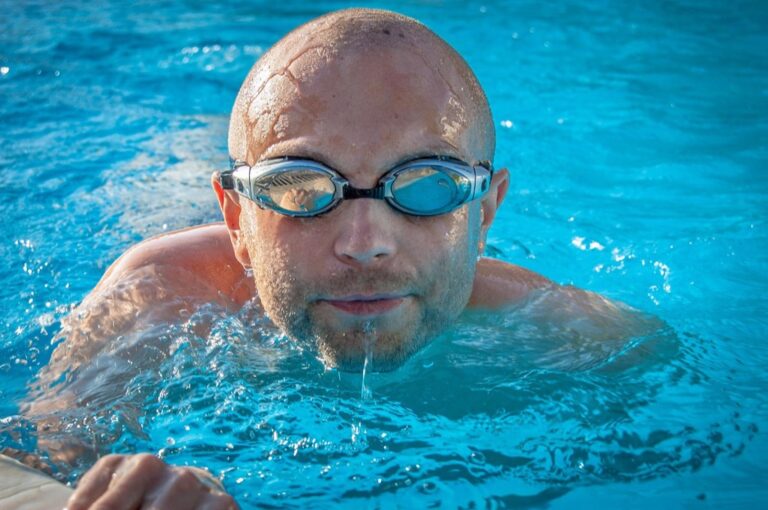
Standard pool goggles often fail in open water because lake swimming requires constant sighting into the sun, which can cause blinding glare. Leakage is also a major distraction when there is no pool wall to hang onto while adjusting straps. A wide field of view and a reliable, watertight seal are non-negotiable for spotting buoys and navigating lake currents.
The Magic 5 Blue Magic Mirror goggles solve these issues by utilizing 3D-printing technology to match the exact contours of the individual’s eye sockets. This custom-fit gasket minimizes the need for overtightened straps, significantly reducing leakage and eye pressure. The Blue Mirror lenses filter out bright sunlight and surface glare, making shorelines and buoys easier to spot on bright mornings.
- Best for: Swimmers struggling with leaky goggles, bright morning training sessions, and high-glare environments.
- Fitting process: Requires a smartphone facial scan via the brand’s app prior to ordering.
- Care: Avoid touching the inside of the lenses to preserve the anti-fog coating.
These goggles are a game-changer for anyone who struggles with standard goggle fit or experiences leaks during long swims. However, they are not the best choice for low-light, overcast dawn swims, where a clear or non-mirrored lens would offer better visibility.
Safety Swim Buoy – New Wave Swim Bubble Buoy
Sharing a lake with motorized boats, jet skis, and paddleboards requires being highly visible from a distance. A safety swim buoy acts as a visual beacon, trailing behind the swimmer to ensure boaters can spot them from hundreds of yards away. It also serves as a crucial resting platform to hold onto during a sudden cramp or panic attack in deep water.
The New Wave Swim Bubble Buoy is the top choice for lake training due to its ultra-bright, high-visibility PVC construction and lightweight, drag-free design. It attaches to a waist belt and floats cleanly behind the swimmer, staying out of the way of the kick cycle. Unlike dry-bag buoys, this model focuses solely on visibility and flotation, keeping the profile sleek and light in the water.
- Best for: Open water training in lakes with motorized boat traffic.
- Waist belt range: Adjustable from 20 inches to 46 inches.
- Usage tip: Inflate by mouth before entering the water, ensuring the valve is tightly closed.
This buoy is an absolute necessity for anyone training in open, multi-use public lakes where safety is paramount. It is not designed to replace a certified life jacket, and it should not be relied upon as a primary life-saving device for non-swimmers.
Triathlon Suit – Synergy Triathlon Trifit Suit
Transitioning between three sports means there is no time to change clothes; a dedicated tri-suit is worn under the wetsuit, ridden on the bike, and run in to the finish. Regular bike shorts have too much padding, which absorbs water like a sponge during the swim and chafes on the run. A proper tri-suit features a thin, fast-drying pad that protects on the saddle but disappears on the run.
The Synergy Triathlon Trifit Suit excels here because of its premium Neo 2way stretch fabric, which provides light compression and excellent hydrodynamics. The low-profile chamois pad is designed specifically to dry rapidly after the swim, preventing saddle sores during the transition to the bike. Its breathable mesh panels on the back keep core temperatures down during hot run legs.
- Best for: Beginner to intermediate triathletes looking for a comfortable one-piece suit.
- Pocket storage: Dual rear pockets for energy gels and small essentials.
- Care: Hand wash in cold water and air dry to maintain fabric elasticity.
This suit is ideal for racers wanting a streamlined, hassle-free transition experience. It is not the right choice for athletes who prefer a two-piece top and bottom setup, which can be easier for quick restroom breaks during longer races.
Cycling Helmet – Giro Synthe MIPS II Helmet
The bike leg is where speed increases dramatically, making head protection the most critical safety consideration. A cycling helmet must protect against multi-directional impacts while keeping the head cool during grueling climbs. It must also feature an aerodynamic profile that reduces wind resistance without trapping heat inside.
The Giro Synthe MIPS II Helmet is a standout choice, integrating MIPS (Multi-directional Impact Protection System) to reduce rotational forces during specific angled impacts. It combines the cooling power of a traditional road helmet with the aerodynamic efficiency of a dedicated time-trial lid. The Roc Loc 5 Air fit system allows for easy, micro-adjustable tensioning with a single hand, even while riding.
- Best for: Road cycling, training rides, and hot-weather triathlons.
- Safety rating: CPSC Bicycle certified with integrated MIPS layer.
- Ventilation: 19 vents with internal channeling for maximum airflow.
This helmet is perfect for riders who want top-tier safety, cooling, and aerodynamics in a single package. It is not suited for mountain biking or trail riding, where a helmet with more rear-head coverage is preferred.
Running Shoes – Hoka Clifton 9 Running Shoes
Running on tired legs after swimming and cycling—often referred to as running on jelly legs—requires a shoe that maximizes impact absorption. Without sufficient cushioning, the joints take a beating, increasing the risk of shin splints and knee fatigue. A lightweight shoe with a smooth rolling motion helps maintain a steady cadence when fatigue sets in.
The Hoka Clifton 9 Running Shoes feature a thick bed of compression-molded EVA foam that delivers plush cushioning without adding unnecessary weight. The early-stage Meta-Rocker geometry acts like a rocking chair for the foot, encouraging a smooth, quick transition from heel-strike to toe-off. This design is incredibly forgiving on fatigued muscles during the final leg of a lake triathlon.
- Best for: High-mileage road running, recovery runs, and post-bike legs.
- Weight: Exceptionally light at around 8.7 ounces (men’s size 9).
- Sizing: True to size, though wide-foot runners should opt for the dedicated “Wide” options.
These shoes are ideal for runners seeking maximum joint protection and a plush ride over hard pavement. They are not recommended for trail runs with technical, loose terrain, where a stiffer shoe with deeper lugs is required for stability.
Transition Mat – Zone3 Transition Bucket Mat
Entering the transition area after a lake swim means stepping onto gravel, grass, or dirt with wet, bare feet. A dedicated transition mat provides a clean, dry zone to stand on while stripping off the wetsuit and putting on bike shoes. Without a defined space, gear quickly gets scattered, dirty, and lost in the chaos of a busy transition zone.
The Zone3 Transition Bucket Mat stands out due to its clever, fold-up rim design that creates a physical barrier against dirt and water. The waterproof PVC base prevents ground moisture from seeping upward, keeping dry running socks and shoes protected. When the race is over, the mat doubles as a wet bag to carry a soaked wetsuit and swimsuit back to the car.
- Best for: Organizing the transition area and keeping feet clean.
- Size: Compact footprint that fits perfectly within standard race-allotted spaces.
- Multi-use: Functions as a gear bucket, transition mat, and wet-gear carrier.
This mat is excellent for triathletes who value organization and want to protect their feet from sharp gravel. It is not necessary for athletes who prefer a minimalist setup and do not mind standing directly on a basic towel.
GPS Smartwatch – Garmin Forerunner 265 GPS Watch
Tracking progress across three distinct disciplines requires a watch that can switch sports with a single button press. Standard running watches often struggle in open water because the GPS signal is lost every time the wrist submerges. A dedicated triathlon watch uses specialized algorithms to estimate distance and stroke rate while swimming in a lake.
The Garmin Forerunner 265 GPS Watch features a dedicated multisport mode that seamlessly transitions from swim to bike to run, tracking transition times along the way. Its bright AMOLED touchscreen display remains highly readable in direct, glaring sunlight on the water. Equipped with dual-frequency GPS, it delivers highly accurate tracking even when swimming along irregular shorelines or under tree cover.
- Best for: Multi-sport athletes demanding accurate tracking and long battery life.
- Battery life: Up to 13 days in smartwatch mode; up to 20 hours in continuous GPS mode.
- Water rating: 5 ATM (suitable for swimming down to 50 meters).
This watch is a premium investment for athletes committed to tracking their training metrics and race-day performance. It is not necessary for casual participants who only want basic timekeeping without deep data analysis.
Anti-Chafe Balm – Body Glide Original Anti-Chafe Balm
Repetitive friction from swimming, cycling, and running can turn a minor skin rub into a painful, burning rash within miles. This is especially true around the neck, where a tight wetsuit collar constantly rubs against wet skin during the swim. Applying a barrier before training prevents this painful friction and makes removing a wet wetsuit much faster.
Body Glide Original Anti-Chafe Balm is the gold standard because it is completely neoprene-safe and will not degrade expensive wetsuit materials over time. Its allergen-free, plant-derived formula creates an invisible, dry barrier that resists water, sweat, and friction without feeling greasy. The stick applicator allows for precise placement on the neck, underarms, and ankles without getting residue on the hands.
- Best for: Preventing wetsuit neck burn, underarm chafing, and blister prevention.
- Formula: Non-petroleum, water-resistant, and skin-breathable.
- Application tip: Apply generously to skin before putting on clothing or wetsuits.
This balm is an absolute must-have for every triathlete training in a wetsuit or running long distances. It is not suitable for those looking to heal existing, open wounds, as it is strictly a preventative barrier.
Packable Towel – Rainleaf Microfiber Towel
Standard cotton beach towels are heavy, bulky, and take hours to dry, making them a poor choice for a packed transition bag. A lightweight, packable towel is essential for quickly drying feet before putting on socks or wiping off lake grime after a hard swim. It must absorb multiple times its weight in water while packing down to the size of a fist.
The Rainleaf Microfiber Towel uses an ultra-fine microfiber blend that absorbs water rapidly and dries up to ten times faster than traditional cotton. It features a convenient snap loop, allowing it to hang from a bike rack or tree branch to dry in the breeze between training sessions. Its compact carry bag keeps it neatly separated from dry gear in a transition pack.
- Best for: Fast-drying needs, compact gear bags, and travel training.
- Material: 85% Polyester, 15% Polyamide microfiber blend.
- Sizes: Available from small (12×24 inches) up to extra-large (40×72 inches).
This towel is perfect for minimalist athletes who want to save space and weight in their gear bags. It is not ideal for those who prefer the plush, thick feel of a traditional cotton bath towel.
Essential Safety Measures for Solo Lake Swims
Swimming alone in a lake requires a strict safety protocol, as there are no lifeguards or pool walls to assist in an emergency. Always file a “float plan” by letting someone on shore know exactly where the swim is taking place and when to expect a return. Whenever possible, swim parallel to the shoreline inside the shallow zone rather than cutting straight across deep, open water where boats operate.
Environmental awareness is key to survival during solo training sessions. Check the weather forecast for sudden wind shifts or lightning storms, and always scan the water for blue-green algae blooms, which can be toxic. If a cramp strikes or panic sets in, flip onto the back, hold onto the safety buoy, and take slow, deep breaths until control is regained.
Conclusion
Stepping into the open water with the right gear transforms a daunting challenge into an exhilarating experience. By selecting equipment designed specifically for the unique demands of lake swimming, beginners can focus on building endurance and refining technique. Prepare thoroughly, respect the water, and let this gear build the path to a successful race day.