8 Essential Triathlon Open Water Swim Gear Picks for Beginners
Master your first race with these 8 essential triathlon open water swim gear picks for beginners. Click here to gear up and swim with confidence in open water.
Stepping off the shoreline into murky, moving open water for your first triathlon swim is a world away from the controlled, tiled environment of a local pool. Without lane lines, black stripes on the bottom, or warm water to keep you comfortable, the elements can quickly overwhelm an unprepared beginner. Having the right specialized gear transforms this intimidating leg of the race from a stressful survival exercise into a confident, controlled effort.
Disclosure: As an Amazon Associate, this site earns from qualifying purchases. Thank you!
Why Open Water Swimming Requires Specialized Gear
Pool swimming is predictable, but open water introduces unpredictable variables like chop, temperature drops, currents, and limited visibility. Standard recreational swimwear offers no buoyancy or thermal protection, leaving swimmers to fight both gravity and cold temperatures. Specialized open-water gear is engineered to help swimmers stay warm, visible, and high in the water column.
Buoyancy is the single biggest factor for beginner triathletes struggling with sinking legs and fatigue. Triathlon-specific gear corrects your body position, elevating the hips and legs to reduce drag and save energy for the bike and run legs. Additionally, safety in open water relies heavily on visibility; without a bright profile, low-profile swimmers are virtually invisible to boaters, jet skiers, and kayakers.
Finally, the mechanics of open-water swimming require gear that tolerates repetitive friction and dynamic movement. From salt water and sand abrasion to the constant head-turning needed to navigate (known as sighting), standard gear will quickly chafe or fail. Investing in targeted equipment isn’t about buying speed; it is about building a safety net and maintaining control in an unpredictable environment.
Triathlon Wetsuit – Orca Athlex Float Wetsuit
A triathlon wetsuit is the foundation of your open-water kit, serving a dual purpose of thermal protection and buoyancy. Unlike standard surfing wetsuits, which are thick and restrictive in the shoulders, a triathlon wetsuit is designed to maximize shoulder flexibility while lifting your lower body to improve your swim posture.
The Orca Athlex Float Wetsuit is the ideal entry point for beginners because it targets the common “heavy legs” problem. It features Yamamoto 39 neoprene with high buoyancy panels in the legs and hips, which naturally corrects a sagging lower body without sacrificing shoulder mobility. The thinner 2mm neoprene on the upper body allows for a natural stroke, while the thicker 4.5mm leg panels keep you horizontal in the water.
Keep in mind that a triathlon wetsuit has a distinct learning curve when it comes to putting it on without tearing the delicate outer skin. You must use the pads of your fingers, never your fingernails, and use plastic bags over your hands and feet to slide into the limbs easily.
- Thickness: 2mm upper body for flexibility, 4.5mm lower body for maximum buoyancy
- Material: Eco-friendly Yamamoto 39 cell neoprene
- Coating: SCS (Super Composite Skin) to reduce friction and increase water speed
- Sizing: Extensive size range based on height, weight, and chest measurement
This wetsuit is perfect for beginner triathletes and recreational swimmers who need help keeping their legs afloat to save energy. It is not the right choice for advanced swimmers with already-perfect body position who prefer a neutral buoyancy profile, or for swim-run events where running in thick neoprene is required.
Swim Goggles – Aqua Sphere Kayenne Goggles
Swimming in open water requires constant navigation to stay on course. Standard pool goggles have narrow lenses that limit peripheral vision, forcing you to crane your neck higher out of the water to find the turnaround buoys.
The Aqua Sphere Kayenne Goggles solve this visual challenge with their oversized, patented curved lenses that provide 180-degree visibility. This wide field of view allows you to spot course markers and fellow swimmers out of the corner of your eye without breaking your stroke rhythm. The low-profile micro-frame sits close to the face to minimize drag, and the robust quick-fit buckle makes strap adjustments simple, even with cold fingers.
These goggles come in various lens tints, and selecting the right one depends heavily on your local swim conditions. Polarized or dark lenses are essential for bright, sunny mornings when glare off the water is blinding, while clear or blue lenses work best for overcast days or dark lake water.
- Lens Type: Curved plexisol lenses with anti-scratch and anti-fog treatments
- Buckle System: One-touch, Quick-Fit buckle for micro-adjustments
- Bridge: Stabilizing bi-material nose bridge for a secure fit
- Options: Available in polarized, tinted, clear, and mirrored finishes
These goggles are excellent for beginners who feel claustrophobic in small pool goggles and need a wide, clear view of their surroundings. They are not ideal for swimmers with very narrow faces, who may find the larger gasket frame difficult to seal properly without water leaking in.
Safety Swim Buoy – New Wave Swim Buoy 15L
Safety is your non-negotiable priority when swimming in open water, where you share the environment with motorized watercraft. A safety swim buoy acts as a bright, floating beacon that trails behind you, making you instantly visible to boaters, lifeguards, and observers on the shore.
The New Wave Swim Buoy 15L is the gold standard for recreational safety because of its ultra-bright neon colors and lightweight, drag-free design. It attaches around your waist with an adjustable strap and floats harmlessly above your lower legs, never interfering with your kick. In addition to visibility, it provides a reliable flotation reservoir you can cling to if you experience a sudden cramp, panic attack, or need to clear your goggles.
This 15L model features a dry storage compartment, which is incredibly useful for keeping car keys, a phone, or ID dry while you swim. However, you should always double-bag electronic items in a zip-top bag before placing them inside, as condensation can sometimes form inside the dry chamber during temperature shifts.
- Capacity: 15 Liters of buoyancy and storage space
- Material: Heavy-duty PVC with nylon webbing strap
- Visibility: High-visibility neon orange, pink, and yellow options
- Waist Belt Fit: Adjustable from 20 inches to 40 inches
This buoy is a must-have for solo open-water swimmers and beginners training in lakes, oceans, or reservoirs. It is not designed to be used as a life-saving device for non-swimmers, nor is it permitted during the actual swim leg of most official, closed-course triathlon races.
Neoprene Swim Cap – Blueseventy Thermal Cap
A massive amount of body heat escapes through your head, and cold-water shock is a real risk for beginners swimming in lakes or oceans early in the season. While a standard silicone cap keeps your hair out of your face, it offers zero insulation against water temperatures below 65°F (18°C).
The Blueseventy Thermal Cap uses premium 3mm Yamamoto neoprene lined with a zirconium loop jersey to trap a thin layer of warm water against your scalp. This thermal barrier prevents the ice-cream headache sensation that often triggers hyperventilation when your face hits cold water. The chin strap design ensures the cap stays securely in place through heavy chop and surface waves without sliding up.
Neoprene caps can feel somewhat restrictive around the jaw and ears at first, which can affect your hearing. It is best to practice breathing and sighting with the cap on in shallow water to get used to the muffled sound environment before heading into the deep zone.
- Thickness: 3mm insulating neoprene
- Lining: Zirconium internal liner for enhanced thermal retention
- Securing Method: Integrated chin strap for a slip-free fit
- Seams: Glued and blind-stitched to minimize water ingress
This cap is essential for spring triathlons, high-altitude lakes, and anyone sensitive to cold-water ear aches. It is not suitable for warm-water swims (above 70°F/21°C), where it will quickly cause you to overheat.
Anti-Chafe Balm – Body Glide Original Formula
The repetitive motion of swimming, combined with the tight collar of a wetsuit and the abrasive qualities of salt water or sand, is a recipe for painful skin chafing. A bad neck burn from a wetsuit can ruin your race and make subsequent training sessions agonizing.
Body Glide Original Formula is the industry benchmark because it creates an invisible, dry barrier that resists water, sweat, and friction without degrading neoprene. Unlike petroleum jelly, which will literally dissolve the glue and rubber of an expensive wetsuit over time, Body Glide is neoprene-safe and washes out of clothing easily.
Apply this balm generously to your neck, underarms, wrists, and ankles before putting on your wetsuit. Applying it to your wrists and lower calves also helps the wetsuit slide off instantly during the pressure-filled transition phase of a race.
- Formula: Allergen-free, plant-derived, petroleum-free ingredients
- Application: Mess-free stick application (similar to deodorant)
- Water Resistance: High sweat- and water-resistant barrier
- Wetsuit Compatibility: 100% safe for neoprene and polyurethane
This is a mandatory gear item for any triathlete wearing a wetsuit or experiencing friction from swimsuit straps. It is not necessary for short, casual pool swims where skin-on-fabric friction is minimal.
Transition Bag – TYR Alliance 45L Backpack
Triathlons require a staggering amount of gear for three different sports, and keeping everything organized on a wet, sandy shoreline or in a cramped transition area can be chaotic. A standard gym bag will quickly puddle water, mix clean dry clothes with soaking wet gear, and leave you searching for lost items.
The TYR Alliance 45L Backpack is engineered specifically for multisport athletes, featuring a massive main compartment and a dedicated wet/dry compartment at the bottom to isolate your soaking wetsuit. It includes specialized mesh pockets for damp goggles and caps, allowing them to air dry and preventing mold growth. The fabric is highly water-resistant, and the rigid, padded back support makes carrying heavy gear over rough terrain comfortable.
The 45L size is quite large and can feel bulky on smaller frames, but it is the exact volume needed to hold a wetsuit, helmet, cycling shoes, running shoes, and change of clothes. Take advantage of the built-in spring hooks to hang your helmet or wet swim buoy on the outside of the bag to save interior space.
- Capacity: 45 Liters of organized storage space
- Waterproof Compartment: Bottom zipper pocket for wet gear
- Material: Durable, water-resistant polyester ripstop
- Pockets: Integrated laptop sleeve, goggle pocket, and dual water bottle holders
This bag is perfect for triathletes who want a single, structured mobile locker to keep their swim, bike, and run gear organized. It is overkill for casual swimmers who only need to carry a towel and a pair of goggles to the local pool.
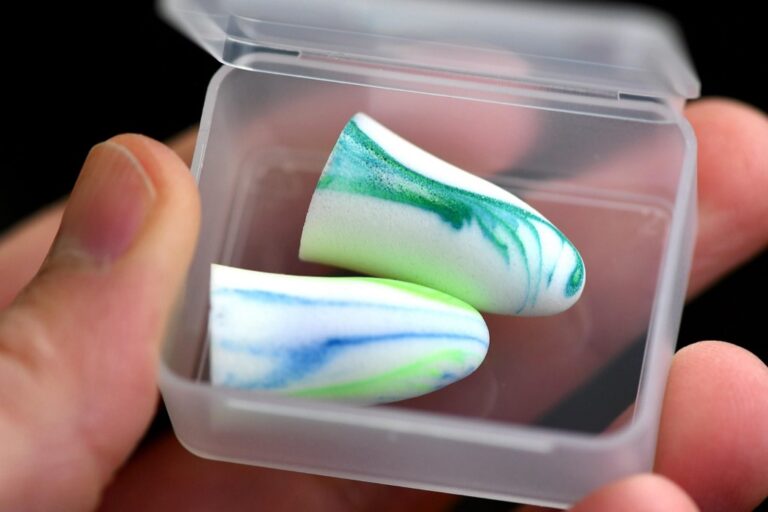
Swimming Earplugs – Mack’s Pillow Soft Silicone
Cold water entering the ear canal can cause dizziness, disorientation, and swimmer’s ear infections caused by trapped bacteria. In cold open water, cold water rushing against the eardrum can stimulate the inner ear, throwing off your balance and making it hard to swim in a straight line.
Mack’s Pillow Soft Silicone Earplugs are the top recommendation because they mold to the unique shape of your outer ear, creating an airtight, watertight seal that plastic flanged plugs cannot match. Because they sit in the outer ear bowl rather than being shoved deep into the ear canal, they are incredibly comfortable and won’t dislodge when you turn your head to breathe.
These silicone putty plugs are designed to be discarded after several uses once they lose their tackiness or collect dirt. Always apply them with clean, dry hands before your skin gets wet, as water on the skin will prevent the silicone from sticking and sealing properly.
- Material: Non-toxic, hypoallergenic silicone putty
- Noise Reduction Rating (NRR): 22 decibels
- Fit: One-size-fits-all moldable design
- Pack Size: Commonly sold in multi-pair value packs
These plugs are ideal for swimmers prone to ear infections, equilibrium issues in cold water, or those who find pre-molded plastic earplugs painful. They are not suitable for deep diving (below 10 feet), as pressure changes require equalizing which these plugs can interfere with.
GPS Swim Watch – Garmin Swim 2 GPS Watch
Tracking your progress in open water is incredibly difficult because you cannot count laps like you do in a pool. A dedicated GPS watch tracks your actual distance, pace, stroke rate, and path, giving you real data to measure your open-water endurance and pacing strategy.
The Garmin Swim 2 GPS Watch is built specifically for swimmers and features a dedicated open-water swim mode that utilizes multiple satellite systems (GPS, GLONASS, and Galileo) to track your path even when your wrist is underwater for parts of your stroke. Unlike general fitness smartwatches, it features a crystal-clear, sunlight-readable display and a slim profile that doesn’t snag on your wetsuit sleeve when peeling it off in transition.
When using GPS in open water, the watch only acquires a satellite signal when your hand is above the water during the recovery phase of your stroke. For the most accurate tracking, wait to hit “start” until you are fully standing or floating at the start line, allowing the watch to establish a strong GPS lock beforehand.
- Modes: Dedicated pool and open-water swim modes
- Heart Rate: Underwater wrist-based heart rate monitoring
- Battery Life: Up to 13 hours in GPS mode, 7 days in smartwatch mode
- Metrics: Tracks distance, pace, stroke count, SWOLF (efficiency score), and path
This watch is a game-changer for data-driven triathletes who want to analyze their open-water pacing and efficiency. It is not necessary for casual swimmers who only swim close to shore for short, timed durations without caring about distance or metrics.
How to Get the Perfect Fit From Your New Wetsuit
A properly fitting triathlon wetsuit should feel surprisingly tight on land—almost like a second skin that compresses your body. Many beginners mistakenly return a perfectly fitting wetsuit because they find it difficult to zip up or feel constricted in the chest while standing in their living room. Neoprene expands slightly and becomes much more pliable once you enter the water, so don’t judge the fit solely on how it feels dry.
When pulling the wetsuit on, work the material systematically up from your ankles, calves, and thighs, ensuring there are no air pockets or loose folds in the crotch area. The same process applies to the arms; pull the sleeves up high enough so that there is no loose neoprene hanging under your armpits, which would restrict your shoulder rotation. Once the suit is zipped, stand up, roll your shoulders backward, and ensure you can breathe deeply without feeling sharp restriction across your collarbone.
If the suit is too loose, water will continuously rush inside, a process called flushing, which defeats the insulating properties and causes heavy, dragging water pockets. If it is too tight, it will restrict your breathing, causing rapid fatigue, or pinch your throat, which can trigger panic. Look for a snug, secure fit where the neck seal is flush against the skin without choking, and the limbs end just above your wrists and ankles.
Essential Safety Practices for Open Water Swimmers
The gold card of open-water safety is to never swim alone under any circumstances. Always swim with a partner, or have a friend paddle alongside you on a kayak or stand-up paddleboard to guide you and keep boaters at bay. If you must swim without a companion, stick to designated swim areas with active lifeguards on duty, and always inform someone on land of your entry time, route, and expected return.
Before stepping into the water, assess the local conditions, including wind speed, water temperature, tide currents, and underwater hazards like weeds or submerged rocks. In tidal saltwater environments, understand how rip currents work and identify landmarks on the shore (such as a distinct tree or building) to keep your bearings, as currents can easily drift you hundreds of yards off course without you realizing it.
If you experience panic, a muscle cramp, or water inhalation, flip onto your back immediately and float. Your wetsuit and safety buoy will easily keep you buoyant without any effort, allowing you to catch your breath, calm your heart rate, and wave your arms to signal for help if needed.
How to Clean and Store Your Swim Gear After Use
Salt water, chlorine, sand, and organic lake debris are highly destructive to neoprene, silicone, and technical fabrics if left to dry. Immediately after every swim, rinse all of your gear—including your wetsuit, goggles, safety buoy, and cap—thoroughly in clean, cool fresh water. Never use hot water, harsh household detergents, or washing machines, as these will destroy the delicate glues and synthetic materials.
Hang your wetsuit to dry inside-out on a wide, padded hanger to prevent creasing or stretching out the shoulders; never use a thin wire hanger, which can puncture or misshape the neoprene. Keep all of your gear out of direct sunlight while drying, as ultraviolet rays will rapidly degrade neoprene, fade colors, and make silicone goggles brittle and prone to leaking.
Once everything is completely dry, store your wetsuit flat or folded loosely in a cool, dry closet rather than leaving it crumpled in a gear bag. Store your goggles in their protective case to prevent scratches on the lenses, and sprinkle a little baby powder inside your neoprene cap to prevent the interior from sticking together during the off-season.
Stepping into the open water with the correct gear changes everything, turning a challenging swim into an empowering experience. By choosing reliable, specialized equipment and prioritizing safety on every training swim, you will build the confidence needed to conquer the transition arch on race day. Stay safe, respect the water, and enjoy the journey to the finish line.