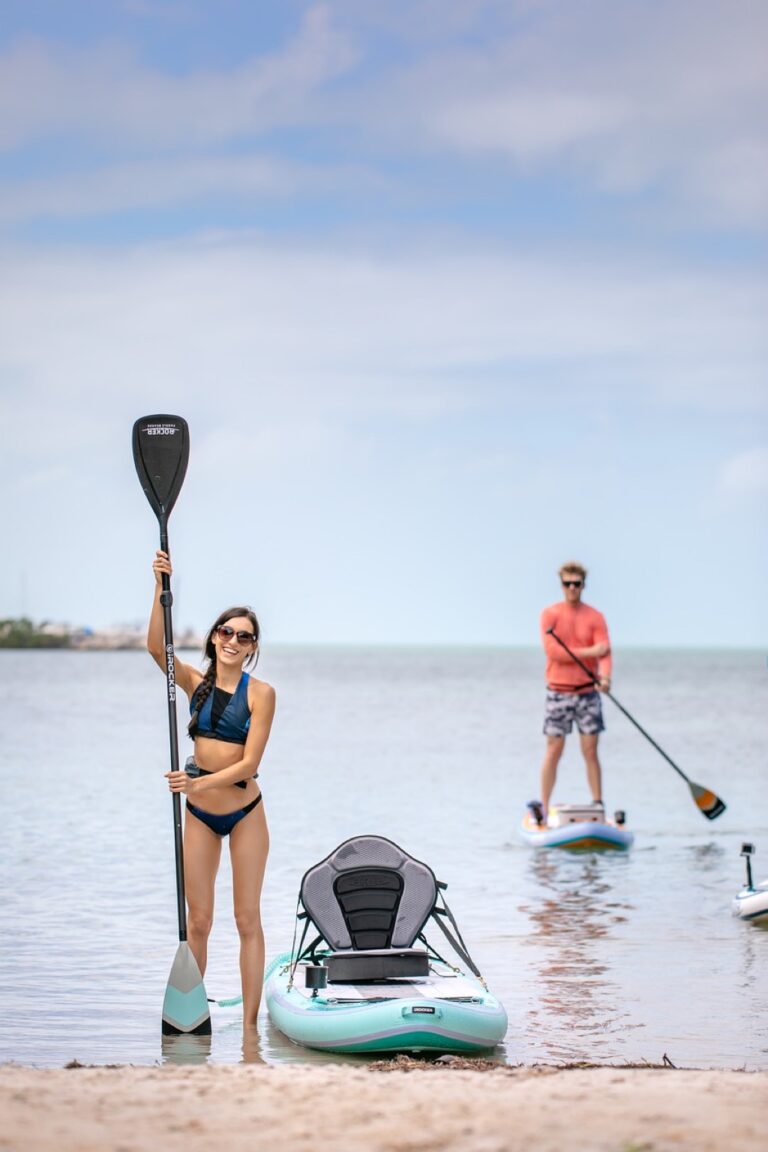
9 Essential Paddleboard Safety Gear Items for Open Water Paddlers
Stay safe on your next adventure with these 9 essential paddleboard safety gear items for open water. Read our expert guide and prepare for your trip today.
Imagine paddling away from a calm shoreline, only to have a sudden offshore wind kick up and push you into deep water. In these open-water environments, the boundary between a scenic afternoon and a survival situation can blur in a matter of minutes. Equipping your stand-up paddleboard with specialized marine safety gear transforms potential ocean emergencies into manageable bumps in the road.
Disclosure: As an Amazon Associate, this site earns from qualifying purchases. Thank you!
Why Open Water Demands Specialized SUP Safety Gear
Open water is a dynamic, unpredictable environment. Unlike a calm, enclosed lake, ocean coastlines and large inland bays feature strong currents, shifting winds, and sudden weather changes that can quickly separate a paddler from their board. When things go wrong miles from shore, standard flat-water habits will not cut it.
Specialized stand-up paddleboard (SUP) safety gear is designed specifically for these high-stakes conditions. It balances the need for extreme durability against the limited deck space of a paddleboard. Every item on an open-water packing list must be compact, corrosion-resistant, and easily deployable even when fatigued or cold.
Investing in high-quality marine-grade equipment ensures your gear actually works when submerged in saltwater or battered by chop. Cutting corners with cheap, non-marine alternatives is a recipe for gear failure at the worst possible moment. True safety on open water comes from preparation, redundancy, and gear that handles the elements without flinching.
Inflatable PFD – Onyx M-16 Belt Pack Life Jacket
A personal flotation device (PFD) is the most critical safety item on any watercraft, but a bulky traditional vest can restrict your paddling motion and cause overheating on hot days. An inflatable belt pack solves this by staying out of the way around your waist until it is needed. In an emergency, a quick pull of the inflation cord deploys a buoyant bladder that keeps your head above water.
The Onyx M-16 Belt Pack Life Jacket excels because of its incredibly low profile and reliable manual inflation mechanism. Its slim design ensures it will not interfere with your paddle stroke, while the durable 200-denier nylon oxford protective cover resists abrasion from saltwater and sunscreen. The bladder provides 17 pounds of buoyancy when inflated, which is more than enough to keep a conscious swimmer afloat.
- Inflated Buoyancy: 17 lbs (75N)
- Inflation Method: Manual pull-tab (using a 16g CO2 cylinder)
- Sizing: Universal fits chest sizes 30″ to 52″
- Approval: USCG Approved Type V with Type III performance
Before heading out, remember that manual inflatables require the user to be conscious and capable of pulling the cord. This belt is perfect for confident swimmers in open water but is not recommended for non-swimmers or white-water paddling. It also requires regular maintenance, including checking the green status indicator on the CO2 mechanism and replacing the cartridge after any inflation.
Coiled Leash – Dakine SUP Coiled Calf Leash
On open water, your paddleboard is your primary life support system; if you fall off, a moderate breeze can blow the board away faster than you can swim. A leash keeps you permanently connected to your board, preventing it from escaping into the horizon. In ocean swell or choppy conditions, this simple cord is what saves you from being stranded in deep water.
The Dakine SUP Coiled Calf Leash is the industry standard for open-water safety. By attaching to the calf rather than the ankle, it stays out of the water, preventing drag and reducing the risk of snagging on floating debris or kelp. The heavy-duty 5/16-inch (8mm) highest-quality urethane Dura-Cord is engineered to absorb high-impact loads without snapping, while the double-swivel design prevents tangles.
- Cord Thickness: 5/16″ (8mm) urethane
- Attachment Point: Padded neoprene calf cuff
- Hardware: Opti-Flex leash ends with marine-grade stainless steel swivels
- Best Use: Open water, flat water, and light swell
Make sure to rinse the Velcro cuff thoroughly after every saltwater session to prevent salt buildup from weakening the hold. This calf leash is ideal for open-water touring and downwind runs, but it should never be used in fast-flowing rivers or whitewater rapids, where a quick-release waist belt leash is required to prevent entrapment.
Safety Whistle – Fox 40 Classic Pealess Whistle
When waves are crashing and the wind is howling, the human voice is easily drowned out over even short distances. A high-decibel safety whistle is your primary tool for signaling nearby boaters, lifeguards, or fellow paddlers when you need assistance. It is a simple, non-electronic backup that works when everything else fails.
The Fox 40 Classic Pealess Whistle is the benchmark for marine safety because it has no moving internal parts. Traditional whistles with a “pea” can clog, freeze, or jam when wet, rendering them silent. The Fox 40 uses a patented three-chamber design to produce a piercing, high-pitched 115-decibel screech that cuts through wind, engine noise, and breaking waves.
- Sound Output: 115 dB
- Design: Pealess (no moving parts to fail)
- Material: Impact-resistant ABS plastic
- Attachment: Heavy-duty lanyard and split ring
Keep this whistle clipped directly to your PFD zipper or harness, never inside a dry bag, so you can reach it instantly with one hand. It requires zero learning curve, but paddlers should practice blowing it in short, sharp bursts of three—the international distress signal—to ensure they can generate maximum volume under pressure.
Marine VHF Radio – Standard Horizon HX890 Handheld
Cell phones frequently lose reception offshore, and touchscreens are notoriously difficult to operate with wet fingers. A handheld marine VHF radio is your direct lifeline to the U.S. Coast Guard, local marine patrols, and commercial vessels operating in your area. It allows you to broadcast a distress call, receive real-time weather alerts, and coordinate rescues directly with emergency responders.
The Standard Horizon HX890 Handheld is the premier choice for paddlers due to its rugged, floating design and integrated GPS receiver. In an emergency, pressing the dedicated Digital Selective Calling (DSC) distress button automatically transmits your exact GPS coordinates and vessel info to rescue agencies. It also features a built-in water-activated strobe light that flashes automatically when submerged, making it easy to locate in the dark.
- Transmit Power: 6W / 2W / 1W options
- Waterproof Rating: IPX8 (submersible to 1.5 meters for 30 minutes)
- Safety Features: Built-in GPS, DSC distress signaling, and water-activated strobe
- Battery Life: Up to 11 hours with rechargeable Li-ion pack
This radio requires some basic set-up, including registering for a free Maritime Mobile Service Identity (MMSI) number to activate the DSC features. It is a must-have for paddlers going more than a mile offshore, though casual harbor paddlers might find its advanced features more than they need for short, near-shore trips.
Personal Locator Beacon – ACR ResQLink 400 PLB
When you are miles out at sea beyond cell coverage and VHF radio range, a Personal Locator Beacon (PLB) is your ultimate emergency safety net. Once activated, a PLB broadcasts your distress signal directly to the Cospas-Sarsat global search and rescue satellite system. It bypasses local cellular networks entirely, ensuring that search and rescue teams can locate you anywhere on Earth.
The ACR ResQLink 400 PLB is engineered to withstand the harshest marine environments while remaining small enough to fit in a PFD pocket. It operates on both the 406 MHz satellite frequency and a 121.5 MHz homing signal, allowing rescue helicopters to pinpoint your exact location once they arrive in the area. It requires no subscription fee, making it a highly cost-effective piece of life-saving insurance.
- Frequencies: 406 MHz (satellite) and 121.5 MHz (homing)
- Battery Life: 28-hour operational life (5-year storage life)
- GPS: Multi-constellation GPS and Galileo receivers
- Buoyancy: Buoyant design (neoprene tail-kit included)
This device must be registered with the NOAA (or your local national authority) before your first launch to ensure search and rescue teams know who they are looking for. It is strictly for life-threatening emergencies; activating it accidentally or for minor inconveniences can result in heavy fines and wasted rescue resources.
Waterproof Dry Bag – Sea to Summit Big River Bag
Paddleboarding on open water requires carrying extra layers, nutrition, communication devices, and emergency gear that must remain bone dry. A leaky bag can ruin your electronics, render your extra clothing useless, or spoil your emergency rations. A heavy-duty dry bag serves as your vault, protecting vital equipment from salt spray, rain, and complete submersion.
The Sea to Summit Big River Bag is built specifically for rugged paddlesport use where gear is lashed directly to a wet deck. Constructed from super-strong 420-denier ripstop nylon with a TPU lamination, this bag resists punctures, abrasions, and UV rays far better than cheap PVC options. Multiple heavy-duty lash loops allow you to secure it tightly to your board’s deck bungees without stressing the seams.
- Material: 420D TPU-laminated nylon
- Closure: Roll-top with field-replaceable buckle
- Waterproof Rating: IPX6 (withstands heavy seas and quick submersion)
- Sizes: Available from 5L to 65L (20L is the sweet spot for day paddlers)
To ensure a watertight seal, always roll the top closure at least three full times before clipping the buckle. While this bag is incredibly tough and handles rough marine environments with ease, it is not designed for prolonged underwater submersion, so sensitive electronics should still be placed in a secondary waterproof pouch inside the bag.
Waterproof First Aid Kit – Adventure Medical Kits Marine 100
Bumps, cuts, jellyfish stings, and fishhook punctures are common hazards when paddling in open water. Left untreated, a minor cut can quickly become infected by marine bacteria or make it impossible to grip your paddle comfortably. A dedicated marine first aid kit provides the supplies needed to patch up minor injuries so you can return to shore safely.
The Adventure Medical Kits Marine 100 is specifically curated for coastal boaters and paddlers, housed in a 100% waterproof dry bag. It features a roll-top closure that keeps the internal contents dry even in heavy surf, unlike standard first aid kits that turn to mush when exposed to saltwater. The kit contains specialized supplies for marine environments, including medication for motion sickness, sterile dressings, and blister treatments.
- Packaging: Waterproof DryTek bag with roll-top closure
- Contents: Cohesive bandages, antiseptic wipes, medications, and wound care
- Capacity: Designed for trips lasting up to 12 hours
- Weight: Ultra-lightweight at under 8 ounces
Regularly inspect the kit at the start of each season to replace any expired medications or used bandages. This kit is ideal for single-day coastal paddlers, but if you plan multi-day offshore expeditions, you should consider upgrading to a larger kit with advanced trauma supplies.
Deck Compass – Brunton 58 Kayak and SUP Compass
When sea fog rolls in or wind pushes you off course, it is remarkably easy to lose your bearings on open water. GPS devices are excellent, but batteries can die, screens can fail, and glare can make them unreadable. A traditional, non-electronic deck compass provides an instant, fail-proof heading that keeps you paddling in the right direction regardless of electronics.
The Brunton 58 Kayak and SUP Compass is designed specifically to mount directly onto a paddleboard’s deck rigging. It features heavy-duty elastic straps that clip easily to your board’s D-rings or deck bungees, keeping it secure in rough water while remaining in your direct line of sight. The direct-reading dial is easy to read from a standing position, allowing you to monitor your heading without breaking your paddling rhythm.
- Mounting: Quick-attach elastic straps for deck lines
- Dial: Direct-reading with large, clear markings
- Durability: No-spin disk with liquid dampening
- Night Visibility: Luminous points for low-light navigation
Be aware of any metal objects, cell phones, or VHF radios mounted near the compass, as magnetic interference can cause inaccurate readings. It is an indispensable navigation tool for coastal touring, but casual flat-water paddlers who stay close to recognizable shorelines may not need to dedicate deck space to it.
Waterproof Strobe Light – ACR Firefly PRO Strobe
If your paddleboard excursion runs late or a mishap leaves you stranded after sundown, you become virtually invisible to passing boats. USCG regulations require paddlers to carry a night-signaling device when operating between sunset and sunrise. A high-intensity waterproof strobe light flashes intensely, alerting nearby vessels and rescue helicopters to your exact position in the dark.
The ACR Firefly PRO Strobe is a military-grade rescue light that emits an incredibly bright 360-degree flash visible for over three miles. Using a state-of-the-art cool white LED, it can run continuously for over 56 hours on two standard AA batteries, far outlasting typical safety lights. It features an impact-resistant, waterproof casing that easily clips to your PFD shoulder strap for hands-free operation.
- Light Output: High-intensity LED (over 300 lumens peak)
- Visibility: Visible up to 3.2 miles
- Runtime: Over 56 hours of continuous strobe action
- Batteries: 2 AA alkaline or lithium batteries
Always use high-quality lithium AA batteries in this strobe, as they resist temperature extremes and have a shelf life of up to ten years without leaking. While this strobe is an absolute lifesaver for open-water and low-light paddlers, it is unnecessary for those who strictly paddle in broad daylight on small, protected inland lakes.
How to Properly Inspect Your Gear Before Launching
Safety gear is only useful if it works the exact moment you need it. A pre-launch inspection routine should be an automatic habit before every single open-water paddle. Set aside five minutes on the beach or tailgate to check your equipment before dipping your blade into the water.
Start by examining your PFD and safety leash. For inflatable belt packs, inspect the green indicator window to confirm the CO2 cylinder is properly screwed in and charged. Check the leash cord for any micro-tears, cracks, or dry rot in the urethane, and ensure the swivel joints spin freely. A leash that snaps under tension in deep water is a catastrophic failure that is easily prevented by a quick visual inspection.
Next, test your communication and signaling gear. Power on your VHF radio to verify the battery charge, and perform a quick radio check on non-emergency channels if paddling with a group. Give your whistle a quick tap to ensure no sand or debris is blocking the airway, and turn your strobe light on and off once to verify the batteries are strong. This simple checklist ensures that if you do encounter trouble, your gear will perform exactly as designed.
Rinsing and Storing Marine Safety Equipment Correctly
Saltwater is incredibly destructive, leaving behind corrosive salt crystals that can seize zippers, degrade plastics, and ruin electronic contacts over time. Proper post-paddle maintenance is what extends the life of your safety gear and ensures it remains reliable. A systematic rinsing routine should be completed immediately after returning from every saltwater session.
Fill a large tub with clean, fresh water and submerge your non-electronic gear, including your safety leash, dry bags, and whistle. For electronic items like your VHF radio, strobe, and PLB, ensure all battery compartments and charging ports are sealed tight, then rinse them thoroughly under a gentle stream of fresh water. Never use high-pressure hoses, as the force can drive water past rubber O-rings and ruin internal circuitry.
Once rinsed, hang all gear to dry completely in a well-ventilated, shaded area out of direct sunlight. Ultraviolet rays break down plastics, nylon fabrics, and leash urethane over time, so avoid leaving gear baking in the sun or locked in a hot car trunk. Once dry, store your safety equipment in a cool, dry closet, leaving dry bags unzipped to prevent mold and mildew growth.
Investing in high-quality marine safety gear and establishing solid maintenance habits guarantees you are prepared for whatever the open water throws your way. Pack smart, inspect your gear before every launch, and paddle with the confidence of knowing you can handle any situation. Safe travels out on the water.