
9 Essential Safety Gear Items for Solo Paddleboarding
Stay safe on the water with these 9 essential safety gear items for solo paddleboarding. Read our expert guide to prepare for your next adventure and stay secure.
Standing alone on a paddleboard miles from shore brings an unmatched sense of quiet freedom, but it also means you are your own rescue team. Without a paddling partner to assist in an emergency, minor mishaps like a dropped paddle or a sudden cramp can quickly escalate into a life-threatening situation. Equipping yourself with the right safety gear ensures that a sudden change in wind or an unexpected fall remains a minor blip rather than a survival headline.
Disclosure: As an Amazon Associate, this site earns from qualifying purchases. Thank you!
Why Solo Paddleboarding Demands a Safety-First Mindset
Solo paddling leaves no room for error or gear failure. When you are on the water alone, there is no one to grab your board if you lose it, yell for help, or tow you back against a brutal headwind. You must be entirely self-reliant, which means anticipating problems before they occur and carrying the tools to solve them yourself.
The marine environment can change in a matter of minutes. A sudden offshore gust or a drop in air temperature can quickly leave an unprepared paddler fatigued and stranded far from their launch point. Having dedicated, accessible safety gear close at hand is the crucial line of defense between a successful self-rescue and a tragic rescue operation.
Many recreational paddlers treat safety gear as a legal compliance checklist rather than an active survival system. Solo paddling requires shifting your perspective from “what do I need to carry to avoid a ticket” to “what do I need to survive a worst-case scenario.” Investing in reliable, specialized equipment is the absolute foundation of safe solo exploration.
Life Jacket – Onyx MoveVent Dynamic Paddle Sports PFD
A life jacket is your single most critical piece of safety gear, but it only works if you actually wear it. Standard boating life jackets are bulky and chafe during the repetitive motion of paddling, which leads many solo paddlers to leave them strapped to the deck of their board. The Onyx MoveVent Dynamic solves this problem by offering a design engineered specifically for active paddle sports.
This PFD features a high-back design that clears tall seat backs and sits comfortably above your waist, preventing the vest from riding up as you paddle. The heavy-duty mesh lower back provides exceptional ventilation, keeping you cool during strenuous workouts in the heat of summer. Sculpted foam flotation pads conform to your body shape, allowing for an unrestricted, natural paddling stroke.
It includes expandable zippered pockets for storing a whistle or snack, along with handy lash tabs for attaching small accessories. Keep in mind that this is a Type III PFD, meaning it is designed for conscious users in calm to moderate waters. It will not automatically turn an unconscious person face-up like a heavy, bulky offshore life jacket.
- USCG Approved: Type III Life Jacket
- Material: 200-denier nylon outer shell with soft flotation foam
- Sizing Options: XS/SM, M/L, XL/2XL
- Best For: Recreational paddlers seeking high mobility and breathability in warm weather
Coiled Leash – FCS Standard SUP Coiled Ankle Leash
In a fall, wind can push an unattached paddleboard away faster than any human can swim. A high-quality leash is your physical lifeline, keeping your primary flotation device within arm’s reach at all times. Without a leash, a simple spill in windy conditions can leave you swimming alone in open water while your board drifts away.
The FCS Standard SUP Coiled Ankle Leash is engineered specifically to prevent drag in the water by keeping the cord bunched on your board deck rather than trailing behind you. Its 7mm polyurethane cord is highly durable, and the double stainless steel swivels prevent the leash from tangling around your feet. The padded neoprene ankle cuff is comfortable enough for long days on the water and features a quick-release loop.
Note that coiled ankle leashes are perfect for flatwater, lakes, and open ocean, but they should never be worn on fast-flowing rivers or tidal rapids. If the leash snags on a submerged branch in a moving current, the force of the water can trap you underwater. For river environments, a quick-release torso belt leash is a mandatory alternative.
- Cord Thickness: 7mm high-strength polyurethane
- Ankle Cuff: Neoprene padded with quick-release pull tab
- Length Options: 10-foot extended length
- Best For: Flatwater, coastal bays, and open-ocean solo paddling
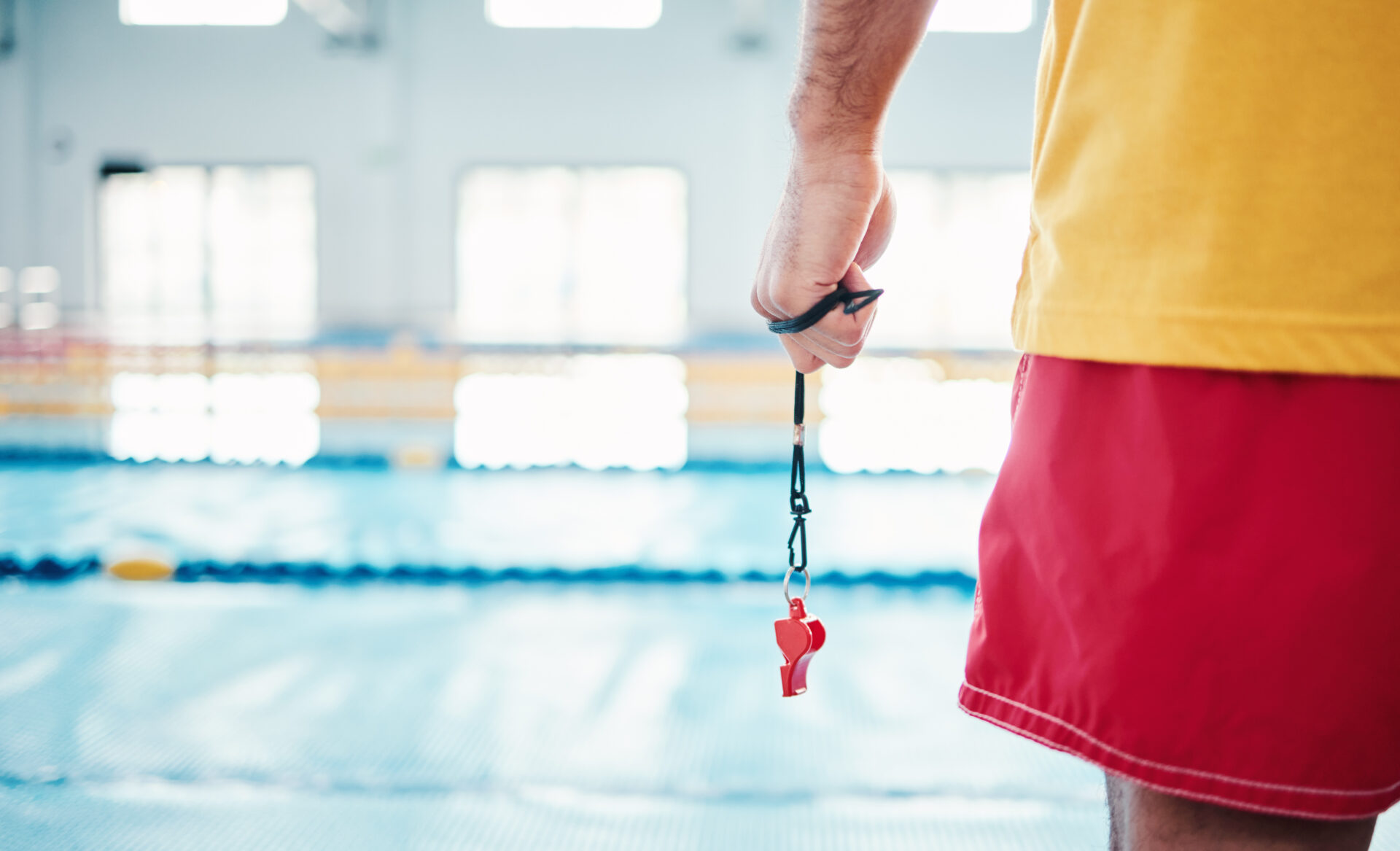
Safety Whistle – Storm All-Weather Safety Whistle
Your voice cannot compete with the roar of wind, crashing waves, or a passing motorboat’s engine. A marine safety whistle provides a high-decibel distress signal that cuts through environmental noise over long distances. It is a simple, non-electronic tool that must be physically attached to your body at all times.
The Storm All-Weather Safety Whistle is widely recognized as one of the loudest whistles on the market, capable of producing a piercing 120-decibel sound. Its unique patented design allows it to be heard even under water, and it works perfectly even after being completely submerged during a fall. The bright orange casing ensures high visibility if you drop it in low-light conditions.
Mount this whistle directly to the shoulder strap of your PFD using a lanyard so it is immediately reachable near your mouth. It is not suitable for casual use, as the sound is loud enough to cause hearing damage in close quarters. Always blow it with your eyes closed and your head turned slightly away to protect your own ears during emergency signaling.
- Decibel Rating: Up to 120 dB
- Material: Impact-resistant thermoplastic
- Key Feature: Performs in and under water
- Best For: All paddlers needing an ultra-loud, reliable emergency signal
Personal Locator Beacon – ACR ResQLink 400 PLB
Cell service is notoriously unreliable once you get a few miles away from shore or down into coastal inlets. When you are paddling alone and experience a medical emergency or get swept out to sea, a Personal Locator Beacon (PLB) is your direct line to emergency services. It bypasses cellular networks entirely, connecting directly to search and rescue satellites.
The ACR ResQLink 400 operates on the military-grade 406 MHz satellite network and includes GPS positioning to transmit your exact coordinates to rescuers worldwide. It requires no subscription fee, operates with a simple manual deployment antenna, and features a bright LED strobe to help rescuers spot you in the dark. The rugged, buoyant casing can be easily clipped to your PFD pocket.
While it is a premium investment, its five-year battery life and dependable construction make it a non-negotiable tool for offshore or remote solo paddlers. This is a dedicated distress beacon; it is not meant for casual tracking or sending “I’m okay” text messages to family. It should only be activated in situations of grave and imminent danger.
- Signal Frequency: 406 MHz (Search and Rescue) and 121.5 MHz (homing signal)
- Battery Life: 5-year operational life (24+ hours active transmission)
- Waterproof Rating: Buoyant, waterproof up to 5 meters
- Best For: Long-distance, offshore, or remote wilderness solo paddlers
Waterproof Dry Bag – Sea to Summit Big River Dry Bag
Keeping your emergency gear, dry clothing, and electronics dry is critical when you are miles away from your vehicle. A flimsy dry bag that tears or leaks upon submersion can turn a minor flip into an equipment disaster. A heavy-duty, abrasion-resistant dry bag is essential for securing your gear directly to your board.
The Sea to Summit Big River Dry Bag is built from heavy-duty 420D nylon fabric, making it incredibly tough and resistant to punctures from rocks or sand. The TPU roll-top closure provides a watertight seal, while the multiple lash loops allow you to secure it firmly to your board’s bungee rigging. It is designed to withstand the rough wear and tear of marine environments without wearing thin.
Always leave a bit of air inside the bag before rolling it closed so that the bag will float if it accidentally falls overboard. This bag is designed to handle heavy spray and brief submersions, but it is not intended for prolonged underwater diving. Avoid packing delicate electronics inside without a secondary waterproof case.
- Material: 420-denier TPU-coated nylon
- Sizes Available: 5L, 8L, 13L, 20L, 35L, 65L
- Closure: Hypalon roll-top with field-repairable buckles
- Best For: Securing critical extra gear and electronics in rough water conditions
Hydration Pack – CamelBak Octane Dart Hydration Pack
Dehydration on the water leads to muscle fatigue, poor decision-making, and heat-related illnesses—all of which are highly dangerous when you are paddling alone. Fumbling with a loose water bottle on your board deck disrupts your balance and stroke. A wearable hydration pack keeps fresh water easily accessible without requiring you to stop paddling.
The CamelBak Octane Dart Hydration Pack keeps water easily accessible on your back, allowing you to sip through a hands-free tube while maintaining your forward momentum. The lightweight, low-profile harness is designed to sit comfortably over a PFD without shifting or causing friction. The sternum strap keeps the pack secure even during active, high-cadence paddling.
It includes a 1.5-liter Crux reservoir and zippered pockets on the harness for quick access to energy gels, keys, or your whistle. Note that the pack must be thoroughly rinsed and dried after use to prevent mold, especially in warm climates. It is best suited for half-day paddles; longer trips may require carrying extra water in your main dry bag.
- Reservoir Capacity: 1.5 Liters (50 oz)
- Storage Capacity: 0.5 Liters of gear storage
- Material: Ultralight Cordura nylon
- Best For: Active paddlers needing hands-free hydration and minimal extra weight
Navigation Light – Guardian Expedition Dual Function Light
If your afternoon paddle stretches into dusk, you instantly become invisible to motorized boats. US Coast Guard regulations require paddlers to carry a flashlight or lantern to prevent collisions in low-light conditions. A compact, waterproof light ensures you can make yourself visible to other vessels in an instant.
The Guardian Expedition Dual Function Light is a compact, ultra-rugged safety light that can be clipped directly to your PFD, paddleboard deck, or leash cuff. It features both steady-on and flashing strobe modes, and it is visible for up to three miles in dark conditions. Its lightweight design means you will barely notice it is there until you need to turn it on.
The light operates on long-lasting lithium batteries and is waterproof up to 300 feet, making it virtually indestructible in rough surf. This light is designed for high visibility to others rather than illuminating your path. If you need to navigate in pitch-black conditions, you should pair this with a quality headlamp.
- Visibility: Up to 3 miles (5 km)
- Waterproof Depth: Up to 328 feet (100 meters)
- Battery Type: 2x CR2032 Lithium cell batteries (included)
- Best For: Late-afternoon, dusk, dawn, or low-light solo paddling
Waterproof First Aid Kit – Adventure Medical Kits Ultralight
Minor injuries like blisters, scrapes from oyster shells, or jellyfish stings can quickly ruin a solo paddle if left untreated. Having a compact, waterproof medical kit on board ensures you can treat minor wounds before they become infected or hinder your ability to paddle home. Standard first aid kits in cardboard boxes will quickly turn to mush in a marine environment.
The Adventure Medical Kits Ultralight / Watertight .5 is designed specifically for water sports, utilizing a dual-stage waterproofing system with an inner DryFlex bag. It contains high-quality medical supplies, including waterproof bandages, sterile gauze, antiseptic wipes, blister treatments, and basic pain medications. The entire kit is vacuum-sealed to keep moisture out until it is needed.
Because the kit is exceptionally compact, it easily slides into a dry bag or PFD pocket without adding noticeable weight. Remember to inspect the kit annually to replace expired medications or used bandages so it remains fully stocked. This kit is designed for minor, single-day injuries; it is not a trauma kit for major wilderness medical emergencies.
- Weight: 3.6 ounces (approx. 100 grams)
- Waterproofing: Outer silicone-coated nylon bag with inner DryFlex bag
- Contents: Dressings, bandages, blister prevention, medications, tape
- Best For: Single-day solo paddlers looking for a lightweight, waterproof first aid solution
Rescue Knife – NRS Co-Pilot Titanium Knife
Entanglement is an underrated hazard on the water, whether it is discarded monofilament fishing line, anchor ropes, or your own leash in a swift current. A sharp, accessible rescue knife can free you from a dangerous snag in seconds. Trying to untangle a rope with your bare hands while submerged is incredibly difficult and dangerous.
The NRS Co-Pilot Titanium Knife features a corrosion-resistant titanium blade that stays sharp even after repeated exposure to harsh saltwater. The blunt safety tip prevents you from accidentally puncturing yourself or your inflatable paddleboard during a frantic rescue. It features both smooth and serrated blade sections, along with a dedicated rope-cutting hook.
The knife lock-sheath clips securely to your PFD lash tab, requiring a simple squeeze-release mechanism to deploy, ensuring it won’t fall out during a swim. Because titanium is lightweight but highly specialized, this knife is strictly for rescue and cutting cordage. It is not designed for heavy-duty utility work or campsite prep.
- Blade Material: Corrosion-proof titanium
- Blade Length: 2.25 inches
- Edge Types: Smooth and serrated sections with a rope-cutting hook
- Best For: Paddlers navigating areas with heavy fishing line, underwater snags, or rigging
How to Plan Your Route and Check the Weather Before Launching
Safety gear is your backup plan, but solid trip planning is your first line of defense. Before you even load your board onto your vehicle, you must study the local weather forecast, paying close attention to wind speed and direction rather than just air temperature. A gentle 10 mph wind might feel pleasant on land, but it can create exhausting chop and drift on open water.
An offshore wind (blowing from the land out to water) can make paddling out feel deceptively easy, only to make the return trip a grueling, exhausting fight against the breeze. Always plan your route to paddle into the wind on the first half of your trip when your muscles are fresh, allowing the wind to assist you on the return leg. Keep a close eye on tidal currents as well, as a strong tide can sweep a paddleboard off course quickly.
Additionally, always file a “float plan” with a trusted friend or family member before hitting the water. Let them know exactly where you are launching, your intended route, what gear you are carrying, and when you expect to return. This simple step ensures that if you do not check in by a set time, someone knows exactly where to direct search and rescue services.
Rinsing and Storing Your Safety Gear After Saltwater Paddles
Saltwater is highly destructive to metals, plastics, and fabrics alike, leading to corrosion and material breakdown if left unchecked. A safety device that fails when you need it most due to salt crystallization is a tragedy that is easily avoided. Proper post-paddle maintenance is just as important as the paddle itself.
After every outing, thoroughly rinse all of your gear—especially your PFD, leash, dry bag buckles, and rescue knife—with fresh, clean water. Pay close attention to zippers, metal swivels, and whistle chambers where salt crust can build up and seize moving parts. A quick freshwater bath prevents rust and extends the lifespan of your safety investments.
Hang your gear to dry in a well-ventilated, shaded area out of direct sunlight, as UV rays will degrade nylon and break down the foam in your life jacket over time. Never store your gear while it is still damp, as mold and mildew will quickly ruin the fabrics. Once completely dry, store your safety gear in a cool, dark place, ready for your next solo adventure.
Conclusion
Solo paddleboarding is an incredibly rewarding pursuit, but its safety rests entirely in your hands. Investing in the right gear, planning your route carefully, and maintaining your equipment ensures you can explore the open water with absolute confidence. Stay prepared, stay vigilant, and enjoy the quiet freedom of the water.

