9 Essential Cold-Water Swimrun Gear Picks for Beginners
Gear up for your first race with these 9 essential cold-water swimrun gear picks. Master the elements and enhance your performance. Read our expert guide today.
Standing on a damp, windswept shoreline with your teeth chattering is the exact moment you realize swimrun is not just another triathlon. Unlike traditional multisport events, this rugged discipline requires transitioning repeatedly between open water and technical trail running without changing your kit. In cold-water environments, having the right specialized gear is the difference between an exhilarating wilderness adventure and a rapid descent into mild hypothermia.
Disclosure: As an Amazon Associate, this site earns from qualifying purchases. Thank you!
How to Choose Your First Cold-Water Swimrun Gear
When assembling your first cold-water swimrun kit, the primary challenge is balancing thermal protection with mobility. Standard swimming wetsuits will chafe your thighs to ribbons during the run, while traditional running shoes will fill with water and drag you down like lead anchors during the swim. Every piece of equipment must serve a dual purpose, functioning efficiently both in choppy, cold currents and on steep, slippery singletrack.
Prioritize modularity and fit over high-end performance ratings when starting out. Beginners often make the mistake of buying the thickest neoprene available, only to overheat during the running stages and suffer from restricted shoulder movement in the water. Look for gear that allows easy venting, such as front zippers, and choose accessories that can be quickly stowed or adjusted on the fly without stopping.
Swimrun Wetsuit – Zone3 Evolution Wetsuit
A dedicated swimrun wetsuit is the cornerstone of your cold-water setup. Unlike standard swimming suits, it features a front zipper for easy venting during runs, high-stretch shoulder panels for unrestricted stroking, and durable, abrasion-resistant materials in the seat area to handle rough rock entries and exits. It keeps your core warm in frigid lakes while allowing a natural running stride on land.
The Zone3 Evolution Wetsuit stands out because of its clever hybrid construction and high-stretch 1.5mm Yamamoto shoulder panels paired with 8mm buoyancy panels on the thighs. This configuration keeps your hips high in the water—crucial when wearing heavy trail shoes—while the front zipper allows you to “cab-down” the top half during long, hot run sections. Built-in internal pockets provide secure storage for nutrition and safety gear, eliminating the need for extra belts.
- Key Specs: 1.5mm to 8mm zoned neoprene thickness, front and rear zippers, internal storage pockets, removable sleeves included.
- Best For: Beginners looking for a durable, highly buoyant suit that transitions seamlessly from running to swimming.
- Not Ideal For: Swimrunners racing in warm, tropical waters where the heavy thigh buoyancy will cause overheating.
Before purchasing, pay close attention to the sizing chart and prioritize the chest and torso fit over height. A suit that is too loose will flush cold water with every stroke, rendering its thermal properties useless. Expect a snug, almost restrictive fit on land; once you hit the water, the neoprene will loosen slightly and mold to your body.
Off-Road Shoes – Vivobarefoot Primus Trail II SG
Your footwear has to perform two seemingly contradictory tasks: gripping wet, slimy rocks and draining water instantly the moment you step onto land. Traditional running shoes absorb water, becoming heavy clogs that ruin your swim posture and cause blisters during the run. A proper swimrun shoe must be lightweight, low-profile, and constructed with hydrophobic materials.
The Vivobarefoot Primus Trail II SG (Soft Ground) excels in this harsh environment due to its ultra-thin, puncture-resistant sole and aggressive 5mm lugs that bite into mud and wet grass. Because it lacks thick foam cushioning, it does not absorb water, allowing it to drain almost instantly after your swim entry. This minimalist design ensures your feet stay light and close to the ground, reducing the risk of rolled ankles on technical terrain.
- Key Specs: Vegan-friendly synthetic materials, 5mm aggressive lugs, quick-drain mesh upper, speed-lace system.
- Best For: Runners who prefer a natural, barefoot feel and need maximum grip on slippery, muddy trails.
- Not Ideal For: Beginners with weak arches or those accustomed to highly cushioned road shoes who require heavy heel support.
Transitioning to minimalist footwear requires a gradual conditioning period to avoid calf strain. If you are new to zero-drop shoes, wear them on shorter trail runs before taking them into a full cold-water swimrun session. Pair them with thin, synthetic socks to minimize friction and prevent debris from causing blisters.
Swimrun Pull Buoy – Ark Sports Keel Pull Buoy
In swimrun, you swim while wearing trail shoes, which naturally sink and create immense drag. A pull buoy is non-negotiable; it fits between your thighs to elevate your legs, keeping your body horizontal and streamlined without requiring you to kick. This saves your leg muscles for the running sections and dramatically reduces fatigue in cold water.
The Ark Sports Keel Pull Buoy is designed specifically for the rigors of swimrun, featuring a hydrodynamic, curved shape that stays locked between your thighs even during rough water entries. Unlike standard pool buoys, it is weighted with a heavier lower section (the “keel”) that naturally stabilizes your body roll in choppy open water. It also includes integrated strap slots so you can secure it to your leg or a harness during the run phases.
- Key Specs: Hydrodynamic molded foam construction, weighted keel design, pre-drilled strap slots, high-buoyancy rating.
- Best For: Athletes struggling with sinking legs who need maximum stabilization in choppy, open-water conditions.
- Not Ideal For: Swimmers with exceptionally strong natural body positions who find bulky leg gear distracting.
Using a pull buoy requires a tether or elastic cord system to keep it attached to your thigh while running. Practice transitioning the buoy from the inside of your thigh (swimming position) to the outside of your hip (running position) while on dry land. A secure fit is vital, as a loose buoy will slip down your leg and trip you up on the trail.
Hand Paddles – Strokemaker Multi-Force Swim Paddles
Because your legs are resting and supported by a pull buoy, your upper body must do all the heavy lifting during the swim. Hand paddles increase the surface area of your hands, allowing you to catch more water and pull yourself forward with greater power. This extra propulsion is crucial for cutting through cold currents and choppy waves.
The Strokemaker Multi-Force Swim Paddles are a classic choice that provide the perfect balance of surface area and flexibility. Their slightly flexible plastic construction prevents shoulder strain while still delivering massive propulsion, and the flow-through holes provide excellent water feel, helping you maintain proper stroke mechanics. The adjustable latex tubing allows for a custom, secure fit that will not slide off your hands during surf entries.
- Key Specs: Flexible plastic blade, adjustable latex finger and wrist straps, flow-through water holes, available in multiple sizes.
- Best For: Swimrunners looking to improve their upper-body propulsion and maintain stroke alignment in open water.
- Not Ideal For: Absolute beginners with shoulder injuries or poor swimming form, as paddles can exacerbate technique flaws.
Sizing hand paddles is a delicate balance; choosing a size too large can quickly lead to rotator cuff tendonitis, especially in cold water where muscles are stiff. Start with a size that is only slightly larger than your actual hand. When running, slide the paddles onto your wrists or clip them to your swimrun belt to keep your hands free for climbing and balance.
Neoprene Cap – Blueseventy Thermal Swim Cap
The human head is a major source of heat loss, and plunging into cold water without protection is a fast track to brain freeze and disorientation. A standard silicone cap is insufficient in water below 60°F (15°C). A dedicated neoprene cap insulates your head, protects your ears from cold wind, and keeps you focused on your pacing rather than the biting cold.
The Blueseventy Thermal Swim Cap features a high-quality Zirconium thermal liner that offers unmatched warmth without adding bulk. Its chin strap is designed to sit comfortably without chafing, securing the cap in place even when diving through waves or running against heavy winds. The 3mm neoprene construction provides a barrier against the cold while maintaining enough flexibility to prevent a claustrophobic sensation.
- Key Specs: 3mm Yamamoto neoprene, Zirconium thermal inner lining, central panel stitching for a contoured fit, secure chin strap.
- Best For: Swimmers tackling water temperatures below 55°F (13°C) who are prone to cold-induced headaches.
- Not Ideal For: Warm-water swimruns or individuals who cannot tolerate the tight sensation of a chin strap.
To maximize comfort, wear your goggles over the neoprene cap but under your official race cap (which is usually provided by event organizers). This prevents your goggle straps from slipping off the slick neoprene. If the chin strap feels too tight on land, remember that it will soften and stretch slightly once wet.
Safety Buoy – Restube Active Inflatable Buoy
Safety should never be compromised in open water, particularly when cold temperatures increase the risk of muscle cramps or sudden panic. A safety buoy provides high-visibility targeting for boats and rescue personnel while offering a reliable flotation device to rest on if you encounter trouble. For swimrun, the buoy must be streamlined so it does not snag on shoreline brush or drag behind you during runs.
The Restube Active Inflatable Buoy is the ultimate compromise between safety and performance, sitting compactly in a small hip pouch while you run and swim. If you experience a cramp or fatigue, a quick pull of the trigger inflates the robust nylon buoy using a CO2 cartridge in a fraction of a second. This inflatable design completely eliminates the drag of a traditional tow-float, making it a favorite for speed-conscious swimrunners.
- Key Specs: CO2 trigger inflation system, saltwater-resistant materials, adjustable hip belt, integrated whistle.
- Best For: Athletes who want safety backup without the constant drag and bulk of a traditional towed buoy.
- Not Ideal For: Swimmers who want a buoy that acts as a dry bag to carry heavy gear during the swim.
Before heading out, always inspect the green indicator on the trigger to ensure the CO2 cartridge is fully threaded and ready to deploy. After any deployment in saltwater, rinse the bladder thoroughly with fresh water and let it dry completely before folding it back into the pouch. Always carry a spare CO2 cartridge in your transition kit.
Swim Socks – Zone3 Neoprene Heat-Tech Socks
Frigid water quickly numbs your extremities, turning your feet into heavy, unresponsive blocks of ice that make running nearly impossible. Swim socks bridge the gap between water insulation and trail protection. They prevent cold water from circulating around your feet while swimming and provide a layer of blister defense inside your wet shoes.
The Zone3 Neoprene Heat-Tech Socks are designed with a unique titanium lining that reflects body heat back to your skin, maintaining warmth in the coldest conditions. They feature a slightly longer ankle cuff that tucks securely under your wetsuit leg, preventing water from flushing in during your swim stroke. The sole is reinforced with a durable grip pattern, offering protection if you need to walk over sharp rocks without your shoes.
- Key Specs: 3.5mm neoprene thickness, Heat-Tech titanium lining, liquid-sealed seams, reinforced textured sole.
- Best For: Cold-water athletes whose feet numb quickly, and those who need extra protection against gravel inside their shoes.
- Not Ideal For: Swimruns in warm weather, as the thick insulation will cause excessive sweating and blisters on the run.
For the best results, put your socks on first, pull your wetsuit legs down over the ankle cuffs, and then put your running shoes on over the top. This layered configuration creates a highly effective water barrier. Ensure your trail running shoes have enough volume to accommodate the extra 3.5mm of neoprene thickness without squeezing your toes.
Thermal Base Layer – Orca Heatseeker Vest with Hood
When the water temperature drops below 52°F (11°C), even a high-end swimrun wetsuit can benefit from an extra layer of core protection. A thermal base layer fits snugly beneath your suit, trapping a thin layer of water next to your skin that your body heat quickly warms up. This extra barrier can mean the difference between completing your course and pulling out early due to shivering.
The Orca Heatseeker Vest with Hood is an ingenious solution that combines a 2mm open-cell neoprene chest vest with an integrated thermal hood. The hood prevents cold water from seeping down your neck—a common point of entry for drafts—while the sleeveless vest design preserves complete shoulder mobility for swimming. The thermal jersey lining feels comfortable against the skin and prevents the chafing often caused by wearing multiple layers of gear.
- Key Specs: 2mm open-cell neoprene, integrated thermal hood, sleeveless core cut, low-profile flatlock seams.
- Best For: Swimmers tackling extreme cold-water venues who want to upgrade their existing wetsuit’s thermal range.
- Not Ideal For: Mild-water conditions where the added hood will cause immediate overheating during the running sections.
Because this vest sits directly against your skin, a precise fit is absolutely essential to prevent chafing under your armpits and around your neck. Apply a generous amount of non-petroleum anti-chafe lubricant to these high-friction areas before slipping the vest on. Wash the vest inside out after every session to prevent sweat and body oils from degrading the neoprene lining.
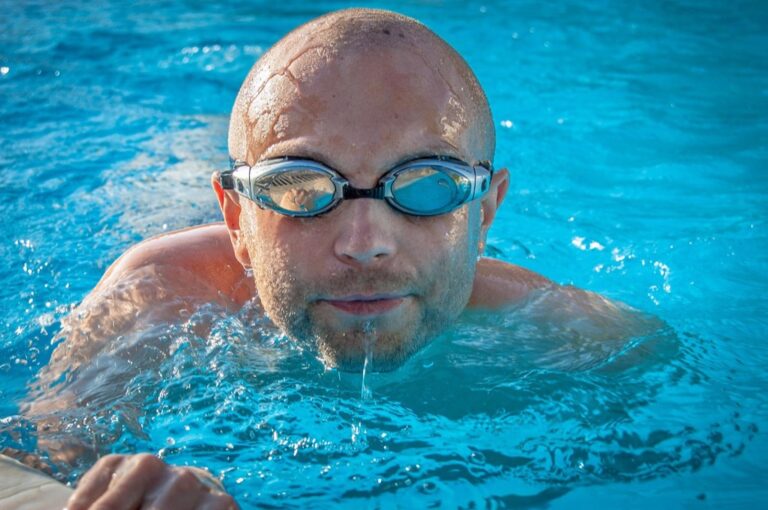
Swim Goggles – Aqua Sphere Kayenne Swim Goggles
Navigating in open water requires clear, unobstructed vision to spot trail markers, safety boats, and rocky shorelines. Cold water can cause standard goggles to fog instantly due to the temperature differential between your face and the water. A wide field of view and a reliable anti-fog seal are critical for staying on course and avoiding underwater hazards.
The Aqua Sphere Kayenne Swim Goggles are a gold standard for open-water swimmers, featuring oversized, curved lenses that provide a panoramic 180-degree field of view. The stabilized nose bridge ensures a secure fit that won’t leak when you dive into choppy water, while the quick-fit buckle allows for instant tension adjustments with a simple pull. The lenses are treated with a durable anti-fog coating and are available in polarized options to cut through glare on sunny, cold mornings.
- Key Specs: Oversized Plexisol lenses, 180-degree visibility, Quick-Fit one-touch buckle, scratch-resistant and anti-fog coatings.
- Best For: Swimrunners who need maximum peripheral vision to spot exit points and navigate rough, open water.
- Not Ideal For: Swimmers with very narrow faces who prefer low-profile, socket-style pool racing goggles.
To keep your goggles fog-free, avoid touching the inside of the lenses with your fingers, as skin oils will quickly destroy the anti-fog coating. Rinse them with clean, fresh water after every swim and store them in a protective case to prevent the lenses from scratching against your trail shoes or paddles in your gear bag.
Essential Safety Rules for Cold-Water Swimming
Cold-water swimrun is an exhilarating challenge, but the physical impact of cold water on the human body must never be underestimated. The primary danger during the initial entry is cold shock response, which triggers an involuntary gasp reflex and rapid breathing. Entering the water slowly and splashing your face before swimming helps mitigate this response, allowing you to establish a controlled breathing rhythm before you begin stroking.
Always swim with a partner and utilize a buddy system throughout the training session. In cold water, hypothermia can creep up insidiously, impairing your judgment and coordination before you realize you are in danger. Keep a close eye on your partner for signs of slurred speech, erratic swimming strokes, or sudden lethargy, and do not hesitate to call an end to the session if either of you begins to shiver uncontrollably.
Finally, plan your exit points carefully before you ever enter the water. Cold hands lose their dexterity quickly, making it incredibly difficult to climb up steep, slippery rocks or undo tight zippers. Choose exit points with gradual slopes where you can safely walk out of the water, and ensure you have dry, warm clothing immediately available at the finish line to facilitate quick warming.
How to Wash and Store Your Neoprene Gear Safely
Neoprene is a delicate material that degrades rapidly if exposed to saltwater, chlorine, sweat, and UV light. To extend the life of your expensive swimrun wetsuit, socks, and cap, you must rinse them thoroughly inside and out with clean, cold freshwater after every single use. Avoid hot water, as it can break down the specialized glues used to seal the seams of your gear.
When drying your wetsuit, never hang it by the shoulders on a standard wire hanger, as the weight of the wet neoprene will stretch out the shoulders and ruin the fit. Instead, fold the suit in half over a thick, padded hanger or a dedicated wetsuit hanger, placing the crease at the waist. Dry your gear in a shaded, well-ventilated area away from direct sunlight, which can dry out and crack the neoprene over time.
For long-term seasonal storage, ensure all your gear is completely dry to prevent mold and mildew growth. Store your wetsuit flat or loosely rolled in a cool, dark closet rather than folding it tightly, which creates permanent creases that weaken the material. Treating the zippers with a specialized silicone lubricant before storing will ensure they slide smoothly when the next season arrives.
Equipping yourself with the right cold-water gear removes the friction of the elements, leaving you free to focus entirely on the rhythm of the trail and the water. With the proper insulation, traction, and buoyancy, those freezing lakes and rugged shores become a playground rather than an obstacle. Invest in high-quality gear, respect the water, and prepare to experience the raw beauty of swimrun at its absolute best.