
7 Best Paddle Boards for Beginners
Discover the top 7 paddle boards perfect for beginners in our comprehensive guide. Learn what features to prioritize, essential accessories, and tips for getting started on the water confidently.
Stand-up paddle boarding has surged in popularity as a fun water activity that combines exercise with adventure. It’s accessible to beginners of all ages, but choosing the right board can make or break your first experiences on the water.
Finding a paddle board that offers stability, durability, and value doesn’t have to be overwhelming—we’ve tested dozens to identify the seven best options for newcomers. These boards provide the perfect balance of forgiveness and performance to help you build confidence while learning the basics.
Disclosure: As an Amazon Associate, this site earns from qualifying purchases. Thank you!
How to Choose the Best Paddle Board for Beginners
Selecting the right paddle board as a beginner requires understanding several key factors that directly impact your learning experience. The perfect board will help you build confidence while minimizing frustration during those first outings on the water. Here’s what to consider when making your choice:
Board Types
Different paddle board types serve various purposes and skill levels. Inflatable paddle boards offer excellent stability and portability, making them ideal for beginners who need to transport their boards easily. All-around boards provide versatility for different water conditions and activities. Touring boards feature a pointed nose for better tracking during longer paddles, while surf SUPs are designed specifically for catching waves.
Size and Stability
Board dimensions significantly affect stability and maneuverability. Wider boards (32-34 inches) provide greater stability for beginners still developing their balance. Longer boards (10-12 feet) track straighter in the water and offer more glide. Thicker boards (5-6 inches) provide better flotation and stability. Your weight also determines the appropriate board volume – heavier paddlers need boards with higher volume to ensure proper flotation and stability.
Construction and Durability
Board construction affects performance, durability, and price. Inflatable SUPs feature drop-stitch construction with military-grade PVC, offering surprising rigidity when properly inflated. They’re also more forgiving during inevitable falls. Hard boards typically use an EPS foam core with fiberglass or carbon fiber layers, providing better performance but less durability against impacts. As a beginner, prioritize durability to withstand the learning process.
Weight Capacity
Every paddle board has a maximum weight capacity that includes both the paddler and any gear. Exceeding this limit compromises stability and tracking. Choose a board with at least 50-75 pounds of capacity beyond your weight to accommodate gear and ensure optimal performance. Many beginners make the mistake of selecting boards with insufficient capacity, leading to frustration when the board sits too low in the water.
Intended Use
Consider where and how you’ll primarily use your paddle board. Calm lakes and bays require different board characteristics than ocean surf or rivers. All-around boards work well for recreational paddling on flat water. If you plan to paddle longer distances, a touring board might be better. For fitness paddling, look for boards with good tracking and stability. Be realistic about your intended use to find the most appropriate board.
Budget Considerations
Quality paddle boards range from $300 to $1,500+. While it’s tempting to start with the cheapest option, extremely low-priced boards often lack durability and performance features that make learning easier. Look for boards in the $400-$700 range for a good balance of quality and affordability. Many starter packages include essential accessories like paddles, leashes, and pumps, offering better overall value.
Additional Features
Look for boards with useful beginner-friendly features. Soft, textured deck pads provide comfort and traction. Bungee storage areas secure gear during paddling sessions. Multiple fin configurations allow customization based on conditions. Padded carrying handles make transportation easier. These seemingly small features can significantly enhance your paddling experience while you’re developing your skills.
Inflatable vs. Hard Paddle Boards: What Beginners Should Know
When entering the world of paddle boarding, one of the first decisions you’ll face is choosing between inflatable and hard paddle boards. Each type offers distinct advantages depending on your specific needs and circumstances.
Benefits of Inflatable Paddle Boards for New Paddlers
Inflatable paddle boards excel in versatility and practicality for beginners. They’re significantly more stable with wider profiles and lower centers of gravity, helping you feel secure while learning. These boards are ultra-portable—deflating to fit in a backpack—making storage and transportation effortless. Many inflatables feature impressive durability, absorbing impacts better than their rigid counterparts. Their lower profile (typically 4.75-5″ thick) minimizes wobbling and makes climbing back aboard easier. As a bonus, they’re typically more budget-friendly, providing excellent value for newcomers to the sport.
When to Consider a Hard Paddle Board
Hard paddle boards become compelling options as your skills advance. They offer superior performance for specialized activities like surfing or racing due to their enhanced rigidity and responsiveness on the water. If you’re planning to quickly progress to advanced paddling techniques or competitive events, a hard board’s improved glide and maneuverability might justify the investment. These boards also excel in specific water conditions—epoxy and fiberglass models deliver unmatched speed and precision for those focused on performance. However, for most beginners, an inflatable board’s combination of stability, durability and convenience makes it the ideal starting point.
The 7 Best Paddle Boards for Beginners in 2023
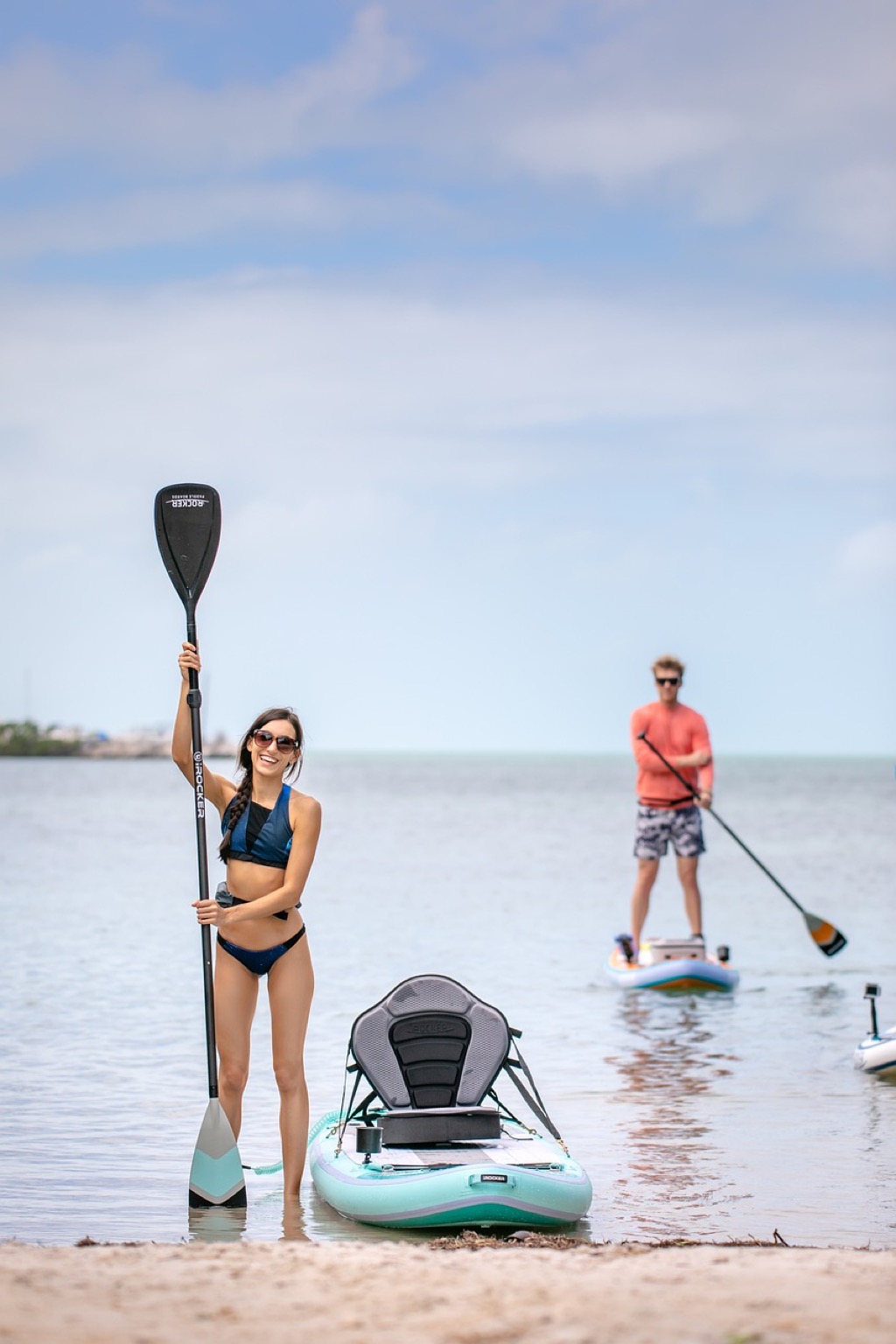
1. iROCKER Cruiser Ultra 2.0 Inflatable Paddle Board
The iROCKER Cruiser Ultra 2.0 stands out with its exceptional 33-inch width that provides supreme stability for beginners. At 10’6″ long and weighing just 21 lbs, this board strikes the perfect balance between maneuverability and steadiness on water. Its innovative foldable design halves its packed size, making storage and transportation remarkably convenient for newcomers to the sport.
2. Atoll 11′ Inflatable Paddle Board
The Atoll 11′ earns high marks for combining quality construction with beginner-friendly affordability. Measuring 11′ × 32″ × 6″ and weighing only 21 lbs, it supports an impressive 315 lbs capacity (tested to 550 lbs). Its machine-laminated dual-layer PVC construction delivers a 9/10 stability rating, giving beginners the confidence they need while learning paddle board basics.
3. ISLE Pioneer Inflatable Paddle Board
While specific reviews for the ISLE Pioneer are limited, it follows the brand’s reputation for beginner-friendly designs with excellent stability and ease of use. The similar ISLE Switch model features an ultra-stable 35.5-inch width and versatile functionality, including a kayak conversion mode. This adaptability makes it perfect for beginners who want to experiment with different paddling styles.
4. Bluefin Cruise SUP Package
The Bluefin Cruise excels in durability with its rigid construction and innovative dual air chambers for enhanced safety. This board comes backed by an impressive 5-year warranty, demonstrating the manufacturer’s confidence in its quality. Though heavier at 32 lbs for the board alone, the extra weight translates to exceptional stability that beginners will appreciate during their learning phase.
5. GILI Adventure Inflatable Paddle Board
Similar to the well-reviewed GILI Komodo, the Adventure model offers beginners a stable 33-inch width platform with a 6-inch thickness. Weighing just 21 lbs while supporting up to 340 lbs, it features durable dual-layer fusion tech construction. The full-coverage deck pad provides superior grip—essential for newcomers still mastering their balance on the water.
6. Thurso Surf Waterwalker Paddle Board
The Thurso Surf Waterwalker delivers reliable performance with its approximately 32-inch width that provides excellent stability for beginners. Though not as frequently highlighted in recent reviews, it maintains a strong reputation for quality construction and user-friendly design. The complete accessory package includes everything you need to start paddling immediately—backpack, paddle, pump, and fins.
7. SereneLife Inflatable Stand Up Paddle Board
The SereneLife board offers exceptional value for beginners with its affordable price point and user-friendly design. Typically measuring around 10’5″ × 32″ × 6″ and weighing just 19 lbs, it’s among the lightest options available. The non-slip deck pad enhances safety for beginners, while the included complete accessory kit ensures you have everything needed for your first paddling adventures.
Essential Features for Beginner Paddle Boards
Stability and Width Requirements
Stability is the cornerstone of a beginner-friendly paddle board. Boards with widths between 32″ and 34″ provide the ideal platform for new paddlers to build confidence. Look for models with a low profile thickness of 4.75″ to 5″, which minimizes side-to-side movement and keeps you steady on the water. The wider surface area creates more contact with water, significantly reducing the likelihood of tipping while you’re learning the basics.
Weight Capacity Considerations
Always check the weight capacity before purchasing a paddle board. A board that can’t properly support your weight will sit too low in the water, affecting performance and stability. Most quality beginner boards have capacities between 250-350 pounds. For optimal performance, choose a board where your weight is at least 50-70 pounds below the maximum capacity. Boards that are 10’6″ to 11′ long typically offer sufficient buoyancy for most adult beginners.
Board Construction and Durability
Inflatable paddle boards offer superior durability for beginners compared to hardboards. Their military-grade PVC construction withstands impacts with rocks, docks, and shorelines that are common during the learning process. Look for boards with reinforced rails and multiple layers of PVC (at least dual-layer construction). Premium inflatables from brands like iROCKER and Thurso Surf feature drop-stitch technology that maintains rigidity even after repeated use.
Deck Layout and Comfort
An uncluttered deck layout is essential for beginners. Your board should feature a spacious, textured deck pad that provides secure footing when wet. Avoid boards with excessive attachments in the center standing area that might interfere with your balance. Front bungee cords are beneficial for securing essentials during your paddle, while padded handles make carrying your board to and from the water much easier on your hands.
Tracking and Maneuverability
The fin configuration significantly impacts how your board handles on water. A three-fin setup (thruster) offers the best balance of tracking stability and maneuverability for beginners. Look for boards with at least one larger center fin and two smaller side fins. Removable fins add versatility and make transportation easier. The Red Paddle Co 10’6 Ride MSL exemplifies excellent tracking with its rounded nose design that helps maintain course while remaining responsive enough for beginners.
Paddle Board Accessories Every Beginner Needs
Paddle
Your paddle is your main tool for propulsion and steering. Opt for an adjustable paddle that can be sized correctly to your height. While aluminum paddles are common starter options, they can feel heavy during longer sessions. Consider investing in a fiberglass paddle for a better balance of durability and weight. Carbon fiber paddles offer the lightest option but come at a premium price point.
Leash
A SUP leash is non-negotiable for safety on the water. This simple cord attaches to your ankle and keeps your board within reach if you fall off. Without a leash, your board can quickly drift away in wind or currents, leaving you stranded. Most leashes feature comfortable ankle cuffs with quick-release tabs for emergency situations.
Personal Flotation Device (PFD)
Many waterways legally require you to carry a PFD while paddle boarding. Belt-style inflatable PFDs are popular among paddlers because they’re comfortable and unobtrusive when not inflated. For children or less confident swimmers, always opt for a constantly worn, properly fitted life jacket rather than an inflatable option.
Deck Pad
A quality deck pad provides crucial traction and comfort during your paddle sessions. Look for a textured, non-slip surface that extends far enough back for various foot positions. Some premium boards feature contoured deck pads with raised tail sections for improved foot positioning during turns and maneuvers.
Backpack or Bag
For inflatable paddle boards, a well-designed carrying backpack transforms transportation and storage. The best bags feature padded shoulder straps, waist supports, and wheel options for longer distances. Interior compression straps help secure your rolled board, while external pockets provide space for accessories and personal items.
Bungees and Cargo Nets
Front and rear bungee systems allow you to secure essential items like water bottles, dry bags, and extra gear during your paddle. Look for boards with at least one set of bungee cords, ideally with multiple attachment points for versatility. Some advanced paddlers add additional aftermarket bungees for extended touring trips.
Repair Kit
Every inflatable paddle board owner should carry a basic repair kit, especially for remote paddling locations. Quality kits include PVC patches, waterproof adhesive, and valve wrenches. Familiarize yourself with basic repair procedures before heading out, as proper application requires specific drying times and preparation steps.
Safety Whistle
A simple whistle can be a lifesaver in emergency situations on the water. Most quality PFDs include an attached whistle, but if yours doesn’t, attach one to your board or leash. Three short whistle blasts universally signal distress and can carry much farther over water than your voice when calling for help.
How to Care for Your First Paddle Board
Cleaning
Proper cleaning extends your paddle board’s lifespan and maintains its performance. After each paddling session, rinse your board thoroughly with fresh water to remove salt, sand, and debris that can cause deterioration over time. Use mild soap and a soft-bristled brush for stubborn dirt, avoiding harsh chemicals that might damage the board’s surface or compromise its structural integrity.
Storage
Correct storage prevents warping, discoloration, and premature aging of your paddle board. Store your board in a cool, dry place away from direct sunlight, which can fade colors and weaken materials. For inflatable boards, release some air pressure before storing long-term and roll loosely to prevent creasing. Hard boards should be stored horizontally on padded racks or suspended using wall mounts with straps that distribute weight evenly.
Maintenance
Regular maintenance checks help identify small issues before they become major problems. Inspect your board monthly for dings, cracks, or valve issues on inflatable models. Apply a UV protectant designed for paddle boards quarterly to shield against sun damage. Check fin boxes and attachment points for sand buildup or looseness that could affect performance on the water.
Transportation
Proper transportation methods prevent damage that can occur while moving your paddle board. Use a padded board bag specifically designed for paddle boards to protect against scratches and impact damage. Secure your board to roof racks with padded straps, avoiding overtightening which can cause compression damage. For inflatable boards, use the provided backpack and ensure the board is clean and dry before packing to prevent mold growth.
Accessories
Maintain your paddle board accessories with the same care as the board itself. Rinse your paddle after use and check for cracks or splitting along the shaft. Clean leashes with fresh water and inspect for wear at connection points. Store fins separately to prevent warping and keep inflation pumps dry to prevent internal corrosion. Well-maintained accessories ensure you’re always ready for your next paddling adventure.
Where to Practice Paddle Boarding as a Beginner
Ideal Locations
Lakes and rivers offer perfect training grounds for beginner paddle boarders. Their calm, smooth surfaces help you master balance and basic paddling techniques without fighting against rough conditions. Many beginners find that small lakes with minimal boat traffic provide the most controlled environment for building confidence.
Bays and inlets serve as excellent alternatives with their protected waters and minimal waves. These sheltered areas shield you from strong currents while still providing enough space to practice turning and navigating. Coastal paddlers often prefer early morning sessions in protected bays when winds are typically lightest.
Conditions to Look For
Calm waters are essential when you’re first learning to paddle board. Avoid areas with strong currents, waves over 6 inches, or wind speeds exceeding 10 mph. Wind creates ripples that make balancing significantly more challenging for beginners.
Shallow waters (2-4 feet deep) offer ideal practice conditions since you can easily stand up if you fall. Being able to touch the bottom provides psychological security and makes getting back on your board much simpler when you’re still mastering the basics.
Designated paddle board areas often feature safety buoys, clear access points, and sometimes even marked beginner routes. These locations frequently have rental shops nearby where staff can provide location-specific safety tips and recommend the best times to paddle.
Tips for Beginners
Start in a kneeling position before attempting to stand up. This lower center of gravity gives you time to feel how the board responds to your movements and paddle strokes. Many instructors recommend spending your first 15-20 minutes paddling from your knees to develop comfort and stability.
Choose early morning or late afternoon sessions for your practice. These times typically feature calmer waters with fewer watercraft creating wakes. The golden hours between 7-9am often provide glass-like conditions perfect for beginners.
Take lessons or join a group session to accelerate your learning curve. Professional instructors can correct your technique early, preventing bad habits and improving your confidence. Group lessons also connect you with fellow beginners who can become paddling partners as you progress in the sport.
Conclusion: Finding Your Perfect Beginner Paddle Board
Starting your paddle boarding journey with the right board makes all the difference in your experience on the water. Any of these seven recommended boards will give you the stability and confidence you need to develop your skills.
Remember to prioritize stability width and weight capacity that suits your body type. Choose between inflatable and hard boards based on your storage options and transportation needs.
Don’t forget essential accessories like a quality paddle leash and PFD to enhance both safety and enjoyment. With proper care and maintenance your paddle board will be your companion for many adventures to come.
Now you’re equipped with everything you need to make an informed decision. Pick your board grab your paddle and discover the joy of gliding across calm waters as you embark on your paddle boarding journey.
Frequently Asked Questions
What type of paddle board is best for beginners?
Inflatable paddle boards are generally best for beginners due to their stability, durability, and portability. They’re more forgiving when you fall (which happens often when learning), easier to transport, and typically more affordable. Look for an all-around board with a width of 32-34 inches for maximum stability while you develop your skills.
How much should I spend on my first paddle board?
For your first paddle board, aim for the $400-$700 range. This price point offers a good balance between quality and affordability. While cheaper boards exist, they often lack durability and performance features that make learning easier. Investing in a mid-range board ensures you get a quality product that will last through your learning curve.
What size paddle board do I need as a beginner?
Beginners should choose a paddle board that’s at least 10’6″ long and 32-34″ wide. Board volume and weight capacity are also important—select a board that can support your weight plus 50-75 pounds extra for gear. Wider boards provide more stability, which is crucial when you’re starting out.
Do I need any special accessories with my paddle board?
Yes, several accessories are essential. You’ll need a quality adjustable paddle, a SUP leash for safety, and a personal flotation device (PFD) which is often legally required. Other helpful items include a carrying backpack for inflatable boards, a pump with pressure gauge, and a repair kit for minor fixes.
Where should I practice paddle boarding as a beginner?
Start in calm, flat water conditions like sheltered lakes, ponds, or protected bays without significant boat traffic or currents. Choose locations with easy shore access and water that’s shallow enough to stand in. Early mornings typically offer calmer conditions. Avoid windy days and areas with strong currents until you build confidence.
How do I maintain my paddle board?
Rinse your board with fresh water after each use, especially after saltwater paddling. Allow it to dry completely before storage. Keep inflatable boards properly inflated during use but slightly deflated for storage. Store away from direct sunlight and extreme temperatures. Regularly check for damage, and address small repairs promptly to prevent bigger issues.
Is paddle boarding difficult to learn?
Paddle boarding has a gentle learning curve compared to many water sports. Most beginners can stand up and paddle within their first hour of practice. Starting in a kneeling position before standing helps build confidence. The key challenges are developing balance and proper paddling technique, which improve quickly with regular practice.
Inflatable vs. hard paddle boards – which should I choose?
For most beginners, inflatable boards are the better choice due to their durability, portability, and forgiving nature. They’re easier to transport, store, and are more impact-resistant when you fall. Hard boards offer better performance and glide but are more difficult to transport and store. Consider your storage space and transportation needs.

