7 Best Floating Mats For Stretching For Daily Yoga
Discover the 7 best floating mats for daily yoga. Improve your balance and core strength with these durable, stable picks for your next water workout session.
There is nothing quite like the feeling of grounding yourself on a yoga mat while the gentle rhythm of the water dictates your pace. Floating yoga transforms a standard practice into an immersive core-strengthening experience that challenges your stability in ways a studio floor never could. Finding the right platform is the first step toward turning your local lake or pool into a serene, liquid sanctuary.
Disclosure: As an Amazon Associate, this site earns from qualifying purchases. Thank you!
Choosing the Right Mat for Aquatic Yoga Practice
When selecting a floating mat, the primary factor is buoyancy versus surface area. You need a mat that provides enough lift to keep you dry during transitions while offering a surface texture that prevents slipping when wet. A mat that is too thin will sag under your weight, while one that is too rigid might lack the necessary grip for barefoot flow.
Consider where you plan to practice, as calm pool water requires different gear than the undulating surface of a lake or bay. If you are a beginner, prioritize width and thickness for maximum stability. For seasoned yogis looking to challenge their balance, a thinner, more responsive mat will amplify every micro-movement of the water, forcing deeper engagement of your stabilizer muscles.
Aqua Lily Pad: The Ultimate Stability Platform
The Aqua Lily Pad is a gold standard for those who prioritize a solid, reliable foundation. Its multi-layer foam construction provides impressive buoyancy, making it nearly impossible to tip over during standard poses. If your goal is to hold long, meditative stretches without constantly fighting to stay centered, this is your best bet.
Because of its density, it acts more like a floating deck than a traditional yoga mat. It’s perfect for practitioners who want to focus on their breath and form rather than the mechanics of staying afloat. If you want a platform that feels as steady as a wooden dock, the Aqua Lily Pad is the clear choice for your practice.
Floating Oasis 6-Foot Mat for Solo Sessions
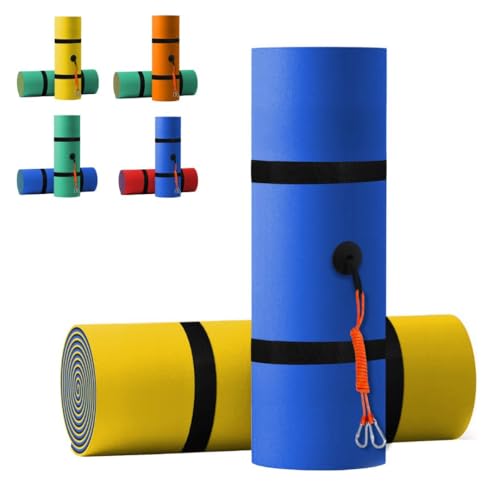

The Floating Oasis is designed specifically for the individual who wants a personal, distraction-free bubble on the water. Its 6-foot length is optimized for a single user, providing just enough space for a full-length savasana without the unnecessary bulk of larger party mats. It’s a specialized tool for those who treat their yoga practice as a solitary ritual.
This mat excels in portability and ease of setup, making it ideal for quick sunrise sessions at the local pond. While it offers less surface area than group mats, its compact nature allows for better control in choppy water. If you value a dedicated space that fits easily in your trunk and sets up in seconds, this is the ideal companion for your solo journey.
Rubber Dockie 18-Foot Mat for Group Yoga
Enjoy fun on the water with the Rubber Dockie floating mat! Its durable, two-layer foam design resists tears and UV damage, while the included bungee tether ensures secure anchoring.

If your yoga practice includes friends or you want to host a small aquatic session, the Rubber Dockie 18-foot mat is a game-changer. This massive platform offers enough room to spread out, allowing multiple people to move through a flow simultaneously without bumping into one another. It’s essentially a floating studio floor that can accommodate an entire group.
The sheer size of this mat provides a high level of stability, as the surface area distributes weight across a larger volume of water. However, keep in mind that its size makes transport and storage a significant commitment. If you are looking to build a community-focused practice or simply want a expansive area to experiment with wide, dynamic movements, the Rubber Dockie is the ultimate solution.
Intex Giant Inflatable Mat for Beginners
Relax and enjoy the water on this Intex floating platform! Made of durable 20-gauge vinyl, it comfortably fits up to three adults and inflates/deflates quickly with two air chambers.
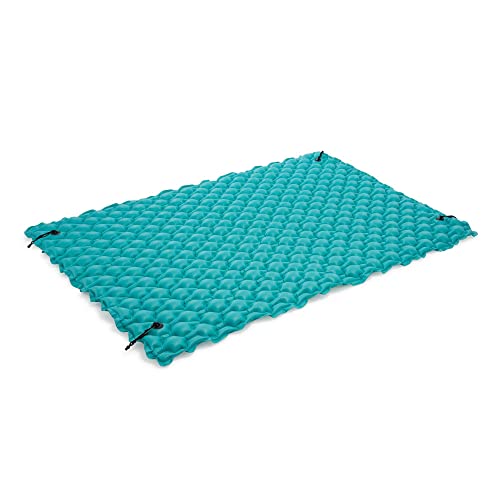
For those just dipping their toes into the world of floating yoga, the Intex Giant Inflatable Mat is a practical, budget-friendly entry point. Its inflatable nature provides a softer, more forgiving surface than high-density foam, which can be very comfortable for knee-intensive poses. It’s an accessible way to test whether you enjoy the water-based lifestyle before investing in professional-grade gear.
Because it is air-filled, it is incredibly lightweight and easy to deflate for storage. The tradeoff is that it lacks the firm, grounded feel of solid foam mats and can be more susceptible to wind drift. If you are a beginner who wants to experiment with balance and buoyancy without a heavy upfront cost, the Intex mat is a sensible starting point.
Mission Elite Floating Mat for Durability

The Mission Elite is built for the practitioner who is tough on their gear. Constructed with advanced, tear-resistant materials, this mat is designed to withstand harsh sun exposure and rough water conditions without degrading over time. If you practice in areas with rocky shorelines or high-traffic docks, this mat’s rugged construction will provide peace of mind.
Beyond its durability, it offers a consistent, high-traction surface that remains stable even when soaked. It is a premium investment, but for someone who practices daily and wants a mat that will last for years, the value is undeniable. If you want a "buy it once" product that refuses to quit, the Mission Elite is the high-performance choice.
Maui Mat Ultra-Light Foam for Portability
If you are hiking to a secluded lake or biking to the beach, the Maui Mat is your best ally. Its ultra-light foam composition makes it significantly easier to carry than standard foam mats, which are often heavy and cumbersome. Despite its low weight, it doesn’t sacrifice the buoyancy needed to keep you above the surface during your flow.
The mat rolls up tightly, fitting into gear bags or straps that standard mats simply cannot manage. While it may feel slightly more flexible than the heavy-duty options, that flexibility is a benefit for those who want to feel the water’s movement. For the adventurous yogi who prioritizes mobility and ease of transport, the Maui Mat is the clear winner.
Essential Safety Tips for Floating Yoga
- Always wear a leash: Just like a surfboard, tether your mat to your ankle or a stationary point to prevent it from drifting away while you are in a deep stretch.
- Check the weather: Never practice on the water if there is a risk of high winds or sudden storms, as open water conditions can change in minutes.
- Know your depth: Always practice in water deep enough to be safe if you fall, but shallow enough that you can easily stand up and regain your footing.
- Use a PFD: If you are a weak swimmer or practicing in a large, open body of water, keep a slim-profile personal flotation device nearby or wear a belt-style inflatable.
Maintaining Your Mat After Water Exposure
To ensure your mat lasts for many seasons, always rinse it with fresh water after every session, especially if you are practicing in salt or brackish water. Salt crystals can act as abrasives, damaging the surface texture and weakening the foam over time. A quick spray from a garden hose is usually enough to clear away salt, sand, and algae.
Allow your mat to air dry completely in a shaded area before rolling it up for storage. Storing a damp mat in a dark, enclosed space is a recipe for mold and mildew growth. By keeping it clean and dry, you protect the structural integrity of the foam and ensure your mat stays fresh for your next practice.
Enhancing Your Balance on Open Water
Floating yoga is less about achieving the perfect pose and more about refining your micro-adjustments. When you feel the water shift beneath you, don’t fight it with rigid tension; instead, soften your joints and engage your core to stay centered. This "active stability" is the secret to building functional strength that translates perfectly to your land-based practice.
Remember that progress on the water is non-linear. Some days the water will be glass, and other days it will be choppy, providing a different level of resistance each time. Embrace the instability as a teacher, and you will find that your focus, breath control, and core strength improve significantly with every session.
Floating yoga is a transformative practice that invites you to harmonize your movements with the natural, shifting energy of the water. Whether you choose a high-performance foam mat or a versatile inflatable, the key is to stay consistent and prioritize your safety. Step onto your mat, find your center, and let the water guide you toward a deeper, more mindful flow.