

7 Best Lake Maps For Wind Patterns To Improve Safety
Master wind patterns with our top 7 lake map picks. Enhance your water safety and navigation skills by understanding local gusts for a safer day on the lake.
There is nothing quite like the feeling of a crisp breeze on the water until the wind shifts, turning a peaceful afternoon into a challenging navigational test. Understanding how wind interacts with your specific lake environment is the single most important skill for keeping your crew safe and your vessel secure. By leveraging the right digital tools and topographical knowledge, you can anticipate gusts before they ever reach your hull.
Disclosure: As an Amazon Associate, this site earns from qualifying purchases. Thank you!
Understanding Wind Patterns and Lake Safety Basics
Wind on a lake is rarely uniform, as it is constantly shaped by the surrounding geography, temperature differentials, and the time of day. When cool air from the lake meets warm land, you often experience an onshore breeze, while the reverse happens as the sun sets. Recognizing these cycles is the first step in avoiding being caught off guard in open water.
Safety begins with the realization that lakes are dynamic environments where the wind can whip up whitecaps in minutes. Always check the forecast for the entire duration of your trip, not just the departure time, and pay attention to "fetch"—the distance the wind travels across open water. Longer fetch means larger, more dangerous waves, even if the wind speed itself seems manageable.
Windy.com App: Best Real-Time Wind Forecasting
If you want a professional-grade look at what the atmosphere is doing, Windy.com is the gold standard for visual data. It provides high-resolution, animated wind maps that allow you to see exactly how air currents are moving across your specific lake in real-time. It is the perfect tool for sailors or powerboaters who need to visualize wind shifts before they hit the water.
The depth of data here is impressive, but it can be overwhelming for casual weekend boaters. If you are someone who enjoys nerding out on meteorological models and wants to see how different altitudes affect surface wind, this is your go-to. For those who just want a simple "go or no-go" signal, it might be more than you need.
Navionics Boating App: Best for Depth and Wind
Navionics is synonymous with marine navigation, but its integration of weather overlays makes it a powerhouse for safety. You aren’t just looking at depth contours and hazards; you are layering wind speed and direction directly over your charted path. This is essential for planning a route that keeps you in the lee of the shore when the wind picks up.
This app is the best choice for anyone who prioritizes navigational safety alongside environmental awareness. By seeing your exact position relative to underwater obstacles while monitoring wind gusts, you eliminate the guesswork of where to anchor safely. It is an indispensable tool for anyone navigating complex, rocky, or shallow lake systems.
Garmin ActiveCaptain: Best Integrated Lake Map
![Garmin Central America Caribbean Navionics+ NSSA010R [010-C1451-20]](https://m.media-amazon.com/images/I/41oj2ZF0rdL._SL500_.jpg)

Garmin’s ActiveCaptain is the ultimate ecosystem for boaters already running Garmin hardware. It syncs seamlessly with your chartplotter, allowing you to pull down weather updates and wind forecasts directly to your helm. It’s not just about the map; it’s about having a unified command center that keeps you informed without needing to fumble with a phone.
If you are a serious angler or cruiser who spends long days on the water, the convenience of this integration is unmatched. It effectively removes the barrier between your digital planning and your physical location. If you own a Garmin-equipped vessel, this is the only logical choice for your navigation and weather needs.
Windfinder Pro: Best for Precise Wind Reporting
Windfinder Pro excels in providing hyper-local, station-based reporting that feels incredibly accurate for specific marinas or points. Unlike global models that estimate wind over a wide area, this app relies on actual sensor data from nearby locations. It is perfect for those who operate in areas with distinct microclimates where the wind at the north end of the lake differs wildly from the south.
This tool is a must-have for paddleboarders, kayakers, and small boat owners who are highly sensitive to even minor gusts. Because it focuses on precision over breadth, it is highly reliable for planning short-duration trips. If you need to know exactly what is happening at your specific launch point, look no further.
Lake Link Maps: Best for Localized Wind Trends

Lake Link is a treasure trove for those who want to understand the "personality" of a specific body of water. While it provides standard weather data, its real value lies in the community-sourced insights regarding how wind affects fishing and navigation on specific lakes. It offers a more human perspective on how local terrain dictates wind behavior.
This is the ideal resource for the angler who wants to know how a south wind usually impacts the water clarity or wave height in a particular bay. It bridges the gap between raw meteorological data and practical, on-the-water reality. It is a fantastic secondary tool for anyone who wants to understand the nuances of their favorite local spots.
Windy.app for Wind Speed and Gust Predictions
Windy.app is designed for those who need to know not just the wind speed, but the potential for sudden, dangerous gusts. It provides excellent charts that break down wind trends by the hour, helping you identify the "window of opportunity" for your outing. It is particularly adept at warning you when conditions are trending toward a shift that could make returning to the ramp difficult.
This app is perfect for active water sports enthusiasts who need to time their sessions perfectly. Its interface is clean and emphasizes safety thresholds, making it easy to see when the wind exceeds your comfort level. If you are a windsurfer or a small-craft sailor, this is an essential part of your safety toolkit.
NOAA Weather Radar: Best for Storm Tracking
Stay informed with the Midland WR120B NOAA Emergency Radio. It provides localized weather alerts for over 60 hazards and features S.A.M.E. programming for county-specific warnings.
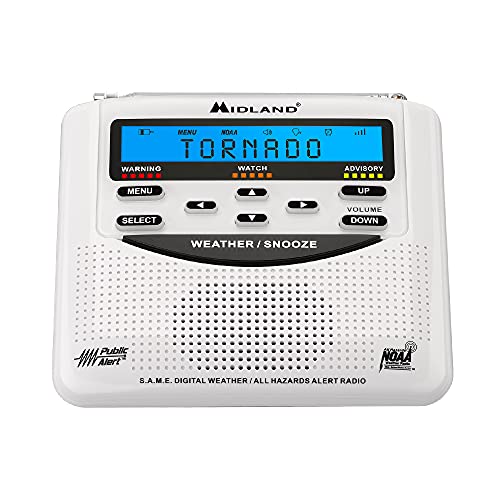
Never head out on a lake without a reliable way to track incoming storm cells. The official NOAA radar remains the most accurate way to visualize precipitation and severe weather patterns moving toward your location. While it doesn’t give you wind speed data in the same way a dedicated wind app does, it is the best tool for identifying the source of sudden, violent wind shifts.
You should use this in conjunction with your wind-specific apps to ensure you aren’t just watching the breeze, but also the potential for a squall. It is non-negotiable for safety, especially on large lakes where storms can develop rapidly over the horizon. Relying on this is the baseline for responsible boating.
Using Topo Maps to Predict Funneling Wind Effects
Topographical maps are an often-overlooked secret weapon for predicting wind behavior. When wind hits a narrow gap between two hills or bluffs, it accelerates, a phenomenon known as the "Venturi effect" or funneling. By studying the contours of the land surrounding your lake, you can identify these high-risk areas before you ever leave the dock.
Always look for narrow straits, high-walled canyons, or deep inlets on your map. These are the spots where the wind will be significantly stronger than in the open basin. Acknowledging these natural tunnels allows you to plan a route that avoids them during high-wind forecasts, keeping your trip smooth and stress-free.
Essential Safety Gear for Windy Lake Conditions
Even with the best maps and apps, you must be prepared for the reality of wind-driven waves. Your gear list should always prioritize flotation and communication. A high-quality, comfortable life jacket is your first line of defense, but you should also carry a handheld marine VHF radio to monitor local weather channels directly.
- Visual Distress Signals: Essential for being spotted if you are pushed off course.
- Anchor and Scope: Ensure you have enough chain to hold in high-wind, choppy conditions.
- Waterproof Phone Case: Keep your navigation apps dry and functional when the spray starts flying.
- Whistle or Sound Device: A simple, loud signal is often the most effective way to alert nearby boaters if you are struggling.
Mastering wind patterns is a lifelong pursuit, but it begins with the simple act of checking your digital tools and reading the landscape before you launch. By combining the precision of modern apps with a deep respect for topographical wind funnels, you turn safety into a seamless part of your planning. Stay observant, keep your gear ready, and you will always find the best conditions for a perfect day on the water.
