7 Best Tide Gauges For Tsunami Warning Systems For Safety
Discover the 7 best tide gauges for tsunami warning systems. Learn how these critical tools enhance coastal safety through precise, real-time sea-level data.
Standing on the shoreline, the rhythm of the tide is usually a soothing companion, but for those of us who spend our lives on the water, we know that the ocean’s behavior can shift in an instant. Tsunami warning systems act as the silent sentinels of our coastlines, providing the critical minutes needed to move from the beach to higher ground. Understanding the hardware behind these alerts is essential for any coastal community looking to bolster its safety infrastructure.
Disclosure: As an Amazon Associate, this site earns from qualifying purchases. Thank you!
Understanding Tsunami Warning Tide Gauge Tech
Tsunami warning systems rely on a sophisticated network of sensors designed to detect minute, rapid changes in sea level that standard tidal charts simply cannot capture. Unlike traditional tide gauges that track the slow, predictable rise and fall of the moon-driven tides, tsunami-ready gauges must be hyper-sensitive to high-frequency pressure waves. These devices convert hydrostatic pressure or radar reflections into digital data, which is then transmitted via satellite to central monitoring stations.
The primary challenge in this field is distinguishing a genuine seismic event from local noise like storm surges or heavy boat traffic. Modern systems utilize advanced signal processing to filter out this "clutter," ensuring that authorities only issue warnings when a genuine threat is detected. For coastal safety managers, the goal is to balance extreme sensitivity with the need to minimize false alarms that can lead to public complacency.
OTT Hydromet CBS Tide Gauge for Real-Time Data
The OTT Hydromet CBS is a workhorse for organizations that prioritize consistent, real-time data streaming without the headache of constant manual calibration. It utilizes a bubble sensor system that is particularly effective in harsh marine environments where salt crusting often ruins traditional mechanical sensors.
I recommend this unit for municipalities that need a "set it and forget it" solution for harbor monitoring. It is rugged, reliable, and integrates seamlessly into existing data networks. If your primary concern is long-term operational stability in a busy port setting, this is the gold standard.
Xylem YSI Water Level Sensors for Coastal Safety
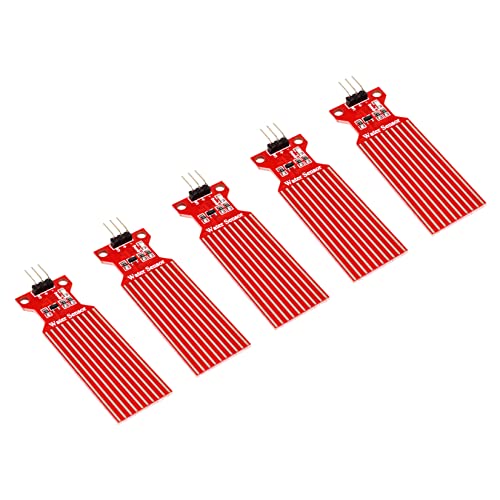

Xylem’s YSI line of sensors is synonymous with precision in environmental monitoring. These sensors are designed to handle the dynamic, often turbulent conditions found in estuary mouths and coastal inlets, where tsunami waves often amplify. Their ability to provide high-resolution data in real-time makes them a top-tier choice for localized warning networks.
If you are looking to build a dense network of sensors along a complex coastline, the YSI series offers the best value-to-performance ratio. They are compact, easy to install on existing piers, and provide the level of accuracy required for early detection. For safety coordinators who need to cover a lot of ground with a limited budget, these are an excellent investment.
Teledyne Marine Radar Gauges for High Accuracy

Radar-based sensors, like those from Teledyne Marine, are a game-changer because they measure water levels without ever touching the water. By mounting a radar unit above the surface, you eliminate the risks of corrosion, biofouling, and mechanical damage that plague submerged sensors. This non-contact approach is inherently more durable in the long run.
These units are ideal for high-traffic areas where debris or heavy marine life might damage submerged equipment. While the initial investment is higher, the reduced maintenance costs over a five-year period make them a smart choice for major infrastructure projects. If you want the most accurate, maintenance-free data possible, choose radar.
Valeport TideMaster for Portable Deployment
Sometimes, you need a temporary monitoring solution, perhaps for a seasonal event or an area undergoing construction. The Valeport TideMaster is the premier choice for portability, offering a compact, battery-powered system that can be deployed by a small team in under an hour. It provides professional-grade accuracy in a package that fits in a standard equipment case.
I suggest this for rapid-response teams or researchers who need to establish a temporary baseline in a region lacking permanent infrastructure. It is not designed for permanent, decade-long installation, but for short-term safety monitoring, it is unmatched. If you need mobility, this is the only serious contender.
Aanderaa WLR Series for Deep Water Monitoring
When we talk about true tsunami detection, we often look to the deep ocean, where waves travel fastest and with the most energy. The Aanderaa WLR (Water Level Recorder) series is engineered to sit on the seafloor, measuring the pressure of the entire water column above it. These sensors are the "early warning" backbone that gives coastal cities their lead time.
These are not for the casual user; they are for professional oceanographic agencies tasked with regional safety. The depth capability and long battery life allow them to function in remote locations for years. If you are serious about building a regional warning system that detects threats long before they reach the shore, these are essential.
In-Situ Level TROLL Sensors for Reliability

The In-Situ Level TROLL is widely respected for its intuitive software and extreme durability in brackish and saltwater environments. It is a highly versatile sensor that provides high-frequency logging, which is critical for capturing the rapid oscillations of a tsunami wave. Its ability to withstand pressure spikes makes it a very reliable choice for coastal monitoring.
This sensor is perfect for smaller coastal towns or private harbor associations that need professional-grade reliability without needing a team of engineers to operate it. The interface is user-friendly, and the data export options are excellent for integration with public warning apps. For the small-scale operator, this is the most practical choice.
Sutron SatLink3 Systems for Remote Alerts
The Sutron SatLink3 is less of a sensor and more of a powerful communication hub that ensures your data actually reaches the people who need it. It excels in remote locations where cellular or internet coverage is non-existent, utilizing satellite links to broadcast alerts instantly. In a tsunami scenario, a sensor is useless if the signal can’t get through.
I highly recommend pairing a SatLink3 with any of the sensors mentioned above to create a fail-safe communication chain. It is the bridge between the water and the emergency management center. If your monitoring site is in a remote or rugged area, this is your most important piece of hardware.
Essential Features for Tsunami Gauge Selection
When evaluating tide gauges, focus on these non-negotiable features:
- Sampling Rate: The device must be capable of high-frequency sampling (at least 1Hz) to capture the rapid rise of a tsunami.
- Data Latency: Real-time transmission is mandatory; data that arrives on a delay is useless for emergency response.
- Power Redundancy: Units should feature solar or long-life battery backups to remain functional during power grid failures.
- Environmental Hardening: Look for IP68-rated enclosures to protect against saltwater intrusion and extreme weather.
Maintaining Tide Gauge Networks for Safety
Installing the gear is only the first step; maintaining the network is where the real safety work happens. Sensors must be inspected quarterly for biofouling, as algae and barnacles can skew readings or clog intake valves. Always keep a stock of spare parts, especially mounting hardware, which takes the brunt of the ocean’s force.
Furthermore, schedule regular "dry run" tests to ensure that the data flow from the sensor to the warning center remains uninterrupted. A system that is technically functional but has a broken communication link is a liability, not an asset. Consistent maintenance is the only way to ensure that when the moment of truth arrives, your equipment is ready to sound the alarm.
Investing in high-quality tide gauge technology is one of the most proactive steps any coastal community can take to protect its residents and visitors. By selecting the right gear for your specific environment and committing to a rigorous maintenance schedule, you ensure that your warning systems remain vigilant. Stay informed, stay prepared, and keep the safety of your community at the forefront of every water-based project.