

7 Best Dive Knives For Emergency Cutting For Scuba Divers
Equip yourself for safety with our guide to the 7 best dive knives. Discover reliable blades designed for rapid, emergency cutting in underwater situations.
Imagine drifting through a kelp forest when a stray piece of discarded fishing line suddenly wraps around your regulator hose or ankle. A reliable cutting tool is the difference between a minor annoyance and a genuine underwater emergency. Carrying a dedicated knife isn’t just about utility; it is a fundamental piece of safety equipment that every diver must master.
Disclosure: As an Amazon Associate, this site earns from qualifying purchases. Thank you!
Why Every Diver Needs a Dedicated Cutting Tool
Entanglement is one of the most common, yet overlooked, hazards in recreational diving. Whether it is monofilament fishing line, kelp, or abandoned netting, these materials can quickly restrict your movement or compromise your life support equipment. Having a sharp blade within immediate reach allows you to regain your freedom without panicking or relying on your dive buddy.
Beyond self-rescue, a dive knife serves as a vital signaling device. Tapping your tank with the handle of a knife creates a distinct, metallic sound that carries well underwater, helping you grab your buddy’s attention in low-visibility conditions. It is the ultimate multi-purpose tool that provides peace of mind, ensuring you are prepared for the unexpected during every descent.
Essential Safety Features for Scuba Dive Knives
When selecting a knife, prioritize accessibility and ergonomics above all else. A knife is useless if it is buried in a gear bag or requires two hands to unsheathe while you are struggling with an entanglement. Look for a sheath that offers multiple mounting options, such as your calf, forearm, or BCD inflator hose, ensuring the handle is always within your natural reach.
The blade configuration is equally critical for underwater safety. A serrated edge is essential for sawing through tough nylon lines or ropes, while a hooked line cutter—often integrated into the handle or the base of the blade—allows you to snag and slice through thin fishing line without risking damage to your exposure suit or gear. A blunt tip is often preferred over a pointed tip to prevent accidental punctures to your BCD or drysuit during a high-stress deployment.
Selecting the Right Blade Material and Coating
The harsh reality of saltwater is that it will corrode almost any metal given enough time. You generally have two choices: high-grade stainless steel or titanium. Stainless steel is affordable and holds a sharp edge well, but it requires diligent freshwater rinsing after every single dive to prevent rust from forming in the microscopic pores of the metal.
Titanium is the gold standard for serious divers because it is virtually immune to rust and significantly lighter than steel. While it may be more expensive, the lack of maintenance and the incredible strength-to-weight ratio make it a lifetime investment for frequent travelers. Regardless of the material, look for a protective coating like PVD (Physical Vapor Deposition) to further enhance corrosion resistance and reduce glare.
Spyderco Salt 2: Best Corrosion-Resistant Knife


If you are tired of seeing rust spots on your gear after a single week of salt exposure, the Spyderco Salt 2 is your answer. Built with H-1 steel—a nitrogen-based alloy that is physically incapable of rusting in saltwater—this knife is a game-changer for those who dive in tropical environments. It features a high-visibility handle, ensuring you can find it even if you drop it in the surf.
The serrated edge is exceptionally aggressive, slicing through webbing and rope with minimal effort. Because it is a folding knife, it remains compact and unobtrusive on your harness until you actually need it. If you prioritize extreme durability and low maintenance over a fixed-blade design, this is the most reliable tool in your kit.
Scubapro White Tip: Best Compact Titanium Knife

The Scubapro White Tip is the perfect solution for divers who want a low-profile, titanium tool that doesn’t get in the way. Its small size makes it ideal for mounting on a BCD shoulder strap or a console hose, keeping it tucked away yet ready for instant deployment. Because it is made from high-grade titanium, you never have to worry about it seizing up in its sheath due to corrosion.
This knife is specifically designed for the minimalist diver who values efficiency. The combination of a sharp point and a serrated edge gives you versatility, while the locking mechanism ensures it stays secure until you need it. If you want a "set it and forget it" tool that won’t add bulk to your streamlined rig, the White Tip is the clear winner.
Aqualung Argonaut SP: Best Heavy-Duty Option
When you need a tool that can handle rugged conditions, the Aqualung Argonaut SP stands out as a beast. This fixed-blade knife is crafted from a single piece of high-grade stainless steel, providing immense leverage and strength for tough tasks. It is designed for divers who might face more demanding environments, such as wreck penetration or technical diving, where a flimsy blade simply won’t cut it.
The handle is wrapped in paracord, which provides an excellent grip even when wearing thick neoprene gloves. While it is heavier than the titanium options, the sheer utility of a full-tang blade is unmatched for heavy-duty cutting. If you are a diver who pushes the limits and needs a knife that can take a beating, the Argonaut SP is the robust choice you need.
Cressi Orca: Best Knife for Line Entanglement
![Cressi Long Stainless Steel Diving Knife with Sheat and Leg Straps | Orca: Made in Italy, Black, One Size (RC556000) [Duplicate]](https://m.media-amazon.com/images/I/41RUs6eHUaL._SL500_.jpg)
The Cressi Orca is a classic design that has stood the test of time for a reason: it is a massive, highly effective tool for clearing heavy entanglements. With a large blade and a powerful serrated edge, it acts more like a small machete than a standard dive knife. It is the perfect choice for divers in areas where heavy fishing nets or thick kelp are common hazards.
The ergonomic handle is designed for maximum force, allowing you to saw through thick materials with confidence. While it is larger than most modern knives, its effectiveness in an emergency is unparalleled. If you find yourself diving in environments where you might need to clear significant debris, the Orca is the most capable tool for the job.
Promate Scuba Knife: Best Value for Beginners

If you are a new diver on a budget, the Promate Scuba Knife offers a fantastic balance of functionality and affordability. It provides a standard stainless steel blade with a serrated edge and a line cutter, covering all the essential safety requirements without a high price tag. It is a no-frills, dependable tool that gets the job done during your training and early recreational dives.
While it lacks the exotic materials of high-end knives, it performs admirably if you stay on top of your post-dive maintenance. The sheath is easy to mount, and the handle is comfortable enough for standard use. For those just starting their underwater journey, this knife is the most practical way to ensure safety without overspending.
Tusa FK-940 Ti: Best Lightweight Titanium Tool
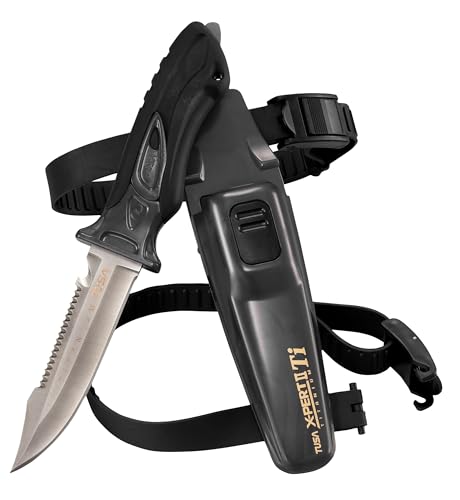
The Tusa FK-940 Ti is a masterclass in design, offering a lightweight titanium blade that feels almost weightless on your BCD. What sets this knife apart is the unique "easy-release" sheath mechanism, which allows you to deploy the knife with a single hand in a split second. It is an incredibly intuitive tool that integrates seamlessly into any diver’s setup.
The blade features a sharp point and a serrated edge, making it highly versatile for various cutting needs. Its titanium construction ensures it will remain pristine for years, even with minimal rinsing. If you want a high-performance, lightweight tool that prioritizes quick deployment above all else, the Tusa FK-940 Ti is the gold standard.
Maintenance Tips for Longevity and Performance
Regardless of the material, every knife requires a post-dive ritual to stay in top shape. Always rinse your knife thoroughly in fresh water after every dive, making sure to flush out the sheath as well, as salt crystals can build up inside and cause the blade to stick. Once dry, applying a tiny amount of food-grade silicone grease can prevent locking mechanisms from seizing.
Never store your knife in its sheath for long periods while wet, as this creates a perfect environment for corrosion. Every few months, inspect the edge and sharpen it if necessary to ensure it remains ready for an emergency. By treating your knife with the same care as your regulator, you guarantee that it will be ready to perform the moment you need it most.
A dive knife is your primary insurance policy against the unpredictable nature of the underwater world. By choosing a tool that matches your specific diving environment and committing to proper maintenance, you ensure that you remain the master of your own safety. Invest in a quality blade today, because when a moment of entanglement arises, you will be glad you did.
