6 Best Whitewater Paddleboards For Rapids For Beginners
Discover the 6 best beginner whitewater paddleboards. Learn which stable, durable boards provide the control and safety needed to master river rapids today.
Stepping onto a paddleboard in moving water transforms a peaceful lake hobby into an adrenaline-fueled dance with the river’s current. While the learning curve is steeper than flatwater paddling, the right gear turns intimidating rapids into an exhilarating playground. This guide will help you navigate the turbulent waters of choosing your first whitewater-specific SUP.
Disclosure: As an Amazon Associate, this site earns from qualifying purchases. Thank you!
Choosing Your First Whitewater Paddleboard
When transitioning to moving water, you must prioritize stability and maneuverability over raw speed. Unlike flatwater boards, whitewater SUPs are shorter, wider, and feature significant "rocker"—the upward curve of the nose and tail—which prevents the board from pearling (diving) into waves. A board with a rounded, full-volume nose is essential for punching through hydraulic features without getting bogged down.
Look for inflatable construction, as rigid boards are prone to cracking against submerged rocks. High-quality drop-stitch materials with reinforced side rails are the industry standard for durability in rocky environments. Remember that a board designed for whitewater will feel sluggish on a lake; choose your gear based on the specific environment where you intend to spend 80% of your time.
Understanding River SUP Safety Requirements
River paddling is inherently more dynamic than lake paddling, meaning your safety protocol must evolve alongside your skills. The most critical rule is to always wear a quick-release leash; never use a standard ankle leash on a river, as it can snag on underwater debris and trap you in the current. If you fall, your leash should be the first thing you can disconnect in an emergency.
Furthermore, you must wear a high-floatation life jacket (PFD) specifically designed for whitewater, which often includes a rescue harness. Always scout rapids from the shore before attempting to paddle them to identify hidden hazards like strainers, undercut rocks, or low-head dams. Never underestimate the power of moving water, even in shallow sections.
Badfish Badfisher: Best for Stability


The Badfish Badfisher is a tank in the best possible way, offering an incredibly wide platform that makes it nearly impossible to tip over. Its design leans heavily into stability, making it the perfect confidence-builder for beginners who are just starting to read river currents. If your primary goal is to stay upright while learning the ropes, this board is your best ally.
The board’s volume distribution keeps you high on the water, preventing the nose from dipping when you hit choppy sections. While it isn’t the fastest board on the market, it provides the predictable handling necessary for mastering basic eddy turns. For the beginner who values security above all else, the Badfisher is the definitive choice.
Hala Atcha 9’6: Top Performance Choice
If you are looking for a board that will grow with you as your skills advance, the Hala Atcha 9’6 is a standout performer. It features a progressive rocker profile that allows you to carve through turns with surprising agility for such a stable platform. This is the board you buy when you want to stop just surviving the rapids and start actively surfing them.
The Atcha’s construction is remarkably stiff, which translates to immediate responsiveness when you shift your weight. It is designed for those who want to transition from Class I ripples to more technical Class II and III features. This board is an investment in your progression, not just a starter craft.
NRS Star Phase: Best Durable Inflatable
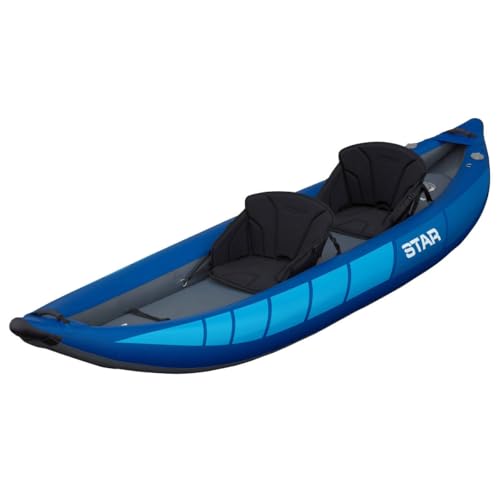
The NRS Star Phase is built with the rugged abuse of rocky riverbeds in mind, utilizing heavy-duty PVC that resists punctures and abrasions. It features a straightforward, no-nonsense design that prioritizes durability and ease of use. If you are worried about hitting rocks and damaging your gear, this board offers the peace of mind you need.
It handles well in moderate currents and provides enough stability for a beginner to feel comfortable in moving water. While it lacks some of the high-end performance features of more expensive boards, its reliability is unmatched. For the paddler who wants a board that will last for years of rough-and-tumble river use, the Star Phase is a clear winner.
Boardworks Kraken: Best for Maneuvering
The Boardworks Kraken is engineered for those who want a lively, responsive experience on the water. Its shape is slightly more tapered than typical beginner boards, which allows it to pivot quickly around obstacles or navigate tight river bends. If you find that larger boards feel like "barges" to you, the Kraken will feel like a breath of fresh air.
This board rewards active paddling and proper footwork, making it an excellent tool for learning how to use your body weight to steer. It is agile enough to handle technical water but stable enough to keep a beginner from constant swimming. If you have a background in other board sports, you will likely appreciate the Kraken’s playful personality.
Sol Paddleboards Soljah: Rugged Design
The Sol Paddleboards Soljah is built for the "adventure paddler" who treats their gear like a tool rather than a trophy. It is exceptionally rigid and features reinforced seams that can handle the high pressure required for a stiff, stable ride in turbulent water. It is a workhorse designed to handle everything from shallow rocky runs to deep, pushy river sections.
The deck pad is grippy and comfortable, ensuring you have a solid connection to the board even when things get bouncy. It’s a bit heavier than some competitors, but that weight contributes to its planted, secure feel in the water. For the beginner who plans to push their limits in varied, rugged environments, the Soljah is a dependable companion.
Thurso Surf Waterwalker: Best Versatility

The Thurso Surf Waterwalker is the ultimate "do-it-all" board for those who split their time between flat water and easy-moving rivers. It features a balanced shape that tracks well on lakes but remains maneuverable enough for light whitewater. If you aren’t ready to commit to a dedicated, single-purpose whitewater board, this is your best middle-ground option.
It comes with a high-quality accessory package that makes it a great value for beginners starting from scratch. While it isn’t designed for aggressive whitewater, it handles Class I and easy Class II rapids with grace. For the paddler who wants one board to handle a wide variety of weekend adventures, the Waterwalker is the most versatile choice.
Essential Whitewater SUP Safety Gear
Beyond the board itself, your kit should include a few non-negotiable items that protect you in the event of an unexpected swim. A high-visibility helmet is mandatory for river SUP, as rocks are often hidden just beneath the surface. You should also carry a whistle, a knife for cutting away snagged lines, and a basic first aid kit stored in a dry bag.
- PFD: Whitewater-rated, Type III or V.
- Helmet: Certified for whitewater use.
- Quick-Release Leash: Essential for river safety.
- Footwear: Sturdy, closed-toe shoes with good grip.
- Communication: A whistle attached to your PFD.
Mastering Basic River Paddling Skills
The most important skill to master is the "eddy turn," which allows you to move from the fast current into the calm water behind an obstacle. Practice this by aiming for the eddy line—the boundary between the fast and slow water—at a 45-degree angle. Keep your weight centered and your knees bent to absorb the turbulence as you cross the line.
Another fundamental skill is the "draw stroke," which allows you to move the board laterally without losing momentum. When you are in moving water, your paddle is your rudder; keep it in the water as much as possible to maintain control. Always keep your eyes on where you want to go, not on the rock you are trying to avoid, as your board will naturally follow your gaze.
Whitewater paddleboarding is a rewarding pursuit that demands respect for the river and a commitment to continuous learning. By choosing the right gear and prioritizing your safety, you open the door to a lifetime of aquatic adventure. Start slow, stay within your limits, and enjoy the rush of mastering the currents.