6 Boat Trailer Tie Down Anchors For Security During Transit
Secure your vessel with our top 6 boat trailer tie-down anchors. Learn how to choose reliable hardware for safe, stable transport during every road trip.
Nothing ruins a perfect weekend at the lake faster than watching your boat shift or bounce on the trailer while you navigate highway traffic. Securing your vessel properly is the single most important step between your driveway and the boat ramp. Investing in high-quality tie-downs provides the peace of mind you need to focus on the water ahead rather than the rearview mirror.
Disclosure: As an Amazon Associate, this site earns from qualifying purchases. Thank you!
Essential Safety Rules for Boat Trailer Transit
The golden rule of boat towing is that your vessel should be treated as a single, immovable unit with the trailer. If your boat can shift even an inch, it creates kinetic energy that can lead to trailer swaying, damaged gel coats, or, in worst-case scenarios, a dangerous highway incident. Always ensure your bow winch is locked and that you have at least two independent transom tie-downs at the rear.
Never rely solely on the winch strap to hold the boat in place, as it is designed for loading, not for the forces of road vibration. Check your connections immediately after leaving the ramp and again after the first ten miles of driving. This "settling" period allows the straps to stretch slightly and the boat to find its natural resting position on the bunks.
Fulton Heavy-Duty Transom Tie Down Straps
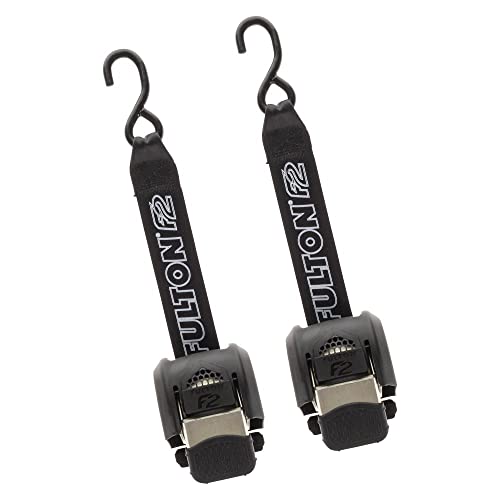

If you are looking for a no-nonsense, industrial-grade solution, the Fulton Heavy-Duty straps are the gold standard. These are built for the boater who frequently travels long distances or navigates rough, uneven backroads. The oversized hooks and heavy-duty webbing are designed to withstand significant tension without fraying or slipping over time.
These are the right choice if you own a larger fiberglass boat that requires serious holding power. While they are slightly bulkier than entry-level options, the added security of their heavy-duty ratchet mechanism is worth the extra weight. If you want a "set it and forget it" solution that will last for years, Fulton is your best bet.
BoatBuckle G2 Retractable Ratchet Tie Downs

The BoatBuckle G2 system is a game-changer for anyone who hates wrestling with loose straps at the boat ramp. These permanently mount to your trailer frame, meaning they are always there when you need them and tucked away when you don’t. The retractable design keeps the webbing clean and free from tangles or UV degradation.
I highly recommend these for the solo boater or those who want to shave time off their loading and unloading routine. They are incredibly convenient, though they do require a permanent bolt-on installation to your trailer chassis. If you value efficiency and a clean look, these are the premium choice for your setup.
Erickson Stainless Steel Cam Buckle Straps

For those who boat in saltwater environments, corrosion is the silent enemy of your trailer hardware. Erickson’s stainless steel cam buckles offer the necessary resistance to rust while providing a quick, easy way to cinch down smaller boats or personal watercraft. The cam buckle mechanism is faster than a ratchet, making it ideal for lighter vessels.
These are perfect for the weekend warrior who wants a simple, reliable strap that won’t seize up after a few trips to the coast. They aren’t meant for massive offshore cruisers, but for aluminum fishing boats or jet skis, they provide the perfect balance of ease and security. If you prioritize corrosion resistance, look no further.
Shoreline Marine Adjustable Transom Tie Downs

Shoreline Marine offers a straightforward, budget-friendly option that gets the job done without unnecessary bells and whistles. These adjustable straps feature a standard ratchet mechanism that is easy to operate even with wet hands. They are highly versatile and fit a wide range of trailer configurations.
These are an excellent choice for the casual boater who needs a reliable backup or a replacement for worn-out factory straps. They aren’t the most heavy-duty option on the market, but they are perfectly adequate for standard-sized family runabouts. If you need a solid, cost-effective solution, these will serve you well.
KEEPER 8-Foot Ratchet Tie Down Anchor Kit

The KEEPER 8-foot kit is a versatile choice for boaters who need extra length to secure their load. Sometimes, the distance between the trailer frame and the boat’s transom eyes is greater than standard straps can accommodate. This kit provides that extra reach without sacrificing the strength of the ratchet mechanism.
I suggest these for boaters with custom trailers or larger vessels where standard-length straps just won’t reach. The webbing is durable, and the ratchets are smooth, providing a secure hold even at full extension. If you have unique geometry on your trailer, this kit offers the flexibility you need.
Reese Towpower Transom Saver Tie Down Straps

Reese Towpower is a household name for a reason: they focus on consistent, reliable performance. Their transom tie-down straps are designed to absorb road shock effectively, keeping the boat tight against the bunks. The hardware is coated to resist the elements, ensuring the release mechanism works smoothly every time.
These are a fantastic mid-range option for the average boater who wants a balance of durability and affordability. They don’t have the fancy bells and whistles of high-end retractable systems, but they are incredibly dependable. If you want a trusted brand that delivers consistent results, these are a safe, smart purchase.
Proper Tensioning and Anchor Point Inspection
Tensioning is an art that requires finding the balance between "tight enough" and "over-tightened." You want the boat to be snug against the bunks, but cranking a ratchet until the webbing groans can actually damage your boat’s fiberglass or the trailer frame. Always pull the strap until the slack is gone, then perform two or three clicks on the ratchet to secure it.
Before every trip, inspect your anchor points—the metal eyes on the boat and the loops on the trailer—for signs of stress or rust. A strap is only as strong as the point it is attached to. If you notice any hairline cracks or deep corrosion, address those structural issues before you even think about hitting the road.
Preventing Hull Damage During Road Transport
Hull damage during transport is often caused by the boat "walking" on the bunks due to loose straps. To prevent this, ensure your bunks are properly adjusted to the hull’s contour, which distributes the weight evenly. When using tie-downs, always use protective sleeves or pads if the strap crosses over a finished edge of the boat to prevent chafing.
Avoid the common mistake of over-tightening the bow winch while the transom straps are loose. This creates a fulcrum effect that can put unnecessary stress on the bow eye. Always secure the transom first to lock the boat in place, then tighten the winch to keep it snug against the bow stop.
Routine Maintenance for Your Trailer Hardware
Trailer hardware lives a harsh life, constantly exposed to water, road salt, and UV rays. At the end of every season, spray your ratchet mechanisms with a silicone-based lubricant to keep them moving freely. If you notice any fraying or cuts in the webbing, replace the strap immediately; there is no such thing as a "mostly safe" strap.
Keep a spare set of straps in your vehicle at all times, just in case one fails or is lost at the ramp. By keeping your hardware clean, lubricated, and inspected, you extend the life of your gear and ensure your boat arrives at the water in the same condition it left your garage. A little maintenance now prevents a major headache on the highway later.
Securing your boat is not just about following the law; it is about protecting your investment and ensuring the safety of everyone on the road. By choosing the right tie-down system for your specific boat and trailer, you can eliminate the stress of transit entirely. Take the time to set up your gear properly, and you will be ready to enjoy every minute of your time on the water.