

6 Best Boat Anchors For Large Yachts For Secure Mooring
Selecting the right anchor is vital for large yachts. Explore our top 6 picks, focusing on holding power, seabed versatility, and reliable mooring security.
There is nothing quite like the peace of mind that comes from knowing your yacht is held fast as the wind picks up during a coastal sunset. Choosing the right anchor is the single most important decision for protecting your vessel and ensuring a restful night on the water. This guide breaks down the top performers to help you secure your investment with confidence.
Disclosure: As an Amazon Associate, this site earns from qualifying purchases. Thank you!
Understanding Yacht Anchoring Fundamentals
Anchoring a large yacht isn’t just about dropping a heavy piece of metal over the side; it’s about creating a system that balances weight, geometry, and seabed interaction. When you anchor, you are essentially creating a mechanical bond between your vessel and the earth. If that bond fails, the consequences range from minor inconveniences to catastrophic hull damage.
Understanding how your anchor interacts with the bottom is vital. You need a design that can penetrate through weeds or soft silt, yet hold firm in hard-packed sand. Remember that an anchor is only as strong as its weakest link, which includes your chain, shackle, and windlass setup.
Rocna Vulcan Anchor: The Ultimate Holding Power
The Rocna Vulcan is a masterclass in modern geometry, specifically designed for yachts where bow space is at a premium. Its unique shank shape allows it to fit snugly on most bow rollers without the need for a roll bar, yet it maintains an incredibly high surface area for deep penetration. If you frequent varied coastal anchorages and prioritize quick, reliable setting, this is the anchor you want on your foredeck.
The Vulcan excels because it consistently self-launches and sets on the first try. It’s an ideal choice for the captain who wants a "set it and forget it" experience without compromising on holding power. If your yacht has a complex bow pulpit or limited clearance, the Vulcan is the gold standard for your setup.
Mantus M2 Anchor: Superior Setting Performance
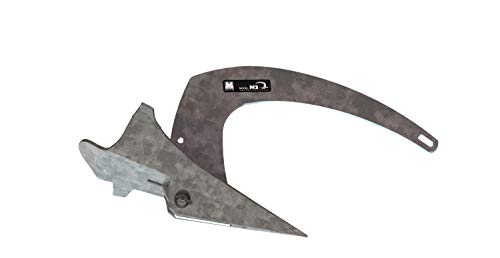

The Mantus M2 is engineered for one primary purpose: to bury itself deep and stay there, regardless of the substrate. Its sharp, weighted tip acts like a plow, cutting through grass and debris that would cause other anchors to skip or drag. When the load increases, the M2’s fluke surface area bites deeper, providing a level of security that is hard to match in storm conditions.
This anchor is perfect for cruisers who often find themselves in challenging, unpredictable bottoms. While it may look aggressive, that design is exactly what you need when the weather turns sour. If you value maximum holding power in difficult terrain, the Mantus M2 is a top-tier investment for your peace of mind.
Fortress FX-125 Anchor: Lightweight Reliability

The Fortress FX-125 is the go-to choice for those who need a high-performance anchor that is easy to handle and deploy. Because it is constructed from a high-tensile aluminum-magnesium alloy, it is significantly lighter than steel alternatives, making it a dream for crew members tasked with deployment or retrieval. Don’t let the weight fool you; its design allows it to outperform much heavier steel anchors in soft mud and sand.
This anchor is an excellent secondary or "lunch hook" for large yachts, though it serves admirably as a primary in many conditions. Its adjustable fluke angle is a clever feature that lets you tune the anchor for different seabed types. If you want a versatile, easy-to-manage anchor that packs a punch, the Fortress is a sophisticated choice.
Spade S160 Anchor: Best for Varied Seabeds

The Spade S160 is widely respected for its ability to perform across the widest spectrum of bottom types, from soft mud to hard clay. The secret lies in its weight distribution; the majority of the weight is concentrated on the tip, ensuring the anchor drives itself into the seabed the moment it touches down. It is essentially a self-righting, self-burying machine.
This is the anchor for the long-range voyager who never knows exactly what kind of seabed they will encounter next. It doesn’t rely on a roll bar, making it quite versatile for different bow configurations. If you want one anchor that performs consistently regardless of your destination, the Spade S160 is a reliable, high-conviction choice.
Lewmar Claw Anchor: The Classic Design Choice

The Lewmar Claw is a legendary design that has proven its worth over decades of service. Its simple, robust construction is incredibly effective at resetting itself if the wind or tide shifts, which is a common occurrence in tidal anchorages. While it may not have the extreme penetration power of newer "scoop" style anchors, it remains a favorite for its simplicity and reliability.
This anchor is best suited for captains who prioritize durability and ease of use in sand or rocky bottoms. It is a no-nonsense piece of gear that is easy to store and maintain. If you prefer a classic, time-tested design that gets the job done without unnecessary complexity, the Claw is a solid, economical addition to your yacht.
Manson Supreme Anchor: Precision Engineering
The Manson Supreme anchor ensures your family's safety with its high holding power and rapid, reliable setting. Independently tested and SHHP rated for superior performance.

The Manson Supreme is designed with a focus on high-tensile strength and deep-set capabilities. It features a roll bar that ensures the anchor lands in the correct position every time, regardless of the angle at which it hits the bottom. This precision engineering makes it incredibly reliable in high-wind scenarios where a dragging anchor could be disastrous.
This anchor is ideal for large vessels that require heavy-duty holding power in a variety of conditions. Its build quality is exceptional, giving you the confidence that it won’t fail under heavy strain. If you are looking for a heavy-duty, high-performance anchor that emphasizes safety and structural integrity, the Manson Supreme is a fantastic option.
Evaluating Seabed Types for Large Vessels
- Soft Mud: Requires an anchor with a large surface area, like the Mantus or Fortress, to prevent sinking too deep or dragging.
- Hard Sand: Needs a sharp, weighted tip for quick penetration; the Rocna Vulcan and Spade excel here.
- Grass and Weeds: You need an anchor that can cut through the vegetation to reach the substrate, such as the Manson Supreme.
- Rock and Coral: Avoid fluke-style anchors; these require a heavy, claw-style anchor that can hook into crevices.
Always check your nautical charts for bottom composition before dropping your hook. A beautiful bay might look perfect, but if the bottom is solid rock, your high-performance sand anchor will simply skate across the surface.
Proper Scope and Chain Selection for Yachts
Scope—the ratio of the length of your anchor rode to the depth of the water—is the most critical factor in your anchor’s performance. For large yachts, a minimum scope of 5:1 is a good baseline, but 7:1 is preferred in high winds or choppy conditions. The weight of your chain helps keep the shank of the anchor horizontal, which is essential for maintaining a strong hold.
Never rely solely on rope; a significant length of high-quality galvanized or stainless steel chain is non-negotiable for large yachts. The chain provides the necessary weight to dampen the forces exerted by the yacht’s movement. By maintaining a horizontal pull on the anchor, you ensure it stays buried rather than being pulled out of the seabed.
Essential Safety Tips for Secure Mooring
Always utilize a snubber or bridle when anchored. This acts as a shock absorber, protecting your windlass from the massive loads caused by waves and wind gusts. Without a snubber, the direct strain on your anchor chain can eventually lead to gear failure or, worse, cause the anchor to "trip" and break free from the bottom.
Finally, always keep a secondary anchor ready for immediate deployment. If your primary anchor drags or the wind shifts unexpectedly, having a backup ready to go can save your vessel from a dangerous situation. Practice your anchoring routine regularly so that every crew member knows exactly what to do when it’s time to secure the boat.
Investing in high-quality ground tackle is the best insurance policy you can buy for your yacht. By matching the right anchor to your vessel’s needs and the conditions you frequent, you transform your time at anchor from a source of stress into a true escape. Choose your gear wisely, stay vigilant, and enjoy the serenity of your next anchorage with complete confidence.
