

6 Best Canoe Anchors For Current To Keep You Steady
Stay steady in moving water with our top six canoe anchors. Discover reliable, durable picks designed to hold your position securely against strong currents.
There is nothing quite like the serenity of a river until the current begins to pull you away from that perfect fishing hole or photography spot. Anchoring a canoe in moving water is a delicate dance between physics and gear, where the right choice means stability and the wrong one means a frantic paddle against the flow. Mastering this skill is the difference between a relaxing day on the water and a constant, exhausting battle against the current.
Disclosure: As an Amazon Associate, this site earns from qualifying purchases. Thank you!
Understanding Canoe Anchor Physics in Currents
When you drop an anchor in a current, you aren’t just fighting gravity; you are fighting the lateral force of moving water pushing against the hull of your canoe. The goal is to create enough friction or "bite" on the riverbed to counteract this force without creating a dangerous situation where the canoe is pulled under. A common mistake is thinking a heavier anchor is always better, but in reality, the angle and scope of your anchor line are often more critical than the sheer mass of the metal.
Think of your anchor line as a spring. By using enough line—typically three to five times the depth of the water—you allow the anchor to pull horizontally along the bottom, which is where it performs best. If your line is too short, the anchor will act like a pendulum, lifting off the bottom every time the canoe shifts.
Choosing the Right Anchor Weight for Your Canoe
For most solo or tandem canoes, an anchor weighing between 5 and 15 pounds is the sweet spot. Anything lighter than 5 pounds will likely drift across the bottom in even a moderate current, while anything over 15 pounds becomes a logistical nightmare to haul and stow in a craft as nimble as a canoe. Remember, you are aiming for enough weight to hold position, not to moor a cruise ship.
Consider the surface area of your canoe as well. A wide, flat-bottomed canoe catches more current than a sleek, narrow touring model, requiring a slightly heavier anchor to compensate for the increased drag. Always factor in the total weight of your gear and passengers, as a fully loaded boat has significantly more momentum that an anchor must overcome.
Attaching Your Anchor Line and Safety Considerations
Never tie your anchor line directly to the bow or stern handle of your canoe. If the current is strong and the anchor catches suddenly, the force can easily swamp the canoe or pull the gunwales under. Instead, use an anchor trolley system or a quick-release cleat that allows you to adjust the anchor point along the side of the boat, keeping the bow pointed safely into the current.


Safety is paramount when working with lines in moving water. Always keep a sharp knife within arm’s reach; if your anchor gets hopelessly snagged and the current begins to pull your canoe under, you must be able to cut the line instantly. Never anchor from the side of the boat in a way that allows the current to push over the gunwales, as this is the fastest way to capsize.
Richter 10lb Anchor: Best for Rocky River Beds

If you spend your time on rocky, jagged river bottoms, the Richter anchor is your best friend. Its unique design features flukes that are specifically engineered to wedge themselves into rock crevices rather than just resting on top of them. This "locking" capability provides a level of security that standard anchors simply cannot match in high-flow, stony environments.
This anchor is ideal for anglers who need to stay put in turbulent water to cast into specific eddies. Because it holds so firmly, it is perfect for those who prioritize stability over ease of retrieval. If you frequent rivers with heavy, rocky beds, this is the reliable workhorse you need.
Grapnel Folding Anchor: Best for Easy Storage
The Grapnel anchor is the gold standard for canoeists who value space-saving gear. Its four flukes fold neatly against the shank, allowing it to slide into a small dry bag or under a seat without cluttering your limited cockpit space. When you reach your spot, simply lock the flukes in the open position and you are ready to deploy.
While it isn’t the strongest anchor for extreme currents, it is perfectly adequate for most calm rivers and lakes. It is the perfect choice for the casual paddler who wants a lightweight, "just in case" anchor that doesn’t get in the way of a fun day on the water. If your priority is minimalism and portability, look no further.
Box Anchor 12lb: Best for High Current Stability
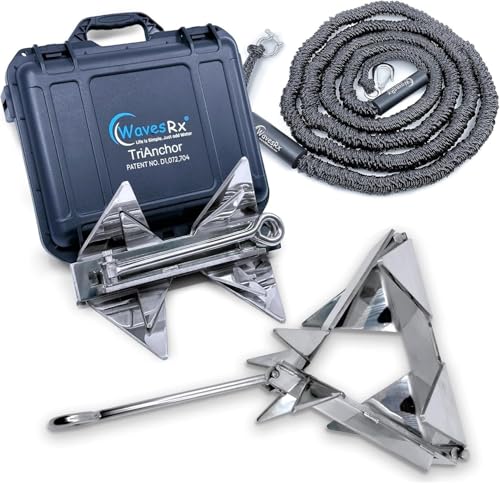
The Box anchor is a marvel of modern design, utilizing a unique shape that digs deeper the harder the current pulls on it. Unlike traditional anchors that rely on weight, the Box anchor uses its geometry to create a self-setting mechanism that keeps you locked in place. It is incredibly effective in sandy or muddy bottoms where other anchors might skip or drag.
This is the anchor for those who hate the "drift" that often accompanies cheaper gear. It is a bit bulkier than a grapnel, but the trade-off in stability is well worth it for anyone navigating strong currents. If you are tired of constantly repositioning your canoe, this is the high-performance solution you’ve been looking for.
Mushroom Anchor 8lb: Best for Soft Mud Bottoms
Secure your lightweight boat with this durable 8-pound cast iron mushroom anchor. Its wide mushroom cup provides reliable holding power in mud and weeds, while the black PVC coating offers added protection.
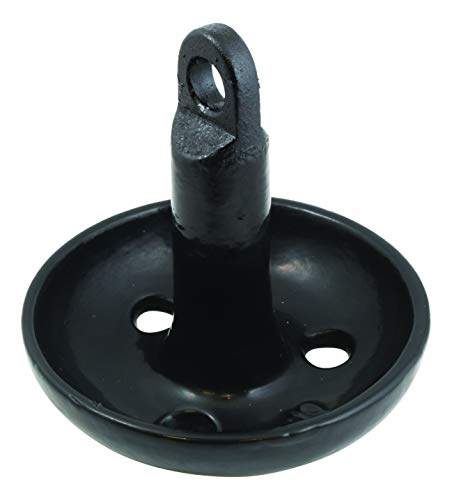
The Mushroom anchor is a classic for a reason: it creates a suction effect in soft, silty river bottoms that is remarkably effective. As it settles into the mud, it creates a vacuum that makes it difficult for the current to dislodge it. It is simple, effective, and lacks moving parts that can break or jam.
This anchor is best suited for slow-moving, muddy rivers or calm lake coves. Because it lacks flukes, it is not ideal for rocky or grassy bottoms where it will simply slide along the surface. For the paddler who navigates gentle, muddy waterways, this is a highly dependable and low-maintenance choice.
River Anchor 15lb: Best for Heavy Flow Control
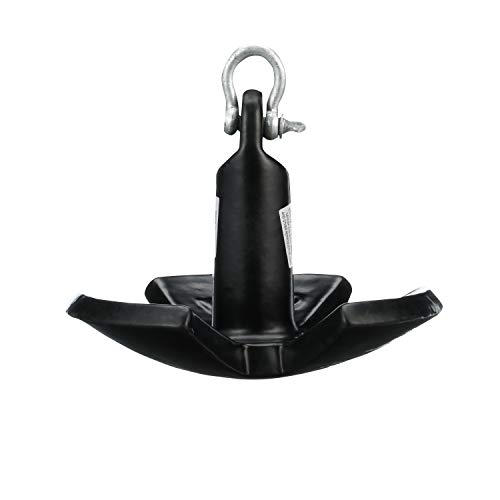
When the water is moving fast and you need absolute certainty that you won’t budge, the 15lb River anchor is the tool for the job. Its heavy-duty construction and wide, aggressive flukes are designed to bite into the toughest riverbeds. It is unapologetically heavy, but that weight is exactly what keeps you steady when the flow is aggressive.
This anchor is specifically for the experienced paddler who understands how to manage heavy gear. It is not for the faint of heart or the light-packer, but for those tackling challenging conditions, it provides unmatched peace of mind. If you find yourself frequently battling strong currents, this is the heavy-duty insurance policy you need.
Vinyl Coated Anchor: Best for Canoe Protection
Many anchors are made of cast iron or steel, which can easily scratch or dent the hull of a fiberglass or plastic canoe. A vinyl-coated anchor solves this problem by providing a soft, protective barrier between your gear and your boat. It is a small detail, but it makes a massive difference in maintaining the longevity and appearance of your canoe.
This is the perfect choice for the owner of a high-end or aesthetic-conscious canoe who doesn’t want to deal with rust stains or deep scratches. You get the same performance as a standard anchor with the added benefit of hull safety. If you take pride in your equipment, investing in a coated anchor is a no-brainer.
Proper Anchoring Techniques for Moving Water
Once you have chosen your gear, the technique is what seals the deal. Always approach your anchoring spot from downstream, moving up into the current until you reach your desired position. Drop the anchor, slowly drift back as you pay out your line, and ensure the anchor has firmly "set" before you tie off.
Always check your surroundings for hazards like submerged logs or debris that could tangle your line. If you are anchoring for a long period, periodically check your position relative to landmarks on the shore to ensure you aren’t slowly dragging. By combining the right anchor with these disciplined techniques, you can safely enjoy the water regardless of the current.
Anchoring in a current is a skill that rewards patience and the right equipment. By matching your anchor type to the riverbed and respecting the physics of moving water, you can transform your canoe into a stable platform for any adventure. Choose your gear wisely, stay vigilant, and enjoy the confidence that comes with being truly anchored in the flow.
