7 Best Pace Trackers For Interval Training For Runners
Optimize your interval training with our top 7 pace trackers. Discover the best devices to monitor speed, improve efficiency, and hit your running goals faster.
Mastering your interval training requires more than just grit; it demands precise data to ensure every sprint hits your target intensity. Whether you are training for a swim-run event or simply pushing your aerobic capacity on the track, the right technology acts as your silent coach. These seven trackers provide the reliable metrics you need to turn your sweat into measurable progress.
Disclosure: As an Amazon Associate, this site earns from qualifying purchases. Thank you!
Garmin Forerunner 265: Best Overall GPS Watch
The Garmin Forerunner 265 helps you train smarter with personalized insights and a bright AMOLED display. Track your recovery, plan race strategies, and enjoy accurate GPS, all with up to 13 days of battery life.


The Forerunner 265 is the gold standard for runners who want a vibrant, high-resolution AMOLED display without sacrificing battery life. Its interface is incredibly intuitive, allowing you to program complex interval workouts directly on the watch or sync them seamlessly from the Garmin Connect app.
If you value a watch that provides "Training Readiness" scores and precise heart rate variability data, this is your best bet. It strikes the perfect balance between a lifestyle smartwatch and a dedicated performance tool. If you want a device that does everything well and looks great while doing it, the 265 is the clear choice.
Coros Pace 3: Top Choice for Battery Efficiency
When your training schedule involves long hours on the trail or track, the Coros Pace 3 stands out for its exceptional battery longevity. It is lightweight and minimalist, meaning it won’t distract you during high-intensity bursts or heavy arm swings.
The software is laser-focused on athletic performance, stripping away the bloat found in more expensive smartwatches. If you are a minimalist athlete who prioritizes data accuracy and long intervals between charges, this watch is your best companion. It is a no-nonsense tool built for those who prefer function over flash.
Apple Watch Series 9: Best for Smart Integration
![Apple Watch Series 9 [GPS 45mm] Midnight Aluminum Case with Midnight Sport Band, S/M (Renewed)](https://m.media-amazon.com/images/I/41d-SELeXML._SL500_.jpg)
For the runner who is already deeply embedded in the Apple ecosystem, the Series 9 offers an unmatched user experience. The integration with third-party apps like Strava and TrainingPeaks is seamless, making it easy to push your interval data to your coach instantly.
While the battery life requires daily charging, the sheer power of the processor and the reliability of the heart rate sensor are top-tier. This watch is ideal for the athlete who wants a high-end fitness tracker that also manages their emails, music, and payments. It is the ultimate "do-it-all" device for the modern, connected runner.
Polar Pacer Pro: Best for Advanced Data Metrics
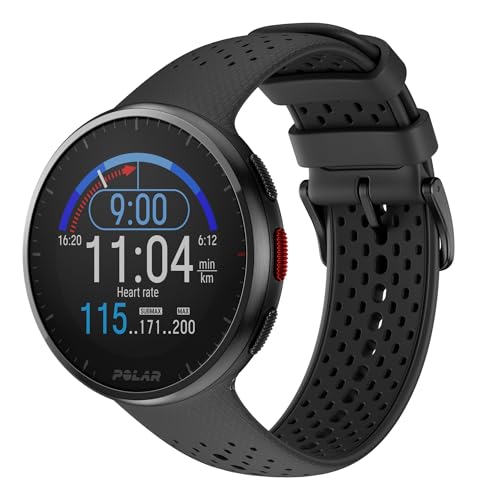
Polar has long been the leader in heart rate science, and the Pacer Pro carries that legacy forward with incredible precision. It offers unique metrics like "Running Power" directly from the wrist, which is a game-changer for maintaining consistent effort on hilly terrain.
The display is optimized for outdoor visibility, ensuring you can check your lap splits even in direct, harsh sunlight. If you are a data-driven runner who wants to analyze every nuance of your cardiovascular load, this watch is built specifically for you. It is a serious tool for athletes who treat their training like a science experiment.
Suunto Race: Best for Large Display Visibility
The Suunto Race is designed for those who need to see their stats at a glance without squinting during a high-speed interval. Its large, bright screen and digital crown make navigating through workout menus simple, even when your hands are sweaty.
It excels in durability and mapping, making it a great hybrid for those who transition from the track to rugged mountain trails. If you struggle with reading smaller text while mid-sprint, the clarity of the Suunto Race is unmatched. It is a bold, highly functional piece of hardware that prioritizes readability above all else.
Wahoo Elemnt Rival: Best for Triathlon Tracking

Wahoo designed the Elemnt Rival with the multi-sport athlete in mind, specifically focusing on the seamless transition between swim, bike, and run. Its "Touchless Transition" feature is a massive benefit for triathletes who don’t want to fumble with buttons while gasping for air.
The watch is incredibly streamlined, focusing on the metrics that matter most during a race or a brick workout. If your training involves frequent transitions between water-based activities and running, this device is your best partner. It cuts through the complexity of multi-sport tracking with elegant, reliable simplicity.
Casio G-Shock G-Squad: Best for Durability

If your training environment involves harsh elements—think rocky coastal paths or dusty, unmaintained tracks—the G-Squad is built to survive it all. It carries the legendary G-Shock ruggedness, meaning you never have to worry about a stray rock or a hard fall damaging your gear.
While it lacks the deep analytical features of some competitors, it provides essential pace and distance tracking in a virtually indestructible package. This watch is for the athlete who values equipment that can take a beating and keep ticking. It is the ultimate "set it and forget it" tool for the rough-and-tumble runner.
Understanding Interval Training Pace Metrics
Interval training relies on your ability to hit specific intensities for defined periods, which makes real-time pace monitoring essential. You should focus on Lap Pace rather than Current Pace, as the latter can fluctuate wildly due to GPS signal jitter.
- Average Lap Pace: Keeps you consistent across a set distance.
- Heart Rate Zones: Ensures you are training in the correct energy system.
- Cadence: Monitors your efficiency as fatigue sets in.
By focusing on these metrics, you prevent the common mistake of starting your intervals too fast and fading before the set is complete. Consistency is the secret to building aerobic capacity, not raw speed.
How to Calibrate Your GPS for Track Accuracy
Standard GPS watches can struggle on tight track turns, often overestimating distance if not calibrated correctly. Most modern watches feature a "Track Mode" that snaps your path to the lanes of a standard 400m track, which is highly recommended for precision.
Track your runs and fitness with the Garmin Forerunner 55. This GPS running watch offers daily suggested workouts and monitors heart rate, pace, and distance, with up to 2 weeks of battery life.

If your watch lacks a dedicated track mode, try to run in the outer lanes to keep your signal clear of interference. Additionally, ensure your firmware is updated regularly, as manufacturers frequently push patches to improve satellite connectivity. A little bit of technical maintenance goes a long way in ensuring your data reflects reality.
Essential Features for Interval Training Gear
When selecting your next tracker, don’t get distracted by features you won’t use. Prioritize hardware that offers:
- Customizable Data Screens: Keep your pace and timer front and center.
- Haptic Alerts: Vibrations are easier to notice than beeps in noisy environments.
- Auto-Lap Functionality: Set this to 400m or 1km to automate your interval tracking.
Ultimately, the best gear is the one that provides the information you need without requiring you to break your stride to find it. Keep it simple, focus on your form, and let the watch do the heavy lifting.
Choosing the right interval tracker is about aligning technology with your specific training goals and environmental needs. By focusing on the metrics that matter and ensuring your device is properly configured, you set yourself up for consistent, measurable improvement. Gear is only a tool, but with the right selection, it becomes the most reliable partner in your pursuit of a new personal best.