6 Best Drone Cameras For Aerial Shots For Pro Creators
Elevate your cinematography with our top 6 drone camera picks. Discover the best aerial imaging tools designed to help professional creators capture perfection.
Capturing the perfect aerial shot over open water requires more than just a steady hand; it demands gear that can handle the unpredictable nature of the elements. Whether you are filming a sunrise surf session or tracking a boat across a lake, the right drone transforms a simple clip into a cinematic masterpiece. Here are the top tools for pro creators looking to elevate their perspective above the water.
Disclosure: As an Amazon Associate, this site earns from qualifying purchases. Thank you!
DJI Mavic 3 Pro: Best for Cinematic Precision


The Mavic 3 Pro is the gold standard for creators who refuse to compromise on image quality. Featuring a unique triple-camera system, it offers a 24mm wide-angle lens, a 70mm medium telephoto, and a 166mm telephoto lens. This versatility allows you to capture sweeping coastal vistas and intimate close-ups of watercraft without ever needing to fly dangerously close to your subject.
For the professional, the inclusion of Hasselblad color science means your footage requires minimal grading to look pristine. It is the ideal choice if your workflow demands high-end, broadcast-ready content. If you are serious about building a professional portfolio, the Mavic 3 Pro is the investment that sets you apart.
Autel Robotics EVO II Pro: Best Low Light Drone
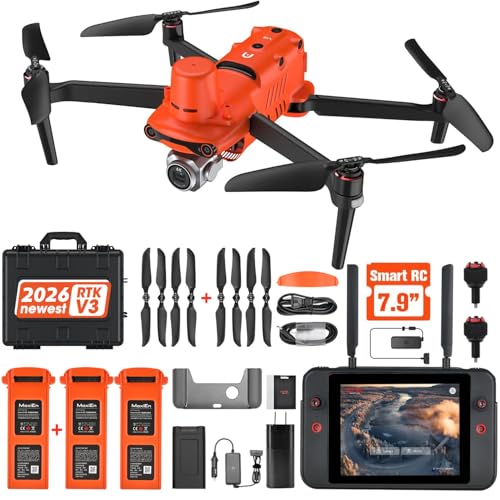
When you are shooting at dawn or dusk, light is your biggest enemy. The EVO II Pro addresses this with a massive 1-inch sensor that excels in low-light conditions, producing cleaner shadows and less noise when the sun dips below the horizon. Its ability to retain detail in high-contrast scenes makes it a powerhouse for moody, atmospheric water shots.
Beyond the sensor, the flight stability in breezy conditions is exceptional. If your work frequently takes you to beaches where wind is a constant factor, this drone provides the reliability you need to keep your shots locked in. Choose this if you prioritize sensor size and low-light performance over all else.
DJI Air 3: Best Versatile Dual Camera System
The Air 3 strikes a perfect balance between portability and professional capability. By utilizing dual primary cameras—a wide-angle and a 3x medium telephoto—it allows for creative framing that was previously only available on much larger, more expensive platforms. It’s a workhorse that fits easily into a gear bag for long hikes to remote lake locations.
Because it is lighter and smaller than the flagship models, it is incredibly agile in the air. This makes it a fantastic option for creators who need to move quickly between locations without sacrificing focal length options. If you want a reliable, versatile tool that won’t weigh you down during a full day of filming, the Air 3 is your best bet.
Sony Airpeak S1: Best for Professional Cinema

The Sony Airpeak S1 is in a league of its own, designed specifically for filmmakers who need to carry full-frame mirrorless cameras. If you are already invested in the Sony Alpha ecosystem, this drone allows you to use your existing high-end lenses to achieve a truly cinematic look. It is the only choice for high-budget productions where the drone is just one part of a larger, professional cinema setup.
However, keep in mind that this is a specialized tool requiring a pilot-operator team for the best results. It is not for the solo creator, but for the production house that needs absolute control over every frame. If your goal is Hollywood-level production quality, this is the machine that gets you there.
DJI Mini 4 Pro: Best Compact Aerial Solution

Don’t let its sub-250g weight fool you; the Mini 4 Pro is a capable capture device that excels in tight spaces. Its ability to shoot vertical video natively is a game-changer for social media creators who need to deliver high-quality content to platforms like Instagram and TikTok. It is the perfect "run and gun" drone for capturing quick, spontaneous moments on the water.
While it lacks the massive sensor of its larger siblings, its obstacle avoidance and flight time are surprisingly robust. It is the ultimate drone for the creator who values mobility above all else. If you are traveling light and need a drone that can be deployed in seconds, the Mini 4 Pro is the clear winner.
Skydio 2+: Best Autonomous Tracking Drone
When you are the subject of your own footage—say, paddling or surfing—you need a drone that can follow you without constant manual input. The Skydio 2+ uses advanced AI to track subjects through complex environments, even if you pass behind trees or bridge pilings. It effectively acts as your own personal camera crew.
This autonomy allows you to focus on your activity rather than the drone’s position. While the image quality is solid, the real value here is the peace of mind that comes with superior obstacle avoidance. If you are a solo adventurer who needs to capture action shots while staying in the moment, the Skydio 2+ is indispensable.
Essential Drone Safety for Water Environments
Flying over water introduces unique risks, primarily due to the lack of visual depth perception for sensors. Always maintain a direct line of sight and avoid flying too close to the surface, as wave action can cause sudden pressure changes that confuse altitude sensors. Never rely solely on automated landing features when operating near water; always be prepared to take manual control.
- Avoid Salt Spray: Salt is corrosive and can ruin internal electronics within minutes.
- Check Wind Speeds: Water surfaces amplify wind gusts, which can quickly drain your battery as the drone fights to maintain position.
- Use a Landing Pad: If launching from a beach, use a portable landing pad to prevent sand from entering the motors or gimbal.
Optimizing Camera Settings for Water Clarity
Water is highly reflective, which can lead to overexposed highlights and blown-out footage. To combat this, a Circular Polarizer (CPL) filter is non-negotiable. It cuts through the glare on the water’s surface, allowing you to see beneath it and making colors appear significantly more vibrant.
When setting your exposure, prioritize the highlights. It is much easier to recover detail from slightly underexposed shadows than it is to fix clipped, white-out highlights on a shimmering lake. Keep your shutter speed at double your frame rate—the "180-degree rule"—to ensure natural motion blur, which is crucial for professional-looking water movement.
Managing Drone Batteries in Humid Conditions
Humidity is the silent killer of drone gear. When moving from a cool, air-conditioned car to a humid coastal environment, your batteries and drone body can develop internal condensation. Always allow your gear to acclimate to the ambient temperature before powering up to prevent short circuits.
Furthermore, always store your batteries in a moisture-proof case with silica gel packets. If you notice any corrosion on the battery contact points after a day at the beach, clean them gently with high-purity isopropyl alcohol immediately. Treating your batteries with this level of care ensures they maintain their capacity and safety throughout their lifespan.
Protect your valuables from moisture damage with these 100 desiccant packets. Each packet contains highly absorbent silica gel, and can be easily reactivated for repeated use.

Legal Regulations for Coastal Aerial Filming
Coastal areas often have strict regulations regarding drone usage, especially near marine sanctuaries or nesting bird habitats. Always check local ordinances before takeoff, as many beaches prohibit drones during specific seasons to protect wildlife. Ignorance of these laws can lead to hefty fines and the permanent banning of drone use in popular spots.
Beyond legal requirements, consider the "social footprint" of your flight. Avoid flying directly over other beachgoers or swimmers, as this is both a safety hazard and a major privacy concern. By being a respectful and law-abiding pilot, you help ensure that these beautiful locations remain open to aerial photography for everyone.
The right drone is a powerful tool, but your greatest asset remains your situational awareness and respect for the environment. By selecting the camera that matches your specific creative needs and adhering to rigorous safety standards, you can capture breathtaking footage while protecting your gear. Get out there, stay observant, and enjoy the unique perspective that only an aerial view can provide.