6 Best Life Jacket Emergency Beacons For Distress At Sea
Stay safe at sea with our top 6 life jacket beacons. We compare key features, battery life, and signal range to help you choose the best device for emergencies.
When you are miles offshore, the horizon can feel both majestic and incredibly isolating. A Personal Locator Beacon (PLB) acts as your digital lifeline, ensuring that if the worst happens, rescue services know exactly where to find you. Investing in one of these devices is the single most important decision you can make for your peace of mind on the water.
Disclosure: As an Amazon Associate, this site earns from qualifying purchases. Thank you!
The Critical Role of PLBs in Maritime Safety
A PLB is not just another piece of gear; it is your final insurance policy against the unpredictable nature of the ocean. When you activate one, it transmits a high-powered distress signal to the Cospas-Sarsat satellite system, which then alerts local search and rescue authorities. Unlike a cell phone, which relies on spotty coastal towers, these beacons function anywhere on the globe.
Many boaters mistakenly believe their VHF radio is enough for every emergency. While a radio is essential for short-range communication, it fails the moment you lose line-of-sight with other vessels or coastal stations. A PLB removes the "if" from a rescue operation, providing your precise GPS coordinates to professionals who are trained to handle extreme maritime crises.
ACR ResQLink View: Best Overall Rescue Beacon
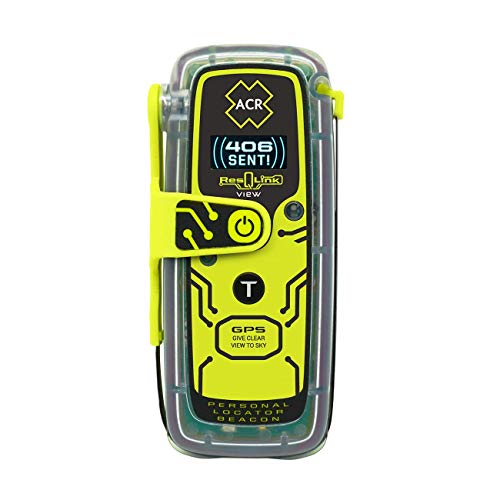

The ACR ResQLink View is the gold standard for most recreational boaters because it bridges the gap between high-end professional gear and user-friendly design. Its standout feature is the digital screen, which provides real-time status updates and GPS coordinates during an emergency. This gives you immediate psychological comfort, knowing the device is actually working.
If you want a rugged, no-nonsense beacon that fits easily into a life jacket pocket, this is your primary choice. It is buoyant and features a multi-function strobe that helps rescuers spot you even in low-light conditions. For the sailor or offshore angler who wants the most reliable, feature-rich unit on the market, the ResQLink View is the clear winner.
Ocean Signal rescueME PLB1: Most Compact Design

If you are worried about your beacon being too bulky to carry comfortably, the Ocean Signal rescueME PLB1 is the solution. It is remarkably small, designed specifically to tuck away into the smallest life jacket pockets without creating drag or discomfort. Despite its size, it packs a massive punch with a seven-year battery life and a powerful, high-intensity strobe.
This device is perfect for kayakers, paddleboarders, or anyone wearing a slim-profile PFD where space is at a premium. You won’t even notice it is there until you actually need it. If your biggest barrier to carrying a PLB is the sheer bulk of traditional units, the rescueME PLB1 eliminates that excuse entirely.
Garmin inReach Mini 2: Best Satellite Messaging
Stay connected anywhere with the compact Garmin inReach Mini 2. This satellite communicator offers two-way messaging, interactive SOS, and TracBack routing for confident exploration.

The Garmin inReach Mini 2 is a unique beast because it offers two-way satellite communication alongside its SOS capabilities. While a standard PLB is a "one-way" distress signal, this device allows you to text family members or even coordinate with search and rescue teams. It is a fantastic tool for those who want to send "all good" check-ins during long coastal passages.
However, keep in mind that this device requires an active subscription plan to function. It is ideal for the tech-savvy explorer who values constant connectivity over a simple, subscription-free distress signal. If you want a device that serves as both a safety net and a communication hub, the inReach Mini 2 is your best bet.
McMurdo FastFind 220: Reliable Battery Life

The McMurdo FastFind 220 is built for those who prioritize long-term reliability and straightforward operation. It boasts an impressive battery life and a dedicated SOS button protected by a secure, easy-to-release cover. It is a no-frills, highly functional device that does exactly what it says on the tin without unnecessary complications.
This beacon is an excellent choice for the budget-conscious mariner who wants a high-quality, professional-grade signal without paying for extra bells and whistles. It is tough, waterproof, and designed to perform in the harshest environments. If you value simplicity and long-term durability, the FastFind 220 is a dependable companion.
ACR ResQLink AIS: Best Dual-Technology Beacon

The ACR ResQLink AIS is a powerhouse that combines standard PLB satellite signaling with AIS (Automatic Identification System) technology. By broadcasting an AIS signal, it allows nearby vessels equipped with AIS receivers to see your exact location on their chartplotters. This creates a "local" rescue circle while the satellite signal alerts global authorities.
This is the ultimate choice for sailors who frequently transit busy shipping lanes or coastal areas. It provides two layers of protection, ensuring that even if a rescue helicopter is an hour away, a passing freighter might spot you on their screen in minutes. It is a sophisticated, high-end tool for those who take offshore safety seriously.
Kannad SafeLink R10: Best AIS Survival Device
The Kannad SafeLink R10 is specifically designed to be integrated directly into your life jacket, activating automatically when the jacket inflates. It is a dedicated AIS-only survival device, meaning it is meant to alert nearby vessels rather than the global satellite network. It is the perfect "man overboard" solution for racers and coastal cruisers.
Because it focuses on local rescue, it is incredibly effective for getting you back on board your own vessel or to a nearby boat quickly. It is not a replacement for a satellite PLB, but rather a vital supplement for your PFD. If you are looking to enhance your immediate, on-the-water recovery chances, the R10 is an essential addition.
Essential Features for Life Jacket Integration
When choosing a beacon, think about how it attaches to your gear. Look for:
- Attachment Points: Ensure the beacon has a secure lanyard or clip that won’t fail in heavy seas.
- Activation Ease: Can you trigger the device with cold or numb fingers?
- Buoyancy: Always prioritize devices that float, as dropping a beacon during a crisis is a disaster.
- Size/Profile: The device must not interfere with the inflation mechanism of your life jacket.
Proper Maintenance and Battery Replacement Tips
Even the best beacon is useless if the battery is dead or the electronics have corroded. Most PLBs have a battery life of 5 to 7 years, but you should check the expiration date on the casing annually. When the battery reaches its end, do not attempt to replace it yourself; send it to an authorized service center to ensure the waterproof seal remains intact.
Perform a self-test according to the manufacturer’s instructions every few months. This checks the internal circuitry and battery voltage without sending a false distress signal. Keep your beacon clean of salt spray, as residual salt can cause corrosion on the battery contacts over time.
Testing Procedures for Reliable Distress Signals
Testing your beacon is vital, but you must do it correctly to avoid triggering a false alarm. Use the "Self-Test" function exclusively, which is designed to verify that the beacon is functional without transmitting a signal to the Cospas-Sarsat system. Never activate the "SOS" button unless you are in an actual life-threatening situation.
If you accidentally trigger a false alarm, do not panic. Contact the local coast guard or search and rescue authorities immediately to inform them it was a mistake. They would much rather receive a cancellation call than launch a multi-million dollar search mission for a false positive.
Choosing the right emergency beacon is about matching your specific activity to the level of risk you face on the water. Whether you opt for the compact convenience of a PLB1 or the dual-technology power of the ResQLink AIS, the goal is always the same: ensuring you return home safely. Equip yourself, test your gear, and enjoy your time on the water with the confidence that you are prepared for anything.