

6 Best Kayak Handheld Gps Devices For Touring For Experts
Navigate confidently with our top 6 expert-rated kayak GPS devices. Discover durable, precise units designed for long-distance touring and remote exploration.
Navigating expansive coastal waters or hidden inland waterways requires more than just a compass and a hunch. When you are miles from the launch, a dedicated GPS device becomes your most reliable partner against fog, current, and fatigue. These six units represent the gold standard for experts who refuse to compromise on navigation and safety.
Disclosure: As an Amazon Associate, this site earns from qualifying purchases. Thank you!
Garmin GPSMAP 86i: Best for Global Touring


If your touring plans involve crossing open channels or exploring remote archipelagos, the GPSMAP 86i is the ultimate insurance policy. It integrates full-featured GPS navigation with Garmin’s inReach satellite technology, allowing you to send messages or trigger an SOS even when you are completely off the grid. The device is also buoyant, which is a massive relief if you happen to capsize in choppy conditions.
This unit is the professional’s choice for those who demand a "one-and-done" device. It syncs seamlessly with your boat’s marine electronics, pulling in AIS data so you can see nearby shipping traffic directly on your screen. If you are a serious expedition paddler who needs global reach and reliable communication, this is the only device you should be considering.
Garmin Montana 700i: Best Large Screen Unit

The Montana 700i solves the biggest complaint most paddlers have with handhelds: squinting at a tiny screen while battling spray and glare. Its large, glove-friendly touchscreen provides a massive interface for viewing detailed topo maps or nautical charts. While it is bulkier than other options, the real estate it offers is unmatched for complex route planning on the fly.
You should choose this unit if you prioritize situational awareness and ease of use over extreme portability. It features a rugged, military-grade build that stands up to constant saltwater exposure and heavy vibration. If you have the deck space to mount it, the Montana 700i transforms your kayak into a true navigation command center.
Garmin eTrex 32x: Best Compact Reliability
Navigate confidently with the Garmin eTrex 32x, featuring preloaded TopoActive maps on a sunlight-readable color display. This rugged handheld GPS includes a 3-axis compass, barometric altimeter, and supports both GPS and GLONASS for reliable tracking.

Sometimes, simplicity is the greatest asset on the water. The eTrex 32x is a workhorse that fits comfortably in a PFD pocket or clips easily to a deck line. It lacks the bells and whistles of the larger touchscreen units, but it delivers rock-solid tracking and a battery life that lasts for days on end.
This is the perfect device for the minimalist tourer who wants to keep their cockpit uncluttered. Because it uses physical buttons rather than a touchscreen, it remains perfectly functional even when your hands are cold, wet, or gloved. If you value rugged, no-nonsense performance and want a device that won’t get in your way, the eTrex 32x is your best bet.
Garmin GPSMAP 66sr: Best Multi-Band Accuracy
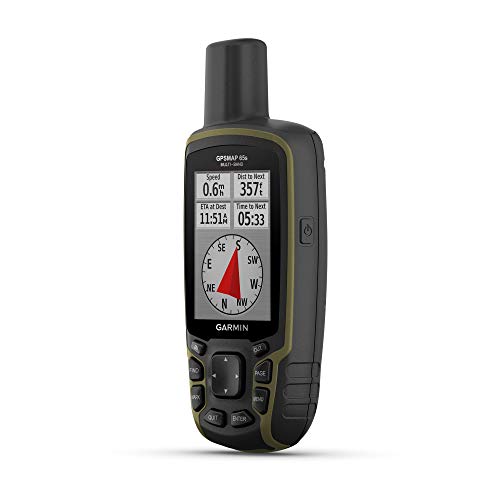
When you are paddling through deep canyons or dense coastal forests, signal bounce can lead to inaccurate positioning. The GPSMAP 66sr utilizes multi-band technology to access multiple satellite frequencies, providing pinpoint accuracy even in challenging terrain. It is the most precise handheld on the market for those who need to know exactly where they are down to the meter.
This device is overkill for casual lake paddlers, but it is a game-changer for experts navigating intricate mangrove mazes or narrow fjords. Its fast processor ensures that the map redraws instantly, which is vital when you are moving quickly through complex waters. If your trips take you into "signal-challenged" environments, you need this level of technical precision.
Garmin inReach Explorer+: Best Safety Features
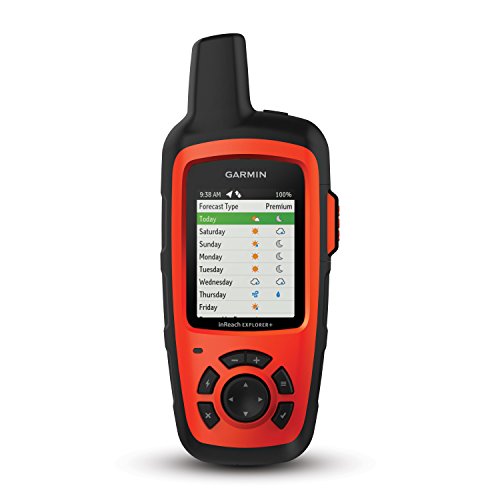
The inReach Explorer+ is built for the paddler who views safety as the primary pillar of their trip. While it functions as a high-end GPS, its true strength lies in its two-way satellite communication capabilities. It allows you to share your location with family, receive weather updates, and maintain a constant link to rescue services regardless of cellular coverage.
This unit is less about fancy map features and more about peace of mind. It is the ideal companion for solo expeditions where the margin for error is razor-thin. If you are planning a multi-day trek where you need to report back home or call for help in an emergency, the Explorer+ is an essential piece of gear.
Bad Elf GPS Pro+: Best Mobile Device Pairing

Not every paddler wants a dedicated handheld unit; many prefer the familiarity of a smartphone or tablet. The Bad Elf GPS Pro+ acts as a high-performance external receiver that beams precise GPS data to your mobile device via Bluetooth. It effectively turns your phone into a high-end chartplotter without draining your phone’s internal battery.
This is the smartest choice for those who already use marine charting apps like Navionics on their tablets. It allows you to keep your phone tucked away in a waterproof case while the Bad Elf does the heavy lifting of satellite acquisition. If you prefer the user interface of modern apps over traditional GPS menus, this is the most logical and cost-effective upgrade.
Essential Features for Touring Kayak GPS
When evaluating a device, prioritize waterproofing (IPX7 rating) and floatability. A device that dies the moment it hits the water is a liability, not an asset. Look for high-contrast screens that remain legible under direct sunlight, as glare is your constant enemy on the water.
- Satellite Constellation Support: Ensure the device uses GPS, GLONASS, and Galileo for faster signal acquisition.
- External Antenna Potential: Some units allow for an external antenna, which can be useful if you mount the device inside a covered cockpit.
- Battery Versatility: Devices that allow for replaceable AA batteries can save your trip if you run out of power away from a charging port.
Battery Life and Power Management Tactics
Even the best GPS units struggle in cold, damp conditions, which can sap battery life faster than advertised. Always carry a secondary power source, such as a ruggedized power bank, and keep it in a dry bag attached to your deck. Avoid leaving your device on at full screen brightness when you are not actively navigating; use "power save" mode to extend your runtime.
If you are on a long-distance tour, develop a rhythm of checking your position at specific waypoints rather than leaving the screen active for hours. This simple habit can double your battery life. Remember that extreme cold will kill lithium-ion batteries; keep your device insulated against the hull if you are paddling in early spring or late autumn.
Mapping Software and Route Planning Tips
A GPS is only as good as the maps loaded onto it. Invest in high-quality nautical charts that show bathymetry, navigational markers, and hazard zones. Before you launch, always spend time on your desktop computer planning your route and marking potential "bail-out" points in case the weather turns.
Never rely solely on pre-loaded base maps, as they often lack the detail required for safe coastal navigation. Download custom maps of your specific region and verify that your device has enough internal storage to handle them. Always keep a paper chart of the area as a final backup; electronics can fail, but a laminated map never loses its signal.
Mounting Solutions for Kayak Cockpits
Mounting your GPS is a balance between visibility and safety. Avoid mounting the device in a way that interferes with your paddle stroke or your ability to re-enter the boat during a self-rescue. A RAM-mount system is the gold standard for kayaks, as it allows for infinite adjustment and can be moved between different craft.
Ensure your mount is secured with a secondary tether or lanyard. Even the most secure mount can fail during a heavy surf landing or a collision with a submerged object. If you don’t have a secure mounting point on your deck, consider a wrist-mounted option or a deck bag with a transparent window for your handheld unit.
Selecting the right GPS is about matching the device to the specific demands of your paddling style and the environment you frequent. Whether you prioritize satellite communication, mapping detail, or simple, rugged reliability, there is a unit here to keep you on course. Invest in your navigation setup today, and enjoy the confidence that comes with knowing exactly where you are and how to get home.
