7 Best Kayak Roof Top Carriers For Travel For Road Trips
Planning a road trip? Discover the 7 best kayak roof racks that offer security, ease of use, and durability for transporting your gear safely on any journey.
Nothing beats the freedom of hitting the open road with your kayak strapped to the roof, ready to explore hidden alpine lakes or winding coastal inlets. However, a long road trip demands more than just basic straps; you need a secure, reliable carrier system that protects both your vehicle and your vessel. This guide breaks down the top-tier gear to ensure your focus stays on the water, not on your roof rack.
Disclosure: As an Amazon Associate, this site earns from qualifying purchases. Thank you!
Thule Hull-a-Port XT: Best All-Around Kayak Carrier
Transport two kayaks with ease using this versatile carrier. It converts from a J-cradle to a stacker and features an integrated StrapCatch for simple loading.


The Thule Hull-a-Port XT is the gold standard for those who want a "set it and forget it" solution. Its standout feature is the ability to fold flat when not in use, which significantly reduces wind noise and improves fuel efficiency during those long highway stretches.
This carrier is incredibly versatile, offering multiple positions to accommodate different hull shapes. Whether you are carrying a sleek sea kayak or a wider recreational boat, the adjustable J-cradle design provides a snug, secure fit. If you value premium build quality and want a rack that adapts to various boats over the years, this is your best investment.
Yakima JayLow Rack: Best For Multiple Watercraft

If your road trip involves a partner or a friend who also paddles, the Yakima JayLow is a game-changer. It functions as a single-boat J-cradle but can be converted into a vertical stacker to carry two kayaks on one side of your vehicle.
This dual-purpose design is perfect for maximizing space on your roof crossbars for other gear like cargo boxes or bike racks. It’s rugged, simple to operate, and built to withstand the rigors of high-speed travel. For paddlers who need flexibility and extra room for more equipment, the JayLow is the clear choice.
Malone Downloader J-Style: Best For Easy Loading
Loading a kayak solo after a long day on the water can be a daunting task, but the Malone Downloader simplifies the process immensely. It features a unique boarding ramp that allows you to slide your kayak up the side of your vehicle without needing to lift the entire weight over your head.
The integrated ramp is a massive relief for your back and prevents accidental dings on your car’s paint job. It is robust, easy to install, and provides a very stable cradle for your boat. If you frequently travel alone and want to avoid the struggle of high-roof loading, this carrier is an absolute necessity.
Rhino-Rack Nautic Kayak Carrier: Best For Saddles

For those who prefer a saddle-style carrier over a J-cradle, the Rhino-Rack Nautic is the top performer. These padded cradles support the hull of your kayak directly, which is often safer for delicate composite or high-end thermoformed boats that shouldn’t be loaded on their sides.
The spring-loaded design allows for easy adjustment, conforming perfectly to the shape of your kayak’s bottom. It provides excellent lateral stability, ensuring your boat doesn’t slide during sharp turns on mountain passes. If you own a specialized kayak and want to distribute weight evenly across your roof, skip the J-cradles and go for these saddles.
SportRack SR5511 J-Stacker: Best Value Selection

Not everyone needs a rack with every bell and whistle, and that is where the SportRack SR5511 shines. It provides a straightforward, no-nonsense J-style design that gets your kayak from point A to point B safely without breaking the bank.
While it lacks the folding mechanisms of more expensive models, it is incredibly durable and easy to mount. It is the perfect entry-level choice for budget-conscious travelers who prioritize function over premium aesthetics. If you need a reliable, basic rack that does exactly what it promises, this is the best value on the market.
Thule Hullavator Pro: Best Lift-Assist Solution

The Thule Hullavator Pro is the ultimate solution for anyone who finds lifting a kayak to roof height physically impossible or just plain exhausting. Using gas-assist struts, this rack lowers the kayak down to waist level, allowing you to load it comfortably before lifting it back up to the roof.
It is a significant financial investment, but the convenience it offers is unparalleled. By removing the physical barrier to loading, it ensures you’ll actually use your kayak more often. If you have a tall vehicle or simply want to save your energy for the water, this is the gold standard of convenience.
Malone SeaWing Stinger: Best For Aerodynamic Use
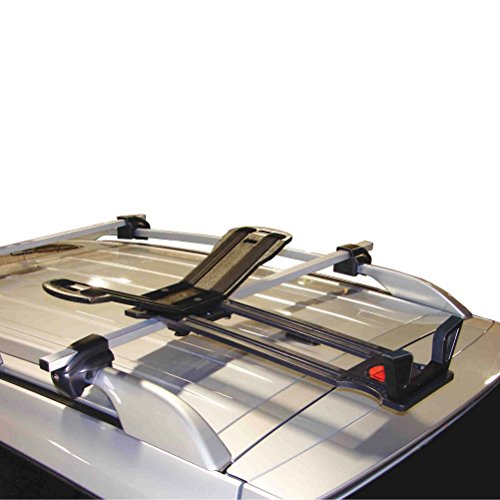
The Malone SeaWing Stinger is designed for the efficiency-minded traveler who wants to minimize drag. Its low-profile, wing-shaped design keeps the kayak close to the roof, which significantly reduces wind resistance and improves your vehicle’s fuel economy on long-distance trips.
The "Stinger" portion acts as an integrated load assist, making it easy to slide your kayak onto the saddles. It’s a sleek, modern system that looks great on any vehicle and performs exceptionally well at highway speeds. For long-distance commuters who want to save on gas and reduce road noise, this is the most aerodynamic option available.
Essential Kayak Roof Rack Safety Considerations
Before you even load your boat, ensure your crossbars are compatible with your chosen carrier and that they are spaced correctly. Most manufacturers recommend a spread of at least 24 to 36 inches to provide a stable foundation for the kayak.
Always check the weight capacity of your vehicle’s roof and the rack system itself. A fully loaded touring kayak with gear can weigh more than you think, especially if it’s waterlogged. Never exceed these limits, as it compromises the structural integrity of your rack and the handling of your vehicle.
Proper Tie-Down Techniques For Road Trip Safety
The golden rule of transport is to use both bow and stern lines in addition to your main straps. While the center straps hold the kayak down against the cradles, the bow and stern lines prevent the boat from shifting forward or backward during emergency braking or high-wind gusts.
Ensure your straps are tight enough to prevent movement but not so tight that they deform the hull of your kayak. Use cam-buckle straps rather than ratcheting straps to avoid over-tightening. Always give your boat a firm "shake test" after loading to ensure everything is locked down tight before you hit the highway.
Protecting Your Kayak During Long Distance Travel
Long-distance travel can take a toll on your kayak’s finish due to road debris, grit, and UV exposure. Consider using a cockpit cover to keep rain, insects, and road grime out of your boat while you are driving.
If you are traveling through areas with high sun exposure, a UV-protectant spray can prevent your kayak’s plastic from becoming brittle over time. Finally, make it a habit to stop after the first 20 miles of your trip to re-tighten all straps, as they often settle once you reach highway speeds.
Investing in the right roof rack system is the most important step toward stress-free paddling adventures. By choosing gear that matches your vehicle, your physical needs, and your budget, you ensure your kayak arrives at the water in perfect condition. Safe travels, and enjoy the serenity of the water once you arrive.