

6 Best Navigation Devices For Open Water For Long Swims
Navigate open water with confidence. We review the 6 best navigation devices for long swims, focusing on tracking accuracy, battery life, and durability.
Navigating a vast, featureless body of water can turn a peaceful long-distance swim into a disorienting struggle against the currents. Mastering your path requires a blend of sharp sighting skills and the right wearable technology to keep you on course. Here are the best navigation tools to ensure you stay safe and efficient during your next open water session.
Disclosure: As an Amazon Associate, this site earns from qualifying purchases. Thank you!
Understanding Open Water Navigation Basics
Open water swimming is rarely a straight line, as currents, wind, and lack of visual landmarks constantly pull you off course. Navigation isn’t just about following a digital arrow; it is about maintaining a "mental map" of your surroundings before you even enter the water. You must account for drift, which can easily add hundreds of meters to your total distance if left unchecked.
Successful navigation starts with understanding the environment. Always identify fixed points on the horizon—like a specific building, a tree, or a buoy—before you dive in. Relying solely on a watch screen while mid-stroke is a recipe for neck strain and broken rhythm, so technology should serve as a backup to your visual checks, not a replacement.
Garmin Swim 2: Precision GPS for Long Swims
The Garmin Swim 2 is the gold standard for swimmers who want a dedicated, no-nonsense device that prioritizes water metrics above all else. It excels in the open water mode by offering highly accurate GPS tracking that compensates for the signal drops common when your wrist dips below the surface.
This watch is perfect for the swimmer who wants to analyze their stroke rate and distance without getting bogged down by unnecessary multisport features. It is lightweight, unobtrusive, and offers a crisp display that is easy to read even in bright, glare-heavy conditions. If you want a reliable, swim-focused workhorse that just works, this is your best bet.
FINIS Hydro Tracker: Essential Pacing Tool
The FINIS Hydro Tracker is a unique piece of gear that attaches directly to your goggles, providing real-time feedback without the need to glance at your wrist. By using an integrated GPS and an audible pacer, it allows you to maintain a consistent tempo throughout your entire swim.
This device is ideal for athletes training for specific race paces or those who struggle with "pacing drift" during long sessions. While it lacks the deep data analytics of a full smartwatch, its ability to provide instant feedback makes it a powerful tool for stroke efficiency. If you find yourself slowing down as fatigue sets in, the Hydro Tracker’s auditory cues are exactly what you need.
Coros Pace 3: Advanced Multisport Tracking
The Coros Pace 3 is a fantastic choice for the triathlete or the endurance swimmer who needs a device that transitions seamlessly from the lake to the bike or the track. It features impressive battery life and an incredibly accurate dual-frequency GPS, which is vital when swimming near cliffs or dense tree lines that might otherwise scramble a signal.
The interface is intuitive, and the lightweight design ensures it won’t drag your arm down during long, grueling sets. It is a highly capable, cost-effective option that doesn’t sacrifice performance for price. If you’re looking for a versatile device that can handle a full triathlon training load, the Pace 3 is a top-tier contender.
Suunto Race S: Reliable Open Water Mapping


The Suunto Race S stands out for its high-resolution AMOLED display and advanced mapping capabilities, which are a massive help when exploring new or complex waterways. It provides a level of visual clarity that makes checking your progress mid-swim much easier than on traditional, lower-contrast screens.
This device is built for the adventurer who values durability and clear, actionable data. The interface is robust, and the build quality is specifically designed to withstand the rigors of salt water and rough conditions. If you frequently swim in varied, unfamiliar locations and want a map-heavy interface, this is the device that will keep you oriented.
Apple Watch Ultra 2: High-End Navigation Tech
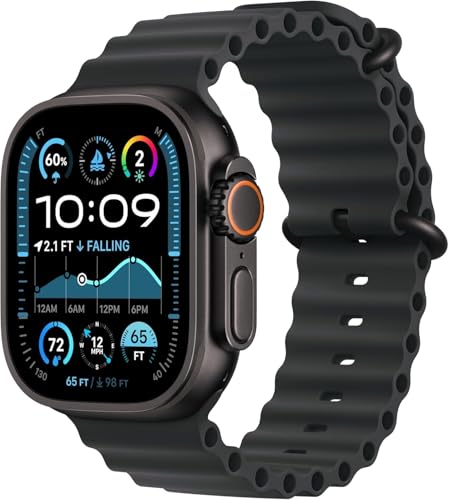
The Apple Watch Ultra 2 is a powerhouse of technology, offering a massive, bright display and the most sophisticated GPS integration currently available in a wearable. Its ability to track complex metrics while providing seamless integration with health apps makes it the ultimate choice for the tech-savvy swimmer.
However, its size is significant, and the touch-screen interface can be tricky to navigate with wet, cold fingers. It is best suited for the athlete who wants a "do-it-all" device that excels in the water but also functions as a high-end smartphone companion. If you prioritize screen real estate and elite-level sensor accuracy, the Ultra 2 is unmatched.
Polar Vantage V3: Endurance Swimmer Favorite
The POLAR Vantage V3 helps you optimize training with its comprehensive suite of tools and over 150 sport profiles. Enjoy a bright AMOLED touchscreen, dual-frequency GPS with detailed offline maps, and extended battery life for up to 8 days.

The Polar Vantage V3 is legendary among endurance athletes for its deep-dive physiological insights and recovery tracking. Beyond just tracking your distance, it monitors your heart rate with surgical precision, even in the water, helping you understand how your body handles long-duration efforts.
This watch is built for the serious athlete who treats every swim as a data-driven training session. It is rugged, reliable, and provides some of the most comprehensive post-swim analysis on the market today. If you are obsessed with optimizing your performance and recovery, the Vantage V3 is the tool that will help you reach your next milestone.
Assessing Your Specific Navigation Needs
Before investing in a high-end device, be honest about your swimming environment and goals. A pool-only swimmer doesn’t need the same GPS capabilities as someone crossing a large, open bay. Consider these factors:
- Battery Life: Do you need it to last for a 30-minute sprint or a 6-hour endurance swim?
- Data vs. Simplicity: Do you want complex metrics or just basic distance and time?
- Environment: Are you swimming in open, flat water or areas with high-interference terrain like mountains or tall bridges?
Mastering Sighting Techniques While Swimming
Even with the best GPS, you must master the art of "sighting" to swim straight. The most effective technique is to lift your eyes just enough to see the horizon while keeping your chin low in the water during your breath. This prevents you from lifting your head too high, which would naturally cause your hips to sink and create unnecessary drag.
Incorporate sighting every 6 to 10 strokes to ensure you remain on your intended path. Practice this in the pool by looking for a specific mark on the wall before you flip turn. By making sighting a rhythmic part of your stroke, you minimize the "zig-zag" effect and conserve significant energy over long distances.
Safety Protocols for Open Water Navigation
Navigation technology is a tool for efficiency, but it is never a substitute for basic safety. Always use a high-visibility tow float, which makes you visible to boaters and provides a place to rest if you experience a cramp or fatigue. Never rely on a digital map to tell you if the water is safe; check local weather reports, tide charts, and water quality alerts before you start.

When swimming in groups, designate a lead swimmer who is responsible for navigation, allowing others to focus on their stroke. If you are swimming solo, always inform someone of your route and your expected return time. Technology helps you find your way, but smart preparation is what ensures you make it back to shore every single time.
Choosing the right navigation device is about balancing your specific training needs with the realities of your local water conditions. Whether you opt for the simplicity of a Gamin or the advanced mapping of a Suunto, remember that your eyes and your preparation are your primary tools for safety. Stay consistent, stay visible, and enjoy the freedom that comes with knowing exactly where you are heading.
