

7 Best Fish Finders With Side Imaging for Deep Waters
Explore the top 7 side imaging fish finders for deep water. Discover how advanced sonar technology helps anglers locate structure and fish in deep, vast zones.
Navigating deep, murky waters without a reliable side imaging system is like trying to find a needle in a haystack with your eyes closed. When you’re hunting for structure or suspended schools far below the surface, the right technology turns a frustrating day of searching into a masterclass in precision fishing. These seven systems represent the gold standard for cutting through the depths to reveal exactly what’s happening beneath your boat.
Disclosure: As an Amazon Associate, this site earns from qualifying purchases. Thank you!
Humminbird Solix 12: Best for Deep Water Clarity
The Solix 12 is a powerhouse for anglers who refuse to compromise on image resolution. Its Mega Side Imaging+ technology produces some of the crispest, most photorealistic returns I’ve seen, even when you push into deeper channels where other units start to blur.
If you are a tournament angler or a serious weekend warrior who needs to distinguish between a brush pile and a cluster of baitfish at 80+ feet, this is your unit. The interface is highly customizable, allowing you to prioritize the data that matters most to your specific fishing style. It’s a significant investment, but for those who demand absolute visual clarity, the Solix 12 is the benchmark.
Garmin Echomap Ultra 126sv: Best for Mapping
When you’re exploring vast, uncharted reservoirs, the mapping capabilities of the Echomap Ultra 126sv are a game changer. Garmin’s integration with Navionics and the ability to create your own high-definition contour maps on the fly via Quickdraw Contours makes this unit indispensable for deep-water navigation.
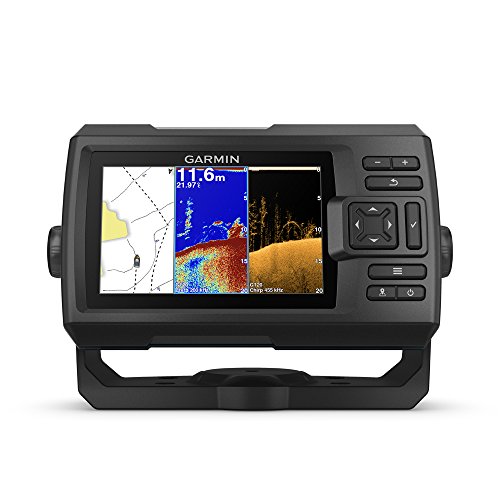

The side imaging performance is rock solid, but the real reason you buy this unit is the ecosystem. If you value knowing exactly where you are in relation to hidden drop-offs and submerged creek channels, this system provides the best situational awareness on the market. It’s the perfect choice for the explorer who wants to master the topography of a new lake quickly.
Lowrance HDS-12 Pro: Best for Active Imaging
The HDS-12 Pro is built for the angler who wants to see the world in high definition. With the latest Active Imaging HD, it provides exceptional target separation, which is crucial when you are scanning the sides of deep structure for game fish hiding in the shadows.

This unit excels at identifying the "life" on a structure rather than just the structure itself. If you spend your time chasing bass or walleye that hug steep ledges, the clarity provided by this system will help you identify fish activity that others simply miss. It’s a sophisticated tool that rewards those who take the time to dial in their settings.
Simrad NSS12 evo3S: Best for Offshore Fishing

Simrad has long been the go-to for the offshore crowd, and the NSS12 evo3S brings that rugged reliability to the table. Its SolarMAX IPS display remains perfectly readable even under the harsh, direct glare of the midday sun, which is vital when you are miles from the nearest shade.
This unit is built for durability and fast processing speeds. If you are regularly navigating deep, open water and need a system that won’t lag when you’re switching between complex sonar views and radar, the evo3S is the professional choice. It is a heavy-duty workhorse designed for those who treat their electronics as essential mission-critical equipment.
Raymarine Axiom 2 Pro: Best for User Interface

The Axiom 2 Pro stands out because it doesn’t fight you; the interface is incredibly intuitive, almost like using a high-end tablet. For anglers who get frustrated by complex, multi-layered menus, this system offers a streamlined experience that lets you get to your side imaging data with minimal taps.
Beyond the interface, the hardware is incredibly capable, offering fast performance and excellent integration with other onboard sensors. If you want a system that is powerful enough for deep-water searching but simple enough to operate without a manual in your lap, this is the one. It’s an ideal balance of user-friendliness and raw technical power.
Humminbird Helix 10 G4N: Best for Mid-Range Power
The Helix 10 G4N is the reliable middle-ground for the angler who wants professional-grade side imaging without needing a degree in computer science. It delivers the signature Humminbird clarity in a package that is straightforward, durable, and highly effective for deep-water scouting.
While it lacks the massive touchscreen real estate of the higher-end models, it makes up for it with sheer dependability. If you want a proven, no-nonsense system that consistently marks fish and structure in deep water, the Helix 10 is a high-value workhorse. It is a perfect fit for the angler who wants to spend more time fishing and less time fiddling with settings.
Garmin Striker Vivid 9sv: Best Value for Side Scan
Not everyone needs a massive, networked system to find fish. The Striker Vivid 9sv is the ultimate entry point for someone who wants to experience the benefits of side imaging without the premium price tag. It provides clear, color-coded sonar returns that make it easy to interpret what’s happening below.
This unit is ideal for the budget-conscious angler or someone running a smaller boat who still needs to find deep-water structure. You lose some of the advanced networking and mapping features found in the larger units, but you gain a portable, highly effective tool that pays for itself in saved time. It’s the best "bang for your buck" solution for deep-water side scanning.
Understanding Side Imaging in Deep Water Zones
Side imaging works by sending out a fan-shaped beam that paints a picture of the bottom and the water column to the sides of your boat. In deep water, the physics become more challenging because the signal has to travel further, which naturally leads to a loss of detail.
- Beam Spread: As depth increases, the effective range of your side imaging decreases.
- Shadowing: Deep structure creates longer, more pronounced shadows, which can be useful for identifying the height of a target.
- Signal Attenuation: High-frequency signals provide better detail but struggle to penetrate deep water, making frequency management a necessity.
Essential Transducer Mounting for Deep Depths
Even the most expensive fish finder will fail if the transducer isn’t mounted correctly. For deep-water applications, the transducer must be perfectly aligned to ensure the side-imaging beams aren’t obstructed by the hull or the motor.
- Clearance: Ensure the transducer is mounted low enough that the side beams aren’t blocked by the boat’s deadrise.
- Vibration: Use a sturdy mount to prevent high-speed vibrations, which can create noise that interferes with your sonar return.
- Leveling: A slightly tilted transducer will result in uneven imaging, making it difficult to accurately judge the distance of objects on the left versus the right.
Optimizing Frequency Settings for Deep Channels
Frequency is the trade-off between range and resolution. For deep water, you often have to drop your frequency to get a deeper, wider scan, even if it means sacrificing some of that crisp, high-definition detail.
- High Frequency (e.g., 1200 kHz): Use this for shallow water or when you need maximum detail on a known target.
- Lower Frequency (e.g., 455 kHz): This is your best friend in deep water because it penetrates further and covers more ground, albeit with less visual clarity.
- Adjustment: Don’t be afraid to toggle between frequencies as you change depths; your unit is a tool, not a "set it and forget it" device.
Choosing the right side imaging system is about balancing your budget with the specific demands of the waters you frequent most often. Whether you prioritize high-end mapping, user-friendly interfaces, or pure, deep-water clarity, these units offer the performance needed to level up your fishing game. Take the time to dial in your transducer placement and master your frequency settings, and you’ll find that the deep water is no longer a mystery, but your next favorite place to fish.
