6 Best Tide Sensors For Environmental Monitoring Projects
Discover the 6 best tide sensors for environmental monitoring. This guide compares key features to help you select reliable tools for precise water data.
Whether you are tracking tidal patterns for a coastal restoration project or simply trying to understand how water levels impact your favorite local surf break, the right data is everything. Getting an accurate picture of water movement requires more than just a ruler; it demands reliable, rugged technology that can withstand the harsh realities of a marine environment. Here are the top sensors to help you capture precise tide data for your next environmental endeavor.
Disclosure: As an Amazon Associate, this site earns from qualifying purchases. Thank you!
Understanding Tide Sensor Technology for Projects
At its core, a tide sensor—often referred to as a pressure transducer—works by measuring the weight of the water column above it. By calculating the hydrostatic pressure, these devices convert physical force into precise water level readings. It is a simple concept, but the engineering required to keep these sensors stable in salty, turbulent, or bio-fouled water is significant.
When selecting a sensor, you must distinguish between absolute and vented (gauge) sensors. Absolute sensors measure total pressure, meaning you will need a secondary barometer to subtract atmospheric pressure changes from your data. Vented sensors, conversely, use a specialized cable to reference atmospheric pressure directly, providing a direct water level reading that simplifies your post-processing work.
HOBO U20L-04 Water Level Logger for Precision


If you are just starting your monitoring journey or working on a tight budget, the HOBO U20L-04 is a fantastic entry point. It is an absolute sensor, which means you have to account for barometric pressure, but the trade-off is a highly durable, compact design that is incredibly easy to deploy.
I recommend this for researchers or enthusiasts who need consistent data without the overhead of complex, vented cabling systems. It is perfect for smaller, sheltered estuaries or calm lake environments where you can easily drop a reference logger nearby for atmospheric correction. If you value simplicity and a lower price point over real-time connectivity, this is your go-to device.
In-Situ Level TROLL 700 for Long-Term Studies
When you are committing to a multi-year environmental study, you need a sensor that won’t quit on you. The In-Situ Level TROLL 700 is a professional-grade workhorse designed for high-accuracy, long-term deployments. Its internal memory and battery life are optimized to minimize the number of site visits you have to make, which is a huge benefit if your study area is remote.
This sensor shines in complex coastal environments where you need to track not just tide, but also temperature and conductivity. Because it is built to resist corrosion, it is the ideal choice for long-term monitoring in brackish water. If you are serious about data integrity and need a "set it and forget it" solution, the TROLL 700 is worth the investment.
YSI Level Scout Sensor for Coastal Monitoring
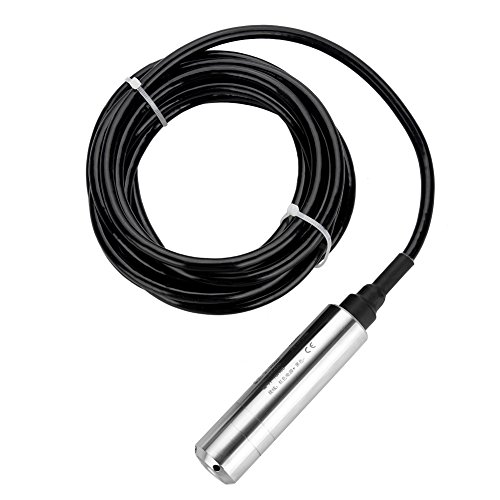
The YSI Level Scout is specifically engineered for the rigors of coastal monitoring, where waves and currents can wreak havoc on sensitive equipment. It features a rugged, stainless-steel body that is built to handle the physical abuse of moving water. What sets it apart is its low power consumption and high-frequency sampling capabilities.
This sensor is perfect for projects where you need to capture rapid changes in water level, such as storm surge events or high-energy tidal channels. It is a robust, reliable tool for those who need to trust their data during extreme weather conditions. If your project involves high-traffic areas or volatile water movement, the Level Scout will hold its own.
OTT ecoLog 1000 for Remote Tide Data Logging
For those managing projects in hard-to-reach locations, the OTT ecoLog 1000 is a game-changer. It integrates cellular communication directly into the logger, meaning you can pull your tide data from your office computer rather than trekking out to the site every few weeks. It is essentially a complete remote station in one compact package.
This device is designed for professionals who need real-time alerts and constant data streams. While the initial setup is more intensive than a basic logger, the time saved on site visits is immense. If your budget allows for the cellular data costs and you need immediate visibility on tidal trends, this is the most efficient choice on the market.
Keller DCX-22 AA Sensor for Submerged Testing
The Keller DCX-22 AA is a specialized tool for those who need high-precision measurements in fully submerged applications. Its design is sleek and narrow, making it ideal for installation in narrow pipes or small monitoring wells near the shoreline. It is a highly accurate absolute sensor that excels in stable, deep-water environments.
I suggest this sensor for researchers focused on groundwater-surface water interaction, where you need to see how the tide influences nearby aquifers. It is not designed for high-energy surf zones, but for precision in controlled, submerged settings, it is unparalleled. Choose this if your project requires surgical accuracy in a compact form factor.
Solinst Levelogger 5 for Reliable Tide Tracking
The Solinst Levelogger 5 is a staple in the environmental industry for good reason: it is incredibly dependable and backed by a massive ecosystem of accessories. Whether you are using a direct-read cable or deploying it as a standalone logger, the data quality is consistently top-tier. It is the "standard" for a reason, offering a balance of ease-of-use and professional-grade performance.
This is the perfect choice for the project manager who wants a proven, reliable system that has been vetted by thousands of researchers. It is versatile enough to be used in everything from small ponds to major tidal rivers. If you want to avoid the headache of troubleshooting obscure equipment, the Solinst Levelogger 5 is the safest, most reliable bet.
Key Factors for Selecting Your Tide Sensor
When narrowing down your list, consider the physical conditions of your deployment site first. A sensor that works perfectly in a protected bay will likely fail in an exposed, high-energy beach environment. You must also account for the frequency of your data needs; do you need real-time updates via cellular data, or is a monthly data download sufficient?
- Deployment Environment: Consider salinity, wave action, and potential for bio-fouling.
- Data Access: Determine if you need real-time cellular/satellite reporting or manual retrieval.
- Power Requirements: Assess how long the battery must last and if you need solar augmentation.
- Maintenance Needs: Factor in how often you can realistically visit the site to clean the sensor.
Calibrating Sensors for Accurate Water Data
Even the most expensive sensor is useless if it isn’t calibrated correctly. Before deployment, you should perform a "bench test" where you compare your sensor’s readings against a known water level in a controlled tank. This establishes a baseline and ensures that the internal electronics are functioning as expected.
Once deployed, you should perform periodic "field checks" by measuring the actual water level with a manual tape or staff gauge. Compare this manual reading to the sensor reading at that exact timestamp. If there is a discrepancy, you can apply a correction factor to your data set to maintain scientific integrity.
Best Practices for Installing Tide Equipment
Installation is the most common point of failure for tide monitoring projects. You must ensure the sensor is secured to a stable, fixed structure—like a piling or a heavy-duty anchor—that will not shift with the tide. If the sensor moves, your data will be skewed, rendering your entire project unreliable.
Additionally, consider the effects of bio-fouling in marine environments. Barnacles and algae can grow over the sensor’s intake, causing drift in your readings. Always use a protective shroud or a specialized anti-fouling coating to extend the life of your equipment and keep your data clean for as long as possible.
Choosing the right tide sensor is about balancing your specific site conditions with your long-term project goals. Whether you opt for a simple, rugged logger or a sophisticated, real-time reporting system, the key is consistent maintenance and rigorous calibration. With the right gear in place, you will gain the deep, data-driven insights necessary to protect and enjoy our precious coastal resources.