6 Underwater Camera Desiccant Packs For Moisture Control
Protect your gear from fog and damage. Explore these 6 top-rated desiccant packs designed to keep underwater camera housings dry and your footage crystal clear.
There is nothing more heartbreaking than surfacing from a perfect dive only to find your camera lens fogged from the inside out. Moisture is the silent enemy of underwater photography, capable of turning a high-end rig into an expensive paperweight in minutes. Mastering the art of humidity control is the single most important habit for any underwater photographer aiming to protect their investment.
Disclosure: As an Amazon Associate, this site earns from qualifying purchases. Thank you!
Why Desiccants Are Essential for Underwater Gear
When you seal a camera inside a housing, you are also sealing in the ambient air from the environment where you closed it. If the air is humid, that moisture has nowhere to go once the temperature drops during a dive. As the cool water surrounds your housing, the internal air reaches its dew point, causing condensation to form directly on your lens port or, worse, on your internal electronics.
Desiccants act as a sponge for this trapped moisture, maintaining a low relative humidity inside the housing. By absorbing water vapor before it can condense, these packs ensure your lens stays crystal clear throughout your entire dive. Think of them as your primary insurance policy against the inevitable physical laws of thermal dynamics.
Understanding Moisture Damage in Camera Housings
Moisture damage rarely announces itself with a splash; it usually starts as a faint, localized fogging that ruins your shots. If left unchecked, this trapped moisture can lead to corrosion on sensitive circuit boards and ribbon cables. Over time, this oxidation creates intermittent connection failures that are notoriously difficult and expensive to repair.
Many beginners assume that as long as the O-ring seal is tight, the interior remains dry. This is a common misconception, as even a perfectly sealed housing contains microscopic amounts of water vapor from the air itself. Small, consistent environmental changes can cause this vapor to cycle between gas and liquid states, slowly degrading your equipment from the inside out.
Silica Gel Packets: The Standard Moisture Solution
Protect your valuables from moisture damage with these 100 desiccant packets. Each packet contains highly absorbent silica gel, and can be easily reactivated for repeated use.


Silica gel is the industry standard for a reason: it is highly porous, chemically inert, and exceptionally efficient at adsorbing moisture. These small packets contain beads that trap water molecules within their microscopic pores, effectively locking them away from your delicate camera sensors. They are affordable, lightweight, and easily replaced, making them the go-to for most recreational divers.
While effective, silica gel does have a saturation point where it can no longer hold moisture. Once the beads are "full," they must be replaced or reactivated by heat to regain their efficacy. For the casual photographer, keeping a few fresh packets in your gear bag is a simple, non-negotiable step for every dive trip.
Pelican Silica Gel Desiccant for Camera Housings

Pelican is a household name in protective gear, and their silica gel canisters are designed for those who don’t want to gamble with their equipment. These are sturdier than generic paper packets, featuring a robust design that prevents leaking or tearing inside the housing. They are specifically shaped to fit into the nooks and crannies of larger, professional-grade housings.
If you are using a heavy-duty, hard-shell housing, these are the gold standard for reliability. They aren’t the cheapest option, but the peace of mind they offer for high-end DSLR or mirrorless setups is worth the premium. You should choose these if your priority is durability and you want a desiccant that won’t break apart during travel.
SeaLife Moisture Muncher for Underwater Cameras
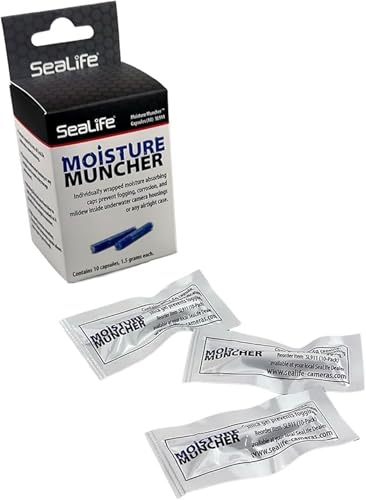
The SeaLife Moisture Muncher is specifically engineered for the unique constraints of compact underwater camera systems. These capsules are small, slim, and designed to fit into the tight spaces of point-and-shoot housings where larger packets simply won’t fit. They are highly effective at pulling humidity out of the small volume of air found in smaller, dedicated underwater cameras.
Because they are so compact, they are perfect for travel-light setups where every millimeter of space counts. If you are shooting with a smaller, integrated housing, the Moisture Muncher is likely your best bet. It is a no-nonsense, purpose-built solution that does exactly what it promises without adding bulk.
BigBlue Silica Gel Packs for Dive Light Casings
![wisedry 112 Gram [4 Packs] Silica Gel Desiccant Packs for Larger Container Desiccant Bags with Orange Indicating Beads for 3D Printer Filament Gun Safe Camera Electronics Equipment Food Grade](https://m.media-amazon.com/images/I/41Ha2uDygyL._SL500_.jpg)
While often associated with cameras, moisture control is equally vital for high-output LED dive lights. BigBlue provides specialized silica gel packs designed to fit into the battery compartments or light housings of their units. These are essential for preventing the internal fogging that can occur when a hot light head meets cold deep-water temperatures.
These packs are ideal for technical divers who rely on consistent, bright lighting for navigation and safety. If you’ve ever noticed your light beam looking "hazy" or "diffused" during a night dive, these packs are the solution you need. They are an essential piece of maintenance gear for anyone serious about their lighting rig.
Ikelite Desiccant Packs for Housing Protection
![FURWEY 100g [ 6 Packs] Rechargeable Desiccant Packs for Storage, Color Indicating Silica Gel Desiccant Packets, Moisture absorbers for storage, Dehumidifier bag for Closets](https://m.media-amazon.com/images/I/51+FVaudz3L._SL500_.jpg)
Ikelite has been a pillar of the underwater photography community for decades, and their desiccant packs reflect that experience. These are designed with the specific airflow patterns of Ikelite housings in mind, ensuring that moisture is pulled away from the lens port efficiently. They are thin, reliable, and come in convenient multi-packs that are easy to keep in your dive kit.
If you are already running an Ikelite system, sticking with their branded desiccants is the smartest move for compatibility. They are engineered to lie flat against the housing wall, meaning they won’t interfere with your camera’s controls or battery access. These are for the photographer who values system-wide consistency and proven performance.
Fantasea Silica Gel Packs for Camera Housings
Fantasea offers a highly effective, cost-conscious solution that is perfect for the recreational diver. These silica packs are small enough to tuck into almost any housing configuration without needing a specific dedicated slot. They are particularly popular among those who use mirrorless cameras with smaller, tighter housing footprints.
They offer a great balance between size and absorption capacity. If you rotate through multiple camera setups or find yourself frequently needing to swap out packs during a long liveaboard trip, these are a fantastic, economical choice. They get the job done reliably without overcomplicating your gear list.
Dry-It Silica Gel Canisters for Travel Kits

For photographers who travel extensively, the Dry-It canister system is a game-changer. These are reusable, long-lasting canisters that can be placed in your camera bag or your housing during transit to keep the entire environment dry. Unlike disposable packets, these canisters often feature a color-changing indicator that tells you exactly when they need to be "recharged" in an oven.
These are the best choice for the frequent flyer who needs to keep gear safe in humid, tropical climates before even reaching the water. If you want a sustainable, long-term solution that reduces waste, this is the way to go. They are slightly larger, but the ability to reuse them indefinitely makes them a smart investment for the long haul.
Best Practices for Installing Desiccant Packs
- Placement: Always place the desiccant in an area with good airflow, but ensure it does not touch the lens port or block any camera controls.
- Timing: Install the desiccant at the very last second before sealing your housing to prevent it from absorbing moisture from the open air.
- Environment: Try to assemble your housing in an air-conditioned room or a dry environment to minimize the initial humidity trapped inside.
- Replacement: Never reuse a standard silica packet once it has changed color or feels heavy; keep a fresh supply sealed in a zip-lock bag until the moment of use.
Protecting your camera from moisture is a simple habit that separates the pros from the frustrated. By choosing the right desiccant for your specific housing and following strict installation protocols, you can ensure your gear stays dry and ready for every dive. Invest in these small insurance policies now, and you will save yourself from the heartbreak of ruined footage later.