

6 Best Fishing Lure Retrieving Tools for Rocky Bottoms
Save your gear from rocky snags. We review the top 6 lure retrievers designed to navigate uneven bottoms and recover your favorite baits with ease and speed.
There is nothing more frustrating than feeling that telltale "thud" of a crankbait burying itself into a crevice while targeting trophy bass in rocky structure. Losing high-quality tackle to the lake floor is an expensive reality, but it doesn’t have to be a permanent one. Mastering the art of lure retrieval saves your wallet and keeps our waterways cleaner by removing lost gear.
Disclosure: As an Amazon Associate, this site earns from qualifying purchases. Thank you!
Understanding Rocky Bottom Fishing Challenges
Rocky bottoms are high-percentage areas for predatory fish, but they are notorious for "eating" lures. When you drag a lure across jagged granite or limestone, the hooks naturally seek out cracks and crevices. Once a treble hook wedges itself into a gap, standard tugging usually just pins it deeper.
Beyond the immediate loss of gear, these snags disrupt your rhythm and spook fish in the immediate area. Many anglers mistakenly assume that once a lure is stuck in a rock, it is gone for good. In reality, with the right tool and technique, you can recover a significant percentage of your snagged tackle.
The Importance of Using Lure Retrievers
Investing in a lure retriever is essentially an insurance policy for your tackle box. Modern lures are increasingly expensive, and losing three or four to a rocky bank can ruin the cost-benefit ratio of your entire fishing trip. A good retriever pays for itself after just a few successful saves.
Furthermore, using a retriever promotes responsible angling. Abandoned lures, complete with monofilament or fluorocarbon line, pose a long-term entanglement hazard to aquatic life and birds. By retrieving your gear, you are actively participating in the conservation of your local fishery.


Bass Pro Shops Lure Retriever: Best Overall

If you want a reliable, no-nonsense tool that gets the job done, this is the industry standard for a reason. It features a heavy-duty design that slides down your fishing line and uses a chain-link system to snag the hooks of your lure, allowing you to pull it free. It is built to withstand the abuse of constant contact with jagged rocks.
This retriever is perfect for the angler who fishes diverse rocky environments and needs a tool that doesn’t overcomplicate the process. It is heavy enough to punch through light surface chop and sink straight to the snag. If you prioritize durability and proven functionality, this is the one to keep in your boat.
Frabill F811 Lure Retriever: Top Value Pick

The Frabill F811 is a fantastic entry point for those who don’t want to break the bank but still demand gear that works. It utilizes a simple, effective design that attaches to a heavy cord, allowing you to drop it directly onto the snagged lure. While it lacks some of the bells and whistles of premium models, it is incredibly effective at dislodging stubborn hooks.
This tool is ideal for the weekend warrior who occasionally fishes rocky structure and needs a backup plan. It is lightweight, easy to store in a tackle bag, and does exactly what it promises without unnecessary bulk. If you are looking for maximum utility at a minimal price point, you cannot go wrong here.
Lindy USA EZ-Spot Lure Retriever: Best Design
The Lindy EZ-Spot stands out because it solves the common problem of actually finding where your lure is snagged in murky water. It features a highly visible, bright design that helps you navigate the line down to the lure with precision. The construction is geared toward ease of use, making it very intuitive even when you are frustrated by a snag.
This retriever is the best choice for anglers who fish in stained water where visibility is low. The design allows for a smooth glide down the line, reducing the chance of creating a secondary tangle. It is a sophisticated piece of gear that rewards the angler who values smart engineering.
Daiwa Lure Retriever: Best Compact Option

Space is always at a premium on a boat, and the Daiwa Lure Retriever is designed specifically for the minimalist. It is significantly more compact than traditional "heavy" retrievers, making it perfect for kayak anglers or those fishing from shore. Despite its small profile, it packs enough weight to effectively reach the bottom in moderate depths.
This is the ultimate tool for mobile anglers who need to keep their gear load light. It fits easily into a small tackle box or even a large pocket, ensuring you always have it on hand when you need it most. If you value portability above all else, this is your go-to retriever.
The SnagMaster Lure Tool: Best for Durability
When you are fishing in extremely rough, jagged environments, you need a tool that can take a beating. The SnagMaster is built with high-grade materials that resist bending and deformation, even after repeated impacts against hard rock. It is designed to be the last retriever you ever buy.
This tool is recommended for the serious, dedicated angler who spends every weekend targeting rocky structure. It is heavier and more robust than most competitors, which helps it maintain contact with the snag in deeper water. If you are tired of replacing flimsy retrievers, the SnagMaster is the investment you need.
Bill Dance Lure Retriever: Best for Beginners
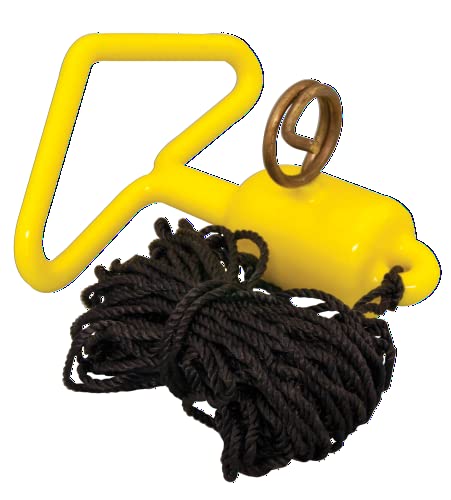
Sometimes the best tool is the simplest one, and the Bill Dance model excels at keeping things straightforward. It is designed with a very clear, easy-to-understand attachment system that takes the guesswork out of the retrieval process. It is a great choice for someone who is just starting to learn how to recover snagged gear.
This retriever is ideal for the novice angler who is still learning the nuances of structure fishing. It removes the intimidation factor of using specialized tools and provides immediate success. If you want a tool that works right out of the box with zero learning curve, pick this one up.
Essential Tips for Using Retrieval Tools
- Maintain tension: Always keep your fishing line taut while lowering the retriever to prevent it from tangling with your lure.
- Go vertical: Try to position your boat or body directly over the snag to give the retriever the best angle of attack.
- Use a heavy-duty cord: Ensure the rope attached to your retriever is strong enough to pull the lure free, as some snags require significant force.
- Go slow: Don’t rush the descent; controlled movement prevents the retriever from getting stuck in the same rocks as your lure.
Maintaining Your Lure Recovery Equipment
Retrievers spend a lot of time in the water, which can lead to corrosion if not properly cared for. After every trip, rinse your retriever with fresh water to remove grit, salt, or lake muck. This simple step prevents the moving parts from seizing up over time.
Additionally, check your retrieval cord for fraying or weak spots regularly. A broken cord means losing both your lure and your retriever, which is a double loss. Keep your gear clean and inspected, and it will serve you faithfully for many seasons to come.
Armed with the right retriever, you can approach rocky structure with confidence rather than hesitation. Remember that the best way to avoid a snag is to keep your lure moving, but when the rocks win, your recovery tool will be there to even the score. Stay prepared, fish smart, and keep your favorite lures in the water where they belong.
