

6 Best Swim Trackers For Performance For Serious Athletes
Optimize your training with our top 6 swim trackers. We analyze precision, data metrics, and durability to help serious athletes reach their peak performance.
Stepping onto the pool deck with a clear plan is the difference between a casual dip and a breakthrough training session. For the serious athlete, data isn’t just a number; it’s the roadmap to shaving seconds off your personal best. Let’s dive into the best tech to help you command your lane and master your performance.
Disclosure: As an Amazon Associate, this site earns from qualifying purchases. Thank you!
Garmin Swim 2: Best for Precision Lap Analysis


If your primary goal is to dissect your stroke mechanics and pace consistency, the Garmin Swim 2 is your go-to device. It is purpose-built for the pool, stripping away unnecessary lifestyle features to focus entirely on aquatic performance. You get industry-leading lap detection and automatic stroke type recognition that rarely misses a beat.
This watch is perfect for the swimmer who wants a "set it and forget it" experience during high-intensity interval sets. It excels at tracking your Critical Swim Speed (CSS) and provides drill logging that is intuitive enough to use mid-workout. If you want a dedicated, no-nonsense tool that treats your swimming data with the gravity it deserves, this is your best bet.
FORM Smart Swim Goggles: Best for Real-Time Data
See real-time swim metrics directly in your goggles with FORM Smart Swim 2. Track heart rate, pace, distance, and more with integrated sensors and a crystal-clear augmented reality display, then analyze your data in the FORM app.

The FORM Smart Swim Goggles represent a paradigm shift in how we approach lap swimming. By projecting your splits, stroke rate, and distance directly onto the goggle lens, they eliminate the need to squint at a pace clock on the wall. This real-time feedback allows you to make immediate adjustments to your effort level without breaking your rhythm.
These goggles are a game-changer for athletes who struggle with pacing during long endurance sets. You can program complex workouts into the app, and the display will guide you through every interval with precision. If you are serious about refining your technique in the moment rather than after the fact, these are an essential investment.
Apple Watch Ultra 2: Best for Multisport Tracking
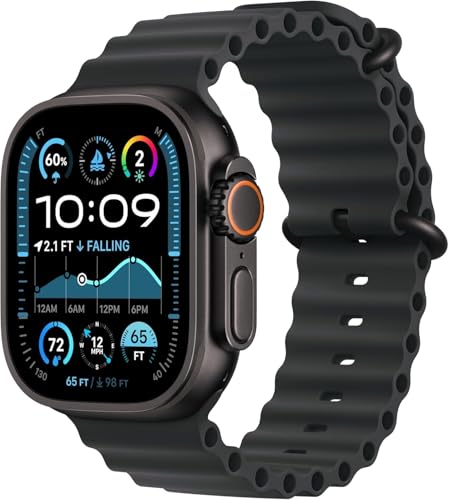
For the triathlete or the athlete who refuses to stay in one lane, the Apple Watch Ultra 2 is a powerhouse. It handles open water and pool swimming with equal proficiency, offering a robust interface that integrates seamlessly with your broader fitness ecosystem. The large, bright display is incredibly easy to read even through the glare of a sun-drenched outdoor pool.
The real strength here lies in the versatility of its sensors and the depth of the Health app ecosystem. It captures a vast array of metrics and integrates them with your running and cycling data, providing a holistic view of your training load. If you need one watch that does everything exceptionally well, the Ultra 2 is the clear winner.
Coros Pace 3: Best for Advanced Metric Tracking
The COROS PACE 3 GPS watch offers lightweight comfort and up to 17 days of battery life. Track your runs, bike rides, and more with accurate, dual-frequency GPS and comprehensive activity modes.

The Coros Pace 3 is a lightweight wonder that punches well above its weight class in terms of data depth. It provides highly accurate tracking for both pool and open-water swims, with specialized algorithms that account for different stroke styles. The battery life is arguably its best feature, lasting through even the most grueling training blocks without needing a charge.
This watch is ideal for the data-driven athlete who wants to analyze their performance via the Coros Training Hub. It offers granular insights into your load and fatigue levels, helping you avoid overtraining. If you prioritize long-lasting battery and deep analytical capabilities over flashy aesthetics, you will find this device indispensable.
Polar Vantage V3: Best for Recovery Monitoring
The POLAR Vantage V3 helps you optimize training with its comprehensive suite of tools and over 150 sport profiles. Enjoy a bright AMOLED touchscreen, dual-frequency GPS with detailed offline maps, and extended battery life for up to 8 days.

Recovery is the invisible half of training, and the Polar Vantage V3 understands this better than any other tracker. While it provides excellent swim metrics, its true value lies in its sophisticated recovery tracking features. It monitors your autonomic nervous system to tell you exactly how well your body has bounced back from yesterday’s double-session.
This watch is built for the high-volume athlete who needs to balance intensity with physiological readiness. By aligning your swim workouts with your body’s actual recovery status, you can push harder when you are ready and pull back when you are at risk of injury. It is the ultimate tool for those who view athletic success as a long-term, calculated process.
Samsung Galaxy Watch 6: Best for Smart Integration

If your life outside the pool is just as connected as your life in the water, the Samsung Galaxy Watch 6 offers the best balance of smart features and fitness tracking. It provides solid, reliable swim metrics that satisfy most competitive swimmers while keeping you tethered to your notifications and ecosystem. The sleek design feels less like a bulky sports watch and more like a daily wearable.
This device is perfect for the athlete who wants to transition directly from a morning swim to a busy workday. It tracks your laps and stroke counts accurately enough for serious training, while its smart capabilities ensure you never miss an important update. It’s the best choice for the athlete who demands high performance without sacrificing modern convenience.
Key Metrics to Track for Competitive Swimmers
To improve, you must move beyond just tracking distance. Focus on Stroke Count per lap to measure your efficiency and SWOLF score (a combination of time and stroke count) to gauge your overall swim economy. Tracking your Pace per 100m is also vital for ensuring you aren’t fading during longer sets.
Consistency is the hidden variable in these metrics. By reviewing your average stroke rate over several weeks, you can identify if you are getting stronger or merely compensating with higher effort. Always compare these numbers against your perceived exertion to ensure your data matches your physical reality.
Understanding Heart Rate Accuracy in the Water
Getting an accurate heart rate reading in the water is notoriously difficult due to the constant movement and the cooling effect of the pool. While wrist-based optical sensors have improved, they can still struggle with "cadence lock," where the watch confuses your stroke rate with your heart rate. For the most precise data, a dedicated chest strap designed for swimming is often the gold standard.
If you rely on your watch for heart rate, ensure the strap is snug—not tight—to minimize light leakage under the sensor. Be aware that cold water can constrict blood vessels, which may further impede the accuracy of wrist sensors. Use this data as a trend indicator rather than an absolute medical truth.
Proper Syncing and Data Analysis Techniques
The value of your swim data is lost if you don’t review it with a critical eye. Sync your watch immediately after your session to ensure the data is fresh and the app can properly categorize your intervals. Use the "drill logging" feature on your watch to manually tag technical work, as automatic detection often fails during slow-motion drills.
Look for patterns in your data rather than obsessing over a single bad workout. Are your splits slowing down toward the end of the session? That’s a sign you need to work on your stamina or your nutrition. Data is only useful if it leads to a change in your training plan.
Choosing the Right Tracker for Your Swim Goals
Selecting the right device comes down to identifying your primary training environment. If you spend 90% of your time in a 25-meter pool, a dedicated swim watch like the Garmin Swim 2 or the FORM goggles will provide the most specialized feedback. If you are a triathlete or a lake swimmer, prioritize devices with superior GPS and open-water algorithms like the Apple Watch Ultra 2.
Don’t let the sheer volume of data overwhelm you. Pick two or three metrics—like pace and stroke count—and master them before diving into complex recovery scores or heart rate variability. The best tracker is the one that provides the feedback you actually use to get faster, not the one with the most buttons.
Technology is a powerful ally, but remember that the best performance gains still come from disciplined technique and consistent effort. Use these tools to illuminate your weaknesses and celebrate your progress as you move through the water. Now, get back in the pool and put that data to work.
