

6 Best Fishing Camera Charging Stations for Long Trips
Keep your gear powered on the water. We review the 6 best portable charging stations to ensure your fishing cameras never miss a moment on long-range trips.
There is nothing more frustrating than capturing the perfect underwater strike on your fishing camera only to realize your battery died ten minutes prior. Long-term fishing trips demand a robust power strategy to keep your optics, depth finders, and mobile devices running from dawn until dusk. Mastering your power management is the difference between documenting a trophy catch and heading home with nothing but a story.
Disclosure: As an Amazon Associate, this site earns from qualifying purchases. Thank you!
Essential Gear for Long Fishing Excursions
When you are miles away from the nearest wall outlet, your power station becomes the heartbeat of your expedition. Fishing cameras, especially those with high-definition recording or Wi-Fi streaming, consume significant energy over a multi-day trip. You need a reliable bridge between your gear and the elements.
Beyond just the camera, you are likely juggling a smartphone for GPS, a headlamp for night rigging, and perhaps a handheld radio for safety. Investing in a dedicated power hub ensures that your critical electronics remain functional when the weather turns or the bite picks up. Think of these stations as your insurance policy against gear failure.
Jackery Explorer 300: Reliable Portable Power


The Jackery Explorer 300 is the gold standard for anglers who prioritize simplicity and consistent performance. It offers enough capacity to recharge a standard fishing camera dozens of times while remaining light enough to carry from the truck to the boat. Its interface is intuitive, making it easy to operate even with cold, wet fingers.
If you are a weekend warrior who needs a "set it and forget it" solution, this is your best bet. It lacks the bells and whistles of more expensive units, but it excels at providing clean, steady power exactly when you need it. For those who want a proven workhorse that won’t let them down on a three-day excursion, the Explorer 300 is an easy recommendation.
Goal Zero Sherpa 100AC: Compact Versatility
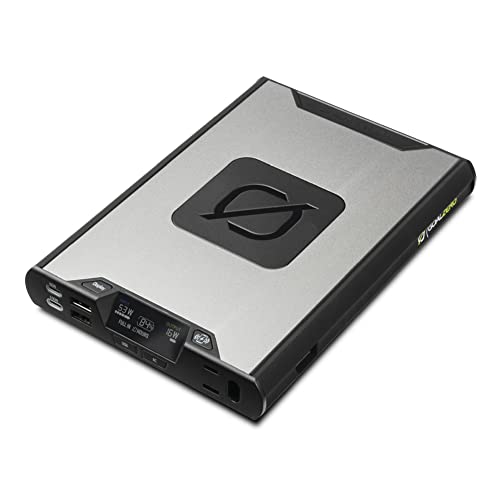
If you are a kayak angler or someone who packs light, the Sherpa 100AC is a masterclass in space efficiency. It fits easily into a tackle bag or a small dry box, providing high-speed charging for cameras and tablets without the bulk of a traditional power station. The inclusion of an AC outlet adds a layer of convenience that most pocket-sized banks simply cannot match.
This unit is specifically designed for the minimalist who refuses to compromise on tech. While it won’t power a heater or a coffee maker, it is perfectly tuned for the specific power demands of modern fishing optics and mobile devices. If weight and portability are your primary constraints, the Sherpa 100AC is the premium choice you should be looking at.
Anker 737 Power Bank: Rapid Charging Solution

For the angler who needs to charge up during a quick lunch break, the Anker 737 is a game-changer. It utilizes advanced Power Delivery technology to push energy into your devices at lightning speeds, minimizing the time your camera needs to be tethered to a cable. Its digital display is also incredibly helpful, showing you exactly how much juice remains in real-time.
This power bank is ideal for those who prefer to keep their gear mobile rather than tethered to a base station. It is not meant to run your entire camp, but it is arguably the best tool for keeping your camera and phone topped off throughout the day. If you value speed and precision, the Anker 737 is a must-have in your kit.
BioLite BaseCharge 600: Off-Grid Capability
The BioLite BaseCharge 600 is built for the angler who spends significant time in remote, off-grid locations. It features a rugged design and a sophisticated internal monitoring system that helps you track your energy consumption with professional-grade accuracy. It is built to withstand the bumps and vibrations of a boat deck or a bumpy forest road.
This is the right choice for the serious expedition angler who needs a central hub for multiple devices over a long duration. Its ability to integrate with solar panels makes it a truly sustainable option for week-long trips. If you want a station that feels like a permanent part of your gear loadout, the BaseCharge 600 is a formidable contender.
EcoFlow River 2 Pro: High Capacity Choice

When you are running multiple cameras, a drone, and a portable fish finder, you need the heavy-duty capacity of the EcoFlow River 2 Pro. This unit charges incredibly fast from a wall outlet before you leave home, and its LiFePO4 battery chemistry ensures a long lifespan even after hundreds of charge cycles. It is a powerhouse that handles high-draw electronics with ease.
This unit is for the angler who doesn’t want to worry about power management at all. You can plug in almost anything, and the River 2 Pro will handle it without breaking a sweat. If you are planning an extended trip where power-hungry equipment is a necessity, this is the most reliable high-capacity option on the market.
Renogy Phoenix 300: Rugged Solar Integration

The Renogy Phoenix 300 is uniquely positioned for anglers who rely on solar energy to keep their systems alive. It features built-in solar panels that can be deployed to trickle-charge the unit while you are fishing, ensuring you never truly run out of power. It is designed to be tough, water-resistant, and ready for the harsh environment of the lakefront.
This station is perfect for the "green" angler who wants to harness the sun to stay off the grid indefinitely. While it may not have the highest capacity on this list, its solar-first design philosophy makes it a standout for remote trips. If your fishing style involves long days in the sun, the Phoenix 300 is a brilliant, self-sustaining solution.
Key Factors for Choosing Fishing Power Banks
When selecting your gear, prioritize the battery chemistry, as LiFePO4 batteries generally offer more cycles and better safety than older lithium-ion models. Consider the output ports—ensure your station has USB-C PD (Power Delivery) if you want to charge your cameras quickly. Weight and form factor are also critical, as a heavy brick is useless if it stays in the truck.
- Capacity (Wh): Higher is better for longer trips, but weight increases.
- Charging Speed: Look for PD-enabled ports for faster camera recharge times.
- Portability: Ensure it fits in your specific boat or kayak storage compartments.
- Durability: Check for dust and moisture resistance ratings.
Managing Power Usage on Extended Trips
The best way to save power is to manage your camera settings before you even hit the water. Turn off Wi-Fi and Bluetooth when you aren’t actively transferring files, as these radios are notorious for draining batteries in the background. Lowering your screen brightness and setting the camera to auto-sleep after a few minutes of inactivity can double your effective runtime.
Always bring more cables than you think you need, and keep them organized in a waterproof bag. If you are using solar, rotate your panels throughout the day to track the sun’s path, which can significantly increase your intake. A little bit of discipline in how you use your devices goes a long way toward keeping you powered up until the final cast.
Safe Handling of Batteries Near the Water
Water and electricity are a dangerous combination, so always prioritize keeping your power station in a dedicated dry bag or a splash-proof storage box. Never charge your devices while they are wet; ensure all ports are completely dry before plugging in. If a battery pack gets submerged, disconnect it immediately and allow it to dry thoroughly in a well-ventilated area before attempting to use it again.
Additionally, avoid leaving your power stations in direct, blazing sunlight for extended periods, as heat can degrade battery health and performance. Store them in a shaded area or beneath a seat in your boat. By treating your charging gear with the same respect you give your high-end rods and reels, you ensure a safe and successful trip every time.
Selecting the right charging station is about matching your specific power needs with the demands of your environment. Whether you prioritize the rapid speed of the Anker 737 or the solar-ready design of the Renogy Phoenix, the goal remains the same: keeping your gear ready for the action. Choose wisely, keep your connections dry, and enjoy the peace of mind that comes with being fully powered on the water.
