

7 Best Floating Dock Docking Arms For Stability For Boats
Enhance your boat’s stability with our top 7 floating dock arms. Discover durable, high-performance solutions designed to keep your vessel secure and steady.
There is nothing more frustrating than watching your boat bash against a floating dock every time a passing wake ripples through the cove. Installing the right docking arms transforms a chaotic mooring experience into a secure, stress-free arrival every single time. Investing in high-quality stabilization ensures your hull stays pristine and your peace of mind remains intact throughout the boating season.
Disclosure: As an Amazon Associate, this site earns from qualifying purchases. Thank you!
Understanding Floating Dock Arm Stability Needs
Floating docks are designed to rise and fall with water levels, but this buoyancy creates a lateral movement that can be punishing for boat hulls. Without a stabilization system, your vessel acts like a pendulum, constantly shifting against the dock edges. Docking arms function by creating a rigid, yet adjustable, bridge between the fixed shoreline or pilings and the floating structure.
The primary goal is to restrict horizontal sway while allowing the dock to maintain its vertical flexibility. When choosing an arm, you aren’t just looking for metal bars; you are looking for a leverage system that absorbs kinetic energy. If your dock feels like a springboard when you step on it, your arms are likely undersized or improperly tensioned.
Assessing Your Boat Size and Dock Configuration
Before you spend a dime, you must account for the total displacement of your boat and the specific layout of your dock. A heavy wakeboard boat or a pontoon requires significantly different stabilization than a lightweight aluminum fishing skiff. Overloading a stabilizer arm will lead to structural fatigue, while choosing an oversized system for a small boat can actually make the dock too rigid, causing it to "fight" the waves rather than ride them.
Consider your environmental exposure as well. If your dock sits in a high-traffic channel or an open lakefront prone to wind, you need a system with higher weight ratings and reinforced pivot points. Always verify the mounting surface of your dock; some modular systems require specific brackets that are only compatible with their own brand of hardware.
Connect-A-Dock Universal Arm for Small Boats
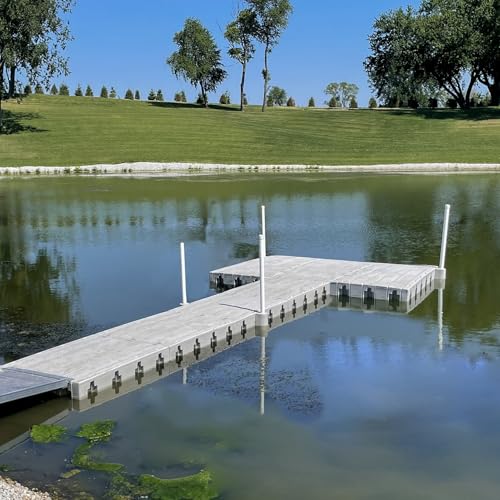

If you are running a personal watercraft or a small aluminum fishing boat, the Connect-A-Dock Universal Arm is the gold standard for modular simplicity. Its design excels in residential settings where the dock is part of a larger, interlocking system. It provides just enough resistance to keep a small hull from "walking" along the dock edge without requiring a massive, industrial-grade installation.
This is the perfect choice for the DIY enthusiast who wants a clean, low-profile look. It isn’t built for heavy cruisers or high-traffic commercial zones, but for light-duty, weekend-warrior setups, it is hard to beat. You should buy this if you value ease of installation and a dock that maintains a sleek, uncluttered appearance.
Tommy Docks Stabilizer Kit for Shoreline Use
Tommy Docks has built a reputation on accessibility, and their stabilizer kit is a fantastic entry point for those dealing with fluctuating water levels in smaller, calmer bodies of water. These arms are designed to work in tandem with their vertical pole systems, effectively anchoring the floating section against the shoreline. It creates a solid, grounded feel that makes stepping onto your boat feel much safer.
However, keep in mind that this system is best suited for shoreline-adjacent docks rather than deep-water mooring. If you are looking for a straightforward, cost-effective way to stop your dock from drifting during seasonal high-water events, this is your solution. It is a highly practical, no-nonsense choice for the budget-conscious boater.
Extreme Max Adjustable Arm for Heavy Vessels
When you move into the territory of larger, heavier boats, you need the brute strength of the Extreme Max Adjustable Arm. These are over-engineered for durability, featuring thick-gauge steel and robust pivot hardware that can withstand the constant torque exerted by a 25-foot cruiser. The adjustability is the real winner here, allowing you to fine-tune the length to match the specific width of your slip.
This is not the product for a lightweight dock or a small kayak launch; it is heavy, substantial, and requires a solid mounting point. If your vessel has significant mass and you are tired of your dock shifting under the load, this is the heavy-duty upgrade you need. It is a serious piece of equipment for serious boaters.
Dock Edge Plus Mooring Arm for Rough Waters

If your dock is located in a high-wind area or a busy waterway where wakes are a constant annoyance, the Dock Edge Plus series offers the lateral stability you are missing. These arms are designed to minimize the "play" in the connection, effectively locking the dock in place while still allowing for natural water level changes. The build quality is excellent, focusing on corrosion resistance, which is vital if you are docking in brackish or saltwater.
You should opt for this system if you are tired of adjusting your fenders every time you head out. It is a premium investment, but the reduction in wear and tear on your boat’s gel coat makes it well worth the price. It is the ideal choice for anyone who demands professional-grade stability in challenging conditions.
Titan Decking Heavy Duty Stabilizer System

Titan Decking has engineered a stabilizer system that prioritizes long-term structural integrity. These arms are designed to integrate seamlessly with heavy-duty floating platforms, providing a rigid connection that resists the twisting forces caused by crosswinds. The materials used are top-tier, ensuring that the system won’t seize up or corrode after a single season in the water.

This system is perfect for those who have invested in a high-end dock and want the hardware to match that level of quality. It is definitely an overkill for a small, simple setup, but for a large, multi-slip dock, it provides the necessary structural backbone. If you want a "set it and forget it" solution, this is a top contender.
PolyDock Products Floating Stabilizer Arms

PolyDock is a master of the modular dock space, and their stabilizer arms are specifically designed to work with their proprietary floating sections. They offer a smooth, fluid movement that feels natural rather than restrictive, which helps preserve the lifespan of the dock’s hinges. The installation is streamlined, making it a favorite for those who want a professional result without a complex construction project.
These arms are best for owners of PolyDock systems who want to maintain the integrity of their warranty and ensure perfect compatibility. If you are piecing together a custom dock from different manufacturers, you might find the mounting requirements tricky. However, for a cohesive PolyDock setup, these are the most reliable option on the market.
ShoreMaster Vertical Dock Arm for Stability
ShoreMaster is a household name for a reason, and their vertical docking arms are a testament to their engineering prowess. These arms are particularly effective for docks that need to handle significant vertical range, such as those on reservoirs or lakes with seasonal power generation drawdowns. They provide exceptional lateral stability while ensuring the dock remains level and secure regardless of the depth.
This is a high-performance system for the boater who deals with extreme water level fluctuations. It is a sophisticated piece of equipment that requires precise installation, but the payoff is a dock that feels as solid as a fixed pier. If your dock is in a location with a 5-to-10-foot variance in water height, this is the gold standard.
Proper Installation Tips for Docking Arms
The most common mistake I see is installing arms at an angle that restricts the dock’s natural rise. Always ensure your arms are mounted perfectly level when the dock is at its average water height to prevent binding. If the arms are mounted too high or too low, you risk putting unnecessary stress on the dock’s frame and the mounting points on the shore.
- Use backing plates: Never bolt directly into thin plastic or wood without a metal backing plate to distribute the load.
- Check hardware annually: Salt and freshwater are both corrosive; ensure all bolts are tightened and lubricated before the season starts.
- Test under load: Once installed, have someone stand on the dock while you observe the arm movement to ensure there is no "binding" or abnormal creaking.
Choosing the right docking arm is about balancing your boat’s weight with the environmental conditions of your specific waterfront. By selecting a system that matches your dock’s construction and your local water behavior, you can eliminate the stress of shifting docks for good. Take the time to install them correctly, and you will enjoy a much more secure and enjoyable boating experience for years to come.
